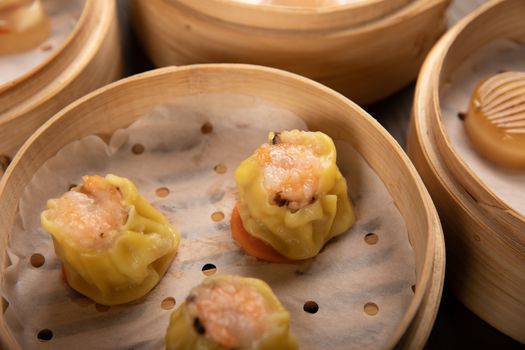
Photo: Change C.C / Pexels
The diets react (see scores below)
Common Ingredients
- ground pork
- shrimp
- shumai wrappers
- shiitake mushrooms
- ginger
- Shaoxing wine
- soy sauce
- sesame oil
Specific recipes may vary.
Incompatible with 7 of 11 diets
Diet Ratings
Pork Shumai is fundamentally incompatible with a ketogenic diet due to the wheat-based shumai wrappers (dumpling skins), which are made from refined wheat flour. Each wrapper contributes approximately 3-5g of net carbs, and a standard serving of 4-6 pieces would deliver 15-30g of net carbs from the wrappers alone, putting a single snack dangerously close to or exceeding the daily keto carb limit. Additionally, Shaoxing wine contains sugar and carbohydrates. The filling ingredients themselves — ground pork, shrimp, shiitake mushrooms, ginger, soy sauce, and sesame oil — are largely keto-compatible, but the dish cannot be meaningfully separated from its defining wrapper component in its standard form.
Pork Shumai contains multiple animal products that are unambiguously excluded from a vegan diet. Ground pork is a direct animal meat product, and shrimp is seafood — both are strictly off-limits under any definition of veganism. There is no debate or nuance here; this dish is fundamentally built around animal flesh as its primary protein sources.
Pork Shumai contains multiple non-paleo ingredients that make it clearly incompatible with the Paleolithic diet. The shumai wrappers are made from wheat flour, a grain explicitly excluded from paleo. Soy sauce contains both wheat and soy (a legume), adding two more violations. Sesame oil is a seed oil, also excluded under paleo guidelines. Shaoxing wine is a processed, grain-derived alcoholic product. While the base proteins (ground pork and shrimp) and aromatics (shiitake mushrooms, ginger) are paleo-approved, the dish as traditionally prepared cannot be considered paleo-compatible due to its foundational non-paleo components.
Pork Shumai is primarily a pork-based dish, and red/processed meat is one of the most restricted categories in the Mediterranean diet, limited to only a few times per month. While shrimp is a Mediterranean-friendly protein, it plays a secondary role here. The refined wheat wrappers (shumai wrappers) are essentially refined grain pasta with no whole-grain equivalent in this context. Sesame oil, soy sauce, and Shaoxing wine are non-traditional flavorings that don't align with Mediterranean culinary patterns, though they aren't inherently harmful. The shiitake mushrooms and ginger are positive plant-based elements, but they don't offset the core issues. Overall, the dish is built around ingredients that the Mediterranean diet discourages: pork as the primary protein and refined grain wrappers.
Some Mediterranean diet interpreters might note that the shrimp component partially redeems the dish, and small portions as an occasional snack could fall within the 'red meat a few times per month' allowance. The mushrooms and aromatics add plant-based value that a lenient interpretation might credit.
Pork Shumai is fundamentally incompatible with the carnivore diet. While the dish does contain animal proteins (ground pork and shrimp), the majority of its ingredients are plant-derived or plant-processed. Shumai wrappers are made from wheat flour — a grain and a strict carnivore exclusion. Shiitake mushrooms are a fungus/plant food. Ginger is a plant root. Shaoxing wine is a fermented grain alcohol. Soy sauce is a fermented legume/grain product. Sesame oil is a plant-derived oil. The dish is essentially a plant-forward Chinese dumpling that uses animal protein as a filling component, not an animal-product dish with minor additives. Even if one were to extract only the pork and shrimp, the dish as prepared cannot be consumed on a carnivore diet.
Pork Shumai contains multiple excluded ingredients that make it clearly non-compliant with Whole30. First, shumai wrappers are made from wheat flour, a grain that is explicitly excluded. Second, soy sauce contains soy (a legume) and often wheat, both of which are excluded — coconut aminos would be the compliant substitute. Third, Shaoxing wine is an alcohol, which is excluded. Even if those three ingredients were substituted with compliant alternatives, the dish in its traditional form also falls into the 'recreating junk food/comfort food' territory with its dumpling wrapper structure, though the filling itself (ground pork, shrimp, mushrooms, ginger, sesame oil) would otherwise be compliant.
Pork Shumai contains multiple high-FODMAP ingredients that make it unsuitable during the elimination phase. The shumai wrappers are made from wheat flour, which is high in fructans — a primary FODMAP concern. Shiitake mushrooms are high in polyols (mannitol) even at small servings per Monash testing. Shaoxing wine contains wheat as well, adding to the fructan load. Soy sauce typically contains wheat (unless using tamari), contributing further fructans. The combination of wheat-based wrappers, shiitake mushrooms, and likely wheat-containing condiments makes this dish high-FODMAP at any standard serving. Ginger and sesame oil are low-FODMAP, and ground pork and shrimp are safe proteins, but the problematic ingredients outweigh these.
Some FODMAP practitioners note that soy sauce contains only trace amounts of wheat after fermentation and may be tolerable in small quantities, and Shaoxing wine is used in small amounts per dumpling. However, Monash University clearly flags wheat-based wrappers and shiitake mushrooms as high-FODMAP, and most elimination-phase protocols would avoid this dish entirely due to these two ingredients alone.
Pork Shumai contains several ingredients that conflict with DASH diet principles. Soy sauce is a major sodium contributor, often adding 800-1,000mg per tablespoon, making the dish potentially high in sodium per serving. Ground pork is a red meat that DASH limits due to its saturated fat content, and the fat content depends heavily on pork loin vs. fatty ground pork. Sesame oil and Shaoxing wine add modest concerns. On the positive side, shrimp is a lean protein, shiitake mushrooms provide potassium and fiber, ginger is a beneficial spice, and the shumai wrappers are relatively thin. The dish is not inherently high in sugar or trans fats, and portions are small. However, the sodium load from soy sauce alone likely pushes a serving well toward or beyond DASH daily sodium limits, making this a 'caution' food suitable only for occasional, portion-controlled consumption. Using low-sodium soy sauce and leaner ground pork would significantly improve the DASH compatibility.
Pork Shumai is a mixed Zone dish. The protein sources (ground pork and shrimp) are reasonable, though ground pork carries more saturated fat than ideal Zone proteins like skinless chicken or fish. Shrimp is an excellent lean Zone protein. The shumai wrappers are made from refined wheat flour, making them a high-glycemic, unfavorable carbohydrate in Zone terms — similar to white bread — though the quantity per piece is small. Shiitake mushrooms are a favorable low-glycemic vegetable. Sesame oil is primarily polyunsaturated/monounsaturated but is an omega-6-heavy oil, which Sears cautions against from an anti-inflammatory perspective. Soy sauce and Shaoxing wine add minimal macros. The dish can fit into a Zone meal in moderate portions (4-6 pieces), where the protein content from pork and shrimp helps balance the refined-carb wrappers, but it is not a clean Zone choice without careful portioning. The fat profile (saturated fat from pork, omega-6-heavy sesame oil) and refined wrappers prevent a higher score, but the dish is far from an 'avoid' — it is a manageable snack with appropriate portion control.
Some Zone practitioners and Sears' later anti-inflammatory writings are more permissive about small amounts of refined carbohydrates when total meal ratios are maintained. A strict early-Zone reading would flag the refined wrappers and pork fat more harshly, while a more flexible Zone-block approach would note that a 4-piece serving keeps refined carbs low enough to balance with the protein content. The pork fat issue is also context-dependent: leaner ground pork (93%+ lean) significantly improves the saturated fat profile.
Pork shumai presents a mixed anti-inflammatory profile. On the positive side, shiitake mushrooms are explicitly emphasized in anti-inflammatory protocols for their beta-glucans and immune-modulating properties, and ginger is a well-supported anti-inflammatory spice. Shrimp, while not a fatty fish, provides lean protein and some omega-3s. Sesame oil in small culinary quantities is generally acceptable. However, ground pork is a red meat and falls in the 'limit' category due to its saturated fat content and arachidonic acid load — though it is not as pro-inflammatory as processed pork products. The refined wheat wrappers are a refined carbohydrate with minimal fiber or nutritional benefit. Soy sauce contributes high sodium, which is not directly pro-inflammatory but is a dietary concern. Shaoxing wine adds negligible alcohol in cooking. Overall, this is a moderately processed dim sum item with a few genuinely anti-inflammatory ingredients (shiitake, ginger) but a protein base that anti-inflammatory guidelines recommend limiting, and a refined carb wrapper. Acceptable occasionally, but not a dish to build an anti-inflammatory diet around.
Most anti-inflammatory frameworks would place pork in the 'limit' category rather than 'avoid,' and some practitioners (including followers of Dr. Weil's more flexible pyramid) consider moderate lean pork acceptable in the context of an otherwise plant-rich diet. However, stricter anti-inflammatory and autoimmune protocols (e.g., AIP) would flag both pork and refined wheat wrappers as problematic, potentially rating this dish lower.
Pork shumai offers a meaningful dual-protein combination from ground pork and shrimp, and the steamed preparation method makes it significantly easier to digest than fried dim sum alternatives. A typical serving of 3-4 pieces provides roughly 12-18g of protein, which is workable but falls short of the 15-30g per meal target on its own. The primary concern is the ground pork, which — depending on fat percentage — can be moderately high in saturated fat, potentially worsening nausea or reflux in GLP-1 patients. Sesame oil adds additional fat in small amounts. The refined wheat wrapper contributes minimal fiber and represents lower-nutrient-density calories. Shiitake mushrooms are a positive addition, providing some fiber and micronutrients. Soy sauce and Shaoxing wine introduce notable sodium, which can be a concern for fluid retention and blood pressure in patients losing weight rapidly. Portion control is manageable given the small individual piece size, which suits the small-meal format recommended for GLP-1 patients. Overall, steamed shumai is a reasonable occasional choice — better than fried dim sum, but not optimized for GLP-1 nutritional priorities.
Some GLP-1-focused dietitians view steamed dim sum like shumai favorably as a portion-controlled, protein-containing option that supports the small-meal eating pattern, and may recommend it freely if ground pork is made with leaner cuts (e.g., 93% lean). Others caution that even moderate saturated fat from pork can significantly worsen GI side effects — particularly nausea and delayed gastric emptying — in patients earlier in their GLP-1 titration, making individual tolerance the deciding factor.
*See how scores were generated at our methodology page.
Nutritional profile
Six traits that cut across every diet.
Fiber & Plants
How much whole-plant food and fiber it delivers.
Healthy Fats
The quality of its fats (unsaturated, omega-3).
Whole / Unprocessed
How close it is to its natural, unprocessed form.
Gut Gentle
How easy it is on digestion (low FODMAP, few irritants).
Low Glycemic
How little it spikes your blood sugar.
Protein Density
How much protein it packs per calorie.
Controversy Index
Higher controversy = more disagreement between diets.
Diet-Specific Tips
 DASH — 4/10
View tips
- High sodium from soy sauce — a major DASH concern
- Ground pork is a red meat DASH recommends limiting
- Shrimp is a lean, DASH-friendly protein source
- Shiitake mushrooms contribute fiber, potassium, and micronutrients
- Small portion sizes (dim sum style) partially mitigate concerns
- Sesame oil is an unsaturated fat but adds caloric density
- Low-sodium soy sauce substitution would meaningfully improve DASH score
- Refined flour shumai wrappers are not whole grain
 Zone — 5/10
View tips
- Ground pork has higher saturated fat than ideal Zone proteins; lean ground pork or shrimp-dominant filling is preferable
- Shrimp is a favorable lean Zone protein source
- Shumai wrappers are refined wheat flour — an unfavorable high-glycemic carbohydrate in Zone terminology
- Shiitake mushrooms are a favorable low-glycemic Zone vegetable
- Sesame oil is omega-6 dominant, which conflicts with Sears' anti-inflammatory emphasis on monounsaturated fats
- Portion control is key: 4-6 pieces can fit within a Zone snack block structure
- No added sugars or trans fats present
 Anti-Inflammatory — 5/10
View tips
- Shiitake mushrooms are a strongly approved anti-inflammatory ingredient
- Ginger is a well-supported anti-inflammatory spice
- Ground pork is a red meat — recommended to limit due to saturated fat and arachidonic acid
- Shrimp provides lean protein and modest omega-3 content
- Refined wheat wrappers are a low-fiber refined carbohydrate
- High sodium from soy sauce is a dietary concern
- Small amounts of sesame oil and Shaoxing wine are unlikely to significantly impact inflammatory profile
 GLP-1 Friendly — 5/10
View tips
- Steamed preparation is easier to digest than fried alternatives — a meaningful positive for GLP-1 patients
- Dual protein from pork and shrimp is a plus, but per-serving protein (3-4 pieces) likely falls short of the 15-30g meal target without supplementation
- Ground pork fat content is variable and can be moderate to high in saturated fat depending on the cut used
- Refined wheat wrappers add calories with low fiber and low nutrient density
- Sesame oil contributes additional fat in small but non-trivial amounts
- High sodium from soy sauce warrants attention, especially for patients with cardiovascular risk factors
- Small individual piece size supports portion-controlled eating patterns recommended on GLP-1 medications
- Shiitake mushrooms provide modest fiber and micronutrient value