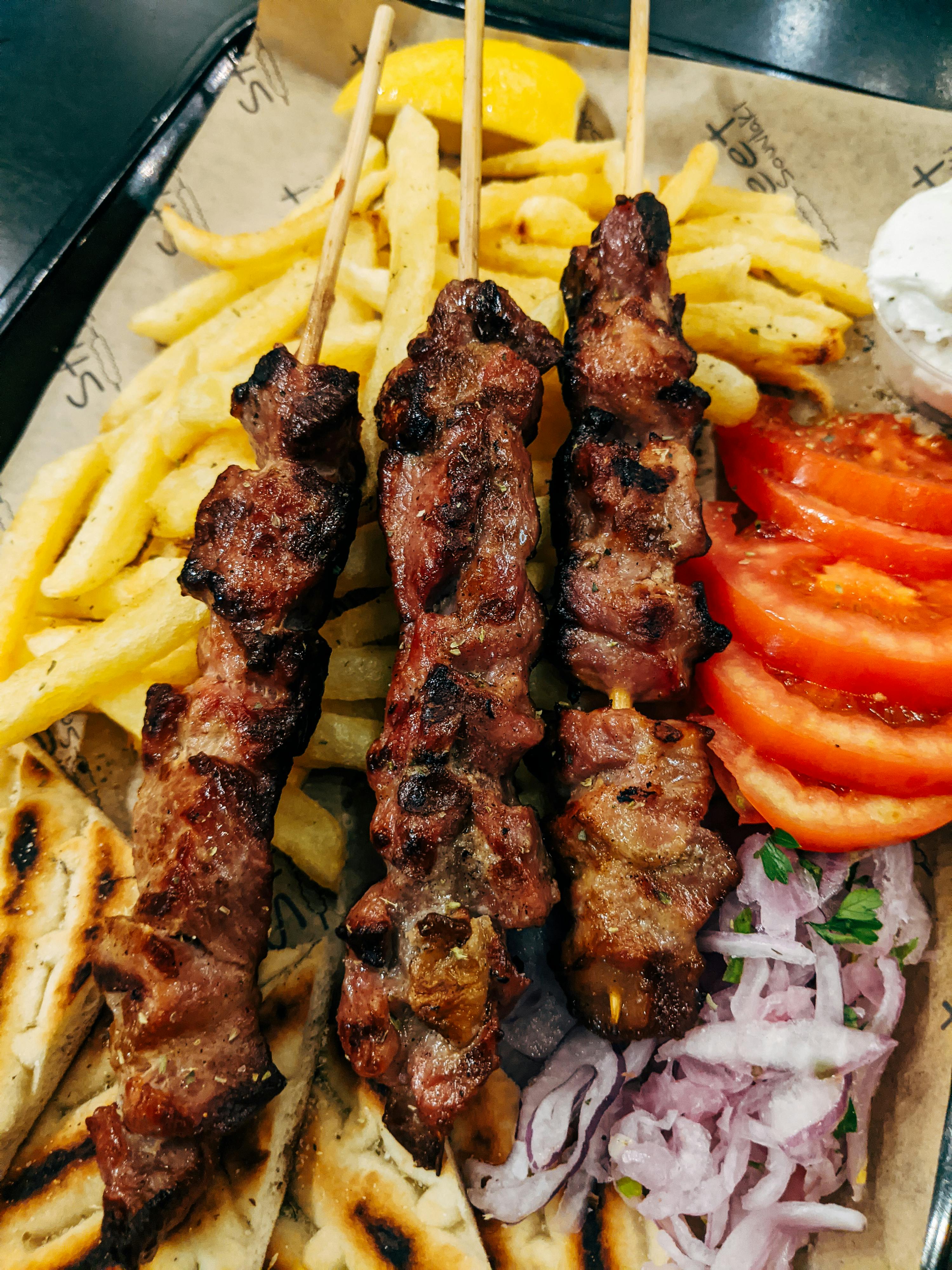
Photo: Markus Winkler / Pexels
Mediterranean
Pork Souvlaki
The diets react (see scores below)
Common Ingredients
- pork shoulder
- olive oil
- lemon juice
- oregano
- garlic
- tzatziki
- pita bread
- red onion
Specific recipes may vary.
Incompatible with 6 of 11 diets
Diet Ratings
Pork souvlaki as traditionally served is incompatible with keto primarily due to the pita bread, which is a wheat-based grain product carrying roughly 30-35g of net carbs per piece. The pork shoulder marinated in olive oil, lemon juice, oregano, and garlic is itself keto-friendly, and tzatziki (yogurt, cucumber, garlic, dill) is borderline acceptable in small portions. However, the dish as described includes pita bread as a core component, making the full dish a keto avoid. Red onion also adds a modest carb load. The saving grace is that the protein and marinade components are excellent keto foods, meaning a modified version (pork skewers without pita, served over greens with tzatziki) would be approvable.
Pork Souvlaki is fundamentally incompatible with a vegan diet. The primary protein is pork shoulder, a direct animal product, which immediately disqualifies the dish. Additionally, tzatziki is a Greek yogurt-based sauce made with dairy, adding a second animal-derived ingredient. These two components make this dish clearly and unambiguously non-vegan.
Pork Souvlaki as traditionally served contains two clear paleo violations: pita bread (a wheat-based grain product) and tzatziki (a dairy-based sauce made from yogurt). These are non-negotiable exclusions under all mainstream paleo frameworks. The remaining ingredients — pork shoulder, olive oil, lemon juice, oregano, garlic, and red onion — are fully paleo-compliant and excellent choices. However, the dish as described cannot be approved or even cautioned due to the presence of a grain and a dairy product, both of which are unambiguous avoid-category foods with high confidence. A paleo adaptation would involve lettuce wraps or serving the pork skewers alone, and replacing tzatziki with a compliant sauce such as a lemon-herb olive oil drizzle.
Pork souvlaki is a traditional Greek dish with deep roots in Mediterranean cuisine, but it presents a nuanced picture under Mediterranean diet principles. Pork is a red/processed meat category item that Mediterranean diet guidelines recommend limiting to a few times per month. However, the preparation method is exemplary: marinated in extra virgin olive oil, lemon juice, garlic, and oregano — all Mediterranean staples. The accompaniments (tzatziki, red onion) are positive elements. The pita bread, if made from refined flour, is a mild negative. The dish is not processed, contains no added sugars, and uses lean cuts in modest portions typical of the Greek tradition. Occasional consumption fits within the diet's flexible approach to red meat, but frequency matters — this should not be a daily staple.
Traditional Greek and broader Eastern Mediterranean culinary practice has long included pork as a culturally significant protein, and some Mediterranean diet researchers argue that the original Cretan diet studies did not strictly exclude pork. Moderate, infrequent consumption as part of an otherwise plant-forward dietary pattern may be compatible, and some authorities classify lean pork similarly to poultry rather than red meat.
Pork Souvlaki is fundamentally incompatible with the carnivore diet. While pork shoulder itself is a carnivore-approved animal protein, virtually every other ingredient in this dish is plant-derived and explicitly excluded. Olive oil is a plant oil, lemon juice is fruit-derived, oregano and garlic are plant-based seasonings, red onion is a vegetable, and pita bread is a grain-based processed carbohydrate — one of the most disqualifying ingredients possible on carnivore. Tzatziki, while containing dairy (yogurt), is also made with cucumber, garlic, lemon, and dill — all plant ingredients. The dish as a whole is a heavily plant-forward Mediterranean preparation that cannot be considered carnivore in any tier of the diet.
Pork Souvlaki as described contains two clearly excluded ingredients: pita bread (a grain-based product) and tzatziki (which is traditionally made with yogurt, a dairy product). Pita bread is a wheat-based flatbread — grains are explicitly excluded on Whole30. Tzatziki is yogurt-based — dairy is explicitly excluded on Whole30. The remaining ingredients (pork shoulder, olive oil, lemon juice, oregano, garlic, red onion) are all fully compliant, but the dish as presented cannot be approved due to these two violations.
Pork Souvlaki as traditionally prepared contains multiple high-FODMAP ingredients that make it unsuitable during the elimination phase. Garlic is one of the highest-FODMAP foods tested by Monash University, containing significant fructans even in small amounts. Pita bread is made from wheat flour, which is high in fructans. Red onion is also very high in fructans — among the worst offenders in the FODMAP system. Tzatziki typically contains garlic and is made with regular yogurt (lactose) or Greek yogurt, adding both fructan and lactose concerns. The combination of garlic, pita bread, red onion, and tzatziki makes this dish a triple-to-quadruple FODMAP hit. The safe components — pork shoulder, olive oil, lemon juice, and oregano — are all low-FODMAP, but they are outnumbered by the problematic ingredients. This dish would require substantial modification (removing garlic, red onion, pita, and replacing tzatziki with a low-FODMAP alternative) to be suitable during elimination.
Pork souvlaki presents a mixed DASH profile. The dish has notable positives: olive oil aligns with DASH's emphasis on healthy vegetable oils, lemon juice and oregano add flavor without sodium, garlic provides beneficial compounds, and red onion contributes vegetables and potassium. However, pork shoulder is a fattier cut of red meat — DASH guidelines limit red meat in general and recommend lean cuts when consumed. The saturated fat content from pork shoulder is a concern. Tzatziki (typically made from low-fat yogurt, cucumber, garlic, and dill) is reasonably DASH-compatible in moderate portions. Pita bread adds refined carbohydrates and potentially moderate sodium depending on the brand (commercial pita can range from 150–300mg sodium per piece). The overall dish is not inherently high in sodium if home-prepared, but the combination of pork shoulder fat content and refined-grain pita limits its DASH score. Portion size is key — a modest serving with emphasis on the vegetable components is acceptable occasionally.
NIH DASH guidelines classify red meat as a food to limit and recommend lean poultry or fish as preferred proteins; pork shoulder's higher fat content makes it a less ideal choice. However, updated clinical interpretations note that the Mediterranean dietary pattern — which this dish exemplifies — has strong cardiovascular evidence, and some DASH-oriented clinicians accept lean pork in moderation, particularly when prepared with olive oil and herbs rather than processed/cured methods. Substituting pork tenderloin (a lean cut) would meaningfully improve the DASH score.
Pork Souvlaki has several Zone-friendly elements but requires meaningful modifications to fit the 40/30/30 framework. The olive oil marinade is an ideal monounsaturated fat source, and lemon juice, oregano, and garlic are polyphenol-rich, anti-inflammatory seasonings Sears would approve of. Tzatziki (yogurt, cucumber, garlic) is a relatively Zone-compatible condiment offering modest protein and fat. However, two issues complicate this dish: (1) Pork shoulder is a fattier cut than Zone-preferred lean proteins — it contains more saturated fat than skinless chicken or fish, pushing fat macros in the wrong direction. (2) Pita bread is a refined, high-glycemic carbohydrate that Sears classifies as an 'unfavorable' carb. A standard pita serving significantly disrupts the carb block balance and spikes insulin. As served in a traditional souvlaki wrap, the pita-to-protein ratio makes it difficult to hit Zone targets without deliberate portioning. A Zone-adapted version — using pork loin instead of shoulder, skipping or halving the pita, and loading up with grilled vegetables and red onion — would score considerably better. As traditionally prepared, this dish requires careful adjustment rather than simple block counting.
Some Zone practitioners, particularly those following Sears' later anti-inflammatory writings, take a more lenient view of moderate saturated fat from whole-food animal sources like pork. In this context, the overall Mediterranean character of the dish — olive oil, garlic, lemon, herbs — aligns well with the anti-inflammatory dietary principles Sears emphasizes in works like 'The Mediterranean Zone.' A practitioner focused on food quality over strict macro ratios might rate this more favorably, especially if portion sizes are controlled and the pita is minimized.
Pork souvlaki presents a mixed anti-inflammatory profile. On the positive side, the dish features several strong anti-inflammatory components: extra virgin olive oil provides oleocanthal and monounsaturated fats, garlic offers allicin and sulfur compounds with known anti-inflammatory properties, lemon juice contributes vitamin C and polyphenols, and oregano is a potent herb rich in rosmarinic acid and antioxidants. Red onion adds quercetin, a notable flavonoid. Tzatziki (yogurt, cucumber, garlic, dill) is generally neutral to mildly beneficial. However, pork shoulder is a fatty cut of red-adjacent meat — while pork is technically white meat, shoulder is higher in saturated fat than lean cuts like tenderloin, placing it in the 'limit' category similar to red meat. The pita bread introduces refined carbohydrates, a category to limit in anti-inflammatory eating. The overall dish reflects Mediterranean dietary patterns, which have genuine anti-inflammatory credentials, but the choice of pork shoulder over a leaner protein and the refined pita temper the rating. Swapping to pork tenderloin and whole grain or limiting pita would improve the profile meaningfully.
Dr. Weil's Anti-Inflammatory Pyramid and broader Mediterranean diet research would view this dish relatively favorably given its olive oil, garlic, oregano, and lemon base — hallmarks of a traditionally anti-inflammatory cuisine. However, stricter anti-inflammatory protocols (e.g., Wahls Protocol, AIP-adjacent frameworks) would flag pork shoulder's saturated fat load and the refined pita as meaningful pro-inflammatory contributors, rating the dish lower.
Pork souvlaki has a mixed nutritional profile for GLP-1 patients. The primary concern is the protein source: pork shoulder is a fattier cut (roughly 20-25g fat per 100g cooked) compared to leaner options like chicken breast or pork tenderloin. The higher saturated fat content can worsen GLP-1 side effects including nausea, bloating, and reflux, since GLP-1 medications already slow gastric emptying and high-fat meals sit in the stomach longer. On the positive side, the dish does deliver meaningful protein (approximately 20-25g per serving depending on portion), and the Mediterranean preparation — lemon juice, oregano, garlic, olive oil — uses unsaturated fat rather than frying, which is a point in its favor. Tzatziki contributes a small amount of additional protein from yogurt and is generally well-tolerated. The pita bread is the secondary concern: refined white pita adds refined carbohydrates with minimal fiber or protein value, representing lower nutrient density per calorie. Red onion and garlic add modest fiber and micronutrients. Overall, the dish is acceptable in moderation if portion-controlled, if the pork is trimmed of visible fat, and ideally if a leaner cut is substituted — but as written with pork shoulder and standard pita, it sits firmly in caution territory for GLP-1 patients.
Some GLP-1-focused dietitians accept pork shoulder in grilled preparations because the fat renders off during high-heat cooking, reducing the effective fat load at consumption — making it more tolerable than its raw fat content suggests. Others maintain that any high-fat cut should be consistently avoided regardless of preparation method, given the significant variability in GI side effect severity among GLP-1 patients, particularly in the first several months of treatment.
*See how scores were generated at our methodology page.
Nutritional profile
Six traits that cut across every diet.
Fiber & Plants
How much whole-plant food and fiber it delivers.
Healthy Fats
The quality of its fats (unsaturated, omega-3).
Whole / Unprocessed
How close it is to its natural, unprocessed form.
Gut Gentle
How easy it is on digestion (low FODMAP, few irritants).
Low Glycemic
How little it spikes your blood sugar.
Protein Density
How much protein it packs per calorie.
Controversy Index
Higher controversy = more disagreement between diets.
Diet-Specific Tips
 Mediterranean — 5/10
View tips
- Pork is classified as red meat — limited to a few times per month in Mediterranean diet guidelines
- Olive oil marinade with lemon, garlic, and oregano aligns perfectly with Mediterranean cooking principles
- Authentic Greek dish with strong traditional Mediterranean cultural roots
- Tzatziki (yogurt-based) is a moderate dairy — acceptable in small amounts
- Pita bread likely made from refined flour, a mild negative
- No processed ingredients, added sugars, or industrial fats
- Lean preparation method (grilled/skewered) is favorable
- Acceptable occasionally but not recommended as a frequent main course
 DASH — 5/10
View tips
- Pork shoulder is a red meat with moderate-to-high saturated fat — DASH limits red meat consumption
- Olive oil is a DASH-approved healthy fat that replaces saturated fats
- No added sodium from curing or heavy seasoning; home preparation keeps sodium manageable
- Pita bread is typically refined grain; whole wheat pita would better align with DASH whole-grain emphasis
- Tzatziki made with low-fat yogurt is DASH-compatible in moderate portions
- Lemon juice, oregano, garlic, and red onion all contribute DASH-favorable nutrients with minimal sodium
- Portion control is essential — smaller serving of pork with more vegetables improves DASH compatibility
- Substituting pork tenderloin or chicken would increase the DASH score significantly
 Zone — 5/10
View tips
- Pork shoulder is a Zone 'unfavorable' protein due to higher saturated fat content compared to lean cuts like pork loin, chicken breast, or fish
- Pita bread is a refined, high-glycemic carbohydrate classified as unfavorable in Zone methodology
- Olive oil marinade is an ideal Zone fat source — monounsaturated and anti-inflammatory
- Lemon juice, oregano, and garlic provide polyphenols consistent with Sears' anti-inflammatory focus
- Tzatziki is a relatively Zone-compatible condiment with moderate protein and fat
- Red onion is a favorable low-glycemic carbohydrate and polyphenol source
- Dish can be made Zone-compliant by substituting pork loin and reducing or eliminating pita
 Anti-Inflammatory — 5/10
View tips
- Pork shoulder is a higher-fat cut with notable saturated fat — similar to 'limit' category red meat guidance
- Extra virgin olive oil is a core anti-inflammatory fat (oleocanthal, polyphenols)
- Garlic and oregano are potent anti-inflammatory herbs with strong research support
- Lemon juice provides vitamin C and polyphenols
- Pita bread introduces refined carbohydrates, a category to limit
- Red onion contributes quercetin, an anti-inflammatory flavonoid
- Mediterranean flavor profile overall aligns with anti-inflammatory principles despite individual ingredient concerns
 GLP-1 Friendly — 5/10
View tips
- Pork shoulder is a high-fat cut — elevated saturated fat worsens GLP-1 GI side effects including nausea and bloating
- Grilled preparation (not fried) and olive oil marinade are positives — avoids trans fats and excess added fat
- Delivers approximately 20-25g protein per serving, meeting per-meal protein targets
- Refined white pita adds empty refined carbohydrates with low fiber and low protein density
- Tzatziki is a mild, protein-containing condiment generally well tolerated
- Portion sensitivity is high — a large serving significantly increases fat load and digestive burden
- Substituting pork tenderloin or chicken would meaningfully improve the rating