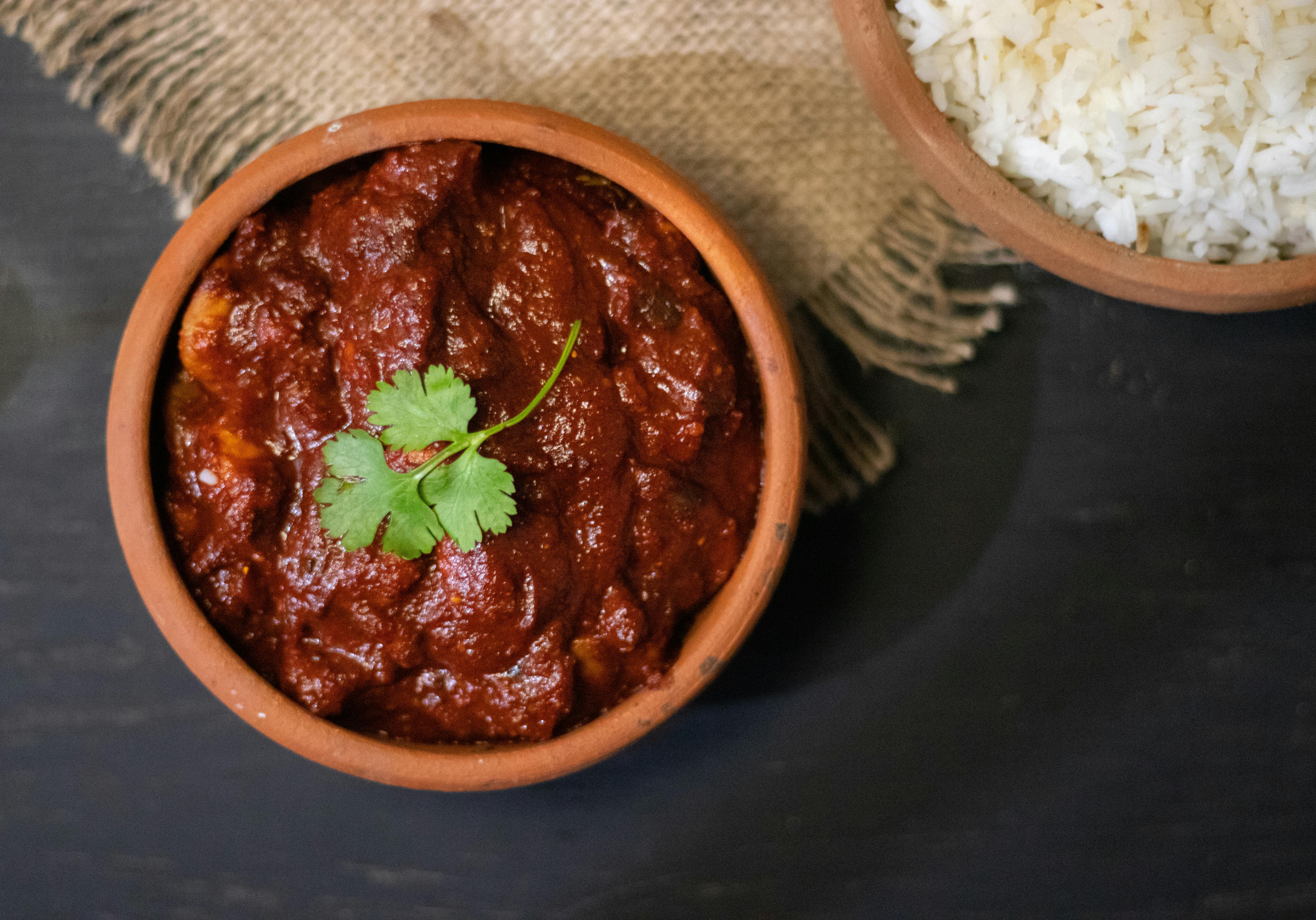
Photo: Yash Maramangallam / Pexels
Indian
Pork Vindaloo
The diets react (see scores below)
Common Ingredients
- pork shoulder
- Kashmiri chili
- white vinegar
- garlic
- cumin
- mustard seeds
- cinnamon
- cloves
Specific recipes may vary.
Incompatible with 6 of 11 diets
Diet Ratings
Pork Vindaloo as described is highly compatible with ketogenic eating. Pork shoulder is a fatty, high-protein cut that fits keto macros well. The marinade and sauce base — white vinegar, Kashmiri chili, garlic, and whole spices (cumin, mustard seeds, cinnamon, cloves) — contribute negligible net carbs. There are no sugars, grains, starches, or potatoes listed (traditional restaurant versions sometimes add potato, which would change the verdict). The vinegar actually aids in flavor depth without adding carbs. Net carbs per serving should remain very low, likely under 5g, making this a strong keto-friendly choice.
Some strict keto practitioners raise concern about Kashmiri chili paste and commercial spice blends potentially containing hidden sugars or fillers, and a minority note that vinegar-heavy marinades may cause digestive issues or slight insulin sensitivity in metabolically compromised individuals, prompting caution in clinical keto protocols.
Pork Vindaloo is entirely incompatible with a vegan diet. The primary protein and central ingredient is pork shoulder, a mammalian meat and clear animal product. There is no ambiguity here — pork is excluded under every definition of veganism. The remaining ingredients (Kashmiri chili, white vinegar, garlic, cumin, mustard seeds, cinnamon, cloves) are all plant-based spices and condiments, but they cannot offset the presence of pork.
Pork Vindaloo is largely paleo-compatible, with pork shoulder, garlic, and all spices (Kashmiri chili, cumin, mustard seeds, cinnamon, cloves) being fully approved paleo ingredients. The sticking point is white vinegar — distilled white vinegar is a processed product derived from grain fermentation, which places it in a gray area for strict paleo adherents. Apple cider vinegar is the paleo-preferred substitute. The dish contains no grains, legumes, dairy, or seed oils, and the spice profile is entirely whole and natural. With the vinegar caveat, this dish scores well but falls just short of a full approve.
Some paleo practitioners, including those following the Whole30 protocol, permit distilled white vinegar on the grounds that the fermentation and distillation process removes all grain-derived proteins and carbohydrates, making it effectively grain-free in its final form. Under this view, the dish would earn a full approve.
Pork Vindaloo is centered on pork shoulder, a red meat that the Mediterranean diet restricts to only a few times per month. Beyond the protein issue, pork shoulder is a relatively fatty cut high in saturated fat, which further conflicts with Mediterranean principles that emphasize unsaturated fats from olive oil, nuts, and fish. The dish contains no olive oil, no legumes, no whole grains, and no vegetables of substance. While the spices (garlic, cumin, cinnamon, cloves, mustard seeds) are individually compatible and even beneficial, they cannot redeem a dish built around a discouraged protein as its primary component. White vinegar is a neutral factor. This dish does not align with Mediterranean dietary patterns in any meaningful way.
Pork Vindaloo is fundamentally incompatible with the carnivore diet. While pork shoulder is a carnivore-approved animal protein, the dish is defined by its extensive plant-based spice marinade: Kashmiri chili, cumin, mustard seeds, cinnamon, and cloves are all plant-derived ingredients. White vinegar, while often fermented, is plant-derived (typically from grain or fruit). Garlic is a plant. The entire flavor and structural identity of vindaloo comes from these excluded ingredients. This is not a carnivore dish with minor non-compliant additions — the plant components are core to the recipe. The pork shoulder itself would score highly in isolation, but as prepared here the dish is firmly in 'avoid' territory.
Pork Vindaloo as listed contains entirely Whole30-compliant ingredients. Pork shoulder is an allowed meat, Kashmiri chili is a compliant spice, white vinegar is explicitly permitted (vinegar is called out as an exception and white wine/rice/champagne/red wine vinegars are all accepted — plain white distilled vinegar is also compliant), garlic and all the spices (cumin, mustard seeds, cinnamon, cloves) are allowed herbs and seasonings. There are no grains, legumes, dairy, added sugars, or other excluded ingredients in this dish. Vindaloo is traditionally made with vinegar as its signature souring agent, making this dish a natural fit for Whole30.
Pork Vindaloo as traditionally prepared contains garlic as a primary ingredient, which is high-FODMAP due to fructans and must be avoided during the elimination phase. Garlic is one of the most potent FODMAP sources and even small quantities (a fraction of a clove) can trigger symptoms. The other spices — cumin, mustard seeds, cinnamon, cloves, and Kashmiri chili — are generally low-FODMAP at culinary amounts. Pork shoulder itself is a plain protein and is low-FODMAP. White vinegar is low-FODMAP. However, the presence of garlic as a core marinade and flavoring ingredient (typically used in significant quantities in vindaloo) makes this dish unsuitable during the elimination phase without major modification.
Pork Vindaloo presents several concerns under DASH guidelines. The primary protein is pork shoulder, a fatty cut high in saturated fat — DASH explicitly limits saturated fat and red/fatty meats, recommending lean poultry and fish instead. Pork shoulder typically contains 7-9g saturated fat per 100g cooked, well above DASH targets. While the spice base (Kashmiri chili, garlic, cumin, mustard seeds, cinnamon, cloves) is sodium-free and contains beneficial antioxidants, and white vinegar is harmless, these positive elements cannot offset the core issue of a high-saturated-fat, fatty red meat base. Restaurant preparations also frequently add significant sodium via salt. The dish as commonly consumed does not align with DASH's emphasis on lean proteins and low saturated fat intake.
NIH DASH guidelines categorically limit fatty red meats and high saturated fat cuts like pork shoulder. However, some updated DASH-oriented clinicians note that if pork shoulder is trimmed of visible fat and portion-controlled to 3 oz, the saturated fat burden may be manageable — and the vindaloo preparation uses no added oils or dairy fat, which slightly mitigates concerns compared to cream-based meat dishes.
Pork Vindaloo presents a mixed Zone Diet profile. The primary concern is the protein source: pork shoulder is a fattier cut of pork, higher in saturated fat than Zone-preferred lean proteins like skinless chicken breast or fish. Dr. Sears consistently recommends lean proteins, and pork shoulder's fat content makes it harder to hit the 30/30/40 block ratios without overshooting the fat allocation — especially saturated fat. However, the dish has genuine Zone-friendly elements: the spice blend (garlic, cumin, cinnamon, cloves, mustard seeds) is rich in polyphenols, which aligns strongly with Sears' anti-inflammatory focus in his later writings. White vinegar is negligible calorically and may even have modest glycemic-moderating effects. Kashmiri chili is a low-GI, polyphenol-rich ingredient. The dish contains no carbohydrate base (no rice or bread as listed), meaning it would need to be paired with low-GI vegetables and a controlled fat addition to complete a Zone meal. If portioned carefully (3 oz of trimmed pork shoulder, paired with non-starchy vegetables), it can fit within a Zone meal, but the saturated fat in pork shoulder requires mindful trimming and portioning. A leaner pork loin would be preferable.
In Sears' earlier Zone books, pork shoulder would be flagged as unfavorable due to saturated fat content. However, in his later anti-inflammatory framework (The OmegaRx Zone, Zone Perfect Meals in Minutes), the emphasis shifts toward overall inflammatory load — and the polyphenol-dense spice profile of vindaloo (cinnamon, cloves, cumin, garlic) actively supports anti-inflammatory goals, partially offsetting concerns about saturated fat. Some Zone practitioners would rate this higher, noting that trimmed pork shoulder in modest portions (3 oz) is workable within blocks.
Pork Vindaloo presents a genuinely mixed anti-inflammatory profile. On the positive side, the spice blend is remarkable — garlic, cumin, cinnamon, cloves, mustard seeds, and Kashmiri chili are all well-supported anti-inflammatory ingredients with documented effects on inflammatory markers. Garlic contains allicin and organosulfur compounds; cloves are among the highest-antioxidant spices; cinnamon has been shown to reduce CRP; cumin and mustard seeds offer beneficial phytochemicals. Kashmiri chili provides capsaicin and carotenoids. White vinegar is essentially neutral. The primary liability is pork shoulder, a fatty cut of red meat that is categorized in the 'limit' tier of anti-inflammatory frameworks due to saturated fat content and arachidonic acid, which can promote inflammatory eicosanoid production. Pork shoulder specifically has a less favorable fat profile than leaner cuts like pork loin or tenderloin. The dish is not inherently processed and contains no trans fats, refined sugars, or artificial additives, which keeps it out of 'avoid' territory. Overall, the exceptional spice density partially offsets the pro-inflammatory protein source, landing this dish in a moderate 'caution' range — acceptable occasionally but not ideal for regular anti-inflammatory eating.
Some anti-inflammatory practitioners, particularly those following Dr. Weil's broader Mediterranean-influenced framework, would note that the potent anti-inflammatory spice load (garlic, cloves, cinnamon, cumin) meaningfully mitigates concerns about the pork, and that an occasional serving of a spice-rich traditional dish fits within a flexible anti-inflammatory lifestyle. Conversely, stricter interpretations (such as those aligned with AIP or autoimmune-focused protocols) would flag pork as a higher-arachidonic-acid meat and recommend substituting with a leaner protein like chicken thigh or fish.
Pork vindaloo presents multiple significant concerns for GLP-1 patients. Pork shoulder is a high-fat cut with substantial saturated fat content, directly conflicting with the low-fat priority and likely to worsen nausea, bloating, and reflux — the most common GLP-1 side effects. Vindaloo is one of the spiciest Indian curries, relying heavily on chili (Kashmiri chili in quantity), which can aggravate GLP-1-associated reflux and GI discomfort. The white vinegar base adds acidity that may further irritate a slowed, sensitive digestive system. While pork does provide meaningful protein, the fat content and spice level of this specific dish make the protein delivery too costly in terms of side effect risk. The aromatics (garlic, cumin, mustard seeds, cinnamon, cloves) are individually fine, but they do not offset the core problems of a fatty cut cooked in a high-heat, high-acid, chili-heavy sauce.
Some GLP-1-informed dietitians note that spice tolerance is highly individual — patients who tolerated spicy food well before starting medication occasionally continue to do so, and Kashmiri chili is milder in heat than many chili varieties. A small portion made with a leaner pork cut (loin instead of shoulder) and reduced chili could be marginally acceptable for patients with no GI side effects, though most practitioners would still recommend choosing a less fatty, less spicy protein vehicle to meet daily protein targets more safely.
*See how scores were generated at our methodology page.
Nutritional profile
Six traits that cut across every diet.
Fiber & Plants
How much whole-plant food and fiber it delivers.
Healthy Fats
The quality of its fats (unsaturated, omega-3).
Whole / Unprocessed
How close it is to its natural, unprocessed form.
Gut Gentle
How easy it is on digestion (low FODMAP, few irritants).
Low Glycemic
How little it spikes your blood sugar.
Protein Density
How much protein it packs per calorie.
Controversy Index
Higher controversy = more disagreement between diets.
Diet-Specific Tips
 Keto — 8/10
View tips
- Pork shoulder is high-fat, moderate-protein — ideal keto macros
- Spice-based marinade contributes minimal net carbs
- White vinegar adds negligible carbs and no sugar
- No potatoes, grains, or starchy ingredients listed
- Kashmiri chili and whole spices are keto-safe in culinary quantities
- Restaurant versions may include added sugar or potato — verify preparation
 Paleo — 6/10
View tips
- Pork shoulder is an unprocessed, paleo-approved protein
- All spices (Kashmiri chili, cumin, mustard seeds, cinnamon, cloves) are whole and paleo-approved
- Garlic is a paleo-approved aromatic
- White vinegar is derived from grain fermentation and is debated in the paleo community
- Apple cider vinegar would be the paleo-preferred swap
- No grains, legumes, dairy, seed oils, or refined sugar present
 Whole30 — 9/10
View tips
- Pork shoulder is a fully compliant Whole30 protein
- White vinegar is explicitly permitted under Whole30 rules
- Kashmiri chili, cumin, mustard seeds, cinnamon, and cloves are all compliant spices
- No excluded ingredients present — no grains, dairy, legumes, or added sugar
- Vindaloo's traditional vinegar-based preparation aligns well with Whole30 principles
 Zone — 5/10
View tips
- Pork shoulder is a fatty cut — higher in saturated fat than Zone-preferred lean proteins, making precise block rationing difficult
- No high-glycemic carbohydrate components in the listed ingredients — dish is protein/fat forward
- Spice blend (garlic, cumin, cinnamon, cloves, mustard seeds) is exceptionally polyphenol-rich, aligning with Sears' anti-inflammatory priorities
- White vinegar adds negligible calories and may support glycemic control
- Dish must be paired with low-GI vegetables to complete the Zone 40/30/30 ratio for a full meal
- Leaner cuts (pork loin/tenderloin) would significantly improve Zone compatibility
 Anti-Inflammatory — 5/10
View tips
- Pork shoulder is a fatty red meat — categorized as 'limit' due to saturated fat and arachidonic acid content
- Garlic is a well-established anti-inflammatory ingredient (allicin, organosulfur compounds)
- Cloves are among the most antioxidant-rich spices available
- Cinnamon has demonstrated CRP-reducing properties in clinical research
- Kashmiri chili provides capsaicin and carotenoids with anti-inflammatory activity
- Cumin and mustard seeds add beneficial phytochemicals and flavonoids
- No trans fats, refined sugars, seed oils, or artificial additives present
- White vinegar is neutral from an inflammatory standpoint
- Traditional whole-food preparation with no processed components