Photo: Thiago Rebouças / Pexels
American
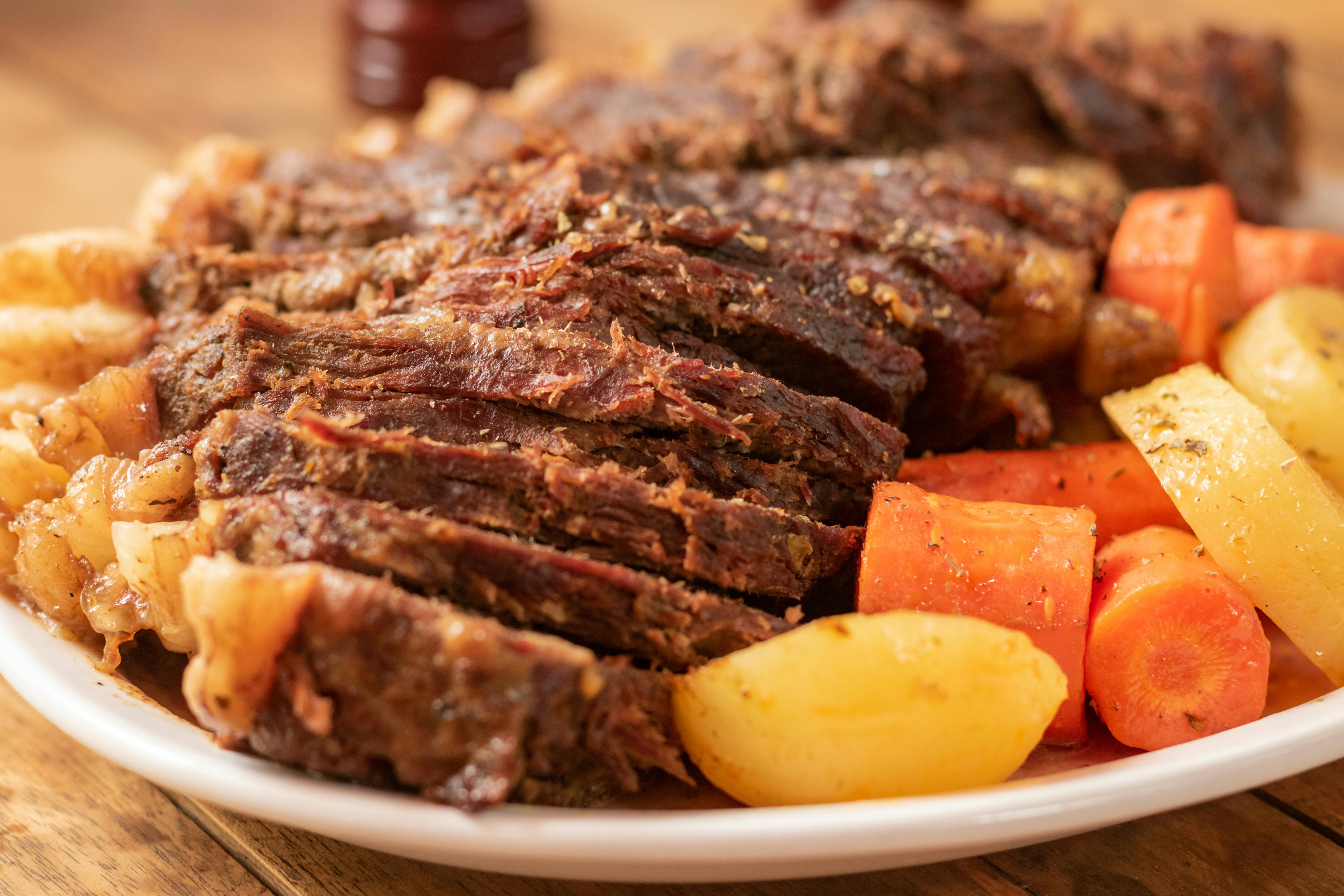
Pot Roast with Vegetables
The diets react (see scores below)
Common Ingredients
- beef chuck
- carrot
- potato
- onion
- celery
- beef broth
- herbs
Specific recipes may vary.
Incompatible with 4 of 11 diets
Diet Ratings
Pot roast's beef chuck base is excellent for keto—high fat, zero carbs—but the dish as traditionally prepared includes potatoes and carrots, both of which are problematic. Potatoes are starchy and high in net carbs (roughly 15g per medium potato), and carrots add additional sugars. Diners can make this keto-compatible by avoiding the potatoes and limiting carrot intake, but the standard preparation pushes total net carbs too high for a single meal.
Pot roast is built around beef chuck and beef broth, both animal products. The dish is fundamentally non-vegan and cannot be made compliant without replacing its core ingredients.
Pot roast is largely paleo-friendly: beef chuck, carrots, onion, celery, and herbs are all approved staples, and a homemade beef broth fits well. The main sticking point is white potatoes, which are debated within the paleo community. Commercial beef broth may also contain added salt and additives, which would push this further toward caution.
Strict Cordain-school paleo excludes white potatoes due to their glycoalkaloid content and nightshade status, rating this dish lower. However, Mark Sisson (Primal) and Whole30 explicitly allow white potatoes, and Paul Jaminet's Perfect Health Diet considers them a safe starch, under which this dish would be fully approved.
Pot roast is built around beef chuck, a fatty red meat cut, which Mediterranean diet guidelines limit to only a few times per month. While the dish includes Mediterranean-friendly vegetables (carrot, potato, onion, celery) and uses herbs rather than processed sauces, the substantial portion of red meat as the centerpiece conflicts with core Mediterranean principles that emphasize fish, poultry, and plant proteins. The cooking method (braising in broth) is acceptable, but the protein choice is the dominant factor.
While the beef chuck base is excellent for carnivore, this dish is laden with plant foods: carrots, potatoes, onions, celery, and herbs. Potatoes are starchy tubers, onions are high-FODMAP plant matter, and the other vegetables and herbs are all explicitly excluded on carnivore. The dish as prepared cannot be considered carnivore-compliant.
Pot roast made with beef chuck, vegetables (carrot, potato, onion, celery), beef broth, and herbs is a classic Whole30-compatible meal. All listed ingredients are whole foods explicitly allowed on the program. The only caveat is ensuring the beef broth is compliant (no added sugar, MSG-free is not required anymore, but watch for soy or other excluded additives).
This dish contains onion and likely commercial beef broth (which typically contains onion and garlic), both of which are high in fructans and considered the most problematic FODMAPs during elimination. The onion cannot be picked out because fructans leach into the entire braising liquid, contaminating the beef, potatoes, carrots, and celery. Even though beef, carrots, and potatoes are individually low-FODMAP, the cooking method makes the whole dish unsafe.
Pot roast features beef chuck, a fatty red meat cut high in saturated fat, which DASH explicitly limits. Standard beef broth is also high in sodium. However, the dish includes generous portions of DASH-friendly vegetables (carrot, potato, onion, celery) that contribute potassium, fiber, and magnesium. With portion control on the beef, leaner cuts, and low-sodium broth, this dish can fit occasionally into a DASH pattern but is not encouraged as a regular entree.
Pot roast with vegetables contains workable Zone components but has two unfavorable elements: beef chuck is a fatty cut high in saturated fat, and potatoes are a high-glycemic carb that Sears explicitly lists as unfavorable. The carrots, onion, celery, and herbs are Zone-friendly low-glycemic vegetables. To fit the Zone, one would need to trim visible fat from the chuck, keep portions to roughly 3-4 oz of meat, minimize or omit the potato (substituting more non-starchy vegetables), and add a monounsaturated fat source like olive oil since beef fat is saturated rather than the preferred monounsaturated profile.
Some Zone practitioners following Sears' later anti-inflammatory writings are more lenient about occasional fattier cuts of beef when balanced with omega-3 supplementation, and small portions of potato can technically fit a single carb block. Under this view, a carefully portioned pot roast could score closer to a 6.
Pot roast centers on beef chuck, a fatty cut of red meat that anti-inflammatory guidelines consistently place in the 'limit' category due to saturated fat and arachidonic acid content. The long braise also produces a fatty broth that concentrates these compounds. However, the dish is partially redeemed by a generous load of anti-inflammatory vegetables (carrots provide beta-carotene, onions provide quercetin, celery provides apigenin) and herbs, plus white potato which is neutral. Overall this is an occasional-meal food rather than a regular choice on an anti-inflammatory pattern.
Pot roast offers solid protein (25-30g per serving) from beef chuck and contributes fiber and nutrients from carrots, onion, celery, and potato in a slow-cooked, easy-to-digest format that is generally gentle on the GI tract. However, beef chuck is a fatty cut high in saturated fat, which can worsen GLP-1 side effects like nausea, reflux, and delayed gastric emptying. The braising liquid also retains rendered fat unless skimmed. Portion control and trimming visible fat are important to make this GLP-1-friendly.
Some GLP-1 clinicians accept lean-trimmed pot roast as a reasonable protein source given its tenderness and digestibility, while others discourage fatty cuts like chuck entirely in favor of leaner beef (round, sirloin) or poultry due to saturated fat content and higher nausea risk.
*See how scores were generated at our methodology page.
Nutritional profile
Six traits that cut across every diet.
Fiber & Plants
How much whole-plant food and fiber it delivers.
Healthy Fats
The quality of its fats (unsaturated, omega-3).
Whole / Unprocessed
How close it is to its natural, unprocessed form.
Gut Gentle
How easy it is on digestion (low FODMAP, few irritants).
Low Glycemic
How little it spikes your blood sugar.
Protein Density
How much protein it packs per calorie.
Controversy Index
Higher controversy = more disagreement between diets.
Diet-Specific Tips
 Keto — 5/10
View tips
- Beef chuck is ideal keto protein with high fat content
- Potatoes are starchy and incompatible with ketosis
- Carrots add moderate carbs/sugar but are manageable in small amounts
- Onion and celery contribute minor carbs, generally acceptable
- Beef broth and herbs are keto-friendly
- Dish is salvageable by picking out the meat and skipping potatoes
 Paleo — 6/10
View tips
- Grass-fed beef chuck is an ideal paleo protein
- Carrots, onion, celery, and herbs are clearly approved
- White potatoes are a debated ingredient in paleo
- Beef broth quality matters — homemade preferred over additive-laden commercial versions
- Slow-roasting with whole-food ingredients aligns with paleo cooking principles
 Whole30 — 9/10
View tips
- All whole-food ingredients
- No grains, legumes, dairy, or added sugar
- Beef broth must be checked for compliant ingredients
- Classic protein + vegetable preparation aligns with Whole30 philosophy
 DASH — 4/10
View tips
- Beef chuck is high in saturated fat (DASH limits red meat)
- Standard beef broth is high in sodium (often 700-900mg per cup)
- Vegetables provide potassium, fiber, and magnesium aligned with DASH
- Portion control on red meat is essential (DASH recommends ≤6 oz/day lean meat)
- Low-sodium broth and trimmed lean beef would improve the score
 Zone — 5/10
View tips
- Beef chuck is a fattier cut high in saturated fat (unfavorable Zone protein)
- Potatoes are high-glycemic and classified as unfavorable carbs by Sears
- Carrots, onion, and celery are acceptable low-glycemic vegetables
- No monounsaturated fat source in the dish; fat comes from saturated beef fat
- Requires portion control and ideally substitution of potato to approach 40/30/30
 Anti-Inflammatory — 4/10
View tips
- Beef chuck is a fatty red meat high in saturated fat and arachidonic acid
- Carrots, onions, and celery contribute carotenoids and flavonoids
- Herbs add polyphenols with anti-inflammatory activity
- Long braising renders fat into the broth, increasing saturated fat intake
- No added sugar, refined grains, or industrial seed oils
- Acceptable occasionally but not as a regular staple
 GLP-1 Friendly — 6/10
View tips
- High-quality protein from beef
- High saturated fat from chuck cut
- Soft, slow-cooked texture is easy to digest
- Vegetables add fiber and nutrients
- Portion-sensitive; fat should be skimmed/trimmed
- Potato adds carbs but also potassium and satiety