Photo: Vincent Rivaud / Pexels
Chinese
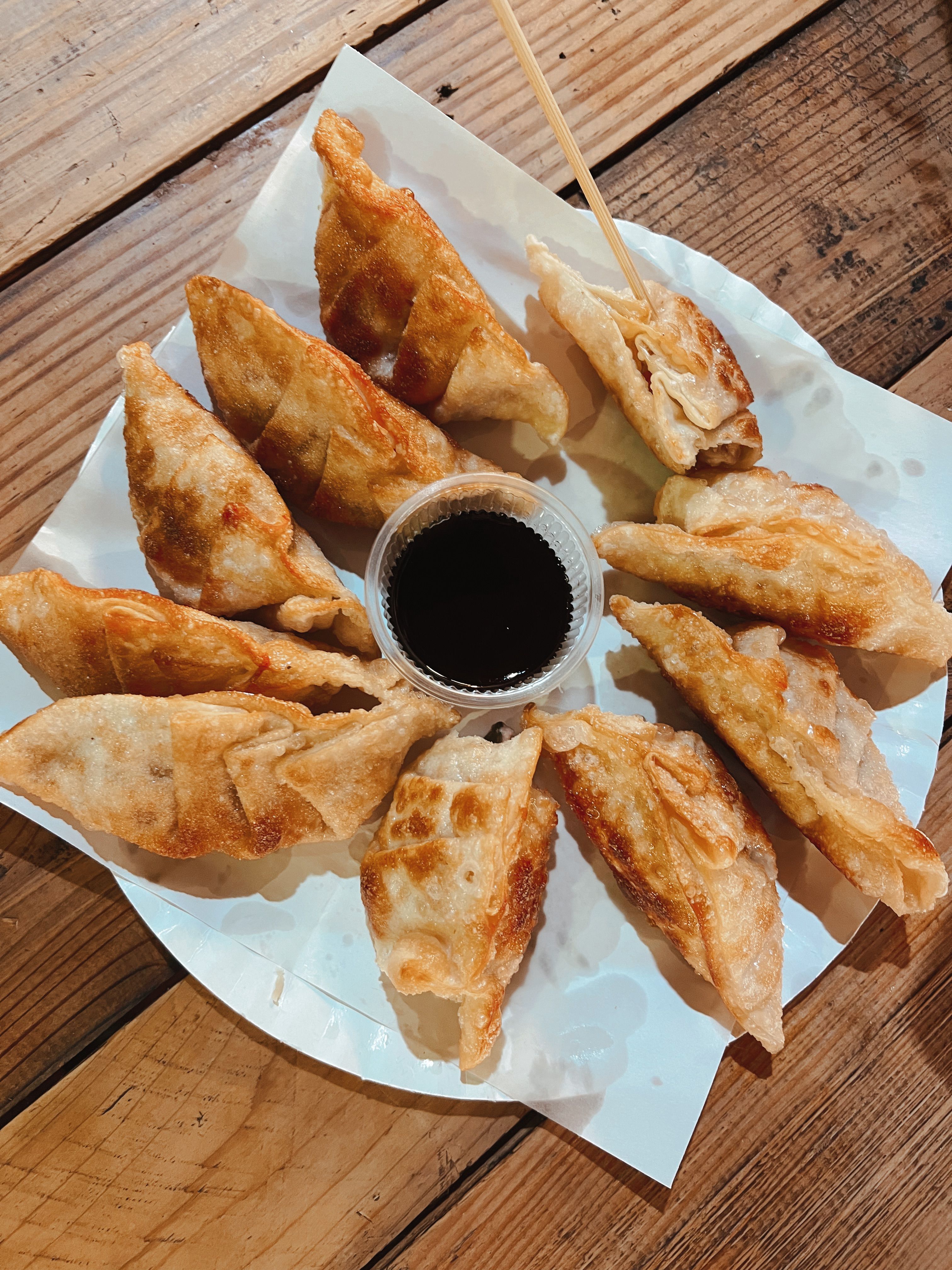
Pork Pot Stickers
The diets react (see scores below)
Common Ingredients
- ground pork
- Napa cabbage
- dumpling wrappers
- ginger
- garlic
- soy sauce
- sesame oil
- Shaoxing wine
Specific recipes may vary.
Incompatible with 8 of 11 diets
Diet Ratings
Pork pot stickers are fundamentally incompatible with a ketogenic diet due to the dumpling wrappers, which are made from wheat flour — a high-carb grain-based ingredient. A standard serving of 4-6 pot stickers can contain 30-45g of net carbs from the wrappers alone, easily exceeding or consuming the entire daily keto carb budget in one snack. The Shaoxing wine also adds minor sugars. While the ground pork filling, Napa cabbage, ginger, garlic, sesame oil, and soy sauce are largely keto-compatible, the wrapper is the non-negotiable deal-breaker. There is no portion size small enough to make traditional pot stickers keto-friendly without fundamentally altering the recipe (e.g., replacing wrappers with zucchini, egg wrappers, or making a deconstructed filling bowl).
Pork Pot Stickers contain ground pork as the primary protein, which is a direct animal product and explicitly excluded under all vegan definitions. There is no ambiguity here — pork is meat, and meat is categorically non-vegan. The remaining ingredients (Napa cabbage, ginger, garlic, soy sauce, sesame oil, Shaoxing wine) are plant-based, but the inclusion of ground pork makes this dish entirely incompatible with a vegan diet. Note that a vegan version of pot stickers could be made by substituting the pork with tofu, mushrooms, or other plant-based fillings, and ensuring the dumpling wrappers contain no egg.
Pork Pot Stickers are heavily incompatible with the Paleo diet. The dish contains multiple non-paleo ingredients: dumpling wrappers are made from wheat flour (a grain), soy sauce contains both wheat and soy (a grain and a legume), sesame oil is a seed oil excluded from paleo, and Shaoxing wine is a processed alcohol. While the base ingredients — ground pork, Napa cabbage, ginger, and garlic — are paleo-approved, the majority of the defining ingredients that make this dish what it is are explicitly excluded. This is not a dish that can be made 'paleo-friendly' with minor substitutions; it would require a fundamental reconstruction.
Pork Pot Stickers conflict with Mediterranean diet principles on multiple fronts. Ground pork is a red meat, which should be limited to only a few times per month. The dumpling wrappers are refined grain products with no whole-grain equivalent in this dish. Sesame oil replaces extra virgin olive oil as the primary fat, which is non-traditional to the Mediterranean framework. Soy sauce and Shaoxing wine add sodium and processed condiments not aligned with Mediterranean eating. The dish is also a non-Mediterranean cultural preparation with no meaningful overlap in dietary philosophy. While the Napa cabbage, garlic, and ginger are positive vegetable components, they are insufficient to offset the core incompatibilities.
Pork Pot Stickers are fundamentally incompatible with the carnivore diet. While ground pork is a carnivore-approved ingredient, virtually every other component violates carnivore principles. The dumpling wrappers are made from wheat flour — a grain-based, plant-derived carbohydrate. Napa cabbage is a plant vegetable. Ginger, garlic, and sesame oil are all plant-derived. Soy sauce contains fermented soybeans and wheat. Shaoxing wine is a grain-based alcohol. This dish is essentially a vehicle for plant foods and processed grain products, with only a minor carnivore-compliant ingredient (the pork) buried within. There is no meaningful sense in which this dish can be adapted or considered borderline — it is a quintessentially plant-and-grain-heavy preparation.
Pork pot stickers contain multiple excluded ingredients. Dumpling wrappers are made from wheat flour, a grain that is fully excluded on Whole30. Soy sauce contains soy (a legume) and wheat, both excluded — coconut aminos would be the compliant substitute. Shaoxing wine is an alcohol, also excluded. Additionally, even if all ingredients were made compliant, pot stickers are essentially dumplings — a wrapped, filled dough product analogous to pasta or a grain-based wrap, which falls squarely under the 'no recreating baked goods/junk food/pasta/noodles' rule. This dish fails on multiple counts simultaneously.
Pork pot stickers contain multiple high-FODMAP ingredients that make this dish unsuitable during the elimination phase. The two primary offenders are garlic (high in fructans — one of the most potent FODMAP triggers, rated avoid by Monash at any typical culinary amount) and dumpling wrappers (made from wheat flour, which is high in fructans). These two ingredients alone are sufficient to classify this dish as avoid. Ground pork, ginger, sesame oil, and Shaoxing wine are generally low-FODMAP or used in small enough quantities to be acceptable. Napa cabbage is low-FODMAP at a standard 75g serving. Soy sauce is low-FODMAP in small amounts (2 tablespoons), though it should be noted that tamari or gluten-free soy sauce would be preferable. However, the wheat-based wrappers and garlic cannot be mitigated by portion control in a standard preparation of this dish.
Pork pot stickers are poorly aligned with DASH diet principles across multiple dimensions. Soy sauce is extremely high in sodium — a single tablespoon contains roughly 900–1,000mg, and this dish typically uses several tablespoons, easily pushing a serving over 1,000mg of sodium alone, which is a substantial portion of even the standard DASH limit of 2,300mg/day and the majority of the stricter 1,500mg/day limit. Ground pork, particularly as used in Chinese dumplings, is often higher in fat and saturated fat than DASH-approved lean proteins. Sesame oil and Shaoxing wine add additional calories and compounds not emphasized in DASH. The refined flour dumpling wrappers provide minimal fiber and no whole-grain benefit. The combination of high sodium from soy sauce, saturated fat from ground pork, and refined carbohydrates from wrappers makes this dish a poor fit for the DASH eating plan. While Napa cabbage and aromatics like ginger and garlic are DASH-positive ingredients, they do not offset the significant nutritional concerns. Low-sodium soy sauce could reduce sodium somewhat, but the dish would still face issues with pork fat content and refined wrappers.
Pork pot stickers present a mixed Zone profile. The dumpling wrappers are made from refined white flour — a high-glycemic, unfavorable carbohydrate in Zone terminology that causes rapid blood sugar spikes. Ground pork is a moderate protein source but is fattier than ideal Zone proteins like skinless chicken or fish, contributing excess saturated fat. Napa cabbage is an excellent low-glycemic Zone-favorable vegetable, and ginger and garlic provide polyphenol benefits. Sesame oil contributes omega-6 polyunsaturated fat rather than preferred monounsaturated fat. The overall macro ratio is skewed: the wrappers deliver a high-glycemic carb load, the pork adds more fat than protein relative to Zone targets, and fat comes from less favorable sources. In a snack context, a small portion (2-3 pieces) could theoretically be worked into a Zone framework by counting the wrapper carbs carefully and pairing with additional lean protein to balance blocks, but the refined flour wrappers make precise Zone balancing difficult. This is a classic 'unfavorable' Zone food — not categorically off-limits, but requiring significant portion control and ideally paired with favorable foods to restore the 40/30/30 ratio.
Some Zone practitioners note that pot stickers consumed in very small quantities (1-2 pieces) as part of a larger meal with abundant vegetables and lean protein can be accommodated within the block system — the wrapper carbs are finite and trackable. Sears' later writings also slightly soften the position on occasional refined carbs when omega-3 and polyphenol intake is otherwise high, meaning the ginger, garlic, and cabbage components partially offset concerns.
Pork pot stickers present a mixed anti-inflammatory profile. On the positive side, ginger and garlic are well-established anti-inflammatory spices with meaningful anti-inflammatory compounds (gingerols, allicin), and Napa cabbage contributes fiber, vitamin C, and phytonutrients. Sesame oil contains sesamin and sesamol with some antioxidant properties. However, ground pork is a red/processed-adjacent meat that is higher in saturated fat than poultry or fish, which the anti-inflammatory framework flags for moderation. The refined wheat dumpling wrappers are a refined carbohydrate with minimal fiber or nutritional value. Soy sauce contributes significant sodium, and Shaoxing wine adds a small amount of alcohol — neither is problematic in cooking quantities but neither helps. The dish is pan-fried, which typically adds oil (often a neutral seed oil) and produces some advanced glycation end-products (AGEs) during the searing process. Overall, this is a moderate-concern food: the anti-inflammatory spices and vegetables offer some benefit, but the refined wrapper, saturated fat from pork, and cooking method push it into caution territory rather than approval. Acceptable as an occasional food, not a staple.
Some anti-inflammatory practitioners following Dr. Weil's less restrictive approach would consider this acceptable in moderation given the meaningful garlic and ginger content and the relatively small amount of pork per dumpling. However, stricter anti-inflammatory protocols and those managing autoimmune conditions would flag the refined carbohydrates, saturated fat load, and high sodium content as cumulative concerns.
Pork pot stickers present a mixed nutritional profile for GLP-1 patients. The pan-frying process (the defining characteristic of pot stickers vs. steamed dumplings) adds fat and makes them harder to digest, which can worsen nausea, reflux, and bloating — common GLP-1 side effects. Ground pork is a moderate protein source but carries more saturated fat than lean proteins like chicken breast or tofu. Sesame oil, while an unsaturated fat, adds caloric density in a small portion. On the positive side, Napa cabbage contributes fiber and water content, and ginger may actually ease nausea. The dumpling wrappers are refined carbohydrates with low fiber and low protein density. Protein per serving is modest — a typical 3-4 piece serving delivers roughly 8-12g protein, requiring larger portions to hit the 15-30g per meal target, which conflicts with the small-portion guidance for GLP-1 patients. Sodium from soy sauce is also worth noting as it can contribute to water retention. Steamed versions of this dish would score meaningfully higher (5-6) by eliminating the fried fat component.
Some GLP-1-focused dietitians would rate dumplings more favorably as a culturally appropriate, portion-controlled food that can fit into a balanced eating pattern — particularly if steamed rather than pan-fried and paired with a high-protein side. Others maintain that the refined wrapper, moderate saturated fat from pork, and pan-frying method make this a poor use of limited caloric capacity for patients who need maximum nutrient density per bite.
*See how scores were generated at our methodology page.
Nutritional profile
Six traits that cut across every diet.
Fiber & Plants
How much whole-plant food and fiber it delivers.
Healthy Fats
The quality of its fats (unsaturated, omega-3).
Whole / Unprocessed
How close it is to its natural, unprocessed form.
Gut Gentle
How easy it is on digestion (low FODMAP, few irritants).
Low Glycemic
How little it spikes your blood sugar.
Protein Density
How much protein it packs per calorie.
Controversy Index
Higher controversy = more disagreement between diets.
Diet-Specific Tips
 Zone — 4/10
View tips
- Refined white flour dumpling wrappers are high-glycemic unfavorable Zone carbohydrates
- Ground pork is fattier than ideal Zone proteins, adding saturated fat beyond the 30% fat target
- Napa cabbage is a favorable low-glycemic Zone vegetable that partially redeems the dish
- Sesame oil is an omega-6 source rather than preferred monounsaturated fat (olive oil, avocado)
- Macro ratio skews toward carbs and fat with insufficient lean protein relative to Zone blocks
- Small portion (2-3 pieces) is minimally workable within Zone block counting but difficult to balance
- Soy sauce sodium is a minor concern; overall dish is processed relative to whole-food Zone ideals
 Anti-Inflammatory — 4/10
View tips
- Ground pork is red meat — higher in saturated fat, limited to moderate consumption in anti-inflammatory frameworks
- Dumpling wrappers are refined wheat carbohydrates with little fiber or nutritional value
- Ginger and garlic are notable anti-inflammatory spices (gingerols, allicin)
- Napa cabbage provides fiber, vitamin C, and phytonutrients
- Pan-frying method generates AGEs and typically adds inflammatory seed oils
- Soy sauce contributes high sodium load
- Sesame oil contains antioxidant lignans (sesamin, sesamol) but is also relatively high in omega-6
 GLP-1 Friendly — 4/10
View tips
- Pan-frying adds fat and reduces digestibility, worsening common GLP-1 side effects like nausea and reflux
- Ground pork contains moderate saturated fat — not a lean protein source
- Low protein density per serving (~8-12g per 3-4 pieces); difficult to hit 15-30g meal target without large portions
- Refined flour dumpling wrappers contribute empty carbohydrate calories with minimal fiber
- Napa cabbage adds beneficial fiber and water content
- Ginger may help mitigate GLP-1-related nausea
- High sodium from soy sauce is a secondary concern
- Steamed preparation would meaningfully improve the GLP-1 compatibility of this dish