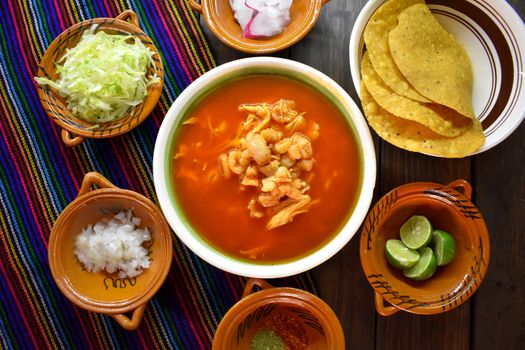
Photo: Den Romi McRod / Pexels
Mexican
Pozole de Pollo
The diets react (see scores below)
Common Ingredients
- chicken
- hominy
- onion
- garlic
- cabbage
- radishes
- lime
- Mexican oregano
Specific recipes may vary.
Incompatible with 6 of 11 diets
Diet Ratings
Pozole de Pollo is fundamentally incompatible with a ketogenic diet due to hominy, which is the defining ingredient of pozole. Hominy is dried maize (corn) treated with alkali, and it carries an extremely high carbohydrate load — roughly 20-24g of net carbs per half-cup serving. A standard bowl of pozole contains a substantial amount of hominy, easily delivering 40-70g of net carbs from that ingredient alone, which would exceed or nearly exhaust an entire day's keto carb budget in a single dish. The chicken, cabbage, radishes, garlic, onion, and lime are all keto-friendly or low-impact, but they cannot offset the core problem. Hominy is not a borderline starchy vegetable — it is a processed grain product that is categorically off-limits on keto. There is no reasonable portion size that makes this dish compatible with ketosis.
Pozole de Pollo contains chicken as its primary protein, which is poultry and a direct animal product. This is unambiguously non-vegan. The remaining ingredients — hominy, onion, garlic, cabbage, radishes, lime, and Mexican oregano — are all plant-based, but the inclusion of chicken disqualifies the dish entirely under vegan standards. There is no meaningful debate within the vegan community about whether poultry is acceptable.
Pozole de Pollo is disqualified from a paleo perspective primarily because of hominy, which is dried maize (corn) that has been nixtamalized — a processed grain that is explicitly excluded under paleo guidelines. Corn is a grain, and no preparation method changes that classification within strict paleo. The remaining ingredients — chicken, onion, garlic, cabbage, radishes, lime, and Mexican oregano — are all paleo-approved whole foods. However, the hominy is so central to the identity of pozole that removing it would make the dish something else entirely. The dish cannot be considered paleo-compatible as traditionally prepared.
Pozole de Pollo is a nutrient-dense, whole-food soup with several Mediterranean-compatible elements: lean poultry protein, abundant vegetables (cabbage, onion, garlic, radishes), citrus, and herbs. However, hominy (nixtamalized corn) is a refined/processed grain not traditionally part of the Mediterranean diet, and the dish notably lacks olive oil as a fat source. Chicken is an acceptable moderate-consumption protein under Mediterranean principles. The overall dish is wholesome and minimally processed, but it doesn't align closely with Mediterranean dietary staples and misses key pillars like olive oil and whole grains.
Some broader Mediterranean diet interpreters might score this higher, noting that corn-based whole foods like hominy are analogous to other starchy staples used in regional Mediterranean cuisines, and the vegetable-forward, legume-adjacent profile of the dish echoes the spirit of the diet even if not its letter. The dish could easily be adapted (adding olive oil as a finishing drizzle) to bring it closer to Mediterranean principles.
Pozole de Pollo is almost entirely incompatible with the carnivore diet. While chicken is a permitted animal protein, it is a minor component relative to the overwhelmingly plant-based ingredient list. Hominy (processed corn) is a grain and the defining bulk ingredient of the dish. Onion, garlic, cabbage, radishes, lime, and Mexican oregano are all plant-derived foods explicitly excluded from carnivore. There is no version of this dish that could be considered carnivore-compliant without completely reconstructing it — at which point it would no longer be pozole.
Pozole de Pollo contains hominy, which is a processed form of corn — a grain explicitly excluded on the Whole30 program. All other ingredients (chicken, onion, garlic, cabbage, radishes, lime, Mexican oregano) are fully compliant. However, hominy is the defining ingredient of pozole and cannot be substituted without fundamentally changing the dish. Since corn and all corn-derived products are excluded, this dish as traditionally prepared is not Whole30 compatible.
Pozole de Pollo contains multiple high-FODMAP ingredients that make it unsuitable during the elimination phase. Garlic is one of the highest-FODMAP foods known, rich in fructans, and is essentially non-negotiable in a traditional pozole recipe. Onion is similarly high in fructans and a major FODMAP offender at any standard serving. Hominy (nixtamalized dried corn) is another concern — while small amounts of corn may be tolerated, hominy is a concentrated, processed corn product that Monash rates as high-FODMAP at typical serving sizes due to GOS and fructans. The combination of garlic, onion, and hominy as core structural ingredients means this dish cannot be made low-FODMAP in its traditional form. Chicken, cabbage (up to 75g), radishes, and lime are all low-FODMAP and would be safe. Mexican oregano in culinary quantities is also fine. However, the foundational broth and base of this dish are built on high-FODMAP ingredients, making it a clear avoid during elimination phase.
Pozole de Pollo as listed contains largely DASH-friendly ingredients: lean chicken provides quality protein, hominy (nixtamalized corn) is a whole grain that supplies fiber and magnesium, and the garnishes—cabbage, radishes, lime, and onion—are excellent low-calorie vegetables rich in potassium and vitamin C. Mexican oregano adds antioxidants with no sodium penalty. The dish is free of saturated fat concerns, tropical oils, added sugars, or red meat. However, the critical variable is sodium: traditional pozole broth is typically seasoned generously with salt and sometimes relies on chicken broth or bouillon, which can push a single bowl well above 700–1,000mg of sodium—a meaningful portion of the DASH daily limit of 2,300mg (or more than half the 1,500mg low-sodium DASH target). Hominy, if canned, also adds 200–400mg sodium per serving. Because sodium content is highly preparation-dependent and the dish is not inherently high in saturated fat or other DASH-discouraged nutrients, it earns a 'caution' rather than 'avoid.' Made with homemade low-sodium broth, drained/rinsed hominy, and minimal added salt, this dish could reasonably score 7–8 (approve).
NIH DASH guidelines do not address pozole directly, but would flag the typical sodium load from salted broth and canned hominy as a concern. Updated clinical interpretation among DASH-oriented dietitians increasingly focuses on the overall nutrient profile—noting that the lean protein, fiber-rich hominy, and abundant vegetable garnishes align well with DASH principles when the dish is prepared with low-sodium broth and rinsed canned ingredients, effectively upgrading it to an approvable meal.
Pozole de Pollo sits in Zone 'caution' territory primarily because of hominy. Chicken is an excellent lean Zone protein source, and the garnishes — cabbage, radishes, lime, onion, garlic, and Mexican oregano — are all favorable low-glycemic, polyphenol-rich vegetables that Zone strongly encourages. However, hominy (nixtamalized corn) is a starchy, moderate-to-high glycemic carbohydrate that Sears classifies as an 'unfavorable' carb similar to corn. It contributes significant net carbs and can spike insulin if portions are generous. In a traditional pozole serving, the hominy-to-vegetable ratio is often too high to maintain a clean 40/30/30 balance without careful portioning. The dish has no problematic fat source — it's naturally low-fat, which actually creates a Zone challenge of its own since fat blocks would need to be added (e.g., avocado or olive oil drizzle). With portion control — reducing hominy, loading up on the cabbage and radish garnishes, and adding a monounsaturated fat source — this dish can be made Zone-compliant. As served traditionally, it leans carb-heavy relative to Zone targets.
Some Zone practitioners note that hominy has a lower glycemic index than plain corn or white rice due to the nixtamalization process and its fiber content, and argue it can be treated as a moderate 'unfavorable' carb usable in controlled block portions. Sears' later anti-inflammatory writing also emphasizes polyphenol-rich traditional foods favorably, and the oregano, garlic, and lime in pozole provide meaningful polyphenol value that partially offsets the hominy concern.
Pozole de Pollo is a well-structured anti-inflammatory dish. Lean chicken provides protein without the saturated fat burden of red meat. Hominy (nixtamalized corn) is a whole grain with good fiber content and a moderate glycemic profile, and the nixtamalization process improves nutrient bioavailability. Garlic and onion are rich in quercetin, allicin, and sulfur compounds that have demonstrated anti-inflammatory and immunomodulatory effects. Mexican oregano contains rosmarinic acid and other polyphenols with antioxidant properties. Cabbage is a cruciferous vegetable high in glucosinolates, vitamin C, and anti-inflammatory compounds. Radishes contribute additional antioxidants and anthocyanins. Lime juice adds vitamin C and flavonoids. The dish is naturally low in saturated fat, free of refined carbohydrates, processed additives, seed oils, or added sugars — all key 'avoid' items in the anti-inflammatory framework. The main limitation is the absence of omega-3-rich ingredients, which caps the score below a 9-10 range reserved for dishes that actively and robustly drive down inflammatory markers. Overall this is a clean, vegetable-forward, lean-protein soup that aligns well with anti-inflammatory principles.
Pozole de Pollo is a strong GLP-1-friendly dish. Lean chicken provides 20-25g of protein per serving, directly supporting the top dietary priority of muscle preservation during weight loss. Hominy adds meaningful fiber and complex carbohydrates with moderate glycemic impact. The broth base is low in fat and highly hydrating — especially valuable given that GLP-1 medications reduce thirst sensation. Traditional garnishes (shredded cabbage, radishes, lime) add crunch, micronutrients, and additional fiber without meaningful calories or fat. Garlic and Mexican oregano are mild enough not to trigger GI side effects. The soup format is inherently small-portion-friendly and easy to digest, suiting the slowed gastric emptying common on GLP-1 therapy. No fried components, no high-sugar ingredients, no carbonation, and no significant saturated fat in the base recipe. The main watch point is sodium — restaurant and home versions can be high in salt, which may exacerbate dehydration risk on GLP-1s. Preparing at home with low-sodium broth and controlling added salt brings this dish close to ideal.
*See how scores were generated at our methodology page.
Nutritional profile
Six traits that cut across every diet.
Fiber & Plants
How much whole-plant food and fiber it delivers.
Healthy Fats
The quality of its fats (unsaturated, omega-3).
Whole / Unprocessed
How close it is to its natural, unprocessed form.
Gut Gentle
How easy it is on digestion (low FODMAP, few irritants).
Low Glycemic
How little it spikes your blood sugar.
Protein Density
How much protein it packs per calorie.
Controversy Index
Higher controversy = more disagreement between diets.
Diet-Specific Tips
 Mediterranean — 5/10
View tips
- Chicken is acceptable poultry protein — moderate consumption aligns with Mediterranean guidelines
- Hominy is a processed grain not native to Mediterranean dietary tradition
- Rich in vegetables: cabbage, onion, garlic, radishes, lime — all Mediterranean-compatible
- No olive oil present as primary fat source — a core Mediterranean pillar is missing
- Minimally processed, no added sugars or refined ingredients beyond hominy
- Garlic and oregano are classic Mediterranean flavor profiles, though Mexican oregano is a distinct species
 DASH — 6/10
View tips
- Lean chicken protein is DASH-approved
- Hominy provides fiber and whole-grain nutrients but is high-sodium when canned—rinsing reduces sodium ~40%
- Traditional broth preparation is often high in sodium, the primary DASH concern
- Vegetable garnishes (cabbage, radishes, onion, lime) are excellent DASH foods rich in potassium and fiber
- No saturated fat, red meat, added sugar, or tropical oils
- Low-sodium homemade version would score 7–8 (approve); restaurant or bouillon-based version may exceed 1,000mg sodium per bowl
 Zone — 6/10
View tips
- Chicken is an ideal lean Zone protein — favorable
- Hominy is a starchy 'unfavorable' Zone carbohydrate with moderate-to-high glycemic load
- Cabbage, radishes, onion, garlic, and lime are all favorable low-glycemic Zone carbs that partially offset hominy
- Dish is naturally low in fat — monounsaturated fat (avocado, olive oil) must be added to hit Zone fat block targets
- Traditional serving portions of hominy are likely too large for Zone carb block compliance
- Strong anti-inflammatory profile from polyphenol-rich herbs, alliums, and citrus aligns with Sears' later Zone recommendations
 Anti-Inflammatory — 7/10
View tips
- Lean chicken — preferred over red meat in anti-inflammatory frameworks
- Garlic and onion — allicin, quercetin, and organosulfur compounds reduce inflammatory markers
- Cabbage — cruciferous vegetable with glucosinolates and vitamin C
- Mexican oregano — rosmarinic acid and polyphenols with antioxidant activity
- Hominy — whole grain fiber; nixtamalization improves nutrient bioavailability
- Radishes — anthocyanins and antioxidant phytochemicals
- Lime — vitamin C and flavonoids support antioxidant defense
- No seed oils, refined carbs, added sugars, or processed additives
- No omega-3 sources — modest ceiling on score
 GLP-1 Friendly — 8/10
View tips
- Lean chicken delivers high-quality protein (~20-25g per serving) supporting muscle preservation
- Broth base is highly hydrating, countering reduced thirst sensation on GLP-1 medications
- Hominy provides fiber and complex carbs with moderate glycemic impact
- Cabbage and radish garnishes add fiber and micronutrients at near-zero calorie cost
- Soup format is easy to digest and naturally portion-controlled
- Low saturated fat in the base recipe avoids worsening nausea or reflux
- Sodium content can be high in restaurant versions — low-sodium preparation recommended
- Mild seasoning profile (oregano, garlic) unlikely to trigger GI discomfort