Photo: Gonzalo Guzmán García / Pexels
The diets react (see scores below)
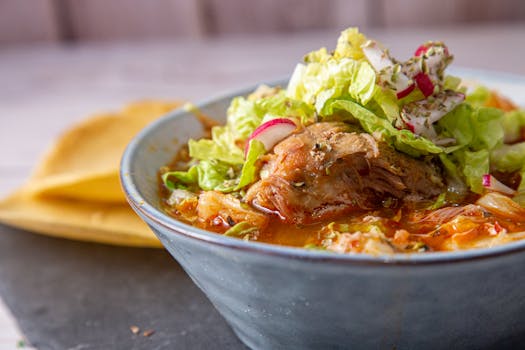
Common Ingredients
- pork shoulder
- hominy
- guajillo chiles
- ancho chiles
- garlic
- onion
- cabbage
- radishes
Specific recipes may vary.
Incompatible with 7 of 11 diets
Diet Ratings
Pozole Rojo is fundamentally incompatible with ketogenic dieting due to its primary ingredient: hominy. Hominy is dried maize (corn) that has been nixtamalized, and it is extremely high in net carbohydrates — a single cup of hominy contains approximately 30-35g of net carbs, which alone can exhaust or exceed the entire daily keto carb budget. A standard serving of pozole typically contains multiple cups of broth with several pieces of hominy, making the dish a near-certain ketosis breaker. The pork shoulder is keto-friendly, and the chiles, garlic, onion, cabbage, and radishes are low-carb garnishes that would individually be acceptable in small amounts. However, hominy is so central to the dish that it cannot be omitted without the dish ceasing to be pozole. There is no meaningful way to make a standard serving of Pozole Rojo compatible with ketogenic macros.
Pozole Rojo as described contains pork shoulder as its primary protein, which is animal flesh and a clear violation of vegan dietary principles. There is no ambiguity here — pork is unambiguously an animal product excluded by all vegan frameworks. The remaining ingredients (hominy, guajillo chiles, ancho chiles, garlic, onion, cabbage, radishes) are all plant-based, but the presence of pork shoulder alone disqualifies the dish entirely.
Pozole Rojo is disqualified from a paleo perspective primarily due to hominy, which is processed dried maize (corn). Corn is a grain and is explicitly excluded from the paleo diet. Hominy is in fact the defining ingredient of pozole — without it, the dish is fundamentally different. The remaining ingredients (pork shoulder, guajillo chiles, ancho chiles, garlic, onion, cabbage, radishes) are all paleo-compliant, but the hominy alone is sufficient to render the dish non-paleo. Grains are among the most clearly excluded food categories in paleo, with strong consensus across all major paleo authorities.
Pozole Rojo is built around pork shoulder as its primary protein, which classifies as red meat — a food the Mediterranean diet limits to only a few times per month. While the dish contains genuinely Mediterranean-compatible components (garlic, onion, cabbage, radishes, and chile peppers as vegetables), the dominant ingredient is a fatty cut of red meat. Hominy is a processed, refined corn product, not a whole grain, adding another mild concern. The vegetable garnishes are positive, but they do not offset the foundational conflict with Mediterranean principles. This dish would need to be fundamentally restructured — replacing pork with legumes, fish, or poultry — to align with the diet.
Pozole Rojo is fundamentally incompatible with the carnivore diet. While pork shoulder is a carnivore-approved animal protein, the dish is overwhelmingly plant-based in its composition. Hominy (processed dried corn) is a grain and a primary structural ingredient — not a minor additive. The broth base is built on guajillo and ancho chiles (plant-derived), garlic, and onion. The traditional garnishes include cabbage and radishes, both excluded plant foods. Only the pork shoulder itself qualifies under carnivore rules. This dish cannot be modified into carnivore compliance without being fundamentally reconstructed into an entirely different dish.
Pozole Rojo contains hominy, which is a processed form of corn (dried maize kernels treated with an alkali process called nixtamalization). Corn is explicitly excluded on the Whole30 as a grain. All other ingredients — pork shoulder, guajillo chiles, ancho chiles, garlic, onion, cabbage, and radishes — are fully compliant. However, hominy is the defining and essential ingredient of pozole; without it, the dish is no longer pozole. Because hominy/corn is a core excluded grain, this dish must be rated avoid.
Pozole Rojo contains multiple high-FODMAP ingredients that make it unsuitable during the elimination phase. Garlic and onion are among the highest-FODMAP foods tested by Monash University, both rich in fructans, and they are used as foundational flavor components in this dish — not merely garnishes. Their FODMAPs leach extensively into the broth during cooking, meaning the entire soup is contaminated even if solids are avoided. Additionally, hominy (nixtamalized corn) is a moderate-to-high FODMAP ingredient at typical serving sizes due to fructans and GOS. The chile-based red sauce (guajillo and ancho) is made by blending or stewing chiles with garlic and onion, concentrating the FODMAP load further. Cabbage used as a topping can be low-FODMAP at small amounts (75g per Monash), and pork shoulder, radishes, and the chiles themselves are generally low-FODMAP, but the cumulative FODMAP burden from garlic, onion, and hominy in standard serving quantities makes this dish a clear avoid during elimination.
Pozole Rojo presents a mixed DASH profile. On the positive side, hominy provides fiber and whole grain character, the guajillo and ancho chiles are rich in potassium and antioxidants, and the garnishes — cabbage and radishes — are excellent DASH-friendly vegetables. Garlic and onion add flavor without sodium concerns. However, pork shoulder is a fattier cut of red meat with notable saturated fat content, which DASH guidelines discourage. More significantly, traditional pozole as commonly prepared is high in sodium — both from the meat and from salted broth — often exceeding 800–1,200mg per serving, making it challenging within the DASH daily sodium budget of 1,500–2,300mg. DASH emphasizes limiting red meat and saturated fat, and pork shoulder is not a lean cut. With modifications — trimming fat from the pork, using lean pork loin instead, controlling added salt, and relying on the chiles and aromatics for flavor — this dish can become more DASH-compatible. As traditionally prepared, it warrants caution rather than approval.
NIH DASH guidelines specifically limit red meat and saturated fat, placing pork shoulder in the 'limit' category; however, some updated DASH-informed clinicians note that if portion size of the pork is modest (e.g., 2–3 oz per bowl), the overall dish's vegetable and legume density from hominy and garnishes may make it acceptable in the broader context of an otherwise DASH-adherent eating pattern.
Pozole Rojo presents a mixed Zone profile. The biggest concern is hominy (nixtamalized corn), which is a high-glycemic carbohydrate that Sears classifies as 'unfavorable' — similar to corn, it has a moderate-to-high glycemic index and counts as a starchy carb block. Pork shoulder is a fatty cut, higher in saturated fat than lean Zone-preferred proteins like skinless chicken or fish, making it 'unfavorable' protein. However, the dish has genuine Zone-friendly elements: guajillo and ancho chiles are polyphenol-rich and anti-inflammatory, garlic and onion are favorable low-GI vegetables, and the toppings of cabbage and radishes are excellent low-glycemic, high-fiber Zone vegetables. The soup format is also helpful — the broth dilutes the hominy's glycemic impact somewhat. With portion control (limiting hominy, trimming pork fat, loading up on the vegetable toppings), this dish can be navigated in a Zone meal, but the hominy-to-protein ratio in a traditional serving will likely be carb-heavy and the pork shoulder adds excess saturated fat. It is best treated as a 'caution' food requiring careful portioning rather than a frequent Zone staple.
Some Zone practitioners and Sears' later anti-inflammatory writing would view this more favorably than early Zone guidelines suggest. The chiles are exceptionally polyphenol-dense, which Sears increasingly emphasized in his later work (Zone Diet and anti-inflammatory protocols). Additionally, hominy's nixtamalization process and its fiber content moderate its glycemic response somewhat compared to plain corn. A practitioner focused on the anti-inflammatory Zone framework might score this higher (6-7) if the hominy portion is modest and the dish is loaded with vegetable toppings.
Pozole Rojo presents a genuinely mixed anti-inflammatory profile. On the positive side, guajillo and ancho chiles are rich in capsaicinoids, carotenoids (beta-carotene, lycopene precursors), and polyphenols with meaningful anti-inflammatory activity. Garlic and onion provide quercetin, allicin, and organosulfur compounds that reduce inflammatory markers like CRP and IL-6. Hominy (nixtamalized corn) is a whole grain with fiber content that supports gut health and a favorable glycemic response compared to refined grains. The toppings — cabbage and radishes — add glucosinolates, vitamin C, and additional antioxidants. However, the primary protein is pork shoulder, a fatty cut of red meat high in saturated fat and arachidonic acid, both of which are pro-inflammatory. Anti-inflammatory frameworks consistently recommend limiting red meat and fatty cuts in particular. The dish would score higher with a leaner protein substitution (e.g., chicken, turkey, or white beans), but as traditionally prepared with pork shoulder, the benefits of the chile-and-vegetable base are partially offset by the fatty pork. Portion size and frequency matter here — occasional consumption in modest portions is reasonable, but regular consumption as a pork-heavy dish is not well-aligned with anti-inflammatory principles.
Some anti-inflammatory practitioners, particularly those following a Mediterranean-adjacent or 'food-as-culture' approach, would argue that traditionally prepared whole-food dishes like pozole — with their dense array of chiles, aromatics, and vegetables — deserve more credit than a pure macronutrient analysis suggests. Conversely, stricter anti-inflammatory protocols such as Dr. Weil's pyramid and the AIP framework would flag pork shoulder's saturated fat and arachidonic acid content more aggressively, potentially pushing this dish toward 'avoid' territory if consumed regularly.
Pozole Rojo has a genuinely mixed nutritional profile for GLP-1 patients. The broth-based format is a strong positive — soups are generally easy to digest, hydrating, and portion-friendly. Hominy contributes moderate fiber and is relatively easy on the digestive system. The toppings (cabbage, radishes) add fiber and micronutrients with minimal calories, supporting the nutrient-density priority. However, the primary protein — pork shoulder — is a fatty cut with significant saturated fat, which is the central concern here. High-fat proteins worsen GLP-1 side effects including nausea, bloating, and reflux, and saturated fat is deprioritized in GLP-1 dietary guidance. Protein content per serving can be reasonable (15-20g depending on portion), but the fat load undermines the score. Guajillo and ancho chiles are mild-to-moderate dried chiles — not in the high-capsaicin category — so GI irritation risk is low for most patients. Overall, this dish is acceptable in moderation if pork shoulder is used sparingly or trimmed of visible fat, but it falls short of an approve rating due to the saturated fat profile of the primary protein.
Some GLP-1-focused RDs would rate this more favorably, arguing that the broth dilutes overall fat per serving and that the fiber from hominy and vegetables partially offsets the fat concern — particularly if portions are small, as is typical on GLP-1 medications. Others would rate it more harshly, noting that pork shoulder is consistently flagged as a high-saturated-fat protein that should be avoided in favor of leaner cuts, regardless of preparation method.
*See how scores were generated at our methodology page.
Nutritional profile
Six traits that cut across every diet.
Fiber & Plants
How much whole-plant food and fiber it delivers.
Healthy Fats
The quality of its fats (unsaturated, omega-3).
Whole / Unprocessed
How close it is to its natural, unprocessed form.
Gut Gentle
How easy it is on digestion (low FODMAP, few irritants).
Low Glycemic
How little it spikes your blood sugar.
Protein Density
How much protein it packs per calorie.
Controversy Index
Higher controversy = more disagreement between diets.
Diet-Specific Tips
 DASH — 5/10
View tips
- Pork shoulder is a high-saturated-fat red meat, which DASH guidelines advise limiting
- Traditional pozole is high in sodium, often 800–1,200mg per serving
- Hominy contributes whole grain fiber, a DASH-positive element
- Guajillo and ancho chiles are rich in potassium and phytonutrients
- Cabbage and radishes are DASH-approved vegetables
- Sodium load is highly preparation-dependent; low-sodium versions score considerably higher
- Substituting lean pork loin would improve the DASH score meaningfully
 Zone — 5/10
View tips
- Hominy is a high-glycemic starchy carbohydrate classified as 'unfavorable' in Zone terminology
- Pork shoulder is a fatty cut with higher saturated fat than Zone-preferred lean proteins
- Guajillo and ancho chiles are polyphenol-rich and anti-inflammatory, aligning with Sears' later Zone emphasis
- Cabbage and radishes are excellent Zone-favorable low-GI vegetables
- Traditional serving portions likely skew carb-heavy relative to Zone 40/30/30 targets
- Can be partially corrected by reducing hominy, defatting broth, and piling on vegetable toppings
 Anti-Inflammatory — 5/10
View tips
- Pork shoulder is a fatty red meat cut high in saturated fat and arachidonic acid — pro-inflammatory per anti-inflammatory diet guidelines
- Guajillo and ancho chiles are rich in carotenoids, capsaicinoids, and polyphenols with anti-inflammatory properties
- Garlic and onion provide quercetin, allicin, and organosulfur compounds that reduce CRP and IL-6
- Hominy is a whole grain with fiber that supports gut health and modulates glycemic response
- Cabbage and radishes add glucosinolates, vitamin C, and additional antioxidants
- No seed oils, refined sugars, or processed additives in the traditional preparation
- Overall profile is mixed: strong anti-inflammatory vegetable/spice base undermined by high-fat red meat protein
 GLP-1 Friendly — 5/10
View tips
- Pork shoulder is a high-fat cut with significant saturated fat — the primary drawback for GLP-1 patients
- Broth-based preparation improves digestibility and adds hydration support
- Hominy provides moderate fiber and is generally easy to digest
- Guajillo and ancho chiles are mild dried chiles — low GI irritation risk for most patients
- Cabbage and radish toppings add fiber and micronutrients with minimal caloric cost
- Protein per serving is moderate but fat-to-protein ratio is unfavorable compared to leaner options
- Small serving size on GLP-1 medications may limit total fat exposure per meal