Photo: Daniel Ruiz / Pexels
Mexican
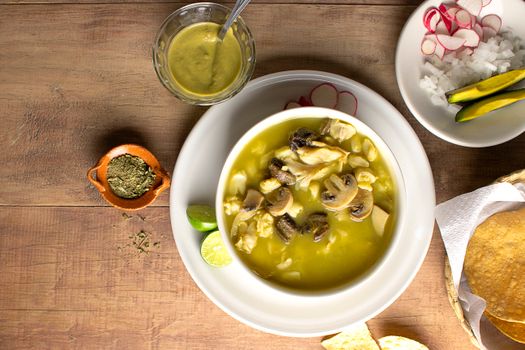
Pozole Verde
The diets react (see scores below)
Common Ingredients
- chicken
- hominy
- tomatillos
- pumpkin seeds
- poblano peppers
- cilantro
- onion
- epazote
Specific recipes may vary.
Incompatible with 6 of 11 diets
Diet Ratings
Pozole Verde is fundamentally incompatible with ketogenic eating due to hominy, which is the defining ingredient of the dish. Hominy (nixtamalized corn) is a high-starch grain with approximately 20-24g net carbs per half-cup serving. A typical bowl of pozole contains a substantial amount of hominy, likely pushing net carbs well above the entire daily keto limit in a single serving. The remaining ingredients — chicken, tomatillos, pumpkin seeds, poblano peppers, cilantro, onion, and epazote — are largely keto-friendly or at least manageable in moderation, but the hominy cannot be reduced to a trace amount without fundamentally changing the dish. Pozole without hominy is simply not pozole. There is no realistic portion adjustment that makes a traditional bowl of pozole compatible with ketosis.
Pozole Verde as described contains chicken, which is poultry and a direct animal product. This is an unambiguous disqualifier under vegan dietary rules. All other ingredients — hominy, tomatillos, pumpkin seeds, poblano peppers, cilantro, onion, and epazote — are fully plant-based, meaning a vegan adaptation of this dish is achievable by substituting the chicken with a plant protein (e.g., jackfruit, mushrooms, or white beans), but the dish as listed is not vegan.
Pozole Verde is disqualified by hominy, which is a processed form of dried maize (corn). Corn is a grain and is explicitly excluded from the paleo diet regardless of preparation method — nixtamalization does not change its grain status. All other ingredients (chicken, tomatillos, pumpkin seeds, poblano peppers, cilantro, onion, epazote) are fully paleo-compliant, but the defining ingredient of pozole — hominy — makes this dish a clear avoid.
Pozole Verde is a nutrient-rich soup with several Mediterranean diet-compatible ingredients. Tomatillos, poblano peppers, cilantro, and onion align well with the diet's emphasis on vegetables and plant-based foods. Pumpkin seeds (pepitas) are an excellent source of healthy fats and plant protein, analogous to the nuts and seeds celebrated in Mediterranean eating. Chicken is acceptable as a moderate protein source (poultry fits within the 'a few times per week' category). However, hominy is a processed form of corn (nixtamalized), which is a refined/processed grain — not a whole grain in the traditional Mediterranean sense — and it serves as the bulk carbohydrate here. The dish also lacks olive oil as a fat source, relying instead on seeds and potentially neutral oils. Overall, it is a wholesome, largely plant-forward soup that fits well in moderation but is not a Mediterranean staple due to the hominy base and non-Mediterranean culinary tradition.
Some modern Mediterranean diet practitioners argue that minimally processed whole-food ingredients like hominy (a traditional nixtamalized grain) can be incorporated similarly to how legumes and whole grains are used, and that the diet's principles of plant-forward, minimally processed eating apply cross-culturally — under this view, Pozole Verde could score higher.
Pozole Verde is almost entirely plant-based aside from the chicken. Hominy (processed corn/grain), tomatillos, pumpkin seeds, poblano peppers, cilantro, onion, and epazote are all plant-derived foods explicitly excluded on the carnivore diet. The chicken itself is the only carnivore-compatible ingredient, but it represents a small fraction of the dish's composition. This soup is fundamentally incompatible with carnivore principles at every level — grains, vegetables, seeds, herbs, and alliums are all present.
Pozole Verde contains hominy, which is a processed form of dried corn (maize). Corn is explicitly listed as an excluded grain on the Whole30 program. All other ingredients — chicken, tomatillos, pumpkin seeds, poblano peppers, cilantro, onion, and epazote — are fully Whole30 compliant. However, hominy is the defining, non-negotiable ingredient of pozole, and its exclusion means this dish cannot be considered Whole30 compatible in its traditional form. Without hominy, it would simply be a different soup entirely.
Pozole Verde contains multiple high-FODMAP ingredients that make it problematic during the elimination phase. Onion is a significant source of fructans and is high-FODMAP at virtually any culinary amount — it is one of the most concentrated FODMAP sources and cannot be reduced to a safe serving in a soup where it is cooked into the broth. Hominy (nixtamalized corn) is another concern: Monash has not thoroughly tested hominy, and the serving size required for a typical pozole bowl is substantial; corn-based products can be moderate-to-high FODMAP depending on preparation. Pumpkin seeds (pepitas) are low-FODMAP at small servings (~2 tablespoons) but the garnish amount in pozole is often generous. Tomatillos have limited Monash testing data. Epazote is an herb with essentially no FODMAP testing data. The remaining ingredients — chicken, poblano peppers (low-FODMAP in small amounts), and cilantro — are generally safe. However, the onion alone is a dealbreaker for elimination phase compliance, as it permeates the broth and cannot be removed after cooking. Even replacing onion with green onion tops would require a recipe modification not reflected here.
Monash University rates onion as clearly high-FODMAP with no safe serving size in typical culinary use, making this dish definitively problematic. However, some clinical FODMAP practitioners suggest that if onion is cooked and removed before consuming the broth, FODMAP load may be reduced — though this is not standard elimination phase guidance and fructans do leach into cooking liquid.
Pozole Verde contains several DASH-friendly ingredients: lean chicken (a preferred DASH protein), tomatillos and poblano peppers (vegetables rich in potassium and fiber), pumpkin seeds (healthy unsaturated fats, magnesium), onion, cilantro, and epazote. These elements align well with DASH principles. However, hominy (nixtamalized corn) is a starchy, processed grain with moderate sodium compared to whole grains, and lacks the fiber profile of DASH-preferred whole grains. The primary concern with pozole as commonly prepared is sodium — restaurant or home recipes often incorporate significant sodium through broth and seasoning, potentially pushing a single serving toward or beyond the DASH daily sodium target of 1,500–2,300mg. Pumpkin seeds also contribute healthy fats but add caloric density. When prepared with low-sodium broth and portion-controlled, this dish moves closer to approval. As typically consumed, it warrants caution due to sodium risk.
NIH DASH guidelines emphasize low-sodium, whole-grain-based dishes, and hominy's lower fiber content and potential sodium load place this dish in the caution range. However, some DASH-oriented clinicians note that when made with low-sodium broth and lean chicken, the rich vegetable base (tomatillos, peppers) and magnesium-rich pumpkin seeds make this a nutritionally favorable choice that could qualify as a DASH-compatible meal.
Pozole Verde has a strong Zone-friendly foundation but requires careful portioning due to hominy. The chicken provides excellent lean protein that fits perfectly into Zone blocks. Tomatillos, poblano peppers, cilantro, and onion are all favorable low-glycemic vegetables rich in polyphenols, supporting Sears' anti-inflammatory framework. Pumpkin seeds contribute monounsaturated and polyunsaturated fats along with some protein, making them a reasonable Zone fat source, though their omega-6 content is somewhat elevated. The primary concern is hominy (nixtamalized corn), which is a starchy, higher-glycemic carbohydrate that Zone classifies as an 'unfavorable' carb. Hominy has a moderate glycemic index but contributes significant starch that can disrupt the 40/30/30 ratio if portions aren't controlled. A Zone-compatible serving would need to limit hominy to roughly 1/4 cup and ensure the vegetable-to-hominy ratio heavily favors the tomatillos and peppers. With proper portioning, this dish can be made Zone-compatible — the broth-based preparation, lean protein, and polyphenol-rich vegetables are all positives — but the hominy elevation makes it a 'use with caution' rather than a straightforward approve.
Some Zone practitioners, particularly those following Sears' later writings emphasizing anti-inflammatory eating, might view pozole verde more favorably. Hominy, while corn-derived, has a lower glycemic index than many grains due to the nixtamalization process and its resistant starch content. Sears' later work (e.g., 'The Mediterranean Zone') places greater emphasis on polyphenols and omega-3 balance than strict glycemic avoidance, and the tomatillos, peppers, cilantro, and epazote in this dish are exceptionally polyphenol-dense. A practitioner in this camp might score this a 7 with moderate hominy portions.
Pozole Verde is a nutritionally dense traditional Mexican soup with a largely favorable anti-inflammatory profile. Chicken (lean poultry) is a moderate-tier protein that is broadly accepted in anti-inflammatory frameworks. Tomatillos are rich in flavonoids, withanolides, and antioxidants with documented anti-inflammatory properties. Pumpkin seeds (pepitas) are a standout ingredient — they provide magnesium, zinc, and a meaningful amount of omega-3 fatty acids (ALA), earning them a place on Dr. Weil's anti-inflammatory food pyramid. Poblano peppers contain capsaicin and carotenoids, both associated with reduced inflammatory markers. Cilantro and epazote are herbs with antioxidant polyphenols; epazote has some traditional use as an anti-inflammatory herb, though human research is limited. Onion contributes quercetin, a well-studied anti-inflammatory flavonoid. Hominy (nixtamalized corn) is a whole grain carbohydrate that, while not particularly anti-inflammatory on its own, is fiber-rich and far preferable to refined carbohydrates; the nixtamalization process also enhances bioavailability of nutrients. The overall dish is low in saturated fat, free of refined sugars, processed additives, and trans fats, and is built primarily from whole, minimally processed ingredients. The main limitation is that chicken is only a moderate-tier protein (not a top-tier omega-3 source like fatty fish), and hominy is a starchy base that some practitioners flag for its glycemic contribution. Still, the combination of pepitas, tomatillos, peppers, herbs, and alliums gives this dish genuine anti-inflammatory breadth.
Some autoimmune protocol (AIP) practitioners flag corn-derived ingredients like hominy as potentially problematic due to lectin content, which may contribute to intestinal permeability in sensitive individuals. Additionally, nightshade-adjacent concerns about tomatillos and poblano peppers exist within AIP and similar frameworks (Dr. Sarah Ballantyne's AIP excludes nightshades and pepper family), though mainstream anti-inflammatory science including Dr. Weil's pyramid considers these vegetables beneficial for the general population.
Pozole Verde is a strong GLP-1-friendly dish. Chicken provides lean, high-quality protein (20-25g per serving depending on portion), directly supporting the #1 priority of muscle preservation. Hominy adds moderate fiber and digestible complex carbohydrates, and the broth-based format means the dish is high in water content, supporting hydration — critical given reduced thirst sensation on GLP-1 medications. Tomatillos, poblano peppers, cilantro, and onion contribute micronutrients and additional fiber with very low caloric load. Pumpkin seeds are the one ingredient requiring attention: they add healthy unsaturated fats and extra protein but also increase fat content per serving — portion of seeds matters. Epazote is a traditional herb with no meaningful nutritional concern. The soup format is inherently easy to digest, small-portion friendly, and nutrient-dense per calorie. Poblano peppers are mild enough that they are unlikely to worsen GI side effects for most patients, unlike hotter chili varieties.
Some GLP-1-focused dietitians flag hominy as a concern due to its relatively high glycemic index compared to other complex carbohydrates, which may matter more for patients using GLP-1s primarily for type 2 diabetes management versus weight loss. Pumpkin seed quantity is also variable across recipes — a generous garnish can meaningfully raise fat content, and some clinicians advise patients prone to nausea to minimize added fats in soups during early titration phases.
*See how scores were generated at our methodology page.
Nutritional profile
Six traits that cut across every diet.
Fiber & Plants
How much whole-plant food and fiber it delivers.
Healthy Fats
The quality of its fats (unsaturated, omega-3).
Whole / Unprocessed
How close it is to its natural, unprocessed form.
Gut Gentle
How easy it is on digestion (low FODMAP, few irritants).
Low Glycemic
How little it spikes your blood sugar.
Protein Density
How much protein it packs per calorie.
Controversy Index
Higher controversy = more disagreement between diets.
Diet-Specific Tips
 Mediterranean — 6/10
View tips
- Chicken is an acceptable moderate protein (poultry, a few times per week)
- Tomatillos, poblano peppers, onion, cilantro are plant-forward and diet-compatible
- Pumpkin seeds provide healthy fats and plant protein consistent with Mediterranean principles
- Hominy is a processed/nixtamalized corn product, not a whole grain per Mediterranean guidelines
- No olive oil as primary fat source
- Non-Mediterranean cuisine but shares plant-forward and legume/seed principles
 DASH — 6/10
View tips
- Lean chicken is a DASH-approved protein source
- Tomatillos and poblano peppers provide potassium, fiber, and vitamins
- Pumpkin seeds offer magnesium and healthy unsaturated fats — DASH-positive
- Hominy is a processed, lower-fiber starch compared to DASH-preferred whole grains
- Sodium content is highly preparation-dependent; restaurant versions often exceed DASH sodium limits
- Low-sodium broth and minimal added salt would significantly improve DASH compatibility
 Zone — 6/10
View tips
- Chicken is an ideal Zone lean protein source — strong positive
- Hominy (nixtamalized corn) is a higher-glycemic 'unfavorable' carb in Zone terminology — primary concern
- Tomatillos, poblano peppers, cilantro, onion, and epazote are all low-glycemic, polyphenol-rich Zone-favorable vegetables — strong positive
- Pumpkin seeds provide monounsaturated and polyunsaturated fats but have elevated omega-6 content — moderate concern
- Broth-based preparation avoids added saturated fat or inflammatory oils — positive
- Portion control on hominy is essential to maintain 40/30/30 ratio
- Dish is naturally anti-inflammatory due to tomatillo and pepper polyphenol content
 Anti-Inflammatory — 7/10
View tips
- Pumpkin seeds provide ALA omega-3s, magnesium, and zinc — a top-tier anti-inflammatory ingredient
- Tomatillos contribute flavonoids and withanolides with documented anti-inflammatory activity
- Poblano peppers supply capsaicin and carotenoids linked to reduced inflammatory markers
- Onion provides quercetin, a well-studied anti-inflammatory flavonoid
- Cilantro and epazote add antioxidant polyphenols
- Lean chicken is an acceptable moderate-tier anti-inflammatory protein
- Hominy (nixtamalized corn) is a whole-grain starch — fiber-rich but glycemically notable
- No refined sugars, trans fats, seed oils, or processed additives
- Entire dish is built from whole, minimally processed ingredients
 GLP-1 Friendly — 8/10
View tips
- Lean chicken protein supports muscle preservation goal — approximately 20-25g protein per standard serving
- Broth-based soup format supports hydration and easy digestibility
- Hominy provides fiber and complex carbs but has moderate glycemic index
- Pumpkin seeds add unsaturated fats and bonus protein — portion-sensitive
- Tomatillos, poblano, onion, cilantro add micronutrients with minimal caloric cost
- Poblano peppers are mild — unlikely to worsen GLP-1 GI side effects
- No fried components, no added sugar, no high-saturated-fat ingredients
- Small-portion friendly — soup format is satiating in modest volumes