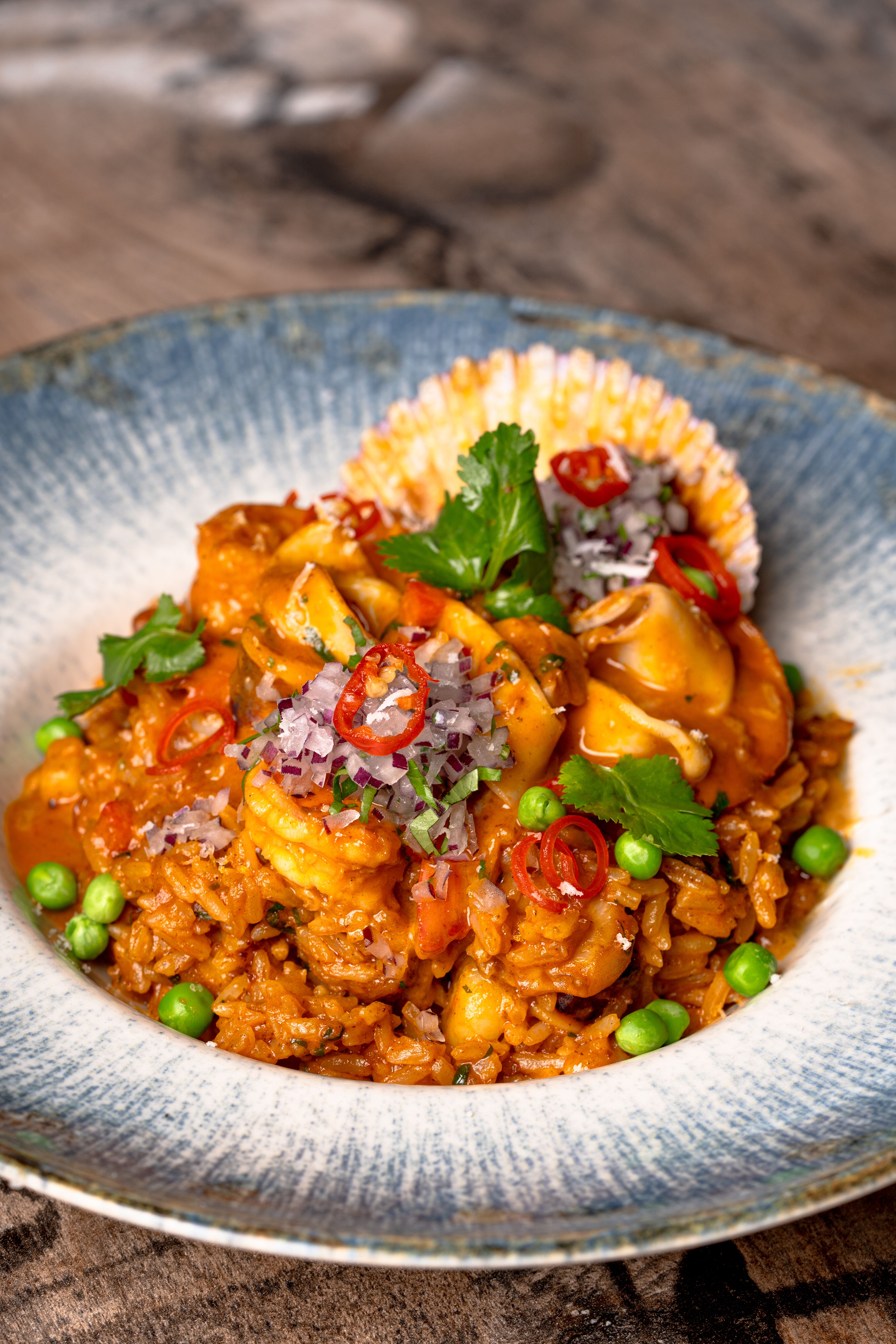
Photo: Nano Erdozain / Pexels
Caribbean
Arroz con Gandules
The diets react (see scores below)
Common Ingredients
- rice
- pigeon peas
- sofrito
- tomato sauce
- olives
- capers
- ham
- sazón
Specific recipes may vary.
Incompatible with 8 of 11 diets
Diet Ratings
Arroz con Gandules is fundamentally incompatible with a ketogenic diet. Rice is a high-glycemic grain that is strictly excluded from keto — a single cup of cooked white rice contains approximately 45g of net carbs, which alone exceeds or meets the entire daily keto carb limit. Pigeon peas add additional net carbs (roughly 15-20g per half cup). Together, these two core ingredients make this dish an extreme carb load. The remaining ingredients (sofrito, tomato sauce, ham, olives, capers, sazón) are largely keto-neutral or even keto-friendly, but they are completely overshadowed by the rice and peas. A standard serving of Arroz con Gandules could easily contain 60-80g of net carbs, making ketosis impossible to maintain.
This traditional Puerto Rican dish contains ham, which is a pork-based animal product and clearly incompatible with a vegan diet. All other ingredients — rice, pigeon peas, sofrito, tomato sauce, olives, capers, and sazón — are plant-based and would otherwise make this dish vegan-friendly. The ham is the sole but definitive disqualifier. A vegan version of Arroz con Gandules is easily achievable by simply omitting the ham or substituting smoked paprika or liquid smoke for a similar depth of flavor.
Arroz con Gandules is fundamentally incompatible with the paleo diet. The dish is built on two core paleo violations: rice (a grain) and pigeon peas (a legume). Both are explicitly excluded from paleo eating due to their anti-nutrient content (lectins, phytates) and status as agricultural foods unavailable to Paleolithic hunter-gatherers. Beyond these foundational violations, the dish also contains ham (a processed meat with added salt, nitrates, and preservatives), sazón (a commercial spice blend containing added salt, artificial colorings, and MSG), olives and capers (typically packed in brine with added salt), and tomato sauce (often containing added sugar and salt). Sofrito itself — a blend of herbs, aromatics, and tomatoes — is the only component that could be considered paleo-friendly in its natural form. There is no realistic modification that salvages this dish while preserving its identity, as rice and pigeon peas are the defining ingredients.
Arroz con Gandules has a mixed Mediterranean profile. The pigeon peas are a Mediterranean-friendly legume, and olives and capers align well with the diet. However, the dish is built on white rice (a refined grain), includes processed ham (cured red/processed meat), and uses sazón which typically contains artificial colorants and additives. The tomato-based sofrito is positive, but the combination of refined grain base plus processed meat tips this dish into avoid territory under strict Mediterranean guidelines.
Some Mediterranean diet interpreters, particularly those referencing traditional Southern European and Middle Eastern rice dishes, allow white rice in moderation as part of a balanced plate — especially when paired with legumes as here. The pigeon peas + rice combination provides complementary protein and fiber, and a lenient reading could rate this a cautious 'caution' if the ham is reduced and sazón replaced with whole spices.
Arroz con Gandules is fundamentally incompatible with the carnivore diet. The dish is built almost entirely on plant-based foods: rice (grain), pigeon peas (legume), sofrito (plant-based herb/vegetable blend), tomato sauce (plant), olives (plant), capers (plant), and sazón (plant-derived spice blend). While ham is an animal product, it is a minor component in a dish that is overwhelmingly plant-derived. The primary macronutrients come from rice and legumes — two food categories explicitly excluded on the carnivore diet. There is no meaningful animal-derived content that would salvage this dish for carnivore compliance.
Arroz con Gandules contains multiple Whole30-excluded ingredients that make it clearly non-compliant. Rice is a grain and is explicitly excluded from the Whole30 program. Pigeon peas are legumes and are also explicitly excluded (unlike the narrow exceptions for green beans, sugar snap peas, and snow peas). Ham often contains added sugar, nitrates, and other non-compliant additives. Sazón seasoning packets typically contain MSG (now allowed) but commonly also contain annatto and, more critically, are often blended with non-compliant additives or fillers; however, these are secondary concerns given the foundational exclusions of rice and pigeon peas. This dish cannot be made Whole30-compliant in any meaningful form, as rice and pigeon peas are its defining, non-substitutable core ingredients.
Arroz con Gandules contains multiple high-FODMAP ingredients that make it unsuitable during the elimination phase. The most significant offenders are pigeon peas (gandules), which are legumes high in GOS and are rated high-FODMAP at typical serving sizes by Monash University. Sofrito, the flavor base, traditionally contains onion and garlic — both high in fructans and among the most problematic FODMAP foods. Sazón seasoning blends similarly often contain garlic and onion powder, which are highly concentrated sources of fructans. While rice itself is low-FODMAP, and olives, capers, and small amounts of ham are generally acceptable, the combination of pigeon peas plus the onion/garlic-heavy sofrito and sazón creates a dish that is high-FODMAP at any realistic serving size. There is no straightforward way to make a traditional Arroz con Gandules low-FODMAP without fundamentally altering the recipe, as the pigeon peas and sofrito are core to the dish.
Some FODMAP-adapted recipes substitute green beans or canned and thoroughly rinsed lentils for pigeon peas and use garlic-infused oil with scallion greens instead of sofrito to reduce FODMAP load, but Monash University has not tested pigeon peas specifically as a canned/rinsed option, and clinical FODMAP dietitians generally advise avoiding legumes entirely during strict elimination regardless of preparation method.
Arroz con Gandules is a sodium-heavy dish that conflicts with core DASH diet principles on multiple fronts. Sazón (a seasoning blend typically containing significant salt, sometimes MSG, and annatto) contributes substantial sodium, as do olives, capers, and ham — all of which are high-sodium, processed, or cured ingredients. Ham is also a processed red/cured meat, which DASH explicitly limits due to saturated fat and sodium content. Tomato sauce adds additional sodium. The cumulative sodium load from this dish in a typical serving would likely consume a large portion of the DASH daily sodium budget (1,500–2,300mg) in a single side dish. White rice, while not forbidden on DASH, is a refined grain rather than the whole grain DASH emphasizes. Pigeon peas and sofrito are genuinely DASH-friendly components — pigeon peas provide fiber, plant protein, potassium, and magnesium, and sofrito's vegetable base is beneficial — but these positives are overwhelmed by the high-sodium profile of the dish as traditionally prepared.
Arroz con Gandules is a carbohydrate-heavy dish built on white rice, which is a high-glycemic, unfavorable Zone carbohydrate. The rice dominates the macro profile, making it very difficult to fit this dish into a balanced 40/30/30 Zone block structure without very small portion sizes. The pigeon peas add some protein and fiber (which helps lower net carbs slightly), and the ham provides a small lean protein contribution. The sofrito, tomato sauce, olives, and capers add polyphenols and some monounsaturated fat from the olives, which are Zone-favorable elements. However, the dish as a whole is carb-skewed and provides minimal protein relative to its carbohydrate load. To use this in a Zone meal, the portion would need to be very small (perhaps 1/3 to 1/2 cup) and paired with a substantial lean protein source and additional vegetables to rebalance the 40/30/30 ratio. The ham introduces some sodium and potentially saturated fat. The fundamental problem is that white rice is explicitly listed as an unfavorable, high-glycemic carb in Zone methodology, making this dish a challenging inclusion rather than a straightforward one.
Arroz con Gandules presents a mixed anti-inflammatory profile. On the positive side, pigeon peas (gandules) are a legume rich in fiber, plant protein, and polyphenols — all consistent with anti-inflammatory eating. Sofrito typically contains onions, garlic, peppers, cilantro, and tomatoes, which are antioxidant-rich aromatics strongly endorsed in anti-inflammatory frameworks. Olives and capers contribute polyphenols and have mild anti-inflammatory properties. Tomato sauce adds lycopene. However, the dish has several drawbacks: white rice is a refined carbohydrate that raises blood sugar quickly and lacks the fiber of whole grains, which are preferred in anti-inflammatory diets. Ham is a processed red meat high in sodium and saturated fat, both associated with increased inflammatory markers. Sazón, a commercial spice blend, often contains annatto and natural spices (acceptable) but may also contain MSG, artificial colorings, and high sodium — additives the anti-inflammatory framework discourages. The overall dish is a culturally significant, flavorful staple with genuinely beneficial components (legumes, sofrito aromatics), but the refined rice base, processed ham, and likely additive-containing sazón prevent it from earning a full endorsement.
Some anti-inflammatory practitioners following a whole-foods, plant-forward approach might rate this more favorably if ham is omitted or minimized, noting that legume-and-rice combinations offer complementary amino acids and substantial fiber. Conversely, stricter protocols like AIP or low-glycemic anti-inflammatory frameworks would penalize the white rice base more heavily, potentially pushing the dish toward 'avoid' territory.
Arroz con Gandules is a traditional Puerto Rican rice dish that presents a mixed nutritional profile for GLP-1 patients. The pigeon peas contribute meaningful fiber (roughly 5-8g per cup) and some plant protein (~7-8g per cup), which are positives. However, the dish is built on a refined white rice base — a high-glycemic, low-fiber refined grain that provides calories without meaningful nutrient density. The ham adds sodium and saturated fat rather than lean protein. Olives and capers add sodium and fat in small amounts. Sofrito and tomato sauce are generally fine — low calorie, some micronutrients — but sazón (especially commercial packets) is very high in sodium, which can worsen water retention and bloating. As a side dish with no primary protein, it occupies valuable stomach real estate (GLP-1 patients have limited capacity) without delivering the protein or fiber density that should anchor each small meal. Portion size is critical — a small serving (~1/2 cup) alongside a lean protein could be acceptable, but a standard serving as a side is likely too carb-heavy and sodium-dense for regular GLP-1 meal planning.
Some GLP-1-focused RDs note that legume-containing traditional dishes like this offer a culturally meaningful way to incorporate plant-based fiber and protein, and may be preferable to ultra-processed alternatives; the disagreement centers on whether the white rice base and sodium load outweigh the pigeon pea benefits, with individual glycemic tolerance and GI sensitivity driving different recommendations.
*See how scores were generated at our methodology page.
Nutritional profile
Six traits that cut across every diet.
Fiber & Plants
How much whole-plant food and fiber it delivers.
Healthy Fats
The quality of its fats (unsaturated, omega-3).
Whole / Unprocessed
How close it is to its natural, unprocessed form.
Gut Gentle
How easy it is on digestion (low FODMAP, few irritants).
Low Glycemic
How little it spikes your blood sugar.
Protein Density
How much protein it packs per calorie.
Controversy Index
Higher controversy = more disagreement between diets.
Diet-Specific Tips
 Zone — 4/10
View tips
- White rice is a high-glycemic, unfavorable Zone carbohydrate that dominates this dish
- Pigeon peas add fiber and some protein, reducing net carb impact slightly
- Ham provides some lean protein but in small quantities relative to the overall dish
- Olives contribute Zone-favorable monounsaturated fats and polyphenols
- Sofrito and tomato sauce add polyphenols aligned with Sears' anti-inflammatory focus
- Dish is heavily carb-skewed; very difficult to hit 40/30/30 without tiny portions
- Would need significant lean protein accompaniment to balance as part of a Zone meal
 Anti-Inflammatory — 4/10
View tips
- Pigeon peas are a fiber-rich legume with anti-inflammatory polyphenols — a positive contributor
- Sofrito base (garlic, onions, peppers, herbs) is rich in antioxidants and anti-inflammatory compounds
- White rice is a refined carbohydrate — preferred anti-inflammatory guidelines favor whole grains
- Ham is processed red meat with saturated fat and high sodium — associated with pro-inflammatory markers
- Commercial sazón may contain artificial additives, MSG, and excess sodium
- Olives and capers contribute beneficial polyphenols and healthy fats in modest amounts
- Tomato sauce provides lycopene, an antioxidant carotenoid
 GLP-1 Friendly — 4/10
View tips
- White refined rice is the primary ingredient — high glycemic index, low fiber, low nutrient density per calorie
- Pigeon peas add meaningful fiber and plant protein, a genuine positive
- Ham contributes saturated fat and significant sodium rather than lean protein
- Commercial sazón is very high in sodium, which may worsen bloating common in GLP-1 patients
- No primary protein — poor use of limited stomach capacity for GLP-1 patients
- Olives add heart-healthy unsaturated fat but also sodium; acceptable in small amounts
- Small portion (½ cup) alongside lean protein is more manageable than a standard side serving
- Digestibility is moderate — rice is easy on the stomach, but high sodium and fat from ham may worsen GI side effects