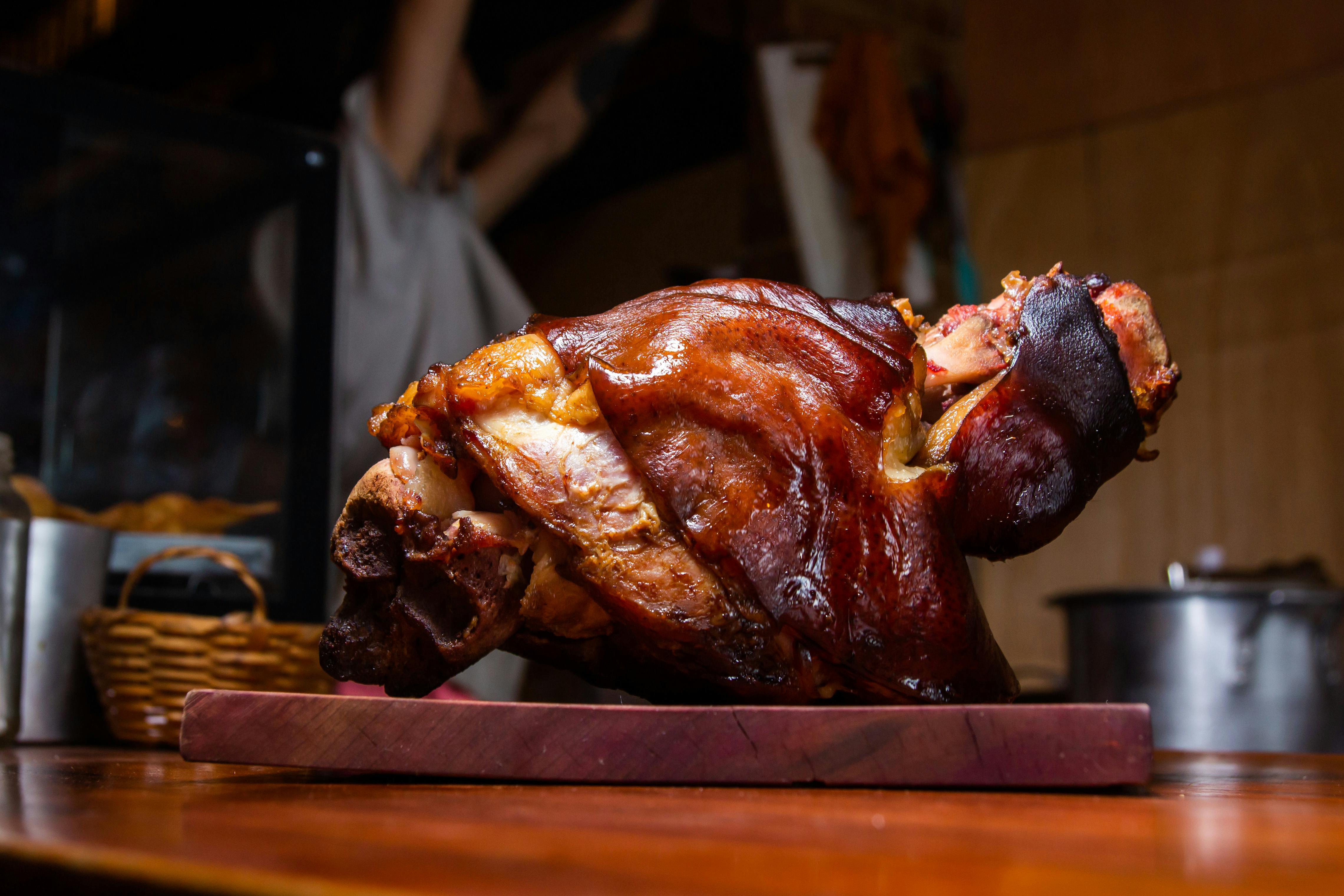
Photo: Vinícius Caricatte / Pexels
Caribbean
Pernil (Roast Pork)
The diets react (see scores below)
Common Ingredients
- pork shoulder
- garlic
- oregano
- sour orange
- olive oil
- sazón
- adobo
- onion
Specific recipes may vary.
Incompatible with 4 of 11 diets
Diet Ratings
Pernil is primarily pork shoulder — a fatty, protein-rich cut that is fundamentally keto-friendly. The marinade (adobo, garlic, oregano, olive oil) adds negligible carbs. However, sour orange (naranja agria) is a meaningful carb contributor in the marinade, and sazón seasoning packets sometimes contain small amounts of sugar or corn starch. The onion adds minor carbs. In a typical serving, the actual carbs absorbed into the meat from the marinade are low, but home recipes and restaurant versions vary significantly in how much citrus is used. A standard 4-6oz serving is likely within keto limits, but portion awareness and ingredient label checks are warranted.
Strict keto practitioners may flag the sour orange marinade as a sugar/fructose source and object to commercial sazón and adobo blends that contain hidden starches or sugars, recommending only homemade spice mixes with verified labels before approving this dish.
Pernil is a traditional Caribbean roast pork dish centered on pork shoulder as its primary ingredient. Pork is an animal flesh product, making this dish entirely incompatible with a vegan diet. There is no ambiguity here — all remaining ingredients (garlic, oregano, sour orange, olive oil, sazón, adobo, onion) are plant-based, but the pork shoulder is the defining and dominant component of the dish, rendering it non-vegan by the most fundamental rule of veganism.
Pernil's core ingredients — pork shoulder, garlic, oregano, sour orange, olive oil, and onion — are all paleo-approved. The problem lies in the seasoning blends: sazón and adobo are pre-mixed commercial spice packets that almost universally contain added salt, MSG, and often anti-caking agents or other additives, which violate paleo's exclusion of processed foods and added salt. If homemade or additive-free versions of these spice blends were used, the dish would comfortably earn an approve rating. As commonly prepared with commercial sazón and adobo, the dish falls into caution territory due to processed seasoning blends.
Some modern paleo practitioners take a relaxed stance on small amounts of added salt and minimal commercial spice blends, arguing that trace additives in seasoning are negligible and that the dish's whole-food protein base is what matters. Robb Wolf and practical paleo communities often prioritize overall dietary pattern over strict ingredient purity in condiments and spice blends.
Pernil is a slow-roasted pork shoulder dish, making red/processed meat its primary component. Pork shoulder is a fatty cut of red meat, which the Mediterranean diet limits to a few times per month. While the dish includes genuinely Mediterranean-friendly elements — extra virgin olive oil, garlic, oregano, and onion — these aromatics do not offset the core issue: a large portion of pork shoulder as the main protein. The Caribbean spice blends (sazón, adobo) are generally acceptable seasoning-wise, though some commercial versions contain additives. The overall dish is centered on a fatty red meat, which contradicts Mediterranean principles of limiting red meat consumption significantly.
Some Mediterranean diet interpretations, particularly those rooted in traditional Iberian (Spanish/Portuguese) practice, acknowledge that pork has historically played a role in Mediterranean cuisines of the Iberian Peninsula and parts of Italy. In these regional traditions, a modest portion of well-seasoned roasted pork on a celebratory or occasional basis might be considered acceptable rather than a strict avoidance item.
While pork shoulder is an excellent carnivore-approved cut, Pernil as traditionally prepared is heavily laden with non-carnivore ingredients. Garlic, oregano, sour orange (citrus juice), olive oil, onion, sazón, and adobo are all plant-derived or plant-containing seasonings. Sazón typically contains annatto, coriander, cumin, and other plant spices, while adobo blends include garlic powder, oregano, and similar plant compounds. Sour orange juice adds plant-based acids and sugars. Olive oil is a plant-derived oil. In aggregate, this dish is a heavily marinated preparation where plant ingredients are central to the recipe — not incidental. The pork itself is carnivore-approved, but the dish as a whole is not compatible with carnivore principles.
The core ingredients of pernil are straightforwardly Whole30-compliant: pork shoulder, garlic, oregano, sour orange (a citrus fruit), olive oil, and onion are all approved whole foods. However, two seasoning blends — sazón and adobo — are the critical concern. Commercial versions of both frequently contain non-compliant additives. Sazón commonly includes MSG (now Whole30-compatible per 2024 rules), annatto, and sometimes maltodextrin or other fillers, but some brands also contain corn starch or other excluded ingredients. Adobo blends are similarly variable; many commercial versions (e.g., Goya) contain ingredients that need label scrutiny. If both blends are made from scratch (garlic powder, onion powder, oregano, cumin, salt, pepper, annatto) or are verified compliant, the dish is fully approved. The dish itself is a traditional preparation that aligns well with Whole30's whole-food philosophy — it is not a recreated baked good or junk food analog — so it earns a favorable caution rating pending seasoning verification.
Official Whole30 guidelines allow homemade or compliant spice blends freely; the program's concern is with hidden excluded ingredients in commercial blends rather than the dish concept itself. Careful label-reading or making sazón and adobo from scratch resolves the issue entirely, which some practitioners argue makes this a straightforward approve rather than a caution.
Pernil contains multiple high-FODMAP ingredients that make it problematic during the elimination phase. Garlic is one of the highest-FODMAP foods tested by Monash University, rich in fructans, and is typically used in substantial quantities in pernil marinades (often whole cloves rubbed directly into the meat). Onion is equally problematic — also very high in fructans and a core component of the marinade. Sazón and adobo seasoning blends almost universally contain garlic powder and onion powder, which are highly concentrated sources of fructans and among the most problematic FODMAP ingredients. Sour orange (Seville orange) is likely low-FODMAP in small amounts as citrus juice, and pork shoulder, oregano, and olive oil are all low-FODMAP. However, the combination of fresh garlic, onion, and FODMAP-heavy spice blends throughout the marinade means this dish cannot be considered safe during the elimination phase as traditionally prepared.
Some FODMAP practitioners note that FODMAPs from garlic and onion can partially leach into cooking juices during long roasting, and if the meat is eaten without the drippings or marinade solids, exposure may be somewhat reduced — however, Monash University does not support this as sufficient mitigation for whole garlic cloves or onion used in marinades, as FODMAPs remain present in the meat tissue. A low-FODMAP-adapted version using garlic-infused oil and omitting onion and garlic-containing spice blends would make this dish safe.
Pernil (roast pork shoulder) presents a mixed picture for DASH compatibility. Pork shoulder is a fatty cut with moderate-to-high saturated fat content, which DASH limits. However, the dish also contains several DASH-friendly elements: garlic, oregano, onion, sour orange (citrus), and olive oil are all consistent with DASH principles. The primary concerns are the sazón and adobo seasonings, which are typically very high in sodium — a single packet of sazón can contain 300-400mg sodium, and adobo seasoning is predominantly salt, easily pushing a serving well above DASH sodium thresholds. The pork shoulder itself retains significant fat even after roasting. If prepared with low-sodium or homemade seasoning blends and trimmed of excess fat, the dish becomes more DASH-compatible, but as commonly prepared in Caribbean cuisine, the sodium load from commercial sazón and adobo is a significant concern. Pork shoulder also qualifies as red meat, which DASH recommends limiting to ≤6 oz/day of lean cuts. The cut here is not lean by definition.
NIH DASH guidelines categorically limit red meat and high-sodium processed seasonings, which would rate this dish more negatively. However, some updated DASH-oriented clinicians note that if the dish is prepared with homemade sofrito-based seasoning (eliminating commercial sazón/adobo), trimmed of visible fat, and portioned appropriately, the lean pork protein, olive oil, citrus, and aromatics align reasonably well with DASH principles — bringing the effective score closer to the lower 'approve' range.
Pernil (roast pork shoulder) is a flavorful Caribbean dish that presents a mixed Zone Diet profile. The primary concern is the protein source: pork shoulder is a moderately fatty cut with meaningful saturated fat content, making it less ideal than skinless chicken breast, fish, or lean turkey. However, it is a whole-food protein that can absolutely be incorporated into a Zone meal with careful portioning and fat trimming. The marinade ingredients — garlic, oregano, sour orange, onion, and olive oil — are largely Zone-favorable: olive oil is an ideal monounsaturated fat, and the aromatics add polyphenols with negligible macro impact. Sazón and adobo seasoning blends are low-calorie flavor enhancers with no meaningful macro disruption, though some commercial versions contain MSG or excess sodium (not a Zone concern per se, but worth noting). Sour orange (naranja agria) contributes minimal carbohydrates and adds a polyphenol-rich acidic element. The key Zone challenge is the fat-to-protein ratio in pork shoulder: the fat content runs higher than ideal, meaning fat blocks will be partially 'used up' by the meat itself, leaving little room for additional fat at the meal. Leaner cuts (pork tenderloin or trimmed loin) would score higher. When portioned correctly (~3 oz lean-trimmed serving), paired with abundant low-glycemic vegetables as the carbohydrate block and minimal additional fat, pernil can be incorporated into a Zone-balanced meal. The traditional preparation — slow-roasted with the skin on for crispy crackling (cuerito) — adds saturated fat and should be avoided or minimized.
Some Zone practitioners, particularly those following Dr. Sears' later anti-inflammatory writings (The Mediterranean Zone, The OmegaRx Zone), allow moderate saturated fat intake when overall diet quality is high and omega-3 supplementation is adequate. In that context, a trimmed serving of pernil is quite reasonable. Early Zone literature (Enter the Zone) was more strictly limiting of fatty red meats and pork shoulder, categorizing it as 'unfavorable' protein. The distinction matters based on which era of Sears' work is being applied.
Pernil is a slow-roasted pork shoulder dish with a genuinely mixed anti-inflammatory profile. On the positive side, the marinade (sofrito base) is rich in anti-inflammatory compounds: garlic contains allicin and organosulfur compounds that reduce inflammatory markers; oregano is a potent antioxidant herb; sour orange contributes vitamin C and flavonoids; and olive oil provides oleocanthal and monounsaturated fats. Onion adds quercetin, a well-studied anti-inflammatory flavonoid. Sazón and adobo seasoning blends typically contain garlic, cumin, oregano, and turmeric-adjacent spices — generally anti-inflammatory, though commercial versions may contain MSG and excess sodium, which are worth noting. The problematic element is the pork shoulder itself: it is a fatty cut of red/dark meat with significant saturated fat content. Anti-inflammatory guidelines place red meat and high-fat cuts in the 'limit' category. That said, pork is leaner than beef and the slow-roasting method does not add inflammatory fats. The dish is not processed, not fried, and avoids trans fats. Overall, the anti-inflammatory benefits of the herb-and-citrus marinade partially offset the pro-inflammatory nature of the fatty pork cut, landing this dish in cautious, moderate territory — acceptable occasionally but not a regular anti-inflammatory staple.
Some anti-inflammatory practitioners, including those aligned with the Mediterranean-adjacent approach of Dr. Andrew Weil, would view an herb-heavy, olive oil-marinated pork dish as acceptable in moderation, pointing to the substantial antioxidant load of the marinade and the absence of refined carbohydrates or additives. Stricter anti-inflammatory protocols — particularly those addressing autoimmune conditions or cardiovascular inflammation — would flag pork shoulder's saturated fat content and arachidonic acid as meaningful concerns warranting more significant restriction.
Pernil is a slow-roasted pork shoulder, which is a moderately high-protein dish but comes with significant fat concerns for GLP-1 patients. Pork shoulder is a fatty cut — even after roasting and draining, a typical serving contains 15-25g fat alongside roughly 25-30g protein. The marinade ingredients (garlic, oregano, sour orange, olive oil, sazón, adobo, onion) are generally GLP-1-friendly and add negligible concern. The slow-roasting method is preferable to frying, and the dish is not spicy. However, the high saturated fat content from pork shoulder can worsen GLP-1 side effects including nausea, bloating, and delayed gastric emptying — which is already slowed by the medication. The skin (cuero), if consumed, dramatically increases fat content and should be avoided. A skinless, lean portion of the interior meat in a small serving is more manageable, but the cut itself is not a lean protein. Fiber is essentially absent, and the dish offers no meaningful hydration support. It is not an empty-calorie food — the protein value is real — but the fat load per serving is problematic for many GLP-1 patients, especially those in early titration phases with heightened GI sensitivity.
Some GLP-1-focused dietitians accept pernil in small portions as a culturally important protein source, arguing that trimmed interior meat without skin delivers adequate protein and that total fat per small serving may be tolerable for patients who have stabilized on their medication. Others maintain that pork shoulder's saturated fat profile consistently worsens nausea and reflux in GLP-1 patients regardless of portion size, and recommend switching to leaner proteins like chicken breast or pork tenderloin within the same cuisine tradition.
*See how scores were generated at our methodology page.
Nutritional profile
Six traits that cut across every diet.
Fiber & Plants
How much whole-plant food and fiber it delivers.
Healthy Fats
The quality of its fats (unsaturated, omega-3).
Whole / Unprocessed
How close it is to its natural, unprocessed form.
Gut Gentle
How easy it is on digestion (low FODMAP, few irritants).
Low Glycemic
How little it spikes your blood sugar.
Protein Density
How much protein it packs per calorie.
Controversy Index
Higher controversy = more disagreement between diets.
Diet-Specific Tips
 Keto — 6/10
View tips
- Pork shoulder is high-fat, moderate-protein — ideal keto macro profile
- Sour orange in marinade introduces citrus sugars; actual carb absorption into meat is low but not zero
- Commercial sazón/adobo blends may contain hidden starches, maltodextrin, or sugar
- Onion adds minor net carbs (~1-2g per standard serving portion of marinade)
- Olive oil base is keto-approved
- Portion size is key — a standard serving is likely within 50g net carb daily limit
- Homemade preparation with controlled ingredients significantly improves keto compatibility
 Paleo — 5/10
View tips
- Pork shoulder is a clean, paleo-approved protein
- Garlic, oregano, onion, and sour orange are all paleo-compliant whole foods
- Olive oil is a preferred paleo fat
- Commercial sazón typically contains MSG, added salt, and artificial coloring (annatto-based packets may also include anti-caking agents)
- Commercial adobo seasoning contains added salt and often preservatives
- Dish is fully paleo-compliant if homemade spice blends with no additives are substituted
 Whole30 — 6/10
View tips
- Pork shoulder, garlic, oregano, sour orange, olive oil, and onion are all Whole30-compliant
- Commercial sazón may contain corn starch or other excluded fillers — label verification required
- Commercial adobo blends vary widely; many are compliant but some contain excluded additives
- MSG (common in sazón) is now Whole30-compatible per 2024 rule change
- Homemade or verified-compliant versions of both spice blends make this dish fully approvable
- Traditional slow-roasted preparation aligns with Whole30 whole-food spirit
 DASH — 4/10
View tips
- Pork shoulder is a fatty red meat cut — DASH limits red meat and saturated fat
- Commercial sazón and adobo are very high in sodium, potentially 600-900mg+ per serving — conflicts with DASH sodium limits of 1,500-2,300mg/day
- Olive oil, garlic, oregano, onion, and sour orange are all DASH-compatible ingredients
- Saturated fat content of pork shoulder is a concern even after roasting and fat trimming
- Low-sodium homemade seasoning substitutions would significantly improve DASH compatibility
- Portion control critical — DASH limits red/lean meat to ≤6 oz/day total
 Zone — 5/10
View tips
- Pork shoulder is moderately high in saturated fat, making it a less favorable Zone protein compared to lean cuts
- Skin-on preparation adds significant saturated fat; removing skin and trimming fat improves Zone compatibility substantially
- Olive oil in the marinade is an ideal Zone monounsaturated fat source
- Sour orange, garlic, onion, and oregano are Zone-neutral to Zone-positive ingredients with polyphenol benefits
- Careful portioning (~3 oz trimmed) is essential to manage protein blocks (~4 blocks) and fat blocks simultaneously
- Must be paired with low-glycemic vegetable carbohydrates to complete the 40/30/30 Zone balance
- Traditional crispy skin (cuerito) should be avoided or strictly limited in Zone-compliant preparation
 Anti-Inflammatory — 4/10
View tips
- Pork shoulder is a fatty cut with notable saturated fat — placed in the 'limit' category by anti-inflammatory guidelines
- Garlic and oregano are potent anti-inflammatory herbs with well-documented antioxidant and anti-inflammatory properties
- Olive oil provides oleocanthal and monounsaturated fats with demonstrated anti-inflammatory effects
- Sour orange contributes vitamin C and citrus flavonoids
- Onion supplies quercetin, an anti-inflammatory flavonoid
- Commercial sazón/adobo blends may contain MSG, artificial colors (annatto aside), and high sodium — check labels
- No trans fats, no refined carbohydrates, no added sugars — favorable compared to many meat-based dishes
- Slow-roasting method does not introduce additional inflammatory cooking oils
 GLP-1 Friendly — 4/10
View tips
- Pork shoulder is a fatty cut with significant saturated fat — problematic for GLP-1 GI side effects
- High fat content slows gastric emptying further, compounding the medication's effect
- Meaningful protein content (~25-30g per serving) is a genuine positive
- Skin (cuero) must be avoided — dramatically increases fat and should be treated as an avoid
- Marinade ingredients are largely GLP-1-friendly (garlic, citrus, herbs, onion)
- No fiber content — does not support the fiber priority for GLP-1 patients
- Small, skinless interior portions are more tolerable than a standard full serving
- Pork tenderloin would be a significantly better GLP-1-friendly alternative within the same cuisine