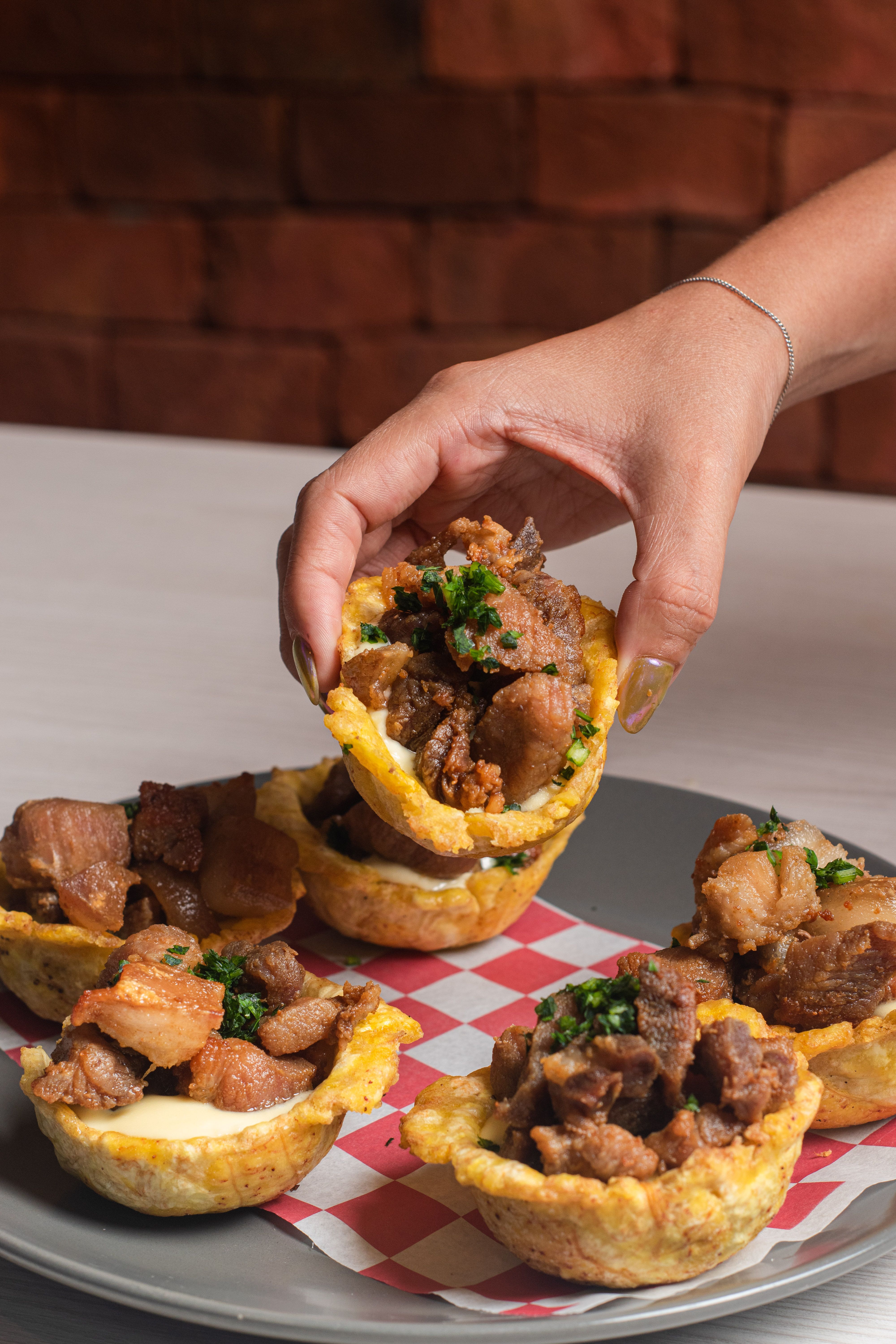
The diets react (see scores below)
Common Ingredients
- green plantains
- oil
- salt
- garlic
- lime
- mojo
- cilantro
- mayonnaise
Specific recipes may vary.
Incompatible with 6 of 11 diets
Diet Ratings
Tostones are made from green plantains, which are extremely high in starch and net carbs. A single medium green plantain contains approximately 50-60g of net carbs before frying, and a standard serving of tostones (2-3 pieces) can easily contain 25-40g of net carbs — enough to push most keto practitioners over or near their entire daily carb limit in one side dish. Plantains are botanically a fruit but nutritionally behave like a starchy vegetable, making them fundamentally incompatible with ketosis. The oil, salt, garlic, lime, mojo, cilantro, and mayonnaise components are keto-friendly, but the primary ingredient — green plantain — is the disqualifying factor. No portion adjustment makes tostones keto-compatible without trivializing the dish to a negligible amount.
Tostones themselves — fried green plantains with oil, salt, garlic, lime, and cilantro — are fully plant-based and would normally earn a strong approval. However, the ingredient list explicitly includes mayonnaise, which in its standard/default form is made with eggs, an animal product. Traditional mayo is unambiguously non-vegan. While vegan mayo alternatives (e.g., Just Egg, Hellmann's Vegan) exist, the default ingredient as listed is conventional egg-based mayonnaise, which disqualifies this dish as presented.
Tostones have multiple paleo violations. The most critical is the unspecified frying oil — traditional tostones are fried in vegetable or canola oil, which are seed oils explicitly excluded from paleo. Added salt is also a paleo exclusion. Mayonnaise (as a dipping component) is almost certainly commercially made, containing soybean or canola oil and additives, making it a clear avoid. Mojo sauce often contains added salt and sometimes other non-paleo ingredients. Green plantains themselves are paleo-friendly as a starchy fruit, and garlic, lime, and cilantro are all approved. However, the preparation method and accompanying ingredients undermine the dish significantly. Even if one substituted coconut or avocado oil for frying, the salt, commercial mayo, and likely non-compliant mojo would still disqualify the dish as typically prepared.
If tostones were prepared with coconut or avocado oil, salt omitted, and served with a homemade paleo-compliant mojo (olive oil, garlic, citrus, herbs), some paleo practitioners — particularly those following Mark Sisson's more flexible Primal Blueprint — might accept plantains as a nutrient-dense starchy carb source, pushing the dish closer to caution territory.
Tostones are twice-fried green plantains, a whole plant-based food that aligns with the Mediterranean diet's emphasis on vegetables and minimally processed ingredients. Green plantains are a good source of resistant starch and fiber. However, the preparation method (deep frying) introduces significant added fat, and the frying oil is unspecified — if a neutral seed oil or lard is used rather than extra virgin olive oil, this conflicts with Mediterranean fat principles. Mayonnaise is a processed condiment high in refined oils and not part of Mediterranean tradition. Garlic, lime, cilantro, and mojo (typically citrus, garlic, olive oil) are all compatible flavors. The dish is not inherently Mediterranean in origin, but plantains as a whole starchy vegetable are analogous to other Mediterranean starches. The combination of frying and mayonnaise pulls it toward caution rather than approval.
Some Mediterranean diet practitioners would view tostones more favorably if prepared with olive oil and served without mayonnaise, arguing that whole-food starchy vegetables fried in olive oil are part of traditional Mediterranean cooking (e.g., Spanish patatas bravas). Others applying strict modern clinical guidelines would flag any deep-fried preparation as inconsistent with the diet's principles regardless of the base ingredient.
Tostones are fried green plantains — a plant-based starch with zero animal-derived ingredients. Every component of this dish is excluded on the carnivore diet: plantains are a high-carbohydrate fruit/starch, garlic and cilantro are plant foods, lime and mojo are plant-derived, and even the mayonnaise likely contains plant oils and additives. There is no animal product of any kind in this dish. This is unambiguously incompatible with the carnivore diet under any tier or variant.
Tostones are twice-fried green plantain slices — plantains are a compliant starchy vegetable on Whole30. Salt, garlic, lime, cilantro, and compliant cooking oil are all fine. Mojo sauce is typically made from citrus juice, garlic, olive oil, and herbs, which is generally compliant, though store-bought versions may contain added sugar or non-compliant additives requiring label scrutiny. The bigger concern is mayonnaise: commercial mayo almost universally contains soy lecithin or added sugar, making it non-compliant. A homemade or Whole30-approved mayo (e.g., Primal Kitchen) made with compliant oils and no soy would be required. Additionally, tostones are a fried, chip-like snack food, and while they are made from a whole-food ingredient (not a grain), they closely resemble 'chips' in form and function — a category explicitly excluded by Whole30's Rule 4 (no chips, fries, or tots). This spirit-of-the-program concern is what the community debates most.
Official Whole30 guidelines explicitly ban chips, french fries, and tots as recreational fried foods regardless of ingredients. Some practitioners argue tostones fall squarely in this excluded category as a fried, snack-style starch. Others, however, note that plantains are a staple whole food in Caribbean cuisine and that tostones served as a side dish (not a snack substitute) may honor the program's intent — Melissa Urban has not explicitly addressed tostones by name.
Tostones themselves (fried green plantains, oil, salt) are inherently low-FODMAP — green plantains are low-FODMAP per Monash at standard servings, and oil and salt are FODMAP-free. However, this dish as listed includes two high-FODMAP ingredients: garlic (high-FODMAP due to fructans at any meaningful quantity) and mojo sauce (a traditional Cuban/Caribbean condiment typically made with garlic, onion, and citrus — both garlic and onion are among the highest-FODMAP foods). The inclusion of raw garlic and mojo makes this dish unsuitable during the elimination phase. Mayonnaise is generally low-FODMAP in standard portions, lime juice is low-FODMAP, and cilantro is low-FODMAP. The dish could be made low-FODMAP by substituting garlic-infused oil for garlic, omitting or replacing mojo with a FODMAP-safe alternative, but as presented it must be rated avoid due to garlic and mojo.
Some clinical FODMAP practitioners note that if the garlic is used solely as an infusion in oil during cooking and removed before serving, it could be rendered low-FODMAP (since FODMAPs are water-soluble, not fat-soluble). Similarly, a mojo made without onion and using garlic-infused oil rather than raw garlic would be safe — so the verdict is highly dependent on preparation method, which is ambiguous in a restaurant or traditional Caribbean context.
Tostones (twice-fried green plantains) present a mixed DASH profile. Green plantains themselves are DASH-friendly — they are a good source of potassium, fiber, resistant starch, and complex carbohydrates, aligning with DASH's emphasis on nutrient-dense whole foods. However, the preparation method involves deep or pan frying in oil, which significantly increases total fat content. The added salt contributes sodium, though this varies by preparation. The mayonnaise dipping sauce is the most problematic element — it adds saturated fat, calories, and often sodium, and is not emphasized in DASH guidelines. Mojo (garlic-citrus sauce) is generally acceptable if oil-based and low in sodium. When made with minimal oil and salt and served without mayonnaise, tostones can be acceptable in moderation. As commonly served with mayo and salted generously, they fall into the caution category — nutritionally interesting base ingredient undermined by high-fat frying and sodium-rich accompaniments.
NIH DASH guidelines emphasize limiting total fat and sodium, which would flag fried, salted preparations. However, some updated DASH-oriented dietitians note that plant-based oils used in moderate frying are preferable to saturated fats, and that potassium-rich plantains can support DASH's blood pressure goals if sodium is controlled — suggesting a baked or air-fried version with low-sodium mojo could edge toward 'approve.'
Tostones are twice-fried green plantains — a starchy carbohydrate source with a moderate-to-high glycemic index, especially once fried. Green plantains are less sweet than ripe plantains and contain more resistant starch, which moderates glycemic impact somewhat compared to their yellow counterparts. However, the frying process adds significant fat (likely from vegetable/seed oils, which are omega-6 heavy and anti-inflammatory concerns in Zone methodology), and the carbohydrate density is high relative to Zone block targets. The mayonnaise dipping component adds saturated fat and likely omega-6 oils. As a side dish with no protein component, tostones push a meal heavily toward carbs and fat without contributing lean protein, making the 40/30/30 ratio difficult to achieve from this dish alone. The garlic, lime, cilantro, and mojo (typically citrus-herb-based) are Zone-friendly polyphenol/flavor components. In Zone terms, plantains are an 'unfavorable' carbohydrate — usable in small blocks but not ideal. The frying oil and mayo are additional concerns. Small portions could technically fit as a carb block in a Zone meal that is otherwise balanced with lean protein and minimal additional fat, but the overall profile makes this a challenging inclusion.
Some Zone practitioners note that green plantains have a lower glycemic index than ripe plantains or white rice and contain resistant starch that blunts insulin response. Sears' later work on polyphenols and anti-inflammatory eating acknowledges that whole food carbohydrate sources, even starchy ones, are preferable to processed grains. A small portion of tostones accompanied by adequate lean protein could be workable within Zone blocks, and the garlic and citrus components provide beneficial polyphenols.
Tostones are twice-fried green plantains, and their anti-inflammatory profile is mixed. Green plantains themselves are a solid whole-food starch — high in resistant starch and fiber, which support gut health and may reduce systemic inflammation. Garlic, lime, cilantro, and mojo (typically garlic, citrus, herbs) are all genuinely anti-inflammatory additions rich in polyphenols and allicin. However, the dish is deep-fried, which introduces two concerns: (1) frying significantly increases caloric density and may generate advanced glycation end products (AGEs) at high temperatures, both of which can promote inflammation; (2) the oil used for frying is unspecified — if a seed oil like corn, sunflower, or vegetable blend is used (common in Caribbean cooking), this adds a substantial omega-6 load and potential oxidation products, both pro-inflammatory. Mayonnaise, a common accompaniment, is typically made from soybean or canola oil with additives, adding further omega-6 concern. If fried in avocado oil or a stable fat and served without mayo, the dish leans more favorably. As typically prepared in restaurants or homes using commercial vegetable oil, it falls into caution territory.
Some anti-inflammatory practitioners would rate this more favorably, noting that green plantains' resistant starch feeds beneficial gut bacteria and that the garlic-citrus-herb mojo profile has documented anti-inflammatory properties — a whole-food starch fried in reasonable quantity is not inherently problematic. Conversely, stricter anti-inflammatory protocols (such as those emphasizing seed oil avoidance) would push this toward 'avoid' given the frying oil concern and mayonnaise.
Tostones are twice-fried green plantain slices — the frying process is the central preparation method, not an optional variation. A standard serving absorbs significant oil during double-frying, making this a high-fat, fried side dish with no meaningful protein. Green plantains do offer some resistant starch and modest fiber, but that nutritional upside is largely negated by the frying method and the inclusion of mayonnaise as a dipping component, which adds saturated fat and empty calories. The garlic, lime, cilantro, and mojo are fine condiment-level additions, but they don't meaningfully alter the overall nutritional profile. For GLP-1 patients, fried foods are a primary category to avoid: they worsen nausea, bloating, and reflux due to slowed gastric emptying, and they deliver calories with poor nutrient density per bite. The mayonnaise further compounds the high-fat concern. This dish fails on fat content, digestibility, protein density, and nutrient density per calorie — four of the most critical GLP-1 dietary criteria simultaneously.
*See how scores were generated at our methodology page.
Nutritional profile
Six traits that cut across every diet.
Fiber & Plants
How much whole-plant food and fiber it delivers.
Healthy Fats
The quality of its fats (unsaturated, omega-3).
Whole / Unprocessed
How close it is to its natural, unprocessed form.
Gut Gentle
How easy it is on digestion (low FODMAP, few irritants).
Low Glycemic
How little it spikes your blood sugar.
Protein Density
How much protein it packs per calorie.
Controversy Index
Higher controversy = more disagreement between diets.
Diet-Specific Tips
 Mediterranean — 5/10
View tips
- Green plantains are a whole, plant-based starchy food — broadly compatible
- Deep frying method adds significant fat; oil type unspecified and critical
- Mayonnaise is a processed condiment inconsistent with Mediterranean principles
- Garlic, lime, cilantro, and mojo are Mediterranean-friendly flavor components
- Not a traditional Mediterranean dish, but analogous starchy preparations exist in the cuisine
- Score would improve substantially if fried in olive oil and mayonnaise is omitted
 Whole30 — 5/10
View tips
- Green plantains are a compliant whole vegetable on Whole30
- Tostones resemble 'chips' in form — Rule 4 explicitly bans chips, fries, and tots
- Mayonnaise as commonly sold contains soy lecithin or added sugar — non-compliant; must use homemade or Whole30-approved mayo
- Mojo sauce requires label-checking for added sugar or non-compliant ingredients
- Garlic, lime, cilantro, salt, and compliant oil are all fully approved
- Spirit-of-the-program debate: fried snack food vs. compliant whole-food side dish
 DASH — 4/10
View tips
- Green plantains are rich in potassium and fiber — DASH-positive base ingredient
- Twice-frying significantly increases total fat content
- Added salt raises sodium load; amount varies by cook
- Mayonnaise adds saturated fat and sodium — not DASH-recommended
- Mojo sauce (garlic, citrus, oil) is relatively DASH-compatible if low-sodium
- Baked or air-fried preparation without mayo would improve DASH score substantially
- No lean protein or dairy components present
 Zone — 4/10
View tips
- Green plantains are a starchy, moderate-to-high glycemic carbohydrate classified as 'unfavorable' in Zone methodology
- Frying adds omega-6-heavy oils, which Sears specifically discourages for their pro-inflammatory effects
- No protein component — dish is purely carb and fat, making Zone ratio balancing entirely dependent on accompaniments
- Mayonnaise contributes additional omega-6 fats and saturated fat
- Garlic, lime, cilantro, and mojo contribute beneficial polyphenols consistent with Zone anti-inflammatory principles
- Green plantains have more resistant starch than ripe plantains, offering some glycemic moderation
- Portion control is critical — even a small serving represents multiple carb blocks with significant fat blocks
 Anti-Inflammatory — 5/10
View tips
- Green plantains are a whole-food starch with resistant starch and fiber — broadly anti-inflammatory
- Garlic, lime, cilantro, and mojo herbs are all anti-inflammatory ingredients
- Twice-frying generates AGEs and significantly increases fat content
- Frying oil is likely a high-omega-6 seed oil (corn, vegetable blend) — pro-inflammatory
- Mayonnaise adds soybean/canola oil and often additives — omega-6 concern
- Dish is acceptable in moderation; preparation method and oil choice are the key variables