Spanish
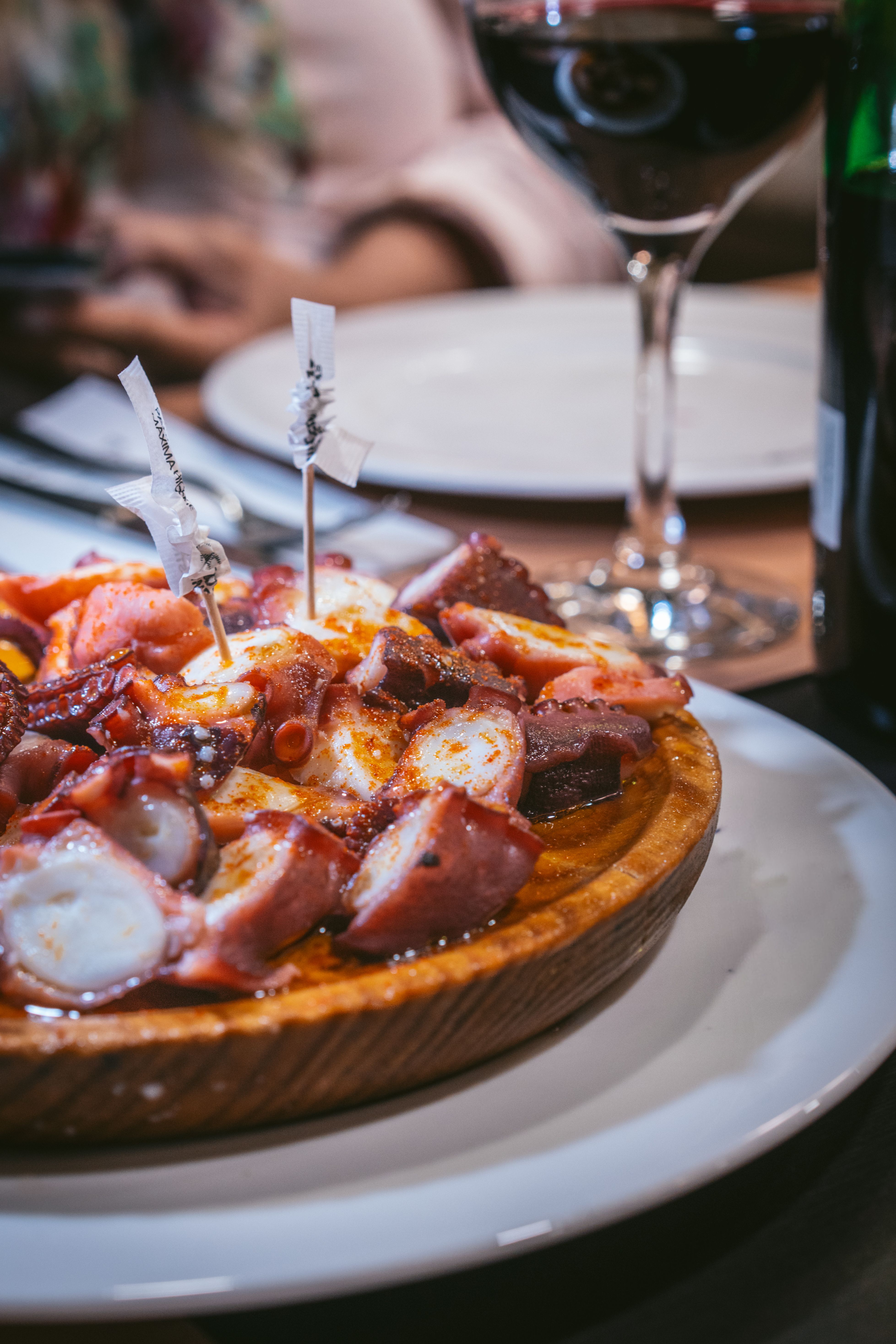
Pulpo a la Gallega
The diets react (see scores below)
Common Ingredients
- octopus
- potatoes
- smoked paprika
- olive oil
- sea salt
- bay leaves
- onion
- garlic
Specific recipes may vary.
Incompatible with 3 of 11 diets
Diet Ratings
Pulpo a la Gallega is fundamentally problematic for keto due to the potatoes, which are a starchy, high-carb vegetable. A standard serving typically includes a significant portion of boiled potatoes (roughly 150-200g), contributing approximately 25-35g of net carbs from the potatoes alone — potentially pushing or exceeding the daily keto limit in a single dish. The octopus itself is excellent for keto: high protein, very low fat, and virtually zero carbs. Olive oil is ideal (healthy fat). Smoked paprika, garlic, onion, bay leaves, and sea salt add negligible carbs. The dish could theoretically be adapted by omitting or drastically reducing potatoes and substituting with a low-carb alternative (e.g., turnip, cauliflower), but as traditionally prepared, the potatoes make it incompatible with strict keto. A caution rating reflects that the non-potato components are keto-friendly, but the dish as served in its authentic form is borderline to incompatible.
Pulpo a la Gallega is a traditional Galician dish whose primary ingredient is octopus, a marine animal. All remaining ingredients (potatoes, smoked paprika, olive oil, sea salt, bay leaves, onion, garlic) are plant-based, but the dish is fundamentally defined by its animal protein. Octopus is unambiguously an animal product, making this dish entirely incompatible with a vegan diet.
Pulpo a la Gallega features octopus as its protein — a clear paleo-approved seafood — alongside olive oil, smoked paprika, bay leaves, onion, and garlic, all of which are paleo-compliant. However, two ingredients create friction: white potatoes and sea salt. White potatoes are a debated ingredient in the paleo community, originally excluded by Cordain but increasingly accepted by modern paleo practitioners. Sea salt (added salt) is technically discouraged under strict paleo rules, though many practitioners consider unrefined sea salt acceptable in moderation. The dish is largely built on whole, unprocessed ingredients and represents a traditional preparation rather than a processed product, which works in its favor. The combination of the potato debate and added salt tips this into caution territory rather than a full approval.
Strict Cordain-school paleo would flag both white potatoes (nightshade with higher glycemic impact) and added salt as non-compliant, potentially pushing this toward avoid. Conversely, Mark Sisson and Whole30 both permit white potatoes, and many modern paleo authorities treat unrefined sea salt as acceptable, which would elevate this dish closer to an approve rating.
Pulpo a la Gallega is an exemplary Mediterranean-aligned dish. Octopus is a lean, nutrient-dense seafood that perfectly fulfills the Mediterranean diet's recommendation of fish and seafood 2-3 times weekly. The dish is finished generously with extra virgin olive oil, the cornerstone fat of the Mediterranean diet. Potatoes provide complex carbohydrates, while smoked paprika, garlic, onion, bay leaves, and sea salt are whole, minimally processed seasonings with no added sugars or refined ingredients. Every component is whole and unprocessed. Though Galician in origin rather than strictly Mediterranean coastal, the dish's nutritional profile is fully consistent with Mediterranean principles.
Pulpo a la Gallega is fundamentally incompatible with the carnivore diet despite its seafood base. While octopus itself is a perfectly acceptable animal-derived protein, the dish is heavily laden with plant-based ingredients that are all excluded on carnivore: potatoes (starchy plant carbohydrate), smoked paprika (plant spice), olive oil (plant oil), bay leaves (plant herb), onion, and garlic. The ratio of plant to animal ingredients makes this dish impossible to approve even at a 'caution' level — it is structurally a plant-forward dish with seafood as a supporting component. Sea salt is the only other carnivore-compatible ingredient besides the octopus itself.
Pulpo a la Gallega is a traditional Spanish dish of boiled octopus served over sliced potatoes, dressed with olive oil, smoked paprika, and sea salt. Every ingredient in this preparation is fully Whole30 compliant: octopus is a permitted seafood, potatoes are an allowed vegetable, smoked paprika is a compliant spice, olive oil is an approved natural fat, sea salt is explicitly allowed, and bay leaves, onion, and garlic are all compliant aromatics and vegetables. There are no excluded ingredients — no grains, legumes, dairy, added sugars, alcohol, or other banned substances. This is a whole-food, minimally processed dish that aligns perfectly with the spirit of the Whole30 program.
Pulpo a la Gallega as traditionally prepared contains two major high-FODMAP ingredients: onion and garlic. Both are significant sources of fructans and must be avoided during the elimination phase. Onion is one of the highest-FODMAP foods tested by Monash University, with even small amounts (e.g., 1/4 onion) being high-FODMAP. Garlic similarly is high-FODMAP at any culinary quantity — a single clove triggers symptoms in sensitive individuals. The remaining ingredients are low-FODMAP: octopus is a plain protein with no FODMAPs, potatoes are low-FODMAP at a standard serving (up to ~300g), smoked paprika is low-FODMAP in typical culinary amounts, olive oil is FODMAP-free (FODMAPs are water-soluble), sea salt is FODMAP-free, and bay leaves used for flavoring contribute negligible FODMAPs. However, the foundational use of both onion and garlic as core flavoring ingredients makes this dish incompatible with the elimination phase without significant modification. A low-FODMAP adaptation would require omitting both onion and garlic entirely and using garlic-infused oil instead.
Pulpo a la Gallega features several DASH-friendly elements: octopus is a lean protein rich in potassium and magnesium, potatoes contribute potassium and fiber, olive oil aligns well with DASH's emphasis on healthy vegetable oils, and aromatic vegetables like onion and garlic are encouraged. However, the dish raises caution primarily due to sea salt — traditional preparations are notably salty, and sodium content can easily approach or exceed DASH limits depending on preparation. Octopus itself is also moderately high in sodium naturally (~400mg per 100g cooked). Smoked paprika is a low-sodium, DASH-compatible spice. Overall, the dish's ingredients are largely whole and minimally processed, but the sodium burden from both the octopus and added sea salt requires careful portion control and restraint with added salt to fit within DASH guidelines.
NIH DASH guidelines emphasize limiting sodium strictly (<2,300mg/day standard, <1,500mg/day low-sodium), which makes traditionally salted preparations of this dish borderline. However, updated clinical interpretations note that for non-hypertensive individuals or those following the standard (not low-sodium) DASH tier, a portion-controlled serving with reduced added salt could reasonably fit into a DASH meal plan given the otherwise high-quality ingredients.
Pulpo a la Gallega is a traditional Galician dish that has several Zone-friendly elements alongside one notable concern. Octopus is an excellent lean protein source — low in fat, high in quality protein, and rich in omega-3s, making it an ideal Zone protein block. Olive oil is the canonical Zone fat, providing monounsaturated fat in favorable proportions. Smoked paprika is a polyphenol-rich spice that aligns well with Sears' anti-inflammatory emphasis. Onion and garlic are favorable low-glycemic Zone carb contributors. The significant problem is the potatoes, which are explicitly categorized as 'unfavorable' high-glycemic carbohydrates in Zone methodology — Dr. Sears lists potatoes alongside white bread and white rice as carbs to limit or avoid. In traditional preparation, potatoes form a substantial base of the dish, pushing the carb load toward high-glycemic territory. However, because the Zone is ratio-based rather than exclusion-based, a modified portion with reduced potato and increased vegetable substitution (e.g., serving over greens or with a side salad) can bring this dish into Zone balance. As traditionally served with generous potato portions, the glycemic load is problematic, but the dish has genuine Zone-compatible bones.
Some Zone practitioners, particularly those following Sears' later anti-inflammatory protocols, argue that the overall glycemic load of a dish matters more than individual ingredients. If potato portions are kept small (as a garnish rather than a base) and the meal is balanced with additional protein and the olive oil fat component, the dish can be brought reasonably close to Zone ratios. The anti-inflammatory profile of octopus (omega-3s), olive oil (monounsaturated fat), and paprika (polyphenols) is strongly positive, and stricter Zone adherents might upgrade this to a 6-7 with conscious portioning.
Pulpo a la Gallega is a traditional Galician dish with a strong anti-inflammatory profile. Octopus is a lean seafood rich in protein, omega-3 fatty acids, selenium, and vitamin B12, with minimal saturated fat — closely aligned with the anti-inflammatory emphasis on seafood. Olive oil is a cornerstone of anti-inflammatory eating, containing oleocanthal, a natural COX inhibitor with properties comparable to ibuprofen. Smoked paprika provides carotenoids (capsanthin, beta-carotene) and polyphenols with antioxidant activity. Garlic and onion contribute quercetin, allicin, and organosulfur compounds that suppress NF-κB inflammatory pathways. Potatoes, while a moderate-glycemic starch, are a whole food providing potassium, vitamin C, and resistant starch (especially when cooled); they are not meaningfully pro-inflammatory in this context. Bay leaves contribute additional polyphenols. Sea salt and bay leaves are nutritionally neutral. The dish is minimally processed, free of refined sugars, seed oils, or trans fats, and fits squarely within a Mediterranean anti-inflammatory eating pattern. The only minor limitation is that potatoes are not a standout anti-inflammatory food, which keeps the score from reaching 9-10.
Pulpo a la Gallega is a strong GLP-1-compatible dish. Octopus is an exceptionally lean, high-protein seafood — a typical 150g serving delivers roughly 25-30g of protein with very low fat content, satisfying the meal-level protein target. The olive oil drizzle is a heart-healthy unsaturated fat used in modest amounts as a finishing condiment, not a cooking medium, keeping overall fat low. Potatoes add digestible complex carbohydrates, a modest fiber contribution, and potassium, which supports electrolyte balance — relevant given GLP-1-related hydration concerns. Smoked paprika, garlic, and onion provide antioxidants and flavor without meaningful fat or sugar load. The dish is not fried, not greasy, not spicy, and not carbonated. Octopus has a tender texture when properly cooked, supporting easy digestibility. The preparation is nutrient-dense per calorie and works well in a small serving, which suits the reduced appetite typical on GLP-1 medications. The only mild limitation is that potatoes are a moderate-glycemic carbohydrate, and if portions are large they could crowd out protein intake — but as a traditional preparation this dish keeps potato as a supporting element rather than the base.
*See how scores were generated at our methodology page.
Nutritional profile
Six traits that cut across every diet.
Fiber & Plants
How much whole-plant food and fiber it delivers.
Healthy Fats
The quality of its fats (unsaturated, omega-3).
Whole / Unprocessed
How close it is to its natural, unprocessed form.
Gut Gentle
How easy it is on digestion (low FODMAP, few irritants).
Low Glycemic
How little it spikes your blood sugar.
Protein Density
How much protein it packs per calorie.
Controversy Index
Higher controversy = more disagreement between diets.
Diet-Specific Tips
 Keto — 4/10
View tips
- Potatoes are the critical problem: high net carbs (~25-35g per standard serving), a starchy vegetable explicitly excluded from keto
- Octopus is keto-friendly: lean protein, zero carbs — no issue
- Olive oil is a preferred keto fat source
- Aromatics (garlic, onion, bay leaves, paprika) contribute minimal net carbs
- Traditional preparation cannot be considered keto without substituting or eliminating potatoes
- Adapted version (cauliflower or turnip base) could achieve an 'approve' rating
 Paleo — 5/10
View tips
- Octopus is fully paleo-approved seafood
- Olive oil is a preferred paleo fat
- White potatoes are debated — excluded by Cordain, accepted by Sisson and Whole30
- Sea salt (added salt) is discouraged under strict paleo rules
- Smoked paprika, garlic, onion, and bay leaves are all paleo-compliant
- Traditional whole-food preparation with no processed ingredients
 Mediterranean — 9/10
View tips
- Octopus is a lean, high-protein seafood fully consistent with 2-3 weekly seafood servings
- Extra virgin olive oil used as primary fat — the canonical Mediterranean fat source
- Potatoes are a whole, minimally processed carbohydrate source
- All seasonings (paprika, garlic, onion, bay leaves, sea salt) are whole and unprocessed
- Zero added sugars, refined grains, or processed ingredients
- No red meat or saturated fat concerns
 Whole30 — 9/10
View tips
- Octopus is a fully compliant seafood protein
- Potatoes are Whole30-approved vegetables
- Smoked paprika, bay leaves, onion, and garlic are all compliant seasonings and aromatics
- Olive oil is an approved natural fat
- Sea salt is explicitly allowed on Whole30
- No excluded ingredients present
- Dish is whole-food and minimally processed, honoring the spirit of the program
 DASH — 5/10
View tips
- Octopus is a lean, low-fat protein naturally rich in potassium and magnesium — DASH-compatible protein source
- Potatoes provide potassium and fiber, supporting DASH nutrient targets
- Olive oil aligns with DASH emphasis on healthy vegetable oils
- Sea salt is a significant concern — traditional preparation can be high-sodium, conflicting with DASH sodium limits
- Octopus has moderate intrinsic sodium (~400mg/100g), compounding salt addition risk
- No saturated fat, added sugars, full-fat dairy, or processed ingredients — clean ingredient profile
- Sodium reduction (using minimal added salt and relying on paprika and garlic for flavor) would significantly improve DASH compatibility
 Zone — 5/10
View tips
- Octopus is an excellent lean, omega-3-rich Zone protein source
- Olive oil is the ideal Zone monounsaturated fat
- Potatoes are explicitly 'unfavorable' high-glycemic carbs in Zone methodology
- Smoked paprika and garlic contribute anti-inflammatory polyphenols aligned with Sears' protocol
- Traditional preparation is potato-heavy, skewing macros toward high-glycemic carbohydrates
- Dish can be Zone-adapted by reducing potato quantity and pairing with low-glycemic vegetables
- Overall anti-inflammatory ingredient profile is strong despite the potato issue
 Anti-Inflammatory — 8/10
View tips
- Octopus: lean seafood with omega-3 fatty acids, selenium, and B12 — strongly anti-inflammatory
- Extra virgin olive oil: rich in oleocanthal and monounsaturated fats, a top anti-inflammatory fat
- Smoked paprika: carotenoids and polyphenols with antioxidant and anti-inflammatory activity
- Garlic and onion: quercetin, allicin, and organosulfur compounds inhibit pro-inflammatory pathways
- Potatoes: whole food, moderate glycemic impact, not pro-inflammatory in modest portions
- No refined ingredients, seed oils, added sugars, or processed additives
- Fits Mediterranean dietary pattern, consistently associated with lower inflammatory markers
 GLP-1 Friendly — 8/10
View tips
- Octopus is very lean and high in protein (~25-30g per 150g serving), directly supporting the #1 GLP-1 dietary priority
- Extremely low fat content — olive oil is used as a light finishing drizzle, not a heavy cooking medium
- Not fried, not greasy — easy on slowed gastric emptying
- Potatoes contribute digestible complex carbs, potassium, and some fiber, supporting hydration and electrolyte needs
- No high-sugar ingredients, no carbonation, no alcohol, no heavy saturated fat
- Nutrient-dense per calorie with strong small-portion functionality
- Smoked paprika and garlic are mild spices unlikely to worsen reflux or nausea
- Mild caution: keep potato portions moderate to preserve protein-to-carb ratio at the meal level