This dish contains raw or undercooked ingredients. Consume at your discretion.
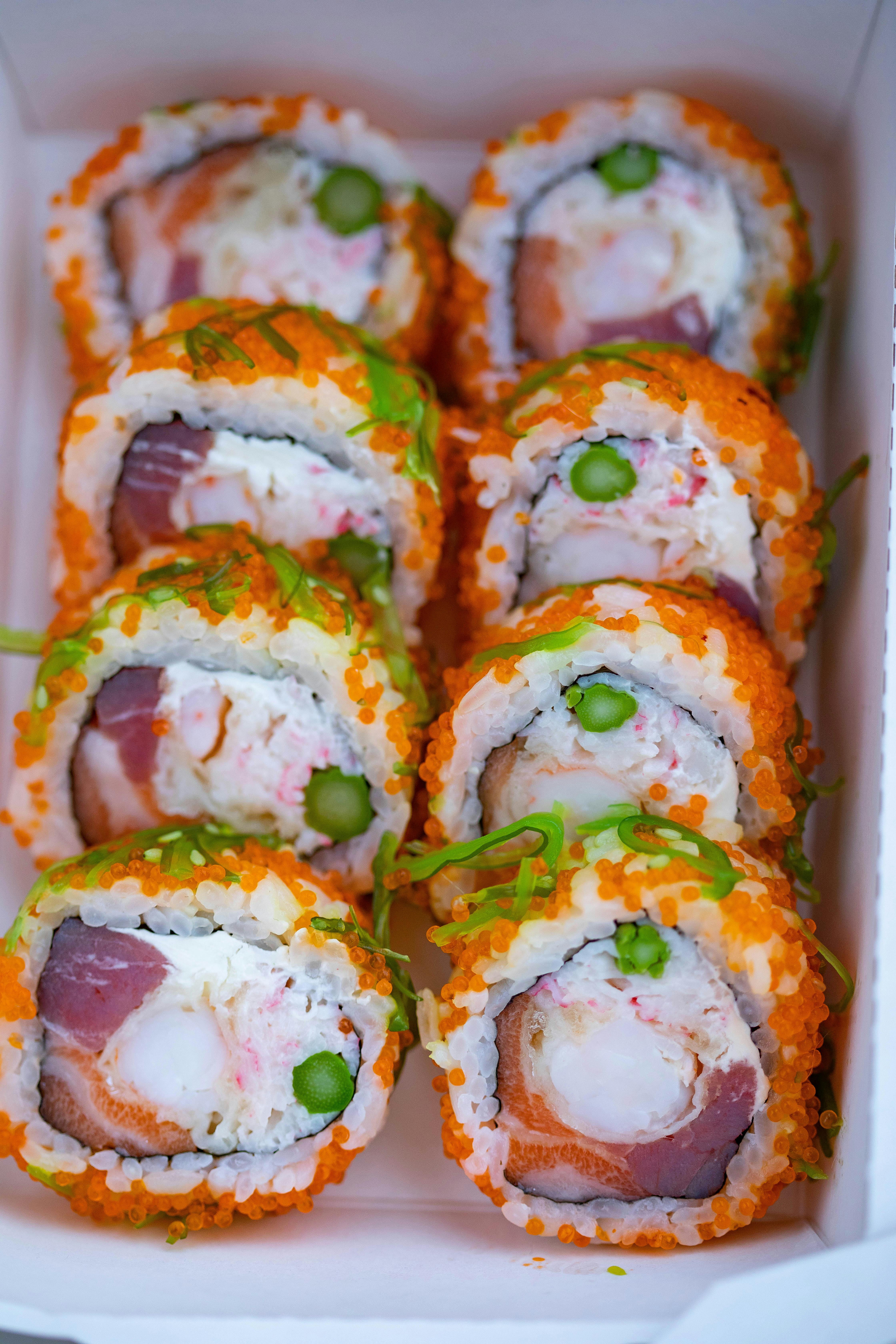
Photo: Valeria Boltneva / Pexels
Japanese
Rainbow Roll
The diets react (see scores below)
Common Ingredients
- sushi rice
- nori
- imitation crab
- avocado
- cucumber
- tuna
- salmon
- yellowtail
Specific recipes may vary.
Incompatible with 5 of 11 diets
Diet Ratings
The Rainbow Roll is fundamentally incompatible with ketogenic diet due to sushi rice, which is the primary disqualifying ingredient. A standard Rainbow Roll contains approximately 40-50g of net carbs from sushi rice alone (roughly 1 cup cooked rice per roll), which can single-handedly exceed the entire daily carb allowance for strict keto. Imitation crab adds further hidden carbs as it is made from processed starch (surimi) with added sugars. The remaining ingredients — avocado, cucumber, nori, tuna, salmon, and yellowtail — are individually keto-friendly, but the dish as a whole cannot be consumed in any meaningful portion without breaking ketosis. There is no practical way to 'portion control' a Rainbow Roll while retaining its identity as a dish.
The Rainbow Roll contains multiple animal products that are strictly excluded from a vegan diet. Tuna, salmon, and yellowtail are all fish (animal flesh), and imitation crab — despite the name — is typically made from surimi, a processed fish paste. These ingredients are unambiguously non-vegan. While sushi rice, nori, avocado, and cucumber are plant-based, the dish as defined cannot be considered vegan in any form.
The Rainbow Roll contains multiple non-paleo ingredients that make it incompatible with the diet. Sushi rice is a grain and is excluded under strict paleo rules. Imitation crab is a heavily processed food typically made from surimi (processed white fish), starch fillers, artificial flavors, and additives — clearly a processed food. Nori (dried seaweed) is generally considered paleo-acceptable, and the fish (tuna, salmon, yellowtail), avocado, and cucumber are all paleo-approved. However, the foundational grain component (sushi rice) and the processed imitation crab are disqualifying ingredients that cannot be overlooked. The dish as traditionally prepared is not paleo-compatible.
The Rainbow Roll contains several Mediterranean-friendly ingredients — raw fish (tuna, salmon, yellowtail) are excellent sources of omega-3 fatty acids and align well with the diet's emphasis on seafood 2-3 times weekly. Avocado and cucumber are healthy, whole-food ingredients. However, sushi rice is a refined, white short-grain rice prepared with added sugar and rice vinegar, which conflicts with the Mediterranean preference for whole grains and minimal added sugars. Imitation crab (surimi) is a highly processed ingredient made from white fish paste with fillers, starch, and additives, which contradicts the diet's emphasis on minimally processed foods. The dish lacks olive oil entirely. On balance, the quality seafood and vegetables partially redeem the dish, but the refined rice and processed imitation crab prevent a full approval.
Some Mediterranean diet practitioners take a broader, flexitarian view and would argue that raw fish-forward dishes like sushi represent a spirit of fresh, whole seafood consumption consistent with coastal Mediterranean traditions. From this perspective, occasional consumption of white rice — which does appear in some Southern European and Middle Eastern Mediterranean cuisines — combined with high-quality fish makes this an acceptable moderate choice.
The Rainbow Roll is fundamentally incompatible with the carnivore diet. While it does contain carnivore-approved ingredients (tuna, salmon, yellowtail), the dish is built on a foundation of plant-based and non-compliant components. Sushi rice is a grain carbohydrate — strictly excluded. Nori (seaweed) is a plant/algae product. Avocado is a fruit. Cucumber is a vegetable. Imitation crab is a highly processed product made primarily from surimi (white fish) but contains starch, sugar, and various plant-based additives and fillers — disqualifying it entirely. The raw fish components alone cannot redeem a dish that is structurally dependent on grains and plant foods. There is no version of a Rainbow Roll that is carnivore-compatible without a complete reconstruction that would make it an entirely different dish.
The Rainbow Roll contains two excluded ingredients. First, sushi rice is a grain (rice), which is explicitly excluded from Whole30. Second, imitation crab (surimi) is typically made with starch fillers, sugar, and often contains soy or other non-compliant additives, making it a processed food that fails on multiple counts. Even setting aside imitation crab, the sushi rice alone disqualifies this dish entirely. The remaining ingredients — nori, avocado, cucumber, tuna, salmon, and yellowtail — are all Whole30-compliant, but the presence of rice and imitation crab makes this dish a clear avoid.
The Rainbow Roll contains several low-FODMAP ingredients (sushi rice, nori, cucumber, tuna, salmon, yellowtail) but has two notable concerns. First, avocado is low-FODMAP only at 1/8 of a whole avocado per Monash University; a typical sushi roll portion likely contains more than this threshold, pushing it into moderate-to-high FODMAP territory due to sorbitol content. Second, imitation crab (surimi) typically contains wheat starch as a binding agent, making it a source of fructans. Sushi rice seasoned with plain rice vinegar and sugar is generally low-FODMAP. The fish proteins (tuna, salmon, yellowtail) are all low-FODMAP. However, the combination of avocado in a realistic serving size and wheat-containing imitation crab introduces meaningful FODMAP load, warranting caution rather than approval during the elimination phase.
Monash University rates avocado as low-FODMAP at 1/8 avocado (30g), which is smaller than what is typically served in a multi-piece sushi roll — clinical FODMAP practitioners often advise avoiding avocado-containing dishes during strict elimination for this reason. Additionally, many FODMAP practitioners recommend asking about imitation crab ingredients, as wheat-based surimi would make this roll unsuitable for elimination phase entirely.
Rainbow Roll contains several DASH-friendly components — fresh tuna, salmon, and yellowtail provide lean protein and heart-healthy omega-3 fatty acids; avocado contributes potassium and healthy monounsaturated fats; cucumber adds a vegetable serving. However, two notable concerns arise: (1) Sushi rice is prepared with seasoned rice vinegar and sugar, making it a refined, higher-glycemic carbohydrate rather than the whole grain DASH emphasizes. (2) Imitation crab (surimi) is a processed ingredient typically high in sodium (a 3 oz serving can contain 400–600mg sodium), added sugars, and artificial additives — inconsistent with DASH's emphasis on minimally processed foods. A typical rainbow roll portion (6–8 pieces) can deliver 600–900mg sodium primarily from the imitation crab and seasoned rice, which is significant within a 1,500–2,300mg daily budget. The fresh fish components are genuinely DASH-compatible, preventing an 'avoid' rating, but the processed surimi and refined rice warrant a caution verdict requiring portion awareness.
NIH DASH guidelines broadly recommend lean fish and limit processed, high-sodium foods — placing imitation crab firmly in the 'limit' category. However, updated clinical interpretations note that sushi in moderate portions can fit a heart-healthy diet, and some DASH-oriented dietitians accept rainbow rolls occasionally, particularly if imitation crab is substituted with real crab or additional fresh fish to reduce sodium and processing concerns.
The Rainbow Roll is a mixed Zone proposition. On the positive side, it contains several excellent Zone-friendly ingredients: tuna, salmon, and yellowtail are lean, omega-3-rich proteins that Sears explicitly favors; avocado provides ideal monounsaturated fat; cucumber is a low-glycemic vegetable carb. However, sushi rice is the primary problem — it is a high-glycemic refined white rice that Dr. Sears classifies as an 'unfavorable' carbohydrate. A standard rainbow roll contains roughly 30-40g of sushi rice carbohydrates per roll, which skews the carb block heavily toward high-glycemic sources rather than the preferred low-glycemic vegetables. Imitation crab (surimi) is a processed protein source containing added starch and sugar, further compounding the glycemic load. The overall macronutrient ratio of a typical rainbow roll skews heavily toward carbohydrates (driven by rice) with insufficient protein density to balance the blocks. A single roll might serve as a Zone 'caution' food if portions are strictly limited (perhaps 4-6 pieces max) and paired with additional lean protein and low-glycemic vegetables. The fish and avocado components are genuinely Zone-favorable, preventing a lower score.
Some Zone practitioners and later Sears writings on the Mediterranean-Zone approach acknowledge that fish-forward meals with healthy fats can partially offset glycemic concerns from modest rice portions. The anti-inflammatory omega-3 content from tuna, salmon, and yellowtail aligns strongly with Sears' post-2000 anti-inflammatory framework. A strict Zone purist would flag the sushi rice and imitation crab heavily, while a more flexible Zone follower might treat a half-roll serving as an acceptable occasional component of a larger Zone meal.
The Rainbow Roll has a genuinely mixed anti-inflammatory profile. On the positive side, it contains three omega-3-rich fatty fish — tuna, salmon, and yellowtail — which are among the most strongly anti-inflammatory foods in the pyramid. Avocado contributes monounsaturated fats, vitamin E, and glutathione. Cucumber and nori add modest antioxidants and minerals. However, the dish is pulled down by two significant factors: sushi rice and imitation crab. Sushi rice is a refined carbohydrate seasoned with sugar and rice vinegar, spiking the glycemic load and contributing to an inflammatory response when consumed in the quantities typical of a roll. Imitation crab (surimi) is a processed food typically made from pollock, starch, sugar, artificial flavors, and food coloring — it contains additives and refined starches that conflict with anti-inflammatory principles. If the imitation crab were replaced with real crab or omitted, this roll would score closer to 7-8. As-is, the processing burden from the surimi and refined rice tempers the strong anti-inflammatory contributions from the fish and avocado, landing this dish in the cautious-positive range.
Some anti-inflammatory practitioners (influenced by the Autoimmune Protocol) would flag white rice as a potential gut irritant and rate this dish lower, while Dr. Weil's framework is more permissive about white rice in small portions and would likely emphasize the omega-3 benefits of the fish lineup as the dominant signal.
The Rainbow Roll has genuine nutritional strengths — tuna, salmon, and yellowtail provide lean, high-quality protein with beneficial omega-3 fatty acids, and cucumber adds hydration and easy digestibility. However, several factors limit its GLP-1 rating. Sushi rice is a refined, high-glycemic grain with minimal fiber and low protein density, and a standard rainbow roll contains a significant volume of it relative to protein. Imitation crab (surimi) is highly processed, low in protein compared to real seafood, and contains added starch and sodium. Avocado adds healthy unsaturated fat but also increases total fat per serving. Raw fish carries food safety considerations — GLP-1 patients are not immunocompromised as a class, but nausea sensitivity may make foodborne illness risk more consequential. A typical 8-piece roll delivers roughly 20-25g protein and 40-50g refined carbohydrate with minimal fiber, which is a poor macronutrient ratio for GLP-1 patients. Small portions (4 pieces) improve the profile meaningfully. Best consumed as an occasional meal with edamame or miso soup to boost protein and fiber.
Some GLP-1-focused RDs view sushi rolls favorably because the protein comes from omega-3-rich fish and the portions are naturally small and pre-divided, supporting the 4-5 small meal pattern. Others flag the refined rice load and processed imitation crab as counterproductive given the limited caloric budget — individual tolerance for the carbohydrate content and raw fish also varies.
*See how scores were generated at our methodology page.
Nutritional profile
Six traits that cut across every diet.
Fiber & Plants
How much whole-plant food and fiber it delivers.
Healthy Fats
The quality of its fats (unsaturated, omega-3).
Whole / Unprocessed
How close it is to its natural, unprocessed form.
Gut Gentle
How easy it is on digestion (low FODMAP, few irritants).
Low Glycemic
How little it spikes your blood sugar.
Protein Density
How much protein it packs per calorie.
Controversy Index
Higher controversy = more disagreement between diets.
Diet-Specific Tips
 Mediterranean — 5/10
View tips
- High-quality omega-3-rich fish (tuna, salmon, yellowtail) strongly aligns with Mediterranean seafood guidelines
- Imitation crab is a highly processed, additive-laden ingredient that contradicts whole-food principles
- Sushi rice is a refined grain prepared with added sugar, not aligned with whole grain preference
- Avocado and cucumber are healthy, Mediterranean-compatible whole foods
- No olive oil used; dish relies on no traditional Mediterranean fats
- Japanese cuisine, not Mediterranean in origin, so dietary context differs significantly
 Low-FODMAP — 5/10
View tips
- Avocado is low-FODMAP only at ≤30g (1/8 avocado); typical roll serving likely exceeds this threshold, introducing sorbitol
- Imitation crab (surimi) commonly contains wheat starch, a source of fructans — a significant FODMAP concern
- Sushi rice, nori, cucumber, tuna, salmon, and yellowtail are all low-FODMAP and safe
- Sushi rice vinegar seasoning is typically low-FODMAP if no high-fructose additives are used
- Combined FODMAP load from avocado quantity and imitation crab makes this risky during elimination phase
 DASH — 5/10
View tips
- Imitation crab (surimi) is processed and high in sodium — a significant DASH concern
- Sushi rice is refined and sugar-seasoned, not a whole grain as DASH recommends
- Fresh tuna, salmon, and yellowtail are excellent lean protein and omega-3 sources aligned with DASH
- Avocado provides DASH-beneficial potassium and monounsaturated fats
- Cucumber adds a vegetable component supporting DASH vegetable servings
- Portion size matters: sodium per roll ranges 600–900mg, which is substantial within daily limits
- Substituting imitation crab with real crab or additional fish would meaningfully improve DASH compatibility
 Zone — 5/10
View tips
- Sushi rice is high-glycemic refined white rice — an 'unfavorable' Zone carbohydrate that dominates the carb block
- Tuna, salmon, and yellowtail are ideal Zone proteins: lean, omega-3-rich, and anti-inflammatory
- Avocado is a near-perfect Zone fat source (monounsaturated)
- Imitation crab (surimi) is processed, contains added starch and sugar — an unfavorable Zone protein
- Cucumber provides low-glycemic vegetable carbs, partially offsetting the rice
- Standard roll portion likely provides too many carb blocks from rice relative to protein and fat blocks
- Overall macro ratio skews carbohydrate-heavy, disrupting the 40/30/30 Zone balance
 Anti-Inflammatory — 6/10
View tips
- Salmon, tuna, and yellowtail provide substantial omega-3 fatty acids (EPA/DHA) — strongly anti-inflammatory
- Avocado contributes monounsaturated fats and antioxidants
- Imitation crab is a processed food with refined starch, added sugar, and artificial additives — pro-inflammatory
- Sushi rice is a refined, high-glycemic carbohydrate with added sugar — moderately pro-inflammatory
- Nori and cucumber add minor antioxidant and mineral value
- Overall balance is positive from fish content but meaningfully offset by processed and refined ingredients
 GLP-1 Friendly — 5/10
View tips
- Refined sushi rice is low-fiber, high-glycemic, and dominates the macronutrient profile
- Real fish (tuna, salmon, yellowtail) provides lean protein and beneficial omega-3 fats
- Imitation crab is highly processed with added starch and lower protein density
- Avocado contributes healthy unsaturated fat but raises total fat per serving
- Typical 8-piece roll delivers ~20-25g protein against ~40-50g refined carbs with minimal fiber
- Naturally small, discrete pieces support portion control
- Raw fish carries food safety risk that is more consequential given GLP-1 nausea sensitivity
- No significant GI triggers (not fried, not spicy, not carbonated)