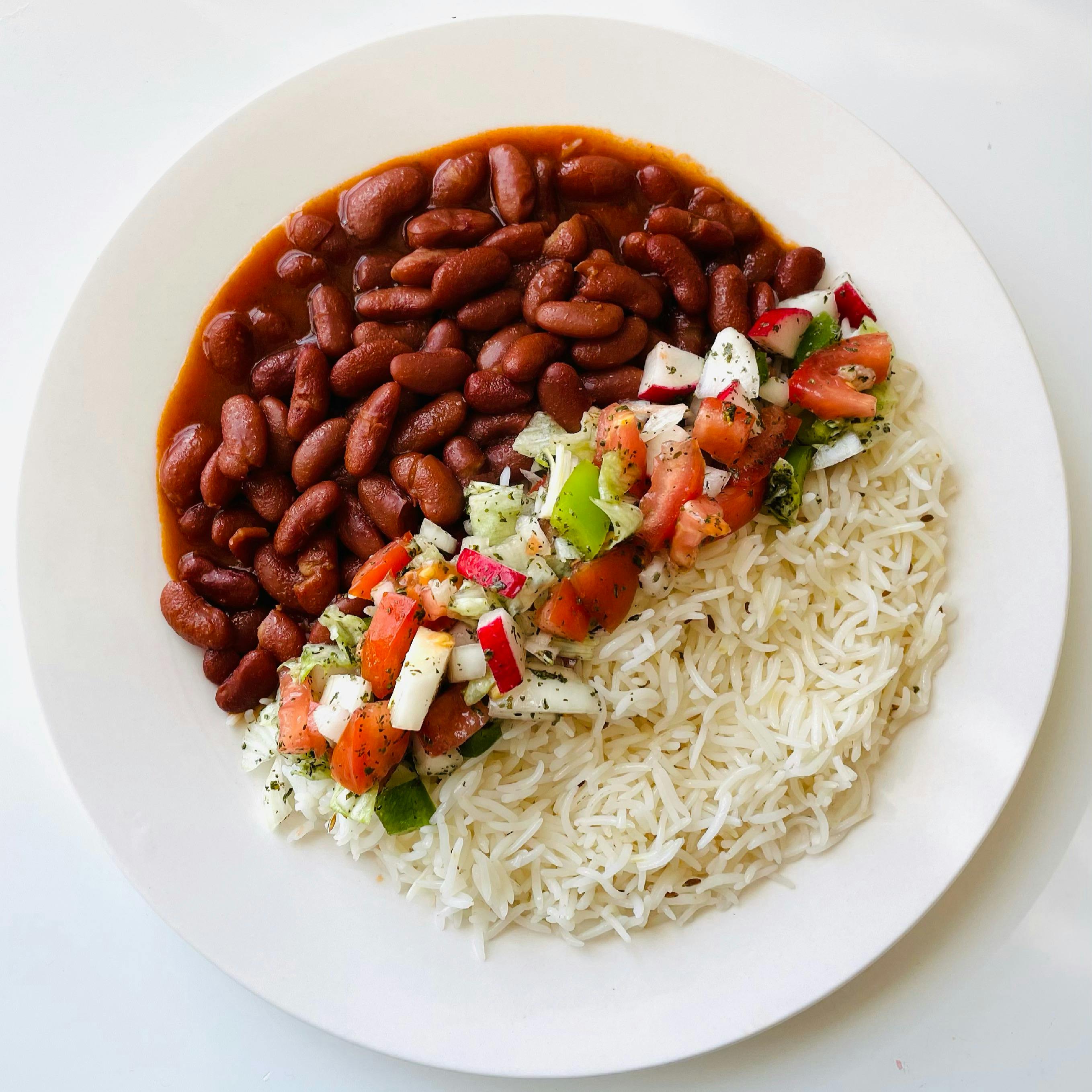
Photo: I Own My Food Art / Pexels
Indian
Rajma (Kidney Bean Curry)
The diets react (see scores below)
Common Ingredients
- kidney beans
- tomatoes
- onion
- ginger
- garlic
- garam masala
- cumin
- cilantro
Specific recipes may vary.
Incompatible with 5 of 11 diets
Diet Ratings
Rajma is fundamentally incompatible with a ketogenic diet. Kidney beans are the primary ingredient and are extremely high in net carbs — a single cup of cooked kidney beans contains approximately 33-35g of net carbs, which can exceed or nearly exhaust the entire daily keto carb limit in one serving. While the accompanying ingredients (tomatoes, onion, spices, cilantro) are relatively low-carb in modest amounts, they cannot offset the dominant carb load from the beans. The dish also provides minimal fat, which is the opposite of keto macros requirements. Kidney beans are a legume, and legumes are broadly excluded from ketogenic eating due to their starch content.
Rajma is a traditional North Indian kidney bean curry made entirely from whole plant-based ingredients. Every component — kidney beans, tomatoes, onion, ginger, garlic, garam masala, cumin, and cilantro — is fully plant-derived with no animal products or animal-derived ingredients. The dish is built around kidney beans, an excellent whole-food protein source, supported by nutrient-dense aromatics and spices. This is precisely the kind of whole-food, legume-centered meal that vegan and whole-food plant-based advocates alike enthusiastically endorse. Note that restaurant or home-cook versions occasionally add ghee or cream for richness, so it is worth confirming preparation method when ordering out, but the base dish as listed here is unambiguously vegan.
Rajma is centered on kidney beans, a legume that is explicitly excluded from the paleo diet. Legumes are avoided due to their high lectin and phytic acid content (antinutrients), which paleo authorities argue interfere with nutrient absorption and gut health. Kidney beans in particular are considered one of the more problematic legumes due to their high phytohaemagglutinin (lectin) content. The remaining ingredients — tomatoes, onion, ginger, garlic, garam masala, cumin, and cilantro — are all paleo-compatible, but the primary protein and bulk of the dish is non-paleo. There is no version of this dish that can be made paleo-compliant while still being recognizable as Rajma.
Rajma is an excellent fit for the Mediterranean diet despite its Indian origins. Kidney beans are a core legume — plant-based, high in fiber, protein, and micronutrients — exactly the type of food the Mediterranean diet emphasizes eating multiple times daily. The supporting ingredients (tomatoes, onion, garlic, ginger) are all whole vegetables and aromatics that align perfectly with Mediterranean principles. Spices like cumin and garam masala add flavor without processed additives. The only minor consideration is cooking fat (traditionally ghee or oil), but prepared with olive oil this dish is essentially a Mediterranean-ideal legume stew. The absence of red meat, refined grains, added sugars, or processed ingredients makes this a highly compatible dish.
Rajma is entirely plant-based and represents the antithesis of the carnivore diet. Kidney beans are a legume — one of the most explicitly excluded food categories in carnivore eating due to their high carbohydrate content, lectins, phytates, and antinutrients. Every single ingredient in this dish is plant-derived: the beans, tomatoes, onion, ginger, garlic, garam masala, cumin, and cilantro. There is no animal product whatsoever. This dish is unanimously rejected across all tiers of carnivore eating, from the most liberal 'animal-based' approach to the strictest Lion Diet.
Kidney beans are legumes, which are explicitly excluded from the Whole30 program. Unlike the specific legume exceptions granted to green beans, sugar snap peas, and snow peas, kidney beans have no exception and are firmly on the excluded list. All other ingredients in this dish (tomatoes, onion, ginger, garlic, garam masala, cumin, cilantro) are fully Whole30-compliant, but the primary protein and defining ingredient of Rajma is kidney beans, making this dish incompatible with the program regardless of preparation method.
Rajma is fundamentally incompatible with the low-FODMAP elimination diet. It contains multiple high-FODMAP ingredients that cannot be reduced to safe levels without completely changing the dish. Kidney beans are extremely high in GOS (galacto-oligosaccharides) and are a classic avoid food — even a small serving (42g or about 3 tablespoons of canned, drained beans) exceeds safe FODMAP thresholds, and a standard curry serving would be many times that. Onion is one of the highest fructan foods tested by Monash and is a core flavoring ingredient here. Garlic is similarly very high in fructans at any culinary amount. Together, kidney beans + onion + garlic make this dish essentially impossible to render low-FODMAP in any recognizable form. Tomatoes in typical curry quantities are borderline (low-FODMAP at under ~65g but high at larger amounts), and while ginger, cumin, cilantro, and garam masala are generally low-FODMAP, they cannot offset the major FODMAP load from the primary ingredients.
Rajma (Kidney Bean Curry) is an excellent fit for the DASH diet. Kidney beans are a DASH-emphasized food — they are rich in potassium, magnesium, fiber, and plant-based protein, all of which are key nutrients the DASH plan prioritizes. Tomatoes, onion, ginger, and garlic add additional potassium, antioxidants, and phytonutrients with negligible sodium. The spices (garam masala, cumin, cilantro) are used in small quantities and contribute minimal sodium. The dish contains no saturated fat, no added sugars, no red meat, and no processed ingredients. As prepared from whole ingredients, sodium content is naturally low and well within DASH limits. This dish exemplifies the DASH emphasis on legumes and plant-based proteins as core daily foods (4-5 servings of legumes/nuts/seeds per week per DASH guidelines).
Rajma is a nutritionally dense Indian dish built around kidney beans, which serve as both the primary protein and carbohydrate source — a dual-macro nature that complicates Zone block math. Kidney beans are a vegetarian protein source, providing roughly 7-8g protein per 1/2 cup cooked, but they simultaneously deliver a substantial carbohydrate load (~20g net carbs per 1/2 cup). This means a portion large enough to hit a 3-block protein target (21g protein) would deliver approximately 50-60g of net carbs — far exceeding the 27g carbs in a 3-block carb allocation. To stay in Zone ratio, portions must be carefully limited, with supplemental lean protein (e.g., chicken or paneer) added to balance macros without overshooting carbs. The tomato, onion, and spice base is favorable — low-glycemic, polyphenol-rich, and anti-inflammatory. Garam masala and cumin contribute no meaningful macros and are Zone-neutral. The dish contains virtually no fat, which would need to be added separately (e.g., olive oil, avocado) to hit the 30% fat target. Rajma is classified as an 'unfavorable' carb source in Zone terminology due to the high carb-to-protein ratio, but it is not disqualifying — vegetarian protein sources with dual-macro profiles are accommodated in Zone, just with stricter portioning. The dish earns a 6 for its whole-food ingredients and anti-inflammatory spices, offset by the challenging macro imbalance inherent to bean-based proteins.
Some Zone practitioners and Sears' later writings give more credit to legumes as a favorable vegetarian protein due to their low glycemic index relative to other carbs, high fiber content (which reduces net carbs significantly), and polyphenol content. A strict reading of Enter the Zone categorizes kidney beans as 'unfavorable' due to the carb-protein ratio challenge, but practitioners adapting Zone for vegetarian diets often treat beans as a preferred protein-carb combo and adjust block counting accordingly. In this context, Rajma could score as high as a 7 with careful portioning and added fat.
Rajma is an excellent anti-inflammatory dish. Kidney beans are a cornerstone of anti-inflammatory eating — they provide substantial dietary fiber, plant-based protein, and polyphenols (particularly anthocyanins in red kidney beans) that have been associated with reduced inflammatory markers including CRP. The tomato base contributes lycopene and vitamin C, both potent antioxidants. Garlic and ginger are well-established anti-inflammatory agents — garlic via allicin and organosulfur compounds, ginger via gingerols and shogaols that inhibit COX-2 pathways similarly to NSAIDs. Cumin and garam masala (typically a blend including coriander, cardamom, cloves, cinnamon, black pepper) add further anti-inflammatory polyphenols and bioactive compounds. Onion provides quercetin, a flavonoid with documented anti-inflammatory effects. Cilantro adds antioxidant support. The dish contains no refined carbohydrates, processed ingredients, trans fats, or pro-inflammatory oils. It aligns closely with Dr. Weil's anti-inflammatory pyramid emphasis on beans and legumes and spice-forward cooking. The high fiber content also supports a healthy gut microbiome, which is increasingly recognized as central to systemic inflammation regulation.
Rajma is an excellent GLP-1-friendly dish. Kidney beans are a dual-action powerhouse — providing both substantial plant protein (~15g per cooked cup) and high fiber (~13g per cup), directly addressing the top two nutritional priorities for GLP-1 patients. The dish is naturally low in fat, with tomatoes, onion, ginger, and garlic adding micronutrients and antioxidants with minimal calories. The spice blend (garam masala, cumin) is moderate in intensity and generally well-tolerated. Kidney beans also have a low glycemic index, supporting stable blood sugar. The tomato-based sauce adds hydration and lycopene. A standard serving is satisfying in a small portion, which suits reduced GLP-1 appetite well. The primary limitation is that kidney beans are an incomplete protein (low in methionine), so pairing with a small serving of rice or a complementary protein source enhances amino acid completeness — though this matters less across a full day of varied eating. As a plant-based main, protein per calorie is good but not as high as lean animal proteins, so patients with high protein targets may want to supplement with a side protein source.
Some GLP-1-focused dietitians note that beans and legumes can cause significant gas and bloating in patients already experiencing GI side effects from slowed gastric emptying, and may recommend introducing them gradually or limiting portion size, particularly in early weeks of treatment. Others note the legume fiber is largely soluble and fermentable, which supports gut health long-term but can exacerbate short-term GI discomfort in sensitive individuals.
*See how scores were generated at our methodology page.
Nutritional profile
Six traits that cut across every diet.
Fiber & Plants
How much whole-plant food and fiber it delivers.
Healthy Fats
The quality of its fats (unsaturated, omega-3).
Whole / Unprocessed
How close it is to its natural, unprocessed form.
Gut Gentle
How easy it is on digestion (low FODMAP, few irritants).
Low Glycemic
How little it spikes your blood sugar.
Protein Density
How much protein it packs per calorie.
Controversy Index
Higher controversy = more disagreement between diets.
Diet-Specific Tips
 Vegan — 9/10
View tips
- Kidney beans are a complete whole-food plant protein source
- All listed ingredients are 100% plant-derived
- No animal products, dairy, eggs, or animal-derived additives present
- Rich in fiber, iron, and complex carbohydrates — nutritionally exemplary for a vegan diet
- Traditional preparation is naturally vegan — no substitutions required
- Watch for ghee or cream additions in restaurant versions, which would change the verdict
 Mediterranean — 9/10
View tips
- Kidney beans are a staple legume — core to Mediterranean eating patterns
- All vegetables (tomatoes, onion, garlic) are strongly encouraged foods
- No animal products, refined grains, or added sugars
- Whole spices are acceptable flavor agents with no nutritional concerns
- Cooking fat not specified — ghee would reduce score slightly, olive oil keeps it ideal
- Plant-forward, high-fiber, high-protein meal consistent with Mediterranean principles
 DASH — 9/10
View tips
- Kidney beans are high in potassium, magnesium, and fiber — core DASH-targeted nutrients
- Excellent plant-based protein source explicitly endorsed by DASH guidelines
- No saturated fat, trans fat, or cholesterol from any ingredient
- Naturally very low sodium when prepared from whole ingredients (no added salt noted)
- Tomatoes and aromatics add potassium and antioxidants with negligible caloric or sodium burden
- Spices used are sodium-free and anti-inflammatory
- Note: If canned kidney beans are used, sodium can increase significantly — rinsing canned beans reduces sodium by ~40%, or use dried/no-salt-added canned beans to maintain high DASH compatibility
 Zone — 6/10
View tips
- Kidney beans are a dual-macro food (both protein and carb source), making Zone block balancing difficult
- A protein-sufficient portion of kidney beans significantly overshoots the carb block allocation
- Tomatoes, onions, garlic, and ginger are low-glycemic, polyphenol-rich, and Zone-favorable ingredients
- Anti-inflammatory spices (garam masala, cumin) align with Sears' anti-inflammatory dietary philosophy
- Dish is naturally very low in fat — monounsaturated fat must be added separately to reach 30% fat target
- High fiber content of kidney beans reduces net carbs, partially mitigating glycemic concerns
- Best used as a component of a Zone meal with supplemental lean protein and added monounsaturated fat
 Anti-Inflammatory — 8/10
View tips
- Kidney beans high in fiber, polyphenols, and anthocyanins — associated with reduced CRP
- Garlic and ginger are well-researched anti-inflammatory spices (allicin, gingerols, COX-2 inhibition)
- Tomatoes provide lycopene and vitamin C
- Garam masala blend includes cinnamon, cloves, cardamom — all anti-inflammatory
- Onion contributes quercetin (flavonoid with anti-inflammatory properties)
- No refined grains, added sugars, trans fats, or processed ingredients
- Beans and legumes explicitly emphasized on Dr. Weil's Anti-Inflammatory Food Pyramid
- High fiber supports gut microbiome health linked to reduced systemic inflammation
 GLP-1 Friendly — 8/10
View tips
- High fiber content (~13g per cup) directly addresses GLP-1 constipation risk
- Good plant protein (~15g per cup) supports muscle preservation goal
- Naturally low fat — no high-fat ingredients in standard preparation
- Low glycemic index supports blood sugar stability
- Tomato-based sauce adds hydration and micronutrients
- Moderate spices generally well-tolerated; not aggressively spicy
- Incomplete protein — benefits from pairing or dietary variety across the day
- Fermentable fiber may cause bloating or gas in GLP-1 patients with existing GI sensitivity