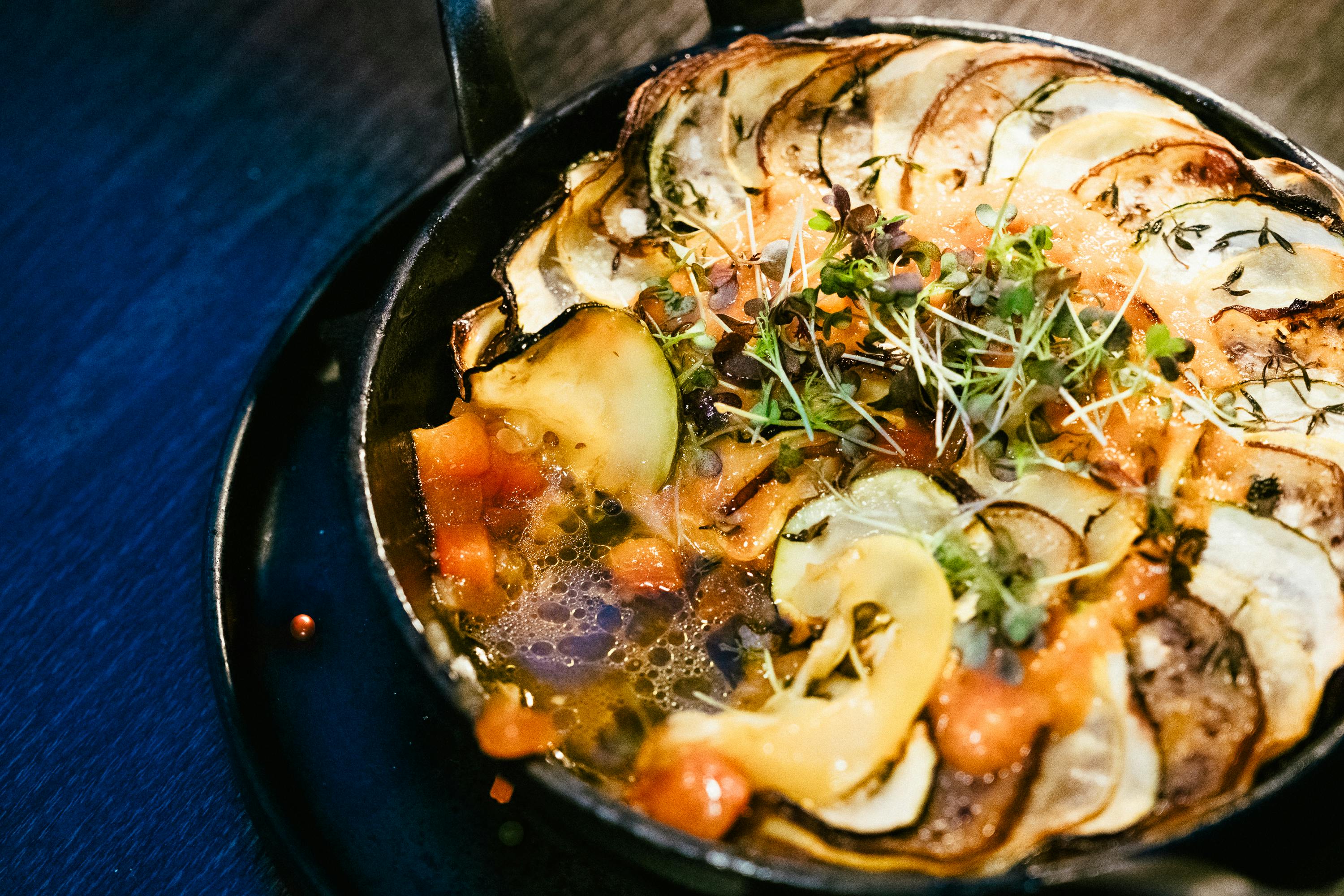
Photo: Deane Bayas / Pexels
Italian
Ribollita
The diets react (see scores below)
Common Ingredients
- cannellini beans
- cavolo nero
- stale bread
- tomatoes
- carrots
- celery
- onion
- olive oil
Specific recipes may vary.
Incompatible with 5 of 11 diets
Diet Ratings
Ribollita is fundamentally incompatible with a ketogenic diet. The dish is built around two major keto-incompatible ingredients: cannellini beans and stale bread. Cannellini beans are high in net carbs (roughly 20-25g net carbs per 100g cooked), and stale bread is a grain-based product that alone could exceed the daily carb limit in a single serving. Together, these two ingredients make a standard serving of ribollita likely contain 50-80g+ of net carbs, far exceeding the daily 20-50g keto threshold. While olive oil, cavolo nero, celery, and onion are acceptable in small amounts, they cannot offset the carb load of the primary structural ingredients.
Ribollita is a traditional Tuscan peasant soup built entirely from whole plant foods. All listed ingredients — cannellini beans, cavolo nero (Tuscan kale), stale bread, tomatoes, carrots, celery, onion, and olive oil — are fully plant-based with no animal products or animal-derived ingredients. The dish is protein-rich from beans, nutrient-dense from dark leafy greens and vegetables, and relies on whole-food ingredients. The stale bread component is standard wheat bread; as long as it contains no eggs, dairy, or honey (most plain rustic Italian breads do not), it remains vegan-compliant. This is an exemplary whole-food plant-based meal that aligns strongly with vegan dietary principles.
Ribollita is fundamentally incompatible with the paleo diet. It contains two major paleo-excluded food categories: legumes (cannellini beans) and grains (stale bread). Cannellini beans are legumes, explicitly excluded from paleo due to their lectin and phytate content. Stale bread is a wheat-based grain product, one of the most clearly avoided foods in paleo. While the remaining ingredients — cavolo nero, tomatoes, carrots, celery, onion, and olive oil — are all paleo-compliant, the two core structural ingredients of this dish make it entirely unsuitable. This is not a borderline case; both offending ingredients represent clear, high-consensus paleo exclusions.
Ribollita is a classic Tuscan peasant soup that exemplifies Mediterranean diet principles. It is built almost entirely on plant-based whole foods: cannellini beans provide plant protein and fiber, cavolo nero (Tuscan kale) is a nutrient-dense leafy green, and the soffritto base of carrots, celery, and onion is a Mediterranean staple. Tomatoes add lycopene and antioxidants. Extra virgin olive oil is the fat source, consistent with Mediterranean guidelines. The only element warranting any reflection is the stale bread, which is a traditional thickening ingredient in Tuscan cooking — while it is a refined grain, the quantity used per serving is modest and the dish is otherwise so aligned with Mediterranean principles that it does not meaningfully detract. Overall, this is one of the most archetypal Mediterranean dishes possible.
Traditional Ribollita uses stale white Tuscan bread (pane sciocco), a refined grain. Modern Mediterranean diet clinical guidelines (e.g., PREDIMED protocol) emphasize whole grains over refined, so a stricter interpretation might suggest substituting whole-grain bread to maximize the diet's benefits.
Ribollita is a traditional Tuscan peasant soup made entirely from plant-based ingredients. Every single component — cannellini beans, cavolo nero, stale bread, tomatoes, carrots, celery, onion, and olive oil — is explicitly excluded on the carnivore diet. There are zero animal-derived ingredients. Legumes (beans), grains (bread), vegetables, and plant oils are all categorically off-limits. This dish is essentially the antithesis of carnivore eating: high-carb, plant-only, and grain-inclusive.
Ribollita contains two excluded ingredients. First, cannellini beans are legumes, which are explicitly excluded from the Whole30 program (only specific exceptions like green beans, sugar snap peas, and snow peas are allowed — cannellini beans are not among them). Second, stale bread is a grain-based product, and all grains including wheat are excluded. Either of these ingredients alone would disqualify the dish; together they make this a clear avoid with high confidence.
Ribollita contains multiple high-FODMAP ingredients that make it unsuitable during the elimination phase. Cannellini beans are high in GOS (galacto-oligosaccharides) and are high-FODMAP at any standard serving size — a typical bowl of ribollita would contain far more than the Monash-safe threshold of around 42g (canned, drained). Stale bread made from wheat is high in fructans. Onion is one of the highest-FODMAP foods tested by Monash, rich in fructans, and there is no safe serving size. Celery becomes high-FODMAP above 10cm of stalk per Monash. The remaining ingredients — cavolo nero (small amounts are low-FODMAP), tomatoes, carrots, and olive oil — are generally low-FODMAP, but the combination of beans, bread, and onion means this dish is definitively high-FODMAP in any traditional preparation.
Ribollita is a traditional Tuscan peasant soup built almost entirely on DASH-ideal ingredients: cannellini beans (high in fiber, potassium, magnesium, and plant protein), cavolo nero (an exceptionally nutrient-dense dark leafy green rich in calcium, magnesium, and potassium), tomatoes, carrots, celery, and onion (all core DASH vegetables), and olive oil (a DASH-approved unsaturated fat). The stale bread adds whole-grain fiber if whole-grain bread is used, though white bread is more traditional and less ideal. The primary concern is sodium: restaurant or canned-ingredient versions can be high in sodium (canned beans, canned tomatoes, added salt), but a home-prepared version using dried or rinsed canned beans, low-sodium tomatoes, and minimal added salt aligns excellently with DASH targets. As commonly prepared at home with moderate salt, this dish is a strong DASH choice. Confidence is medium rather than high because DASH guidelines don't explicitly address this dish, and sodium content varies significantly by preparation.
NIH DASH guidelines emphasize controlling sodium, and traditional or restaurant ribollita may contain significant added salt plus sodium from canned ingredients — some DASH-focused clinicians would rate it 'caution' without explicit low-sodium preparation. Updated clinical interpretation generally approves bean-and-vegetable soups like ribollita when prepared with low-sodium ingredients and reduced added salt, recognizing the strong potassium, fiber, and magnesium profile offsets modest sodium concerns.
Ribollita is a nutrient-dense Tuscan peasant soup with several Zone-favorable elements — cannellini beans provide both protein and carbohydrates, cavolo nero (black kale) is an excellent low-glycemic polyphenol-rich vegetable, tomatoes, carrots, celery, and onion are all favorable Zone carb sources, and olive oil is the ideal Zone fat. However, the dish has two significant Zone challenges: (1) stale bread is a high-glycemic refined carbohydrate that Sears classifies as 'unfavorable' and recommends limiting — it's structurally central to ribollita and cannot simply be omitted without changing the dish; (2) cannellini beans, while a legitimate Zone protein source, are a vegetarian protein meaning each block carries more carbohydrate and fat must be counted differently (fat blocks are 3g rather than 1.5g). The bean-bread combination pushes the carbohydrate load high relative to protein, making the 40/30/30 ratio difficult to achieve without significantly reducing or eliminating the bread. A Zone-adapted ribollita with minimal bread and controlled portions could work, but as traditionally prepared the glycemic load is elevated and the protein-to-carb ratio is unfavorable.
Some Zone practitioners argue that ribollita's overall fiber content (from beans, kale, and vegetables) substantially lowers the net glycemic impact, bringing effective net carbs closer to Zone targets. Dr. Sears' later writings in 'The Zone Diet' emphasize the importance of polyphenols and anti-inflammatory foods — cavolo nero and tomatoes score very well on this metric. A practical Zone adaptation reducing bread to a minimal garnish rather than a structural ingredient could elevate this dish to a solid approve, and many Mediterranean-focused Zone followers would treat this as a core meal with portion adjustment.
Ribollita is a Tuscan peasant soup that exemplifies anti-inflammatory eating. Cannellini beans provide plant-based protein, soluble fiber, and polyphenols that help reduce inflammatory markers. Cavolo nero (Tuscan black kale) is a cruciferous vegetable rich in vitamins C and K, carotenoids, and glucosinolates with well-documented anti-inflammatory and antioxidant effects. Tomatoes contribute lycopene and vitamin C; carrots supply beta-carotene; celery provides apigenin and luteolin, flavonoids with anti-inflammatory properties; and onions are rich in quercetin. Olive oil — the fat base — contains oleocanthal, which inhibits COX enzymes similarly to ibuprofen, and is strongly endorsed by every major anti-inflammatory framework. The stale bread adds whole-grain carbohydrates and makes the dish satisfying without introducing refined sugar or trans fats. This dish is fiber-dense, plant-forward, free of red meat or full-fat dairy, and built almost entirely from anti-inflammatory cornerstone ingredients. Its overall nutritional profile aligns closely with Dr. Weil's Anti-Inflammatory Food Pyramid and the Mediterranean dietary pattern, both of which are strongly supported by research on inflammatory biomarker reduction.
Ribollita is a nutrient-dense Tuscan bean and vegetable soup that aligns well with GLP-1 dietary priorities. Cannellini beans provide a solid combination of plant protein and dietary fiber, directly supporting the top two nutritional priorities. Cavolo nero (Tuscan kale) adds micronutrients, additional fiber, and is easy to digest when cooked soft in soup. The vegetable base (carrots, celery, onion, tomatoes) contributes hydration, fiber, and micronutrient density with minimal calories. Olive oil provides heart-healthy unsaturated fat in moderate amounts. The high water content of the soup format aids hydration, supports easy digestibility, and naturally limits caloric density — all beneficial for GLP-1 patients. The main concern is the stale bread, a refined carbohydrate with low protein and fiber density that adds bulk calories with modest nutritional return. Portion size matters: a moderate serving works well, but the bread component means a large serving could tip the carbohydrate load higher than ideal. Overall, this is a warm, easy-to-digest, fiber- and plant-protein-rich dish that suits the GLP-1 eating pattern well.
Some GLP-1-focused dietitians would flag the stale bread as a meaningful drawback, particularly for patients managing blood sugar alongside weight, and may recommend reducing or omitting it to improve protein-to-carbohydrate ratio. Others consider the traditional preparation acceptable given the overall fiber and nutrient density of the dish, especially when served in small portions.
*See how scores were generated at our methodology page.
Nutritional profile
Six traits that cut across every diet.
Fiber & Plants
How much whole-plant food and fiber it delivers.
Healthy Fats
The quality of its fats (unsaturated, omega-3).
Whole / Unprocessed
How close it is to its natural, unprocessed form.
Gut Gentle
How easy it is on digestion (low FODMAP, few irritants).
Low Glycemic
How little it spikes your blood sugar.
Protein Density
How much protein it packs per calorie.
Controversy Index
Higher controversy = more disagreement between diets.
Diet-Specific Tips
 Vegan — 9/10
View tips
- All ingredients are whole plant foods
- Cannellini beans provide complete plant-based protein
- Cavolo nero adds iron, calcium, and vitamins
- Olive oil is fully plant-derived
- Stale bread is typically plain wheat bread with no animal ingredients
- No animal products, dairy, eggs, or animal-derived additives present
- Traditional recipe naturally vegan by origin
 Mediterranean — 9/10
View tips
- Cannellini beans as primary plant protein — core Mediterranean legume
- Cavolo nero (kale) — nutrient-dense leafy green, strongly encouraged
- Extra virgin olive oil as the cooking fat — canonical Mediterranean fat
- Soffritto base of carrots, celery, onion — whole vegetable foundation
- Stale bread thickener is traditionally refined white bread — minor concern under strict whole-grain guidance
- No meat, no added sugar, no processed ingredients
- Traditional Tuscan dish deeply rooted in Mediterranean culinary heritage
 DASH — 8/10
View tips
- Cannellini beans: excellent DASH protein and fiber source, rich in potassium and magnesium
- Cavolo nero (lacinato kale): highly nutrient-dense dark leafy green, core DASH vegetable
- Olive oil: DASH-approved unsaturated fat, used in moderation
- Abundant vegetables (tomatoes, carrots, celery, onion): aligns with DASH vegetable servings
- Stale bread: whole-grain preferred; white bread is less ideal but a minor component
- Sodium risk: canned beans and tomatoes add sodium — rinsing canned beans and using low-sodium tomatoes improves score significantly
- No saturated fat, red meat, added sugar, or full-fat dairy — no major DASH red flags
 Zone — 5/10
View tips
- Stale bread is a high-glycemic 'unfavorable' carbohydrate central to the dish's identity
- Cannellini beans provide vegetarian protein but simultaneously add significant carbohydrate load
- Cavolo nero is an excellent Zone-approved polyphenol-rich low-glycemic vegetable
- Olive oil is the ideal Zone monounsaturated fat source
- Vegetarian protein from beans requires adjusted fat block calculation (3g fat per block vs 1.5g)
- High fiber content from beans and vegetables partially mitigates glycemic impact
- Traditional preparation skews carb-to-protein ratio above Zone 40/30/30 targets
- Dish is adaptable — reducing bread portion can bring macros closer to Zone balance
 Anti-Inflammatory — 9/10
View tips
- Cannellini beans: high-fiber legume with polyphenols, reduces CRP
- Cavolo nero: cruciferous vegetable rich in carotenoids and glucosinolates
- Extra virgin olive oil: oleocanthal inhibits COX-1/COX-2 pathways
- Tomatoes: lycopene and vitamin C antioxidants
- Carrots and onion: beta-carotene and quercetin (flavonoid)
- Celery: apigenin and luteolin, anti-inflammatory flavonoids
- No red meat, trans fats, refined sugar, or pro-inflammatory additives
- Whole plant-food base aligns with Mediterranean and anti-inflammatory pyramid
 GLP-1 Friendly — 7/10
View tips
- Cannellini beans provide plant protein and high fiber — supports both top GLP-1 dietary priorities
- High water content soup format aids hydration and easy digestibility
- Cavolo nero adds micronutrients and fiber with minimal calories
- Olive oil contributes unsaturated fat in moderate, acceptable amounts
- Stale bread is a refined carbohydrate that reduces protein density and adds modest empty calories
- Plant protein only — total protein per serving may fall short of 15-30g target without additional protein source
- Soft-cooked texture is gentle on the digestive system, beneficial given slowed gastric emptying
- Naturally low in saturated fat — does not worsen GLP-1 GI side effects