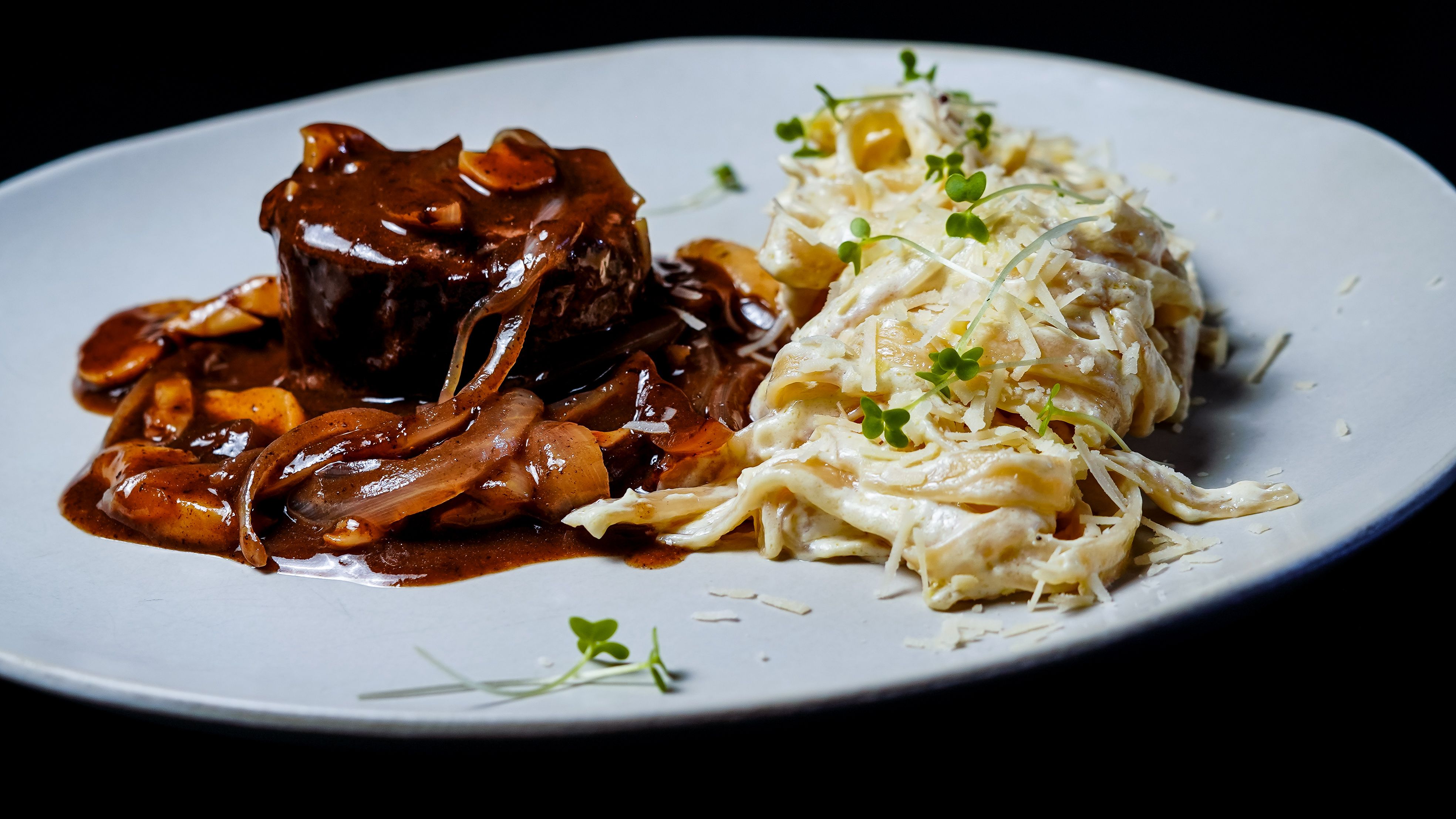
Photo: pedro furtado / Pexels
American
Salisbury Steak
The diets react (see scores below)
Common Ingredients
- ground beef
- mushrooms
- yellow onion
- beef broth
- Worcestershire sauce
- breadcrumbs
- egg
- tomato paste
Specific recipes may vary.
Incompatible with 6 of 11 diets
Diet Ratings
Traditional Salisbury steak contains breadcrumbs as a binder, which introduces grain-based carbs that are incompatible with strict keto. The core protein (ground beef) and gravy components (mushrooms, beef broth, Worcestershire sauce in small amounts, onion) are largely keto-friendly, but the breadcrumbs elevate the net carb count meaningfully. Worcestershire sauce and tomato paste also contribute small amounts of sugar and carbs. The dish is salvageable with simple swaps — replacing breadcrumbs with almond flour or crushed pork rinds — making it a 'caution' rather than 'avoid'. As written with traditional breadcrumbs, it sits in the moderate-concern zone, particularly for strict keto practitioners watching every gram of net carbs.
Some lazy keto or flexible keto practitioners argue that the breadcrumb quantity used as a binder (typically 1-2 tablespoons per serving) is small enough that net carbs per serving remain manageable within a daily budget, and would approve this dish in standard restaurant portions. Strict keto adherents, however, reject any grain-based ingredient outright regardless of quantity.
Salisbury Steak is fundamentally incompatible with a vegan diet. The dish contains multiple animal-derived ingredients: ground beef (animal flesh), beef broth (animal-derived), egg (animal product), and Worcestershire sauce (traditionally contains anchovies). There is no ambiguity here — this dish is built around animal products as its core components, not incidental additives.
Salisbury Steak contains breadcrumbs, which are a grain-based ingredient and a clear paleo violation — this alone disqualifies the dish. Worcestershire sauce typically contains added sugar, malt vinegar (grain-derived), and other additives, making it a processed condiment incompatible with paleo. Beef broth may also contain added salt or preservatives depending on the source. The remaining ingredients — ground beef, mushrooms, yellow onion, egg, and tomato paste — are all paleo-compliant, but the breadcrumbs and Worcestershire sauce make this dish a definitive avoid in its traditional form.
Salisbury Steak is centered on ground beef as the primary protein, which directly conflicts with Mediterranean diet principles. Red meat is limited to only a few times per month in the Mediterranean diet, and ground beef patties are a processed form of red meat high in saturated fat. While the dish does contain some Mediterranean-friendly ingredients — mushrooms, onion, tomato paste — these are minor components in a dish dominated by beef. The breadcrumbs are refined grain filler, and the overall dish profile is a classic American comfort food with no meaningful alignment to Mediterranean dietary patterns.
Salisbury Steak as traditionally prepared contains multiple non-carnivore ingredients that disqualify it outright. While ground beef and egg are carnivore-approved, the dish includes breadcrumbs (grain-based filler), mushrooms (fungi/plant kingdom), yellow onion (plant), tomato paste (plant), and Worcestershire sauce (contains tamarind, molasses, and other plant-derived ingredients). The breadcrumbs alone are a hard disqualifier as a grain product. The vegetable-laden gravy and plant-based binders make this a heavily plant-contaminated dish despite its beef base. A carnivore adaptation would require stripping it down to just ground beef patties cooked in tallow with a pure beef broth pan sauce — at which point it would no longer resemble Salisbury Steak in any meaningful way.
Salisbury Steak as described contains breadcrumbs, which are made from wheat — a grain explicitly excluded on the Whole30 program. Additionally, Worcestershire sauce typically contains malt vinegar (which contains gluten) and often added sugar, both of which are excluded. The remaining ingredients — ground beef, mushrooms, yellow onion, beef broth, egg, and tomato paste — are generally compliant (though broth and tomato paste require label-checking for added sugar or non-compliant additives). The breadcrumbs alone are a disqualifying ingredient with no ambiguity.
Salisbury Steak as traditionally prepared contains multiple high-FODMAP ingredients that make it unsuitable during the elimination phase. Yellow onion is one of the highest-FODMAP foods tested by Monash University, rich in fructans, and is used in significant quantities both in the patty and the gravy. Mushrooms (common button/cremini varieties) are high in polyols (mannitol) and are used generously in the signature mushroom gravy. Breadcrumbs are typically wheat-based, contributing fructans. Beef broth frequently contains onion and/or garlic. Worcestershire sauce often contains onion and garlic extracts. Ground beef and egg are low-FODMAP, and tomato paste is low-FODMAP at small servings (up to 2 tablespoons). However, the combination of onion, mushrooms, wheat breadcrumbs, and likely FODMAP-containing broth and Worcestershire sauce makes this dish high-FODMAP in its standard form. Modifications (scallion greens instead of onion, oyster or canned mushrooms drained, gluten-free breadcrumbs, homemade low-FODMAP broth, and certified low-FODMAP Worcestershire) would be required to make this dish safe.
Salisbury steak presents a mixed DASH profile. Ground beef is a red meat that DASH limits due to saturated fat content — the fat level depends heavily on the lean-to-fat ratio (80/20 vs. 93/7 makes a significant difference). The dish does include DASH-friendly elements: mushrooms and yellow onion provide vegetables, potassium, and fiber; tomato paste adds potassium and lycopene; and the egg contributes lean protein. However, several factors work against it: beef broth and Worcestershire sauce contribute meaningful sodium (standard beef broth runs 400-900mg per cup; Worcestershire adds another 65-100mg per tablespoon), pushing the dish toward or over DASH sodium thresholds in a single serving. Breadcrumbs add refined carbohydrates and often additional sodium. The overall dish, as commonly prepared, is moderately high in saturated fat and sodium — acceptable occasionally in a DASH context if lean ground beef (≥93% lean) is used and low-sodium broth is substituted, but not a dish that aligns with core DASH principles as typically prepared.
NIH DASH guidelines clearly limit red meat and emphasize low sodium, which this dish challenges in its standard form. However, some DASH-oriented clinicians note that when prepared with very lean ground beef, low-sodium broth, and reduced Worcestershire, Salisbury steak can fit within weekly red meat allowances — and the mushroom-heavy gravy provides meaningful vegetable servings that partially offset concerns.
Salisbury steak is a workable but imperfect Zone meal component. The ground beef provides solid protein but brings more saturated fat than Zone-preferred lean proteins like skinless chicken or fish. Mushrooms and onions are favorable low-glycemic Zone carbohydrates, and beef broth and Worcestershire sauce add minimal macronutrient impact. The breadcrumbs introduce a refined, higher-glycemic carbohydrate binder — unfavorable in Zone terms — though the quantity per serving is typically small enough not to derail the meal entirely. The egg contributes additional protein. The primary Zone challenge is the fat profile: ground beef (typically 80/20) will likely push saturated fat higher than the Zone recommends, and the overall fat-to-protein ratio may skew the 30/30 balance. With leaner ground beef (90/10 or 93/7), careful portioning (~3 oz cooked), and pairing with additional low-glycemic vegetables instead of starchy sides, this dish can be reasonably incorporated into a Zone meal. The mushroom gravy component is actually a Zone positive — mushrooms are high in polyphenols and low-glycemic.
Some Zone practitioners and Sears' later anti-inflammatory writings (The Anti-Inflammation Zone) are less strict about saturated fat in lean red meat contexts, arguing that the omega-3 to omega-6 ratio matters more than saturated fat per se. In that framing, lean Salisbury steak with a polyphenol-rich mushroom sauce could score slightly higher, as the Worcestershire and tomato paste also contribute beneficial polyphenols. Conversely, strict early-Zone adherents would flag the breadcrumbs as an unfavorable carb and the beef fat as a saturated fat concern, keeping the score at the lower end of caution.
Salisbury steak sits in mixed territory on an anti-inflammatory framework. The primary protein is ground beef, which anti-inflammatory guidelines consistently place in the 'limit' category due to saturated fat content and arachidonic acid — both associated with pro-inflammatory signaling. However, the dish isn't entirely problematic: mushrooms are an anti-inflammatory positive (though not the emphasized Asian varieties like shiitake, they still provide beta-glucans and antioxidants), and onions contribute quercetin, a notable anti-inflammatory flavonoid. Tomato paste is a concentrated source of lycopene, a well-studied antioxidant. Worcestershire sauce adds minimal concern in small amounts. The breadcrumbs introduce refined carbohydrates, a mild negative. Beef broth is neutral to mildly positive. The inflammatory profile is largely determined by the fat content of the ground beef — leaner ground beef (90%+ lean) would meaningfully improve the score. This is an occasional, moderate-portion dish rather than a regular staple on an anti-inflammatory diet. It's not in 'avoid' territory because it lacks processed ingredients, trans fats, added sugars, or seed oils, and the mushroom-onion-tomato elements provide genuine anti-inflammatory value.
Some anti-inflammatory practitioners, particularly those influenced by the Autoimmune Protocol (AIP), would rate this more harshly due to red meat's arachidonic acid and saturated fat load, potentially pushing it toward 'avoid' for individuals managing inflammatory conditions. Conversely, Dr. Weil's framework allows moderate red meat consumption and would not categorically reject a homemade, whole-ingredient preparation like this one.
Salisbury steak is a ground beef patty served with mushroom-onion gravy — it delivers meaningful protein (roughly 20-25g per serving) but comes with significant drawbacks for GLP-1 patients. Ground beef is typically 15-20% fat by weight, and the beef broth-based gravy adds additional richness, making the overall fat load moderate to high depending on the beef blend used. High dietary fat worsens GLP-1 side effects including nausea, bloating, and delayed gastric emptying on top of the medication's already-slowed motility. Breadcrumbs are refined carbohydrates with minimal fiber or nutritional value, reducing the dish's nutrient density per calorie. Worcestershire sauce and tomato paste are fine in small amounts. The mushrooms and onions are genuine positives — low calorie, some fiber, and easy to digest. The dish is not fried and not ultra-processed, which keeps it out of the avoid category. However, if made with 80/20 ground beef and a rich gravy, the fat content is problematic for GLP-1 patients. Leaner ground beef (93/7 or 96/4) would meaningfully improve the rating. Sodium load from broth and Worcestershire may also be a consideration for patients with hypertension, which commonly co-occurs with obesity.
Some GLP-1-focused dietitians would rate this higher if prepared with lean ground beef (93% lean or above), noting that beef provides complete protein with good bioavailability and iron, which matters for patients at risk of nutritional deficiencies during caloric restriction. Others maintain that even lean red meat should be limited due to saturated fat content and the particular sensitivity of GLP-1 patients to fat-driven GI symptoms, preferring ground turkey or chicken as a substitute in this dish.
*See how scores were generated at our methodology page.
Nutritional profile
Six traits that cut across every diet.
Fiber & Plants
How much whole-plant food and fiber it delivers.
Healthy Fats
The quality of its fats (unsaturated, omega-3).
Whole / Unprocessed
How close it is to its natural, unprocessed form.
Gut Gentle
How easy it is on digestion (low FODMAP, few irritants).
Low Glycemic
How little it spikes your blood sugar.
Protein Density
How much protein it packs per calorie.
Controversy Index
Higher controversy = more disagreement between diets.
Diet-Specific Tips
 Keto — 4/10
View tips
- Breadcrumbs are a grain-based binder adding net carbs — primary keto concern
- Ground beef is an excellent keto protein and fat source
- Mushrooms and onion add minor carbs but are portion-manageable
- Worcestershire sauce and tomato paste contribute small amounts of sugar
- Easy to modify: swap breadcrumbs for almond flour or pork rinds for full keto approval
- Gravy base of beef broth is keto-compatible
 DASH — 4/10
View tips
- Red meat (ground beef) — DASH limits red meat; saturated fat content varies widely by fat percentage
- High sodium risk from beef broth and Worcestershire sauce — standard preparation may exceed 800-1200mg sodium per serving
- Mushrooms and onion provide DASH-friendly vegetables, potassium, and fiber
- Tomato paste contributes potassium and antioxidants (lycopene)
- Breadcrumbs add refined carbohydrates and additional sodium
- Lean ground beef (93%+ lean) and low-sodium broth would significantly improve DASH compatibility
- No added sugars or tropical oils — avoids some DASH red flags
 Zone — 5/10
View tips
- Ground beef is higher in saturated fat than Zone-preferred lean proteins; 90/10 or 93/7 lean ground beef significantly improves Zone compatibility
- Breadcrumbs are a refined, higher-glycemic carb binder — unfavorable in Zone terminology, though quantity per serving is typically small
- Mushrooms and onions are favorable Zone carbohydrates — low-glycemic and polyphenol-rich
- Mushroom gravy (beef broth, tomato paste, Worcestershire) contributes polyphenols and anti-inflammatory benefit aligned with Sears' later writings
- Egg adds protein and complements the block structure
- Portioning is critical: ~3 oz cooked patty keeps protein near the 25g per meal target; must be paired with additional vegetables, not starchy sides
- Overall macro balance is achievable but requires intentional modification of standard recipe and careful portioning
 Anti-Inflammatory — 4/10
View tips
- Ground beef is a 'limit' food in anti-inflammatory guidelines due to saturated fat and arachidonic acid
- Mushrooms contribute beta-glucans and antioxidants — a positive element
- Onions provide quercetin, an anti-inflammatory flavonoid
- Tomato paste is a concentrated source of lycopene
- Breadcrumbs add refined carbohydrates — a mild negative
- No processed additives, trans fats, seed oils, or added sugar
- Fat content of ground beef significantly affects overall inflammatory impact — leaner cuts improve the profile
 GLP-1 Friendly — 4/10
View tips
- Moderate-to-high fat content from ground beef depending on lean percentage — a significant concern for GLP-1 GI side effects
- Solid protein yield (~20-25g per serving) supports muscle preservation priority
- Refined breadcrumb binder adds empty calories with negligible fiber or nutrient value
- Mushrooms and onions contribute fiber, antioxidants, and easy digestibility
- Beef broth and Worcestershire sauce add sodium; manageable in moderation
- Not fried and not ultra-processed — keeps it out of avoid territory
- Saturated fat from standard ground beef is a concern given GLP-1 liver and GI considerations
- Dish is highly improvable: substituting 93/7 lean ground beef and reducing gravy richness would score 6-7