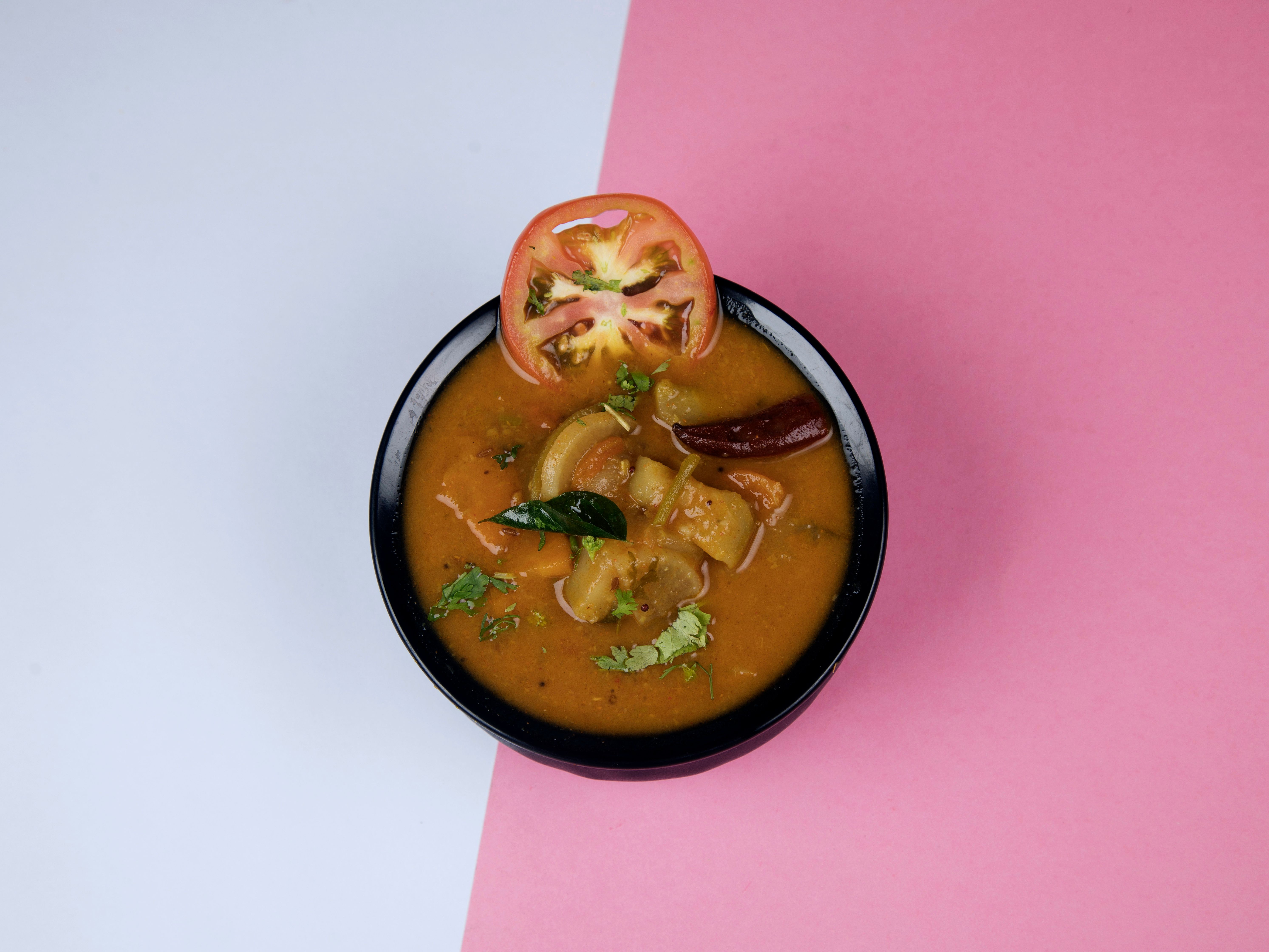
Photo: Milton Das / Pexels
The diets react (see scores below)
Common Ingredients
- toor dal
- tamarind
- drumsticks (moringa pods)
- carrots
- eggplant
- sambar powder
- mustard seeds
- curry leaves
Specific recipes may vary.
Incompatible with 5 of 11 diets
Diet Ratings
Sambar is fundamentally incompatible with ketogenic eating. The primary ingredient, toor dal (split pigeon peas), is a legume with approximately 18-20g net carbs per 100g cooked, making even a modest serving problematic. A typical bowl of sambar easily exceeds 25-35g net carbs from the dal alone. Tamarind adds additional natural sugars (roughly 10g net carbs per tablespoon of paste). The vegetable additions — carrots (higher glycemic root vegetable) and drumstick (moringa pods, moderate carbs) — compound the carb load further. Sambar powder, while used in small amounts, typically contains coriander, chili, and other spices that add minor carbs. The dish has no meaningful fat content, contradicting the high-fat requirement of keto. Eggplant is the only ingredient that is borderline keto-friendly on its own. This dish structurally cannot be made keto-compatible without removing the dal entirely, at which point it ceases to be sambar.
Sambar as described is entirely plant-based. Toor dal (split pigeon peas) provides the protein base, tamarind adds tartness, and the vegetables — drumstick (moringa pods), carrots, and eggplant — are all whole plant foods. Sambar powder is a spice blend of coriander, cumin, black pepper, chili, and other spices, all plant-derived. Mustard seeds and curry leaves are standard vegan aromatics. There are no animal products, dairy, eggs, or animal-derived additives in this ingredient list. This is a traditional South Indian dish that is naturally vegan and composed primarily of whole foods, earning a high score.
Sambar is built on toor dal (split pigeon peas), a legume that is explicitly excluded from the paleo diet. Legumes are rejected in paleo due to their lectin and phytic acid content, which are considered anti-nutrients that impair gut health and mineral absorption. This is not a peripheral ingredient — toor dal is the primary protein and structural base of the entire dish. Without it, the dish ceases to be sambar. The remaining ingredients (tamarind, drumstick, carrots, eggplant, curry leaves, mustard seeds) are largely paleo-compliant, and sambar powder's spice blend is generally acceptable, but the foundational legume disqualifies the dish unambiguously. There is no version of traditional sambar that is paleo-compatible.
Sambar is a nutrient-dense, plant-forward legume soup that aligns exceptionally well with Mediterranean diet principles. Toor dal (split pigeon peas) provides an excellent plant-based protein and fiber source analogous to the legumes central to Mediterranean eating. The dish is loaded with vegetables — drumstick (moringa), carrots, and eggplant — all of which are encouraged daily. Tamarind adds tartness naturally without refined sugars. Spices like mustard seeds and curry leaves are wholesome and anti-inflammatory. The only mild consideration is that sambar powder may contain small amounts of added salt or blended spices not traditional to Mediterranean cuisine, but this is negligible. Overall, this dish is legume-and-vegetable-dominant, minimally processed, and contains no red meat, refined grains, or added sugars.
Some strict Mediterranean diet frameworks emphasize regional authenticity — foods native to the Mediterranean basin — and may not explicitly recognize South Asian dishes. However, most contemporary Mediterranean diet researchers focus on dietary pattern and nutrient profile rather than geographic origin, and sambar's composition is fully consistent with core principles.
Sambar is entirely plant-based and incompatible with the carnivore diet. Every single ingredient is prohibited: toor dal (legume), tamarind (fruit), drumstick/moringa (vegetable), carrots (vegetable), eggplant (vegetable), sambar powder (plant-based spice blend), mustard seeds (seed/spice), and curry leaves (plant). There is no animal product whatsoever in this dish. Legumes like toor dal are among the most anti-carnivore foods due to their high carbohydrate content, lectins, and phytates. This dish represents virtually everything the carnivore diet excludes.
Sambar's primary ingredient is toor dal (split pigeon peas), which is a legume. Legumes are explicitly excluded on the Whole30 program. Unlike green beans, sugar snap peas, or snow peas — which are specifically excepted — lentils and dal varieties have no such exception. The remaining ingredients (tamarind, drumstick/moringa, carrots, eggplant, mustard seeds, curry leaves) and sambar powder (typically a blend of compliant spices) are otherwise Whole30-compatible, but the foundational ingredient disqualifies the dish entirely.
Sambar is a South Indian lentil-based soup with multiple high-FODMAP ingredients that make it problematic during the elimination phase. Toor dal (split pigeon peas) is a legume high in GOS (galacto-oligosaccharides) and is rated high-FODMAP at typical serving sizes — even canned legumes present risk, and toor dal is typically cooked from dried, making GOS content higher. Sambar powder almost universally contains onion and garlic powder, both potent sources of fructans rated high-FODMAP at any amount. Eggplant (aubergine) is moderate-FODMAP due to fructans at servings above ~75g, which is easily exceeded in a soup. Drumstick (Moringa/Murungakkai) has limited Monash testing but is cautionary. Tamarind paste is high in excess fructose at larger quantities used in sambar. While carrots, mustard seeds, and curry leaves are individually low-FODMAP, the combination of toor dal, sambar powder (onion/garlic), tamarind, and eggplant makes this dish high-FODMAP at any standard serving during the strict elimination phase.
Monash University has not specifically tested sambar as a composite dish, and some clinical FODMAP practitioners note that if sambar powder were made from scratch without onion or garlic and a small lentil portion was used, a modified version could be cautiously tolerated; however, traditional sambar as described here would be advised against by virtually all FODMAP dietitians during elimination.
Sambar is a lentil-based vegetable soup that aligns well with DASH diet principles. Toor dal (split pigeon peas) is an excellent plant-based protein rich in fiber, potassium, and magnesium — all nutrients DASH emphasizes. The vegetable lineup (drumstick/moringa, carrots, eggplant) contributes additional fiber, potassium, and micronutrients. Tamarind adds a natural souring agent with minimal nutritional downside. Mustard seeds and curry leaves are used in small quantities as tempering. The primary concern is sodium: sambar powder (a spice blend) can vary widely in sodium content depending on the brand or homemade recipe, and if salt is added generously during cooking, the dish could approach moderate sodium levels. However, as commonly prepared at home without excessive added salt, sambar is low in saturated fat, cholesterol-free, rich in DASH-friendly nutrients, and fits squarely into the legume and vegetable servings the diet emphasizes. The confidence is medium rather than high because NIH/NHLBI DASH guidelines do not specifically address sambar, requiring inference from its ingredient profile.
NIH DASH guidelines endorse legumes and vegetables broadly, which supports sambar's approval; however, some DASH-oriented clinicians note that commercial sambar powder blends and restaurant preparations can be high in sodium, which would warrant a 'caution' rating — using low-sodium sambar powder and limiting added salt keeps this dish firmly in the approved category.
Sambar is a South Indian lentil-based soup with a reasonably favorable nutrient profile for the Zone, but requires careful attention to block balancing. Toor dal (split pigeon peas) provides vegetarian protein along with a significant carbohydrate load — lentils are classified as 'unfavorable' carbs in Zone terminology because they are primarily a carbohydrate source with moderate protein, not a lean protein source like chicken. Per Zone block math, lentils count primarily as carb blocks (about 1/4 cup cooked per carb block) with some incidental protein. The vegetables — drumstick (moringa pods), carrots, and eggplant — are largely Zone-favorable low-glycemic carbs, though carrots have a moderately higher glycemic index. Tamarind adds some sugar-based carbs and must be accounted for. The dish is naturally very low in fat, which is a Zone imbalance issue — it would need added monounsaturated fat (e.g., a drizzle of olive oil or avocado on the side) to hit the 30% fat target. The spice profile (mustard seeds, curry leaves, sambar powder) is anti-inflammatory and polyphenol-rich, which aligns with Sears' later nutritional philosophy. Overall, sambar can fit into a Zone meal but requires portion control on the dal, addition of fat, and possibly a lean protein supplement to properly balance the meal blocks.
In Zone's vegetarian protein framework, lentils can serve as both a protein and carb block source simultaneously (using the 3g fat-per-block vegetarian rule), making sambar more workable as a Zone meal component than it first appears. Some Zone practitioners treat legume-based dishes favorably as long as portions are controlled and fat is added. However, Sears' published materials classify lentils as 'unfavorable' carbohydrates due to their starch content and moderate glycemic load, recommending they be used sparingly and balanced carefully against protein and fat.
Sambar is an exceptionally anti-inflammatory dish by nearly every measure. Toor dal (split pigeon peas) is a legume rich in fiber, plant protein, and polyphenols that support a healthy gut microbiome and reduce systemic inflammation. Tamarind provides antioxidants and has demonstrated anti-inflammatory activity in research. Drumstick (moringa) is one of the most nutrient-dense vegetables known, with high levels of isothiocyanates and polyphenols that actively suppress inflammatory pathways. Carrots contribute beta-carotene and other carotenoids. Sambar powder is a blend of anti-inflammatory spices — typically containing coriander, cumin, black pepper, chili, turmeric, and fenugreek — making it a potent polyphenol and curcumin delivery vehicle. Mustard seeds contain glucosinolates and selenium with documented anti-inflammatory effects. Curry leaves are rich in carbazole alkaloids and antioxidants. The dish is naturally low in saturated fat, free of refined carbohydrates and added sugars, and built almost entirely from foods emphasized in anti-inflammatory frameworks. The only minor flag is eggplant as a nightshade, which is why confidence is medium rather than high.
Mainstream anti-inflammatory nutrition (including Dr. Weil's framework) strongly endorses eggplant and other nightshades for their antioxidant content (nasunin in eggplant skin). However, Autoimmune Protocol (AIP) and some functional medicine practitioners (e.g., Dr. Tom O'Bryan) caution that solanine and lectins in nightshades may trigger inflammation in individuals with autoimmune conditions or leaky gut.
Sambar is an excellent GLP-1-friendly dish. Toor dal (split pigeon peas) provides a solid plant-based protein base (~8-9g per cup cooked) along with significant fiber (~8g per cup), directly addressing the top two dietary priorities. The vegetable mix — drumstick (moringa pods), carrots, and eggplant — adds micronutrient density, additional fiber, and high water content, which supports hydration. Tamarind contributes a small amount of digestible acidity. The tempering of mustard seeds and curry leaves in minimal oil keeps fat content low. Sambar powder typically contains coriander, cumin, chili, turmeric, and black pepper — spice levels are moderate in most home or restaurant preparations and generally well-tolerated, though individual sensitivity varies. The soup format is inherently easy to digest, warm, and liquid-rich, making it gentle on a slowed GLP-1 digestive system. It is low in saturated fat, free of refined grains (when served alone), and nutrient-dense per calorie. The primary limitation is that protein per serving is moderate rather than high — toor dal is not as protein-dense as animal proteins — so sambar works best as part of a meal that includes an additional protein source, or consumed in a larger portion if it is the primary protein vehicle.
Some GLP-1-focused dietitians flag that spice blends like sambar powder, particularly preparations with higher chili content, may exacerbate nausea or reflux in patients who are sensitive during the early titration phase; individual tolerance to spice level is a meaningful variable in this population and patients should monitor their response.
*See how scores were generated at our methodology page.
Nutritional profile
Six traits that cut across every diet.
Fiber & Plants
How much whole-plant food and fiber it delivers.
Healthy Fats
The quality of its fats (unsaturated, omega-3).
Whole / Unprocessed
How close it is to its natural, unprocessed form.
Gut Gentle
How easy it is on digestion (low FODMAP, few irritants).
Low Glycemic
How little it spikes your blood sugar.
Protein Density
How much protein it packs per calorie.
Controversy Index
Higher controversy = more disagreement between diets.
Diet-Specific Tips
 Vegan — 9/10
View tips
- Toor dal is a whole legume — excellent plant-based protein source
- All vegetables (drumstick, carrots, eggplant) are whole plant foods
- Tamarind is a plant-derived souring agent
- Sambar powder contains only spices — no animal-derived ingredients
- Mustard seeds and curry leaves are vegan aromatics
- No dairy (ghee is sometimes added in restaurant versions but is not listed here)
- No eggs, meat, fish, or animal-derived additives present
 Mediterranean — 9/10
View tips
- Toor dal is a high-fiber, plant-based legume protein — a Mediterranean diet cornerstone
- Multiple vegetables (drumstick, carrots, eggplant) align with daily vegetable emphasis
- No red meat, processed ingredients, refined grains, or added sugars
- Tamarind provides natural acidity without sugar additives
- Mustard seeds and curry leaves are wholesome, anti-inflammatory spices
- Not geographically Mediterranean, but nutritionally consistent with the dietary pattern
 DASH — 8/10
View tips
- Toor dal is an excellent DASH-approved legume rich in fiber, potassium, and plant protein
- Multiple vegetables (drumstick, carrots, eggplant) contribute potassium, magnesium, and fiber
- No saturated fat, no cholesterol, no added sugar
- Sodium content is variable depending on sambar powder brand and added salt — home preparation with low-sodium spice blend is ideal
- Tamarind, mustard seeds, and curry leaves are used in small amounts with negligible adverse nutritional impact
- Fits DASH servings for legumes (4-5 servings/week) and vegetables (4-5 servings/day)
 Zone — 6/10
View tips
- Toor dal is primarily a carb block source in Zone, classified as an unfavorable carbohydrate — requires careful portioning
- Vegetables (drumstick, eggplant) are Zone-favorable low-glycemic carbs; carrots are moderate-GI and should be limited
- Tamarind adds sugar-based carbs that must be counted in carb blocks
- Dish is naturally very low in fat — needs monounsaturated fat addition to achieve 30% fat ratio
- Spices (curry leaves, mustard seeds, sambar powder) are anti-inflammatory and polyphenol-rich, aligning with Sears' later work
- As a vegetarian protein source, lentils allow 3g fat per block rather than 1.5g, improving meal balance
- May need supplemental lean protein (tofu, egg whites) to meet 25g protein per meal target
 Anti-Inflammatory — 9/10
View tips
- Toor dal: high-fiber legume, supports gut health and lowers CRP
- Drumstick/moringa: exceptional anti-inflammatory and antioxidant profile
- Sambar powder: multi-spice blend including turmeric, cumin, coriander, chili — strong polyphenol content
- Tamarind: antioxidant-rich, anti-inflammatory phenolic acids
- Mustard seeds: glucosinolates, selenium — anti-inflammatory
- Curry leaves: carbazole alkaloids, antioxidant activity
- Carrots: high carotenoids (beta-carotene), anti-inflammatory
- Eggplant (nightshade): approved by mainstream anti-inflammatory frameworks but flagged in AIP protocols
- No refined carbohydrates, added sugars, trans fats, or seed oils
- Plant-based protein source consistent with anti-inflammatory dietary emphasis
 GLP-1 Friendly — 8/10
View tips
- High fiber from toor dal and mixed vegetables supports GLP-1 digestion and constipation prevention
- Moderate plant protein from toor dal — recommend pairing with additional protein source for a complete meal
- Low saturated fat — minimal oil tempering keeps this lean and GLP-1-safe
- Soup format supports hydration and easy digestibility, ideal for slowed gastric emptying
- High vegetable water content aids hydration, a critical concern on GLP-1 medications
- Spice level is typically moderate but sambar powder heat content varies — monitor individual tolerance
- No refined grains, no added sugar, no fried components — nutrient-dense per calorie
- Tamarind is well-tolerated in small amounts and adds flavor without significant fat or sugar burden