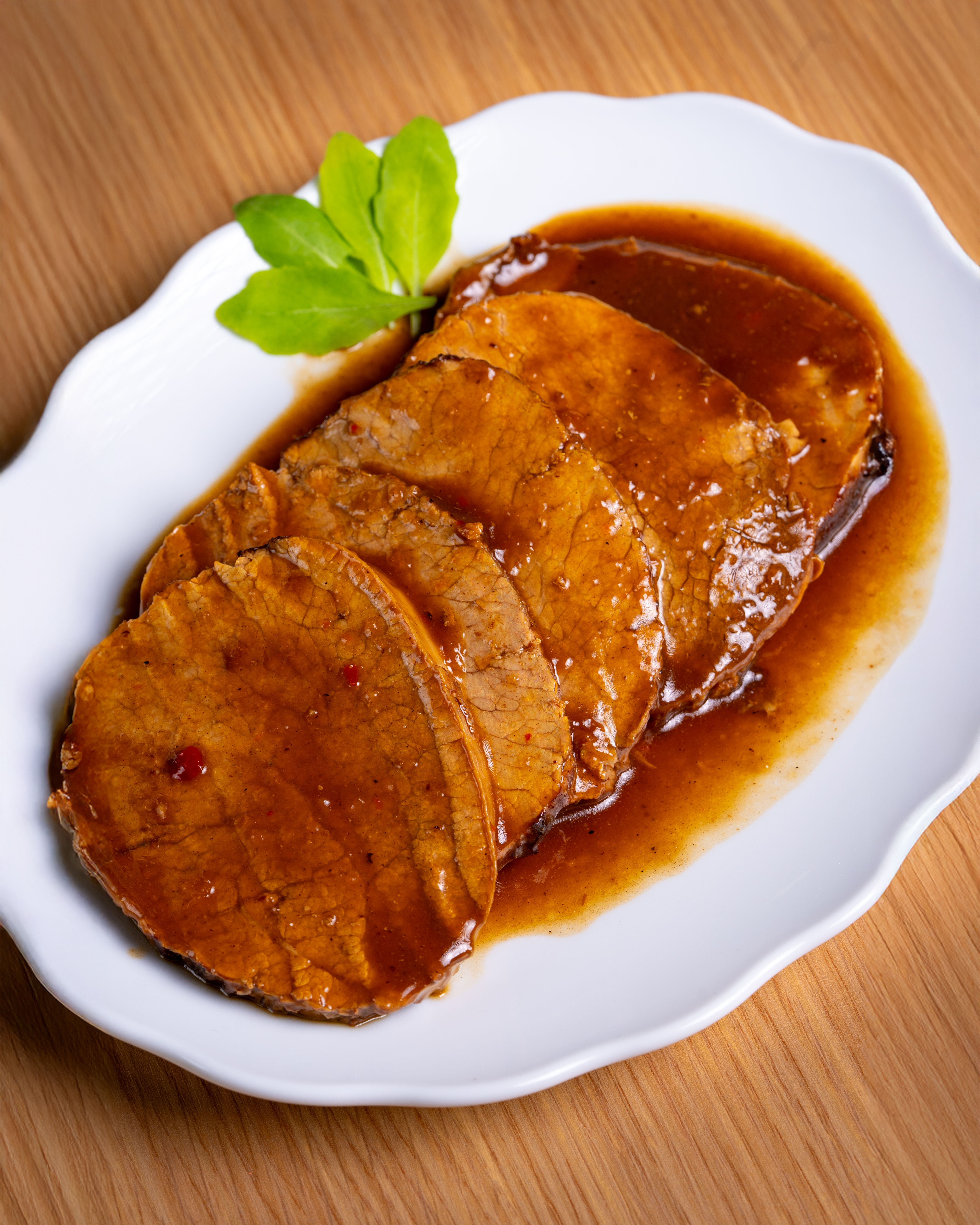
Photo: Nano Erdozain / Pexels
Eastern-European
Sauerbraten
The diets react (see scores below)
Common Ingredients
- beef
- red wine vinegar
- onions
- cloves
- juniper berries
- bay leaves
- gingersnaps
- carrots
Specific recipes may vary.
Incompatible with 7 of 11 diets
Diet Ratings
Sauerbraten is fundamentally incompatible with keto due to the traditional use of gingersnaps (crushed ginger cookies) as a thickening agent in the gravy. Gingersnaps are made from flour and sugar, contributing significant net carbs to the dish. A typical serving of Sauerbraten with traditional gravy can contain 20-35g of net carbs, largely from the gingersnaps, which alone could meet or exceed the entire daily keto carb limit. While the beef base and marinade spices (cloves, juniper berries, bay leaves) are keto-friendly, and carrots and onions are manageable in small amounts, the gingersnap component is a non-negotiable disqualifier. Without a keto-specific modification (e.g., replacing gingersnaps with almond flour, cocoa powder, and a sugar substitute), this dish cannot fit a ketogenic diet.
Sauerbraten is a German pot roast made with beef as its primary and defining ingredient. Beef is an animal product and is explicitly excluded under all vegan dietary frameworks. There is no ambiguity here — this dish cannot be made vegan without fundamentally changing its nature. The remaining ingredients (red wine vinegar, onions, cloves, juniper berries, bay leaves, gingersnaps, carrots) are plant-based, but the central protein is animal flesh.
Sauerbraten is disqualified from a paleo perspective primarily due to gingersnaps, which are grain-based cookies (wheat flour) commonly used as a thickening agent in the traditional recipe. Gingersnaps also typically contain refined sugar and other non-paleo additives. While the majority of the ingredient list is paleo-compliant — beef, red wine vinegar, onions, cloves, juniper berries, bay leaves, and carrots are all acceptable — the gingersnaps are a non-negotiable disqualifier. Red wine vinegar in small amounts is generally considered acceptable within paleo, and the spices and vegetables are clearly approved. However, the dish as traditionally prepared cannot be considered paleo due to this key ingredient.
Sauerbraten is a German/Eastern European pot roast built around beef as the central ingredient, which directly contradicts Mediterranean diet principles. Red meat is limited to only a few times per month in the Mediterranean diet. Beyond the beef itself, the recipe includes gingersnaps — a refined, sugary processed ingredient used to thicken the sauce — adding refined grains and added sugar to the concerns. The dish uses no olive oil, no legumes, and no emphasis on plant-based foods. The aromatics (onions, carrots, bay leaves, juniper berries, cloves) are the only Mediterranean-compatible elements, but they play a minor supporting role. This dish is fundamentally incompatible with Mediterranean diet principles on multiple counts.
Sauerbraten is fundamentally incompatible with the carnivore diet. While the primary protein is beef — which is ideal — the traditional preparation involves marinating and cooking with numerous plant-based ingredients. Onions, carrots, bay leaves, juniper berries, and cloves are all plant-derived and excluded from carnivore. Red wine vinegar, though fermented, is plant-derived. Most critically, gingersnaps (a grain-based cookie with sugar and spices) are used as a thickener for the sauce, introducing processed carbohydrates, grains, and sugar directly into the dish. This is not a borderline case — the dish is structurally built around plant marinades and a grain-based sauce thickener, making it a clear avoid regardless of the beef base.
Sauerbraten as traditionally prepared contains gingersnaps, which are a grain-based baked good (wheat flour) and typically contain added sugar. Both grains and added sugar are excluded on Whole30. Gingersnaps are a defining ingredient of the dish — they are used to thicken and sweeten the sauce, so there is no compliant way to include them. The remaining ingredients (beef, red wine vinegar, onions, cloves, juniper berries, bay leaves, carrots) are individually Whole30-compliant, but the gingersnaps make the dish as described non-compliant.
Sauerbraten contains multiple high-FODMAP ingredients that make it unsuitable during the elimination phase. Onions are one of the highest-fructan foods and a primary FODMAP trigger — they are used in meaningful quantities in the marinade and braise, not just as a trace ingredient. Gingersnaps, a traditional thickening agent in Sauerbraten, are typically made with wheat flour (high in fructans) and often contain molasses or honey, compounding the FODMAP load. While beef itself is FODMAP-free, and spices like cloves, juniper berries, and bay leaves are used in small enough quantities to be negligible, the onion and gingersnap combination makes a standard serving clearly high-FODMAP. Red wine vinegar and carrots are low-FODMAP at normal serving sizes and pose no concern. The dish as traditionally prepared cannot be made low-FODMAP without significant modification (removing onions entirely, substituting gluten-free gingersnaps or an alternative thickener).
Some FODMAP-aware cooks adapt Sauerbraten by omitting onions, using the green tops of scallions or asafoetida instead, and substituting gluten-free gingersnaps — in that modified form, Monash-trained dietitians might cautiously approve it. However, the traditional recipe as listed here contains clear high-FODMAP ingredients and should be avoided during strict elimination phase.
Sauerbraten is a German-style pot roast that presents a mixed DASH diet profile. The primary protein is beef, which DASH limits (recommending no more than 6 oz/day of lean meat and emphasizing that red meat be reduced). The cut used for sauerbraten is typically a tougher, fattier roast (e.g., chuck or bottom round), which can carry moderate-to-high saturated fat depending on the cut and trimming. The marinade and braising liquid include beneficial vegetables (onions, carrots) and spices (cloves, juniper berries, bay leaves) with no added sodium concerns. Red wine vinegar is DASH-friendly. However, gingersnaps — used to thicken the signature sweet-sour gravy — add refined carbohydrates and sugar, which DASH discourages. Traditional recipes also often call for added salt in the marinade and cooking process, raising sodium concerns. On the positive side, the dish does include vegetables and aromatic spices that contribute potassium and other micronutrients. Overall, sauerbraten can be consumed occasionally in moderation if prepared with a lean beef cut, trimmed of visible fat, with reduced salt and minimized gingersnap quantity, but it is not a core DASH food.
NIH DASH guidelines categorically limit red meat and saturated fat, placing beef-centric dishes in the caution-to-avoid range; however, some updated DASH-aligned clinicians note that a well-trimmed lean beef roast (e.g., eye of round) in a portion-controlled serving (3 oz) can fit within the DASH framework's allowance for lean protein, provided sodium is carefully managed.
Sauerbraten is a traditional German/Eastern European pot roast that presents a mixed Zone profile. The beef itself provides lean protein (though the cut used — typically chuck or rump — carries moderate fat content, more than ideal Zone lean proteins like chicken breast). The vinegar-based marinade and aromatic vegetables (onions, carrots, bay leaves, juniper berries, cloves) are Zone-friendly, contributing low-glycemic flavor and polyphenols. However, the critical issue is the gingersnaps used to thicken the sauce — these are high-glycemic, sugar-laden cookies that add refined carbohydrates with poor Zone block value. The traditional sauce becomes carb-heavy in the wrong way (high-glycemic refined carbs rather than low-glycemic vegetable carbs). The dish can theoretically be portioned into a Zone meal — modest beef portion (~3 oz), reduced sauce, paired with non-starchy vegetables — but the gingersnap component makes it difficult to achieve a clean 40/30/30 ratio without significant modification. A Zone practitioner would need to minimize or replace the gingersnap thickener and choose a leaner cut of beef.
Some Zone practitioners argue that small amounts of gingersnaps used as a thickener (perhaps 1-2 cookies per serving) represent such a minor carbohydrate load that they can be counted as carb blocks and offset by reducing other carb portions. In this interpretation, the dish scores higher if the beef is lean and the overall plate is balanced with low-GI vegetables. Sears' later works also show more flexibility around incidental ingredients in otherwise protein-forward dishes.
Sauerbraten is a German pot roast (not strictly eastern European, but similar tradition) that presents a mixed anti-inflammatory profile. The primary concern is red meat (beef), which is classified as 'limit' in anti-inflammatory frameworks due to saturated fat content and arachidonic acid, both of which can elevate inflammatory markers like CRP and IL-6. However, the marinade and spice blend contain several genuinely anti-inflammatory components: red wine vinegar provides acetic acid with modest anti-inflammatory properties; cloves are among the most antioxidant-rich spices (high in eugenol); juniper berries contain anti-inflammatory terpenoids; bay leaves provide linalool and other anti-inflammatory compounds; carrots provide beta-carotene and polyphenols; onions provide quercetin. The significant problematic ingredient is gingersnaps, which are traditionally used as a thickening agent and introduce refined flour and added sugar — both pro-inflammatory. Ginger itself would be beneficial, but the cookie form negates this. The overall dish lands in 'caution' territory: the spice profile works in its favor, but the combination of red meat as the protein base plus refined/sugary gingersnap thickener pulls it into the 'limit' category. Occasional consumption is acceptable; it is not a dish to build a weekly anti-inflammatory meal plan around.
Some anti-inflammatory practitioners (particularly those following the Mediterranean or Weil framework) would note that red meat in modest portions, especially grass-fed, paired with polyphenol-rich herbs and vinegar, is acceptable occasionally and should not trigger a strict 'avoid.' Others following stricter anti-inflammatory protocols (e.g., AIP or functional medicine approaches) would flag red meat as a consistent inflammatory driver and point to the gingersnap sugar load as disqualifying, potentially scoring this dish lower.
Sauerbraten is a German-style pot roast made from beef (typically a tougher, fattier cut like chuck or round) marinated in vinegar and spices, then braised slowly. It provides meaningful protein (~25-30g per serving), which is a point in its favor for GLP-1 patients. However, several factors limit its rating: (1) The beef cut is typically higher in saturated fat than lean proteins like chicken breast or fish, which can worsen GLP-1 GI side effects like nausea and bloating. (2) The gingersnap gravy — a defining feature of the dish — adds refined carbohydrates and sugar with low nutritional value, reducing overall nutrient density. (3) The acidic marinade (red wine vinegar) may irritate the stomach lining or worsen reflux in patients already experiencing GLP-1-related GI discomfort. (4) The dish is often served in large, rich portions with sides like spaetzle or potato dumplings that would further lower the meal's GLP-1 compatibility. On the positive side, the carrots and onions add fiber and micronutrients, the braising method keeps fat lower than frying, and the dish is at least whole-food-based rather than ultra-processed. If made with a leaner cut (eye of round), a reduced gingersnap quantity, and served with a fiber-rich vegetable side in a small portion, it becomes more acceptable.
Some GLP-1-focused dietitians would rate braised beef dishes more favorably given their high protein content and slow-cooked digestibility compared to other red meat preparations — the braising process breaks down connective tissue and may actually ease digestion relative to grilled or pan-fried beef. Others would flag the saturated fat load and the sugary gravy thickener as disqualifying features that reliably worsen nausea and slow gastric emptying further in sensitive patients.
*See how scores were generated at our methodology page.
Nutritional profile
Six traits that cut across every diet.
Fiber & Plants
How much whole-plant food and fiber it delivers.
Healthy Fats
The quality of its fats (unsaturated, omega-3).
Whole / Unprocessed
How close it is to its natural, unprocessed form.
Gut Gentle
How easy it is on digestion (low FODMAP, few irritants).
Low Glycemic
How little it spikes your blood sugar.
Protein Density
How much protein it packs per calorie.
Controversy Index
Higher controversy = more disagreement between diets.
Diet-Specific Tips
 DASH — 4/10
View tips
- Red meat (beef) as primary protein — DASH limits red meat consumption
- Potential for moderate-to-high saturated fat depending on beef cut chosen
- Gingersnaps add refined sugar and carbohydrates, not aligned with DASH principles
- Sodium risk from traditional preparation (salted marinade and braise)
- Beneficial ingredients: carrots, onions, vinegar, and aromatic spices
- Can be modified to be more DASH-compatible with lean cut, low-sodium preparation, and reduced gingersnaps
 Zone — 4/10
View tips
- Gingersnaps are high-glycemic refined carbohydrates that disrupt Zone carb quality
- Beef cut (chuck/rump) is moderately fatty — less ideal than Zone-preferred lean proteins
- Vinegar marinade is Zone-neutral and may have mild glycemic benefits
- Onions and carrots are acceptable Zone vegetables in moderate portions
- Dish can be adapted by minimizing sauce quantity or substituting gingersnap thickener
- Aromatic spices (cloves, juniper, bay leaves) contribute polyphenols consistent with anti-inflammatory Zone goals
- Overall dish requires careful portioning and pairing to approach Zone ratios
 Anti-Inflammatory — 4/10
View tips
- Red meat (beef) is in the 'limit' category due to saturated fat and arachidonic acid content
- Gingersnaps introduce refined flour and added sugar — pro-inflammatory thickening agent
- Cloves are exceptionally high in antioxidants (eugenol); among the most anti-inflammatory spices
- Juniper berries and bay leaves contribute anti-inflammatory terpenoids and volatile compounds
- Onions provide quercetin, a potent anti-inflammatory flavonoid
- Carrots add beta-carotene and fiber
- Red wine vinegar has modest anti-inflammatory and gut microbiome-supportive properties
- Overall dish is high in saturated fat and lacks omega-3s, fiber-rich legumes, or leafy greens
 GLP-1 Friendly — 4/10
View tips
- High saturated fat from beef cut likely used (chuck or round)
- Gingersnap gravy adds refined sugar and empty calories, reducing nutrient density
- Acidic vinegar marinade may worsen reflux or gastric irritation on GLP-1s
- Meaningful protein content (~25-30g per serving) supports GLP-1 protein goals
- Braised preparation is preferable to fried but still a heavy, rich dish
- Carrots and onions contribute modest fiber and micronutrients
- Portion sensitivity is high — small servings with lean cut and minimal gravy improve rating
- Typically served with high-carb, low-fiber sides that further lower meal compatibility