Photo: Shameel mukkath / Pexels
Eastern-European
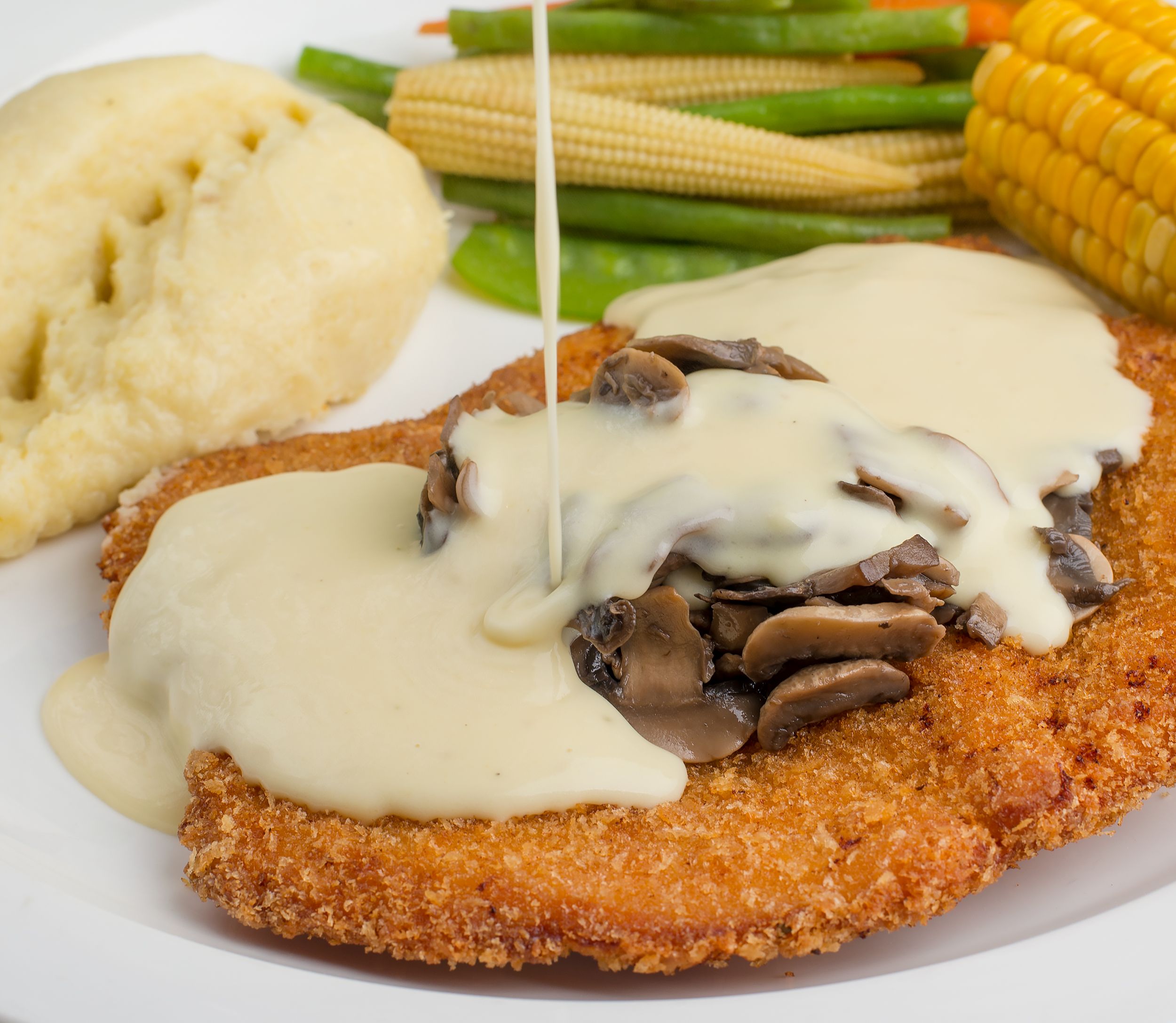
Jägerschnitzel
The diets react (see scores below)
Common Ingredients
- pork cutlets
- mushrooms
- bacon
- onion
- heavy cream
- beef stock
- flour
- parsley
Specific recipes may vary.
Incompatible with 9 of 11 diets
Diet Ratings
Jägerschnitzel is largely keto-friendly in its core components — pork or veal cutlets, mushrooms, bacon, heavy cream, and beef stock are all compatible with ketogenic eating. The primary concern is the flour, which is traditionally used both to bread the schnitzel and to thicken the hunter's sauce. Even a light dredge in flour adds meaningful net carbs per serving, and thickening the sauce compounds this. With straightforward substitutions (almond flour or no breading, cream-reduced sauce without flour), this dish becomes fully keto-approved. As standardly prepared, it sits in caution territory due to the flour usage, though it is far less problematic than many grain-heavy dishes.
Some lazy keto and moderate keto practitioners argue that the small quantity of flour used in a single serving's thin dredge and sauce thickening may keep net carbs within acceptable limits (under 5–8g net carbs per serving), especially if portion-controlled, and would effectively approve the dish as-is. Strict keto adherents counter that any wheat flour is a non-starter due to both carb content and inflammatory grain concerns.
Jägerschnitzel is entirely incompatible with a vegan diet. The dish contains multiple animal products at its core: pork cutlets and/or veal (meat), bacon (meat), heavy cream (dairy), and beef stock (animal-derived liquid). There is no plant-based version of this dish by default — animal products are not incidental or optional, they are the structural foundation of the recipe. No amount of substitution would make this the same dish; it would be an entirely different creation.
Jägerschnitzel contains multiple non-paleo ingredients that disqualify it from the diet. Flour is a grain product used to coat the cutlets, which is strictly excluded. Heavy cream is a dairy product, also excluded. Bacon, while pork-based, is a processed meat with added salt and often preservatives, placing it in the avoid category. The pork cutlets, mushrooms, onion, beef stock, and parsley are paleo-compatible, but the combination of flour, heavy cream, and processed bacon makes this dish clearly non-paleo as traditionally prepared.
Jägerschnitzel is fundamentally at odds with Mediterranean diet principles on multiple fronts. The dish centers on pork cutlets (red meat), which should be limited to only a few times per month. It is further compounded by bacon (processed red meat, high in saturated fat and sodium), heavy cream (high saturated fat dairy used as a sauce base rather than a moderate condiment), and refined flour for breading. The cooking method — breading and frying, typically in butter or lard — replaces the core Mediterranean fat (extra virgin olive oil) entirely. While mushrooms and onion are positive plant-based elements, they are minor components in an otherwise problematic dish. The overall nutritional profile — high saturated fat, processed meat, refined carbohydrates, no whole grains or legumes — directly contradicts Mediterranean diet principles.
Jägerschnitzel contains multiple non-carnivore ingredients that disqualify it. Flour is a grain-based coating used to bread the cutlets, mushrooms and onion are plant foods, and parsley is an herb — all strictly excluded on the carnivore diet. While the base proteins (pork, veal, bacon) and the sauce components (heavy cream, beef stock) are animal-derived, the dish as prepared is fundamentally incompatible with carnivore principles. The flour breading alone is a hard disqualifier, and the mushrooms, onion, and parsley add further plant-based violations. A carnivore adaptation would require stripping the breading and plant ingredients entirely, leaving only the meat and cream/stock sauce — which would no longer be Jägerschnitzel.
Jägerschnitzel contains multiple Whole30-excluded ingredients. Flour (a grain) is used to coat the cutlets, and heavy cream (dairy) is used in the mushroom sauce. These are clear violations of Whole30 rules. Additionally, bacon commonly contains added sugar, adding another likely violation. The dish as traditionally prepared cannot be made Whole30-compliant without fundamental changes to the recipe.
Jägerschnitzel contains multiple high-FODMAP ingredients that make it unsuitable during the elimination phase. Onion is one of the highest-FODMAP foods tested by Monash University, containing significant fructans at any culinary amount. Mushrooms (most common varieties like button or cremini) are high in polyols (mannitol) and are high-FODMAP at standard serving sizes. Flour (wheat-based) used for dredging the schnitzel contains fructans and is high-FODMAP. Heavy cream is generally low-FODMAP at small amounts (1 tbsp), but in a cream sauce context the quantity typically used raises concern. Beef stock may contain onion or garlic as base ingredients. Pork cutlets, bacon, and parsley are individually low-FODMAP and safe. However, the combination of onion, mushrooms, and wheat flour alone — all core structural components of the dish — makes this dish clearly high-FODMAP and unsuitable for the elimination phase without significant recipe modification.
Jägerschnitzel is fundamentally incompatible with the DASH diet. The dish combines multiple high-saturated-fat ingredients — bacon and heavy cream — which DASH explicitly limits. Bacon is a processed red meat high in both saturated fat and sodium, directly violating DASH guidelines. Heavy cream is full-fat dairy, the opposite of the low-fat or fat-free dairy DASH recommends. The pork cutlets, while lean meat is acceptable on DASH, are typically pan-fried in fat and the overall dish is calorie-dense. Beef stock, depending on preparation, can add significant sodium. The flour-based sauce thickening adds refined carbohydrates. While mushrooms, onion, and parsley are DASH-positive ingredients, they are overwhelmed by the problematic components. This dish is high in saturated fat, potentially high in sodium, and uses full-fat dairy and processed meat — all of which DASH explicitly advises against.
Jägerschnitzel presents several Zone Diet challenges. The protein base (pork or veal cutlet) is acceptable as a lean protein source, though pork can vary in fat content depending on the cut. The mushrooms and onion are favorable low-glycemic Zone carbohydrates. However, the dish has multiple problematic elements: (1) Heavy cream is a significant source of saturated fat, disrupting the preferred monounsaturated fat profile and pushing the fat ratio toward an unfavorable type. (2) Bacon adds additional saturated fat and sodium. (3) Flour used for breading and sauce thickening introduces refined, higher-glycemic carbohydrates that are 'unfavorable' in Zone terminology. (4) The sauce, combining heavy cream, bacon fat, and flour, creates a macronutrient profile that is simultaneously too high in saturated fat and unfavorable carbs while likely being calorie-dense. To make this Zone-compatible, one would need to: use a thinner cutlet, skip or minimize the breading, substitute a small amount of olive oil or reduced cream for the sauce base, use a slurry of arrowroot instead of flour, and significantly reduce bacon. As prepared traditionally, the heavy cream sauce makes balancing the 40/30/30 ratio difficult without significant modification.
Some Zone practitioners and Sears' later anti-inflammatory writings (The OmegaRx Zone, The Anti-Inflammation Zone) are slightly less rigid about saturated fat from whole food sources like cream and bacon in small quantities, focusing more on omega-6 seed oils and processed carbs as the primary enemy. Under this lens, a small-portioned Jägerschnitzel with minimal flour thickening could be incorporated cautiously if the rest of the day's meals correct the fat profile toward monounsaturated sources.
Jägerschnitzel presents a notably pro-inflammatory nutritional profile across multiple dimensions. The dish is built around a breaded and pan-fried pork cutlet — pork is a red meat (limit category), and the breading introduces refined flour with a high glycemic impact. Bacon adds processed red meat, which is associated with elevated inflammatory markers (CRP, IL-6) in numerous studies and classified as a processed meat. Heavy cream is full-fat dairy, which is explicitly in the 'limit' category due to saturated fat content. The combination of bacon fat, cream, and frying oil creates a significant saturated fat load. On the positive side, mushrooms are genuinely anti-inflammatory (though not the specifically emphasized Asian varieties), onion contains quercetin (anti-inflammatory flavonoid), and parsley provides antioxidants — but these beneficial ingredients are minor players in the overall dish. The beef stock and flour-thickened sauce add refined carbohydrates. The overall profile — processed red meat, full-fat dairy, refined carbs, high saturated fat, fried protein — stacks multiple pro-inflammatory elements in a single dish, making it difficult to classify above 'avoid' even with moderate frequency consumption.
Jägerschnitzel is a poor fit for GLP-1 patients in its traditional preparation. The dish combines multiple high-fat ingredients — heavy cream, bacon, and a flour-thickened sauce — creating a calorie-dense, high-saturated-fat meal that is likely to worsen the core GLP-1 side effects of nausea, bloating, and reflux due to slowed gastric emptying. While the pork or veal cutlet provides meaningful protein, it is typically pan-fried or breaded before being sauced, adding further fat and refined carbohydrate with minimal fiber. Bacon contributes saturated fat and sodium with negligible nutritional benefit per calorie. The heavy cream sauce is the central problem: it is high in saturated fat, low in protein, low in fiber, and nutritionally empty relative to its caloric load — precisely the profile GLP-1 patients can least afford given their reduced appetite and caloric intake. Mushrooms and parsley contribute trace fiber and micronutrients but cannot offset the dish's overall nutritional profile. The flour-based sauce thickening adds refined carbohydrate without fiber benefit. This dish scores low on nearly every GLP-1 priority: it is fat-heavy, fiber-absent, difficult to digest, and poor in nutrient density per calorie.
*See how scores were generated at our methodology page.
Nutritional profile
Six traits that cut across every diet.
Fiber & Plants
How much whole-plant food and fiber it delivers.
Healthy Fats
The quality of its fats (unsaturated, omega-3).
Whole / Unprocessed
How close it is to its natural, unprocessed form.
Gut Gentle
How easy it is on digestion (low FODMAP, few irritants).
Low Glycemic
How little it spikes your blood sugar.
Protein Density
How much protein it packs per calorie.
Controversy Index
Higher controversy = more disagreement between diets.
Diet-Specific Tips
 Keto — 5/10
View tips
- Flour breading and sauce thickener is the primary keto incompatibility — even a light dredge adds 5–10g net carbs per serving
- Heavy cream, bacon, and beef stock are excellent keto ingredients supporting high fat macros
- Pork cutlets provide quality moderate protein aligned with keto targets
- Mushrooms and onion add minimal net carbs in typical serving quantities
- Easy to make fully keto-compliant by substituting almond flour or skipping breading entirely
- As traditionally prepared, net carbs per serving likely fall in the 8–15g range depending on technique
 Zone — 4/10
View tips
- Heavy cream sauce is high in saturated fat, conflicting with Zone's monounsaturated fat preference
- Flour breading and sauce thickener adds unfavorable refined carbohydrates
- Bacon introduces additional saturated fat and processed meat concerns
- Pork cutlet is a reasonable but moderate-fat protein source (not as lean as chicken breast)
- Mushrooms and onions are favorable low-glycemic Zone carbohydrates
- Dish as traditionally prepared makes hitting 40/30/30 ratio difficult without significant modifications
- High caloric density from cream sauce complicates portion control for Zone blocks