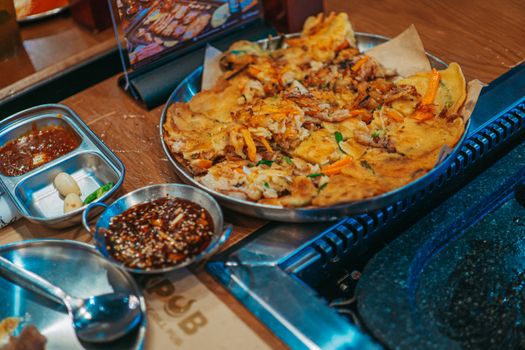
Photo: FOX ^.ᆽ.^= ∫ / Pexels
Korean
Seafood Pancake (Haemul Pajeon)
The diets react (see scores below)
Common Ingredients
- scallions
- squid
- shrimp
- flour
- egg
- soy sauce
- sesame oil
- vinegar
Specific recipes may vary.
Incompatible with 6 of 11 diets
Diet Ratings
Haemul Pajeon is fundamentally built on a wheat flour batter, which is a grain-based, high-carb ingredient that is incompatible with ketogenic eating. A standard serving of this savory pancake delivers a substantial carbohydrate load — primarily from the flour — that would likely exceed or consume most of a day's keto carb budget in a single snack. While the seafood (squid, shrimp) and scallions are keto-friendly, and sesame oil and egg add healthy fats, the flour is non-negotiable and disqualifying. The soy sauce also contributes minor carbs. There is no practical portion size that makes this dish compatible with ketosis without fundamentally reformulating it (e.g., replacing flour with almond or coconut flour).
Haemul Pajeon contains multiple animal-derived ingredients that are strictly excluded under vegan dietary rules. Squid and shrimp are seafood (animal products), and egg is an animal product. These are not edge cases or contested ingredients — they are unambiguously non-vegan. The dish is fundamentally incompatible with a vegan diet regardless of the plant-based ingredients also present (scallions, flour, soy sauce, sesame oil, vinegar).
Seafood Pancake (Haemul Pajeon) contains multiple non-paleo ingredients that disqualify it clearly. Flour (wheat) is a grain and one of the most explicitly excluded foods in all paleo frameworks. Soy sauce contains both wheat and soy (a legume), adding two more violations. Sesame oil is a seed oil, which is excluded in favor of animal fats, olive oil, coconut oil, and similar alternatives. While the seafood (squid, shrimp), scallions, egg, and vinegar are paleo-compliant, the foundation of the dish — the pancake batter — is built on wheat flour, making this dish fundamentally incompatible with a paleo diet. The soy sauce dipping component compounds the violation. This is not a borderline case; wheat flour and soy sauce are among the clearest 'avoid' ingredients across all major paleo authorities.
Haemul Pajeon contains several Mediterranean-friendly elements — mixed seafood (squid and shrimp are encouraged 2-3 times weekly), scallions (vegetables), and egg — but is complicated by the use of refined white flour as the pancake base, sesame oil instead of olive oil, and soy sauce (a processed condiment). The refined flour batter is a departure from whole-grain principles, and the dish is pan-fried rather than prepared with olive oil. However, the seafood-forward protein and vegetable content keep it from being outright discouraged. It lands in the 'caution' zone as an acceptable occasional dish rather than a Mediterranean staple.
Some Mediterranean diet interpreters focused on the 'pescatarian spirit' of the diet might lean toward approving this dish given its strong seafood and vegetable content, arguing that the refined flour component is modest and the overall dish is far preferable to red meat or processed snacks. Others with stricter whole-grain and olive-oil-only stances would score it lower due to the refined batter and non-traditional fats.
Seafood Pancake (Haemul Pajeon) is almost entirely incompatible with the carnivore diet. While squid and shrimp are carnivore-approved animal proteins, they are completely overshadowed by a dominant plant and grain-based structure. The batter is made from wheat flour — a grain and a hard avoid. Scallions are a plant vegetable, also excluded. The dipping sauce compounds the violations with soy sauce (fermented soy — legume-derived), sesame oil (plant oil from seeds), and vinegar (plant-derived fermented product). The egg is the only strictly carnivore-compliant binding ingredient. This dish is fundamentally a grain-and-vegetable pancake with seafood added, not a seafood dish with incidental plant ingredients.
Seafood Pajeon (Korean seafood pancake) contains multiple Whole30-excluded ingredients and also violates the program's 'no recreating baked goods/pancakes' rule. First, flour (wheat) is a grain and explicitly excluded from Whole30. Second, soy sauce contains soy (a legume) and wheat (a grain), both excluded — coconut aminos would be required as a substitute, but that substitution is not what's listed. Third, and independently sufficient to exclude this dish, it is literally a pancake — explicitly named in the Whole30 rules as a prohibited food form, even when made with compliant ingredients. The combination of excluded grains (flour, soy sauce), excluded legumes (soy in soy sauce), and the pancake format makes this a clear violation on multiple counts.
Haemul Pajeon contains two significant high-FODMAP ingredients that make it unsuitable during the elimination phase. First, regular wheat flour is the primary batter base and is high in fructans — this alone disqualifies the dish. Second, scallions (green onions) present a nuance: the green tops are low-FODMAP, but traditional pajeon uses the entire scallion including the white bulb, which is high in fructans. The seafood components (squid, shrimp) are low-FODMAP, as are egg, sesame oil, and vinegar. Soy sauce contains small amounts of wheat but is typically used in such small quantities that it is considered low-FODMAP at standard condiment servings. However, the wheat flour batter is the foundational ingredient and cannot be avoided or reduced to a safe portion — a standard serving of pancake will deliver a significant fructan load. The combination of wheat flour and potentially whole scallions makes this dish clearly high-FODMAP.
Seafood Pancake (Haemul Pajeon) contains several DASH-friendly ingredients — scallions, squid, and shrimp are lean seafood/vegetable sources rich in potassium and protein. However, the dish raises multiple DASH concerns: soy sauce is high in sodium (one tablespoon contains ~900–1,000mg), pushing the dish close to or over DASH sodium thresholds in a single snack serving. The dipping sauce typically made from soy sauce and vinegar compounds this. Refined white flour is used rather than whole grain, reducing fiber value. Sesame oil adds unsaturated fat (acceptable in small amounts) but increases total fat and caloric density. Pan-frying in oil adds further fat. The egg component is acceptable under modern DASH interpretations. Overall, the seafood and scallion base aligns with DASH principles, but sodium from soy sauce and refined flour make this a 'caution' food requiring portion control and sodium-conscious preparation.
NIH DASH guidelines would flag this dish primarily for its soy sauce sodium content, which can easily exceed a significant fraction of the 1,500–2,300mg daily limit in one serving. However, updated clinical interpretations note that using low-sodium soy sauce and reducing the dipping sauce quantity can make this dish more DASH-compatible, and some DASH-oriented dietitians accept seafood-based dishes with minor modifications rather than restricting them outright.
Haemul Pajeon is a mixed seafood pancake that has genuine Zone-friendly elements alongside some unfavorable ones. The mixed seafood (squid and shrimp) are excellent lean protein sources that fit Zone blocks well, and scallions are a favorable low-glycemic vegetable. However, the primary structural issue is the wheat flour batter, which is a refined, higher-glycemic carbohydrate — Zone classifies refined grains as 'unfavorable' carbs. The egg adds moderate protein and some fat. Sesame oil is moderately acceptable (contains some monounsaturated fat but also significant omega-6 polyunsaturated fat, making it less ideal than olive oil). The soy sauce and vinegar dipping component adds minimal macronutrient concern. As a snack, the ratio balance will be off: the flour batter skews carbohydrate content high-glycemic with relatively modest protein per serving unless carefully portioned. A small portion (1-2 blocks) with adjustment for the flour's glycemic impact is manageable but requires discipline. The dish is not ideal Zone food but far from disqualifying — it's an 'unfavorable' carb vehicle with favorable protein.
Some Zone practitioners note that the seafood protein content can be substantial enough to partially balance the carb load from flour, especially if the pancake is thin and seafood-dense. Sears' later writings also place more emphasis on the overall inflammatory profile of meals: the omega-3-rich seafood may offset some of the glycemic concerns, making this more acceptable in context than traditional Zone 'unfavorable carb' classification suggests.
Haemul Pajeon (Seafood Pancake) presents a mixed anti-inflammatory profile. On the positive side, the dish features notable anti-inflammatory ingredients: squid and shrimp provide lean protein and some omega-3 fatty acids (though lower than fatty fish); scallions are rich in quercetin and organosulfur compounds with anti-inflammatory properties; sesame oil contains sesamol and sesaminol (antioxidant lignans) and a reasonable omega-6 to omega-3 ratio compared to other seed oils; garlic-adjacent compounds in scallions support NF-κB pathway inhibition; and vinegar (rice vinegar likely) is benign to mildly beneficial for glycemic response. However, several factors temper the rating: the flour base is a refined carbohydrate, which contributes to glycemic load and offers minimal fiber or nutrient density; pan-frying the pancake (typical preparation) adds cooking oil, often a high-omega-6 vegetable or sesame oil blend; soy sauce contributes high sodium, which while not directly pro-inflammatory, can be a concern; and eggs are neutral to mildly debated. The dish is not high in the most potent anti-inflammatory foods (fatty fish, colorful vegetables, turmeric) and the refined flour base is a meaningful drawback, but the seafood and scallion base prevent it from being pro-inflammatory overall. As an occasional snack, it fits within the 'acceptable in moderation' category of an anti-inflammatory diet.
Some anti-inflammatory practitioners would rate this more favorably, citing the seafood omega-3 content, antioxidant-rich scallions, and sesame oil's lignans as genuinely beneficial — Dr. Weil's framework emphasizes seafood broadly, not just fatty fish. Others following stricter AIP or low-glycemic anti-inflammatory protocols would penalize the refined wheat flour base and soy sauce (gluten and high sodium) more heavily, potentially pushing this toward a lower score.
Haemul Pajeon (Korean seafood pancake) offers genuine nutritional strengths — shrimp and squid provide lean, moderate-quality protein, and scallions contribute some fiber and micronutrients. However, the dish is flour-based and pan-fried in oil, which adds refined carbohydrates, reduces protein density per calorie, and increases fat content. The sesame oil, while an unsaturated fat, adds to the overall fat load. For GLP-1 patients, the combination of refined flour and frying oil can slow digestion further (on top of already-slowed gastric emptying), potentially worsening bloating or nausea. Portion size matters significantly — a small serving (1–2 pieces) can be a reasonable protein-containing snack, but a full portion is calorie-dense relative to its protein yield. The dipping sauce (soy sauce + vinegar) is low-concern and GLP-1 friendly in small amounts. This is not an ideal GLP-1 snack but is acceptable occasionally in a small portion.
Some GLP-1-focused RDs may rate this more favorably given the lean seafood protein and the relatively modest fat content compared to other pan-fried snacks; individual tolerance to pan-fried foods varies considerably among GLP-1 patients, with some experiencing minimal GI disruption. Others would caution more strongly due to the refined flour base providing low nutritional value per calorie and the oil used in pan-frying potentially worsening nausea or reflux in sensitive patients.
*See how scores were generated at our methodology page.
Nutritional profile
Six traits that cut across every diet.
Fiber & Plants
How much whole-plant food and fiber it delivers.
Healthy Fats
The quality of its fats (unsaturated, omega-3).
Whole / Unprocessed
How close it is to its natural, unprocessed form.
Gut Gentle
How easy it is on digestion (low FODMAP, few irritants).
Low Glycemic
How little it spikes your blood sugar.
Protein Density
How much protein it packs per calorie.
Controversy Index
Higher controversy = more disagreement between diets.
Diet-Specific Tips
 Mediterranean — 5/10
View tips
- Positive: squid and shrimp align with Mediterranean seafood encouragement (2-3x/week)
- Positive: scallions and egg are acceptable Mediterranean ingredients
- Negative: refined white flour batter conflicts with whole-grain preference
- Negative: sesame oil replaces olive oil as the primary fat
- Negative: soy sauce is a processed condiment not part of Mediterranean tradition
- Neutral: vinegar is compatible; overall dish is minimally processed compared to packaged foods
 DASH — 5/10
View tips
- High sodium from soy sauce in batter and dipping sauce — major DASH concern
- Shrimp and squid are lean seafood proteins, aligned with DASH
- Refined white flour used instead of whole grain — reduced fiber benefit
- Scallions provide potassium and micronutrients, DASH-positive
- Sesame oil contributes unsaturated fat, acceptable in small amounts
- Pan-frying increases total fat and caloric density
- Low-sodium soy sauce substitution would significantly improve DASH compatibility
- Portion size critical — as a shared snack, DASH impact is more manageable
 Zone — 5/10
View tips
- Wheat flour batter is a refined, higher-glycemic 'unfavorable' carbohydrate in Zone terminology
- Shrimp and squid are excellent lean protein sources — ideal Zone protein blocks
- Scallions are a favorable low-glycemic vegetable carbohydrate
- Sesame oil contains omega-6 fatty acids, less preferred than monounsaturated olive oil or avocado
- Egg contributes to protein balance and adds some fat
- As a snack, portion control is critical to maintain 40/30/30 macro ratio
- Seafood's omega-3 content aligns with Zone's anti-inflammatory principles
 Anti-Inflammatory — 5/10
View tips
- Squid and shrimp provide lean protein and modest omega-3 fatty acids
- Scallions are rich in quercetin and organosulfur compounds with documented anti-inflammatory activity
- Refined wheat flour base adds refined carbohydrates with high glycemic load and minimal fiber
- Sesame oil contains anti-inflammatory lignans (sesamol, sesaminol) but also omega-6 fatty acids
- Soy sauce contributes high sodium; fermented soy is generally neutral to mildly beneficial
- Pan-frying method increases total fat content depending on oil used
- No strongly pro-inflammatory ingredients (no trans fats, added sugars, or processed additives)
- Absence of highly anti-inflammatory ingredients like fatty fish, turmeric, or colorful vegetables limits the ceiling score
 GLP-1 Friendly — 5/10
View tips
- Lean seafood (shrimp, squid) provides moderate protein but overall protein density per calorie is diluted by flour base
- Refined wheat flour adds carbohydrates with minimal fiber, reducing nutrient density
- Pan-fried preparation increases fat content and may worsen GLP-1 GI side effects (nausea, bloating, slowed gastric emptying)
- Sesame oil is an unsaturated fat — preferable to saturated fat but still adds caloric load
- Small portion (1–2 pieces) is more appropriate than a full serving for GLP-1 patients
- Soy sauce dipping sauce is acceptable in small amounts (watch sodium)
- Not a fiber-rich food — scallions contribute minimally