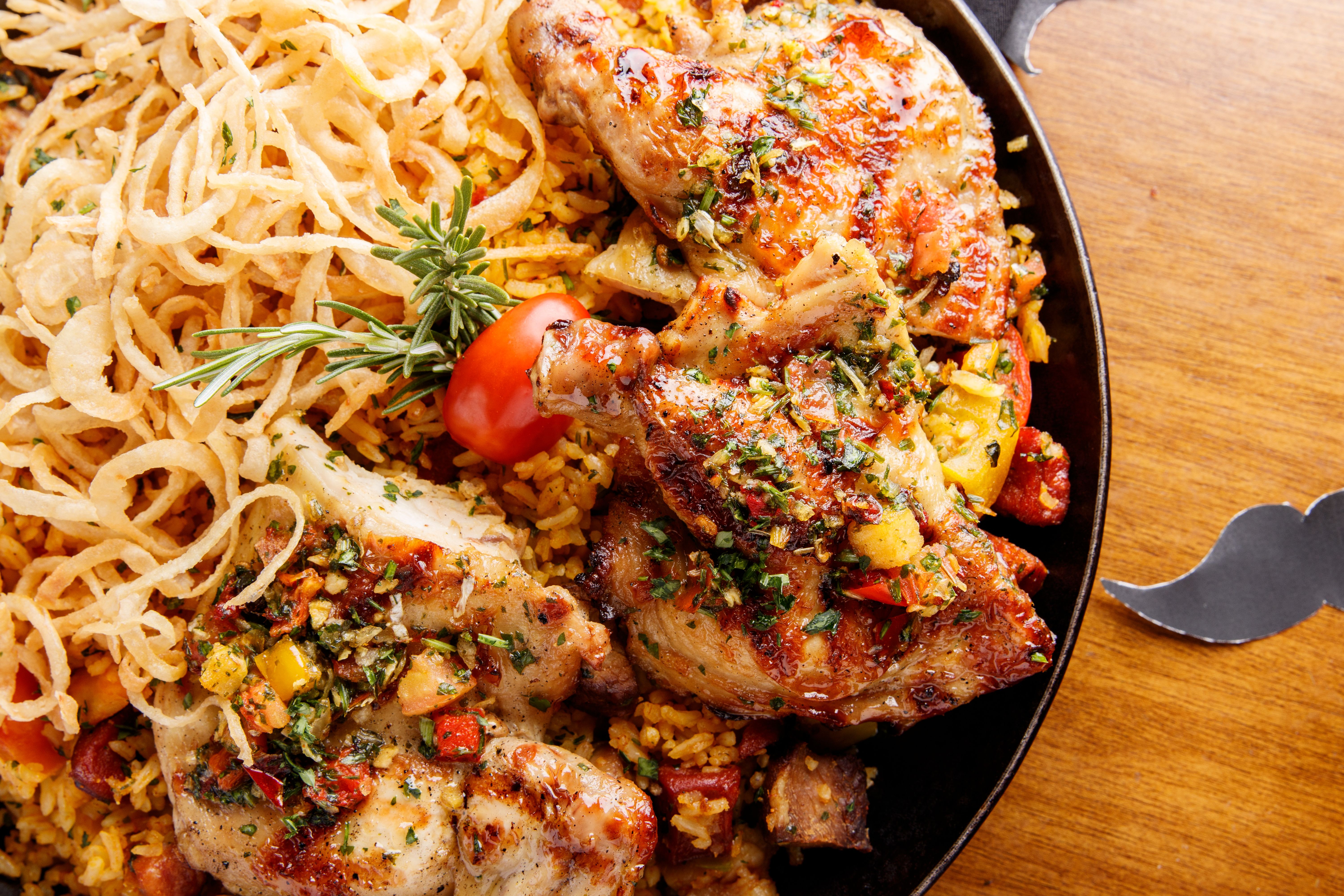
African
Thieboudienne
The diets react (see scores below)
Common Ingredients
- fish
- rice
- tomatoes
- cassava
- carrots
- cabbage
- onion
- tamarind
Specific recipes may vary.
Incompatible with 6 of 11 diets
Diet Ratings
Thieboudienne is a Senegalese rice-and-fish dish that is fundamentally incompatible with a ketogenic diet. Rice alone contains approximately 45g of net carbs per cup (cooked), which would immediately blow the daily keto carb limit in a single serving. Cassava is one of the highest-carb root vegetables available, adding another 30-40g net carbs per serving. Combined with tamarind (which contains sugars), carrots, and tomatoes, this dish delivers an extremely high carbohydrate load that would completely disrupt ketosis. While the fish component is keto-friendly and some vegetables like cabbage and onion are borderline acceptable in small amounts, the dish's defining staple ingredients — rice and cassava — make it entirely off-limits for keto practitioners in any reasonable portion size.
Thieboudienne is a traditional Senegalese dish whose primary protein is fish, an animal product explicitly excluded from a vegan diet. Fish is unambiguously non-vegan regardless of culinary tradition or cultural significance. While the accompanying ingredients — rice, tomatoes, cassava, carrots, cabbage, onion, and tamarind — are all fully plant-based, the central and defining ingredient of the dish is fish, making the dish as a whole incompatible with a vegan diet.
Thieboudienne is a Senegalese rice-and-fish dish whose defining ingredient is rice — a grain that is strictly excluded from the paleo diet. Rice is a grain that provides no nutritional advantage over paleo-approved foods and contains anti-nutrients. While several individual ingredients are paleo-compliant (fish, tomatoes, carrots, cabbage, onion, tamarind, cassava), the dish is fundamentally built around rice as its primary carbohydrate base. Without rice, it would no longer be Thieboudienne. The presence of a core forbidden grain makes the overall dish a clear 'avoid' regardless of the otherwise acceptable supporting ingredients.
Thieboudienne is a nutritious West African dish centered on fish (a Mediterranean diet staple) alongside an abundance of vegetables including tomatoes, carrots, cabbage, onion, and cassava. The fish and vegetable profile aligns strongly with Mediterranean principles. However, the dish is built on white rice as its starchy base, which is a refined grain not emphasized in Mediterranean dietary patterns (whole grains are preferred). Cassava is also a starchy root not common to Mediterranean traditions. The overall dish is whole-food, minimally processed, and plant-forward with quality protein, but the refined white rice base and absence of olive oil as the cooking fat temper the score.
Some Mediterranean diet scholars note that white rice is used in traditional Mediterranean cuisines (e.g., Spanish paella, Greek pilafi) and can be acceptable in moderate portions within a whole-food dietary pattern. From this perspective, Thieboudienne's exceptional vegetable and fish content could warrant a higher 'approve' rating, with the white rice viewed as a culturally equivalent starch rather than a dietary flaw.
Thieboudienne is a traditional Senegalese dish that is fundamentally incompatible with the carnivore diet. While it does contain fish, which is carnivore-approved, the dish is dominated by plant-based ingredients: rice (a grain), tomatoes, cassava, carrots, cabbage, onion, and tamarind. The majority of the dish by volume and caloric contribution comes from excluded plant foods. A carnivore practitioner would need to disassemble this dish entirely, consuming only the fish portion — but as prepared, this dish cannot be considered carnivore-compatible in any tier of the diet.
Thieboudienne (Senegalese fish and rice dish) is excluded from Whole30 primarily because rice is a grain, which is explicitly prohibited on the program. Rice is the foundational carbohydrate in this dish and cannot be substituted without fundamentally changing the recipe. The remaining ingredients — fish, tomatoes, cassava, carrots, cabbage, onion, and tamarind — are all individually Whole30-compliant, but the presence of rice makes the dish non-compliant as traditionally prepared.
Thieboudienne contains two significant high-FODMAP ingredients that make it unsuitable during the elimination phase. Onion is one of the highest-fructan foods tested by Monash University and is high-FODMAP at any culinary quantity — it is nearly impossible to use onion in a dish like this at a safe serving (typically <15g cooked). Tamarind paste/concentrate is high in excess fructose and is high-FODMAP at amounts commonly used in cooking. These two ingredients alone are sufficient to classify the dish as high-FODMAP. The remaining ingredients are largely low-FODMAP: fish (plain protein, no FODMAPs), white rice (low-FODMAP), tomatoes (low-FODMAP at standard serve ~65g), cassava (low-FODMAP at ~100g per Monash), carrots (low-FODMAP), and cabbage (low-FODMAP at ~75g). However, the onion and tamarind are foundational flavoring agents in this traditional Senegalese dish and cannot be reduced to safe levels without fundamentally altering the recipe.
Thieboudienne (Senegalese fish and rice) contains many DASH-friendly ingredients: fish (lean protein with omega-3s), tomatoes, carrots, cabbage, onion, and cassava are all vegetables/plant foods aligned with DASH principles. However, traditional preparation typically uses white rice rather than whole grain, and critically, thieboudienne is often prepared with significant added salt, fermented fish or shellfish seasonings (like guedj or yeet), and palm or vegetable oil in amounts that can push sodium and saturated fat above DASH targets. As commonly consumed, the dish's sodium content from fermented seasonings and salt can be substantial. The tamarind adds a DASH-compatible acidic element. Rating is 'caution' because the ingredient base is largely DASH-compatible but typical preparation methods introduce sodium and fat concerns. A home-prepared low-sodium version with whole-grain rice and minimal oil would score higher (7-8), while restaurant or traditional versions with fermented fish seasonings could score lower (3-4).
NIH DASH guidelines would flag the high sodium load common in traditional thieboudienne (from fermented fish seasonings and added salt) as a significant concern. However, updated clinical interpretations note that if prepared without fermented high-sodium condiments, using minimal oil and whole-grain rice, the dish's rich vegetable and lean fish content would make it highly DASH-compatible — the verdict hinges almost entirely on preparation method.
Thieboudienne is a Senegalese fish-and-rice dish that presents a mixed Zone Diet profile. The protein component (fish) is excellent — lean, rich in omega-3 fatty acids, and a near-ideal Zone protein source. The vegetables (tomatoes, carrots, cabbage, onion) are largely favorable low-glycemic carbohydrates that align well with Zone principles, and tamarind adds polyphenols consistent with Sears' anti-inflammatory emphasis. However, two carbohydrate sources create Zone friction: white rice is a high-glycemic, unfavorable Zone carb that tends to dominate traditional Thieboudienne servings, and cassava (yuca) has a moderately high glycemic index and starchy carb load. Together, rice and cassava skew the dish's carbohydrate block count heavily upward, making it very difficult to achieve the 40/30/30 macro ratio in a traditional portion. The dish can be made Zone-compatible by dramatically reducing rice, increasing the vegetable-to-rice ratio, and keeping fish as the focal protein — but as traditionally prepared and served, the carbohydrate load is disproportionate. Preparation also often includes palm oil or added fats that may include saturated fat, adding another caution flag.
Some Zone practitioners would argue that Thieboudienne's rich vegetable content (cabbage, carrots, tomatoes, onion) and omega-3-rich fish base make it more Zone-friendly than a simple rice dish. Sears' later anti-inflammatory framework (The OmegaRx Zone, The Zone Diet) places heavy emphasis on fatty fish and polyphenol-rich ingredients — both present here — and might treat a carefully portioned, vegetable-heavy version as acceptable. The classification hinges largely on how much rice dominates the serving.
Thieboudienne (Senegalese fish and rice) has a genuinely mixed anti-inflammatory profile. On the positive side, fish (typically a firm white fish or red snapper) provides lean protein and some omega-3 fatty acids, though white fish delivers far less omega-3 than fatty fish like salmon or mackerel. The vegetable base — tomatoes, carrots, cabbage, and onion — is rich in antioxidants, carotenoids (beta-carotene from carrots), lycopene (tomatoes), and flavonoids (onion quercetin). Tamarind adds polyphenols and antioxidant compounds with some research suggesting anti-inflammatory potential. Cassava, however, is a starchy root vegetable with a high glycemic load that contributes to blood sugar spikes, which can promote inflammatory signaling — similar to the concern with white rice, which is the primary base of this dish. White rice is a refined carbohydrate offering limited fiber or micronutrients. The combination of white rice and cassava creates a significant glycemic burden that partially offsets the anti-inflammatory benefits of the fish and vegetables. The dish's overall profile depends heavily on preparation: traditional recipes often use palm oil (which is high in saturated fat and considered pro-inflammatory in excess) or other cooking oils, which could substantially shift the rating. Assuming a moderate oil preparation, the dish earns 'caution' — nutritious and vegetable-forward, but the refined carbohydrate load and variable oil use prevent a full approval.
Some anti-inflammatory-oriented nutritionists would rate this more favorably, arguing that the whole-food vegetable diversity, lean fish protein, and tamarind polyphenols outweigh the glycemic concerns of white rice, especially in the context of a balanced diet where the overall glycemic load is moderated by fiber from vegetables. Conversely, practitioners following stricter anti-inflammatory or glycemic-control frameworks (such as those used in metabolic or autoimmune protocols) would penalize the dish more heavily for the high-glycemic rice and cassava combination, potentially scoring it in 'avoid' territory for individuals with insulin resistance or inflammatory conditions.
Thieboudienne is a West African fish-and-rice dish with a strong nutritional foundation but some GLP-1-specific concerns. The fish (typically grouper, snapper, or similar lean white fish) is an excellent lean protein source with omega-3 benefits, and the generous mix of vegetables — tomatoes, cabbage, carrots, cassava — provides fiber, micronutrients, and hydration support. Tamarind adds flavor with minimal caloric impact. However, the dish is centered on white rice, a refined grain that is low in fiber and protein density, and traditional preparation often uses significant amounts of oil and may include fermented fish paste (guedj or yeet), which adds fat and sodium. The rice-heavy volume also means protein density per serving can be diluted. The cassava adds carbohydrate bulk with modest fiber. For a GLP-1 patient, the core components are sound, but the refined rice base and oil-heavy cooking method are drawbacks. A modified version with reduced rice, more fish and vegetables, and lighter oil use would score higher. As served traditionally, this is a caution — beneficial protein and vegetable components offset by refined carb dominance and potentially high cooking fat.
Some GLP-1-focused dietitians would rate this more favorably, emphasizing the lean fish protein and abundant vegetables as genuinely nutrient-dense components that support GLP-1 dietary goals. Others would caution more strongly due to the refined white rice base and the variability in oil use in traditional preparation, which may worsen nausea or bloating in patients with active GI side effects.
*See how scores were generated at our methodology page.
Nutritional profile
Six traits that cut across every diet.
Fiber & Plants
How much whole-plant food and fiber it delivers.
Healthy Fats
The quality of its fats (unsaturated, omega-3).
Whole / Unprocessed
How close it is to its natural, unprocessed form.
Gut Gentle
How easy it is on digestion (low FODMAP, few irritants).
Low Glycemic
How little it spikes your blood sugar.
Protein Density
How much protein it packs per calorie.
Controversy Index
Higher controversy = more disagreement between diets.
Diet-Specific Tips
 Mediterranean — 6/10
View tips
- Fish is the primary protein — strongly aligned with Mediterranean diet recommendations of 2-3 servings weekly
- Rich variety of vegetables (tomatoes, carrots, cabbage, onion) supports Mediterranean plant-forward emphasis
- White rice is the primary starch — a refined grain, not the whole grain preferred by Mediterranean guidelines
- Cassava is a high-starch root not typical of Mediterranean dietary traditions
- No olive oil specified as the cooking fat — traditional preparation often uses vegetable oil
- Minimally processed, whole-food ingredients with no added sugars or processed components
- Tamarind adds a natural acidic flavor element with no dietary concerns
 DASH — 5/10
View tips
- Fish is a DASH-approved lean protein source
- Multiple vegetables (tomatoes, carrots, cabbage, cassava, onion) align well with DASH's 4-5 vegetable servings
- Traditional preparation often uses fermented fish/shellfish seasonings high in sodium — major DASH concern
- White rice used instead of DASH-preferred whole grains
- Palm or vegetable oil quantity in preparation affects saturated fat profile
- Tamarind is a DASH-neutral acidic flavoring
- Low-sodium home preparation would significantly improve DASH compatibility
 Zone — 5/10
View tips
- Fish is an ideal Zone lean protein with omega-3 anti-inflammatory benefits
- White rice is an unfavorable high-glycemic Zone carb that dominates traditional portions
- Cassava adds additional high-starch, moderate-GI carbohydrate load
- Vegetables (cabbage, carrots, tomatoes, onion) are favorable low-GI Zone carbs
- Tamarind provides polyphenols consistent with Sears' anti-inflammatory goals
- Carbohydrate-to-protein ratio in traditional portions is too high for Zone balance
- Palm oil used in preparation may add saturated fat beyond Zone-preferred monounsaturated fats
 Anti-Inflammatory — 6/10
View tips
- Fish provides lean protein and moderate omega-3 fatty acids (less than fatty fish)
- Rich vegetable base (tomatoes, carrots, cabbage, onion) contributes antioxidants, carotenoids, and flavonoids
- Tamarind adds polyphenols with emerging anti-inflammatory evidence
- White rice is a refined carbohydrate with high glycemic index — pro-inflammatory in excess
- Cassava adds additional glycemic load with limited nutritional offset
- Preparation oil matters significantly — palm oil (common in West African cooking) is high in saturated fat and considered pro-inflammatory
 GLP-1 Friendly — 5/10
View tips
- Lean fish protein is a strong GLP-1-compatible protein source
- White rice is a refined grain — low fiber, low protein density, scores poorly for GLP-1 patients
- Diverse vegetables (cabbage, carrots, tomatoes, cassava) add fiber and micronutrients
- Traditional preparation often uses significant palm or vegetable oil, increasing fat per serving
- Fermented fish additives (common in traditional versions) add sodium and fat
- Cassava contributes carbohydrate bulk with modest fiber benefit
- Tamarind is low-calorie and adds flavor without significant nutritional drawbacks
- Dish is portion-sensitive — fish and vegetable components are approve-worthy; rice-heavy portions are not
- High carbohydrate load relative to protein may not support satiety goals on GLP-1 medications