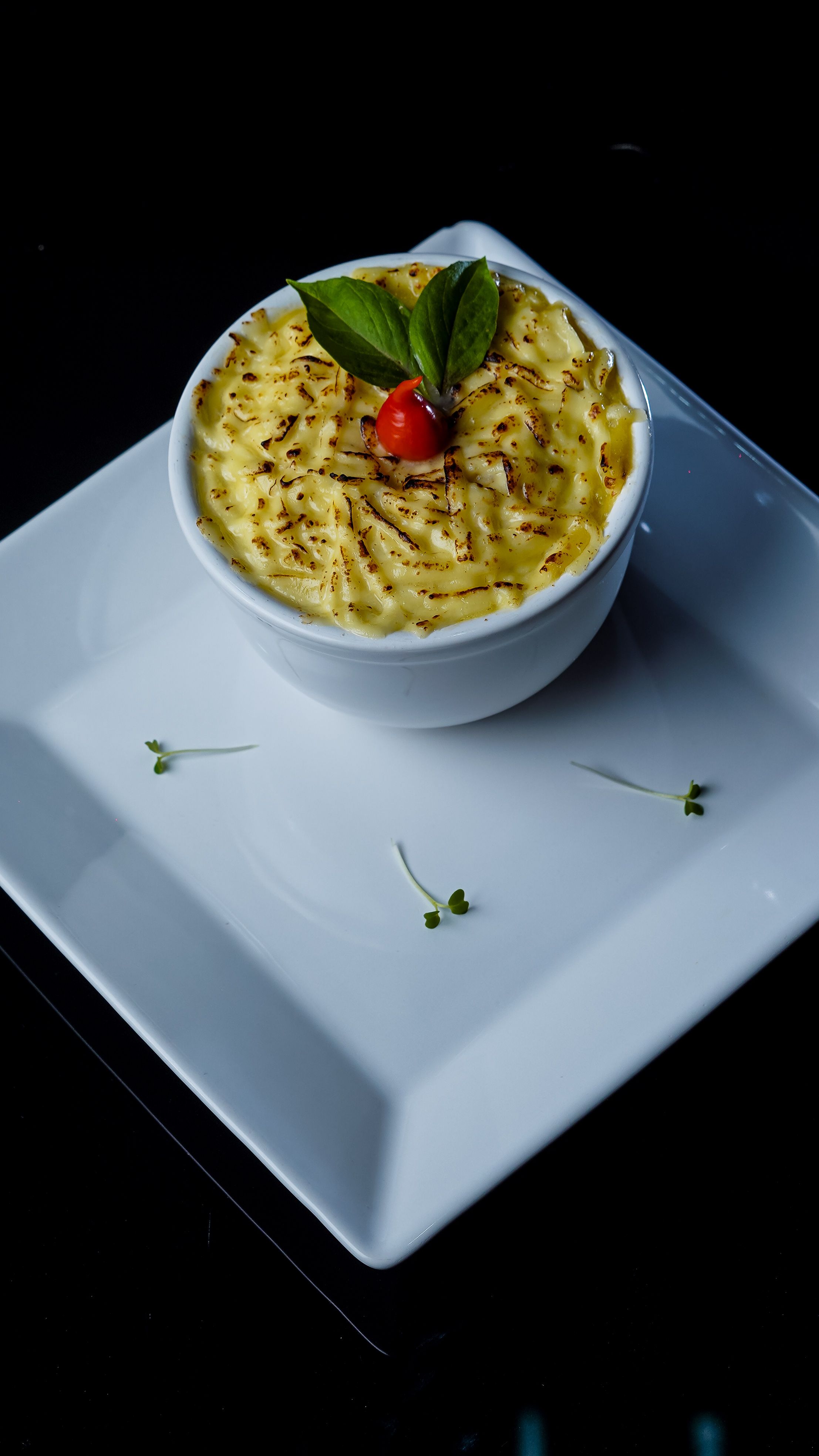
Photo: pedro furtado / Pexels
American
Shepherd's Pie
The diets react (see scores below)
Common Ingredients
- ground lamb
- mashed potatoes
- carrots
- peas
- onion
- beef broth
- tomato paste
- Worcestershire sauce
Specific recipes may vary.
Incompatible with 7 of 11 diets
Diet Ratings
Shepherd's Pie is fundamentally incompatible with ketogenic eating due to its mashed potato topping, which is the defining characteristic of the dish. A standard serving contains roughly 30-40g of net carbs from potatoes alone, which can single-handedly exceed or max out the entire daily keto carb budget. Compounding this, peas and carrots are higher-carb vegetables that add additional net carbs. While the ground lamb or beef base is keto-friendly, and the broth and tomato paste are manageable in small amounts, the overall dish as traditionally prepared is a high-carbohydrate meal. Worcestershire sauce also contains a small amount of sugar, though this is a minor concern relative to the potatoes. There is no realistic portion size of traditional Shepherd's Pie that fits within ketogenic macros.
Shepherd's Pie as described contains multiple animal products that are strictly excluded from a vegan diet. Ground lamb is a direct animal flesh ingredient, beef broth is an animal-derived liquid, and traditional Worcestershire sauce contains anchovies (a fish product). These ingredients alone make this dish fundamentally incompatible with veganism. A vegan version could theoretically be constructed using lentils or plant-based mince, vegetable broth, and vegan Worcestershire sauce, but the dish as presented is not vegan.
Shepherd's Pie as traditionally prepared contains multiple non-paleo ingredients. Peas are legumes and are excluded from paleo. Mashed potatoes (white potatoes) are debated but generally discouraged in strict paleo, and in this dish they form the primary topping component. Worcestershire sauce typically contains added sugar, soy, and other additives, making it a processed condiment incompatible with paleo. Beef broth is often commercially prepared with added salt and preservatives. Tomato paste is generally acceptable if free of additives, but store-bought versions frequently contain added sugar and salt. The combination of peas and Worcestershire sauce alone is enough to push this dish into avoid territory, regardless of how one resolves the white potato debate.
A paleo-adapted version of this dish could substitute cauliflower mash for the potato topping, omit the peas, use homemade compliant broth, and replace Worcestershire with coconut aminos — in that reconstructed form, most paleo practitioners (including Whole30 adherents) would approve it. The rating here applies to the traditional recipe as listed.
Shepherd's Pie is built around ground lamb or beef as the central ingredient, both classified as red meat, which the Mediterranean diet limits to only a few times per month. The dish is fundamentally red-meat-forward with no olive oil, no legumes, and no whole grains. Mashed potatoes are a refined, starchy base with minimal nutritional density compared to Mediterranean staples. Worcestershire sauce and beef broth add processed condiments. While carrots, peas, onion, and tomato paste are positive elements, they play a secondary role and cannot offset the core incompatibility of a red-meat-dominated dish as a regular meal.
Shepherd's Pie is fundamentally incompatible with the carnivore diet. While it contains carnivore-approved ground lamb or beef and beef broth, the dish is dominated by plant-based ingredients: mashed potatoes (starchy carbohydrate), carrots, peas, and onion are all excluded vegetables. Tomato paste is a plant-derived additive, and Worcestershire sauce typically contains anchovies but also tamarind, molasses, vinegar, and onion — all non-carnivore ingredients. The mashed potato topping alone disqualifies this dish entirely. There is essentially no version of traditional Shepherd's Pie that would be carnivore-compliant without a complete reconstruction of the recipe.
Shepherd's Pie as described contains multiple Whole30-incompatible ingredients. Worcestershire sauce traditionally contains malt vinegar (which contains gluten/grain derivatives) and often added sugar or anchovies in soy sauce — most commercial versions are non-compliant. More critically, the mashed potato topping is standard for this dish but potatoes themselves are Whole30-compliant; however, mashed potatoes are typically made with butter and/or dairy milk, both of which are excluded (only ghee or clarified butter would be acceptable). Peas are also a legume — unlike green beans, sugar snap peas, or snow peas, regular green peas are NOT among the explicitly excepted legumes and are therefore excluded on Whole30. The combination of likely non-compliant Worcestershire sauce, dairy in the mashed potatoes, and peas (excluded legume) makes this dish a clear avoid in its standard form.
Shepherd's Pie as traditionally prepared contains multiple high-FODMAP ingredients that make it unsuitable during the elimination phase. Onion is one of the highest-FODMAP foods tested by Monash University, containing significant fructans even in small amounts — it cannot be safely included in any meaningful quantity. Peas are high-FODMAP at standard serving sizes (Monash rates them as high-FODMAP above 1/4 cup due to GOS and fructans). Beef broth/stock commonly contains onion and garlic as ingredients, making most commercial broths high-FODMAP. Worcestershire sauce typically contains onion and garlic as well. Tomato paste becomes high-FODMAP above 2 tablespoons due to excess fructose concentration. The ground lamb and mashed potatoes (if made with lactose-free milk and suitable fat) would be low-FODMAP, as would carrots. However, the onion alone is a disqualifying ingredient — it cannot be simply reduced to a safe portion in a dish like this. The cumulative FODMAP load from onion, peas, broth, and Worcestershire sauce makes this dish a clear avoid during elimination phase.
Shepherd's Pie presents a mixed DASH profile. On the positive side, it contains DASH-friendly vegetables (carrots, peas, onion) and the mashed potato topping provides potassium. However, ground lamb is a red meat relatively high in saturated fat, which DASH explicitly limits. Beef broth and Worcestershire sauce contribute significant sodium — a standard serving can easily contain 600–900mg or more, which is a substantial portion of the DASH daily sodium budget. Tomato paste adds some lycopene and potassium but also concentrated flavor compounds. The dish is not inherently disqualifying, but its red meat base and sodium-heavy seasoning components push it into 'caution' territory. It could be improved significantly by substituting lean ground turkey or chicken, using low-sodium broth, reducing or omitting Worcestershire sauce, and ensuring the mashed potatoes are made with low-fat milk rather than butter and cream.
NIH DASH guidelines explicitly categorize red meat as a food to limit and emphasize lean poultry and fish as preferred proteins. However, some updated DASH-aligned clinical interpretations note that lean cuts of lamb in moderate portions (3–4 oz) may fit within weekly red meat allowances if overall saturated fat intake is managed, making an occasional modified Shepherd's Pie acceptable rather than a routine avoid.
Shepherd's Pie presents a significant Zone challenge primarily due to its mashed potato topping. Mashed potatoes are a high-glycemic carbohydrate that Dr. Sears explicitly classifies as 'unfavorable' in Zone terminology — they spike insulin rapidly and are difficult to balance in a 40/30/30 ratio without dramatically reducing portion size. The ground lamb (or beef) component adds saturated fat, which Zone protocol limits in favor of lean proteins. On the positive side, the vegetables (carrots, peas, onion) are reasonable Zone carb sources, and the tomato paste and Worcestershire sauce add polyphenols. However, the dish as traditionally prepared skews too high in glycemic carbs and saturated fat relative to Zone ideals. A Zone-modified version could substitute cauliflower mash for potatoes and use leaner ground turkey or lean beef, which would push the score higher. As served traditionally, it requires careful portioning — a very small portion with added low-GI vegetables on the side — to approximate Zone ratios, making it a 'caution' food rather than an outright avoid, since the protein and vegetable content do provide some Zone-compatible building blocks.
Shepherd's Pie presents a mixed anti-inflammatory profile. On the positive side, it contains carrots and peas (antioxidants, fiber, carotenoids), onions (quercetin, a potent anti-inflammatory flavonoid), and tomato paste (concentrated lycopene). These vegetables contribute meaningful anti-inflammatory value. However, the primary protein — ground lamb or beef — is red meat, which anti-inflammatory guidelines recommend limiting due to saturated fat content and arachidonic acid, both of which can promote inflammatory signaling at regular consumption levels. Mashed potatoes are a refined-adjacent starch with a high glycemic load, offering minimal anti-inflammatory benefit, and are often prepared with butter and full-fat dairy, adding saturated fat. Worcestershire sauce and beef broth may contain additives, sodium, and hidden sugars. The dish is not inherently disqualifying — the vegetable content provides real benefit — but the red meat base and starchy topping make it a food to moderate rather than emphasize. Lamb in particular has a higher saturated fat content than many lean proteins. Swapping beef broth for a low-sodium vegetable broth and ensuring lean ground lamb or grass-fed beef would improve the profile modestly. Occasional consumption in a broader anti-inflammatory diet is acceptable; regular weekly consumption is not advised.
Some anti-inflammatory advocates, particularly those following Dr. Weil's broader Mediterranean-influenced framework, would note that grass-fed lamb provides modest amounts of conjugated linoleic acid (CLA) and a slightly better omega-3 to omega-6 ratio than conventional beef, potentially softening the red meat concern. Conversely, stricter anti-inflammatory and autoimmune protocols (AIP) would flag both the red meat and potatoes (a nightshade-adjacent concern with solanine content) as problematic, pushing the rating closer to 'avoid.'
Shepherd's Pie presents a mixed nutritional profile for GLP-1 patients. Ground lamb is a meaningful protein source but comes with significant saturated fat, which can worsen nausea, bloating, and reflux — core GLP-1 side effects. Ground beef, depending on fat percentage, carries a similar concern. The mashed potato topping is a refined, starchy carbohydrate with low fiber and moderate glycemic impact, and occupies significant stomach volume relative to its nutritional value. On the positive side, the vegetables (carrots, peas, onion) add some fiber and micronutrients, and the dish is warm, soft, and easy to digest mechanically. Worcestershire sauce and tomato paste contribute flavor without major concern at typical serving sizes. The primary issues are the saturated fat from ground lamb and the low protein-to-calorie ratio relative to GLP-1 dietary priorities. A modified version using extra-lean ground beef or lentils, cauliflower mash instead of potato, and added vegetables could substantially improve the rating.
Some GLP-1-focused dietitians accept traditional Shepherd's Pie in controlled portions, noting that the dish is soft, warm, and palatable on low-appetite days when caloric intake is a concern. Others flag the saturated fat content and starchy topping as reliably problematic for patients experiencing GI side effects, particularly in the early weeks of titration when nausea and delayed gastric emptying are most pronounced.
*See how scores were generated at our methodology page.
Nutritional profile
Six traits that cut across every diet.
Fiber & Plants
How much whole-plant food and fiber it delivers.
Healthy Fats
The quality of its fats (unsaturated, omega-3).
Whole / Unprocessed
How close it is to its natural, unprocessed form.
Gut Gentle
How easy it is on digestion (low FODMAP, few irritants).
Low Glycemic
How little it spikes your blood sugar.
Protein Density
How much protein it packs per calorie.
Controversy Index
Higher controversy = more disagreement between diets.
Diet-Specific Tips
 DASH — 4/10
View tips
- Ground lamb is a red meat high in saturated fat, explicitly limited by DASH guidelines
- Beef broth and Worcestershire sauce significantly elevate sodium content, likely 600–900mg+ per serving
- Vegetables (carrots, peas, onion) are DASH-approved and contribute fiber, potassium, and micronutrients
- Mashed potatoes provide potassium but may be prepared with high-fat dairy (butter, cream), worsening the saturated fat profile
- Substituting lean ground turkey/chicken and low-sodium broth would substantially improve DASH compatibility
- Portion size is critical — a large serving compounds sodium and saturated fat concerns
 Zone — 4/10
View tips
- Mashed potatoes are explicitly 'unfavorable' high-glycemic carbohydrates in Zone methodology — a primary concern
- Ground lamb is a higher-saturated-fat protein; Zone prefers lean proteins like chicken, fish, or lean beef
- Carrots, peas, and onion are favorable Zone vegetables contributing low-glycemic carbohydrates
- Dish macro ratio skews too high in glycemic carbs and saturated fat to easily hit 40/30/30 without modification
- Cauliflower mash substitution would significantly improve Zone compatibility
- Very small portions could technically fit Zone blocks but undermine the meal's satiety value
- No trans fats or heavy processed ingredients — base ingredients are whole foods, which earns some credit
 Anti-Inflammatory — 4/10
View tips
- Ground lamb or beef is red meat — limited in anti-inflammatory guidelines due to saturated fat and arachidonic acid
- Carrots, peas, and onions provide antioxidants, fiber, and quercetin — meaningful anti-inflammatory contributors
- Tomato paste offers concentrated lycopene, a potent carotenoid antioxidant
- Mashed potatoes are high-glycemic and often prepared with butter or cream, adding saturated fat
- Worcestershire sauce and beef broth may introduce additives and sodium
- Dish is not processed per se, but its red meat base and starchy topping limit its anti-inflammatory value
- Grass-fed or lean lamb would modestly improve the omega-3/omega-6 ratio compared to conventional beef
 GLP-1 Friendly — 5/10
View tips
- Ground lamb is high in saturated fat, which can worsen GLP-1 GI side effects including nausea and reflux
- Mashed potato topping is low in fiber and protein relative to caloric density
- Peas and carrots provide modest fiber and micronutrient value
- Dish is soft and warm, supporting easy digestibility — a positive factor
- Protein-to-calorie ratio is suboptimal compared to GLP-1 priority foods
- Portion sensitivity is high — a large serving significantly increases fat and starch load
- Lean ground beef substitution would moderately improve the profile; lentil or cauliflower mash substitutions would improve it substantially