This dish contains raw or undercooked ingredients. Consume at your discretion.
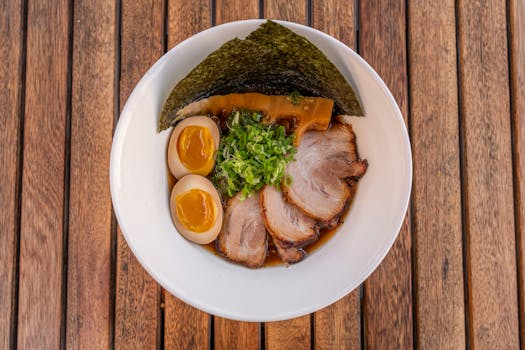
Photo: Connor Scott McManus / Pexels
The diets react (see scores below)
Common Ingredients
- ramen noodles
- chicken broth
- sea salt
- sake
- chashu
- scallions
- bamboo shoots
- soft-boiled egg
Specific recipes may vary.
Incompatible with 8 of 11 diets
Diet Ratings
Shio Ramen is fundamentally incompatible with a ketogenic diet due to its primary ingredient: ramen noodles. Traditional wheat-based ramen noodles contain approximately 50-60g of net carbs per serving, which alone exceeds the entire daily carb limit for ketosis. The remaining ingredients are largely keto-friendly — chicken broth, sea salt, chashu (braised pork belly), soft-boiled egg, scallions, and bamboo shoots are all low-carb or keto-approved. However, the noodles are the defining, non-negotiable component of the dish as typically prepared. Sake also adds a small amount of residual sugars and carbs. The dish cannot be made keto-compatible without fundamentally replacing the noodles (e.g., with shirataki or zucchini noodles), at which point it is no longer Shio Ramen in any traditional sense.
Shio Ramen contains multiple animal-derived ingredients that are incompatible with a vegan diet. Chicken broth is made by simmering animal bones and flesh. Chashu is braised pork belly. The soft-boiled egg is a direct animal product. The primary protein is explicitly chicken or pork. These are unambiguous animal products with no meaningful debate within the vegan community — this dish fails on at least four separate animal-product violations.
Shio Ramen is fundamentally incompatible with the paleo diet. The defining ingredient — ramen noodles — are made from wheat flour, a grain explicitly excluded from paleo. This single ingredient is disqualifying on its own. Additionally, sea salt and sake (rice-based alcohol) add further non-paleo elements. Chashu (braised pork belly) is often prepared with soy sauce and sugar, making it a processed, non-paleo preparation. While some individual components are paleo-friendly — chicken broth, scallions, soft-boiled egg, and bamboo shoots — the dish as a whole is built around a grain-based noodle foundation that cannot be reconciled with paleo principles.
Shio Ramen is fundamentally misaligned with Mediterranean diet principles. The base is refined wheat ramen noodles (not whole grain), and the protein centerpiece is chashu — braised pork belly, a fatty red/processed meat that Mediterranean guidelines restrict to a few times per month at most. The dish contains no olive oil, no legumes, no vegetables beyond scallions and bamboo shoots, and no whole grains. While the egg and broth have some nutritional value, the overall dish is a refined-grain, high-sodium, pork-centric preparation with no Mediterranean dietary foundation. The sodium content from sea salt, sake, and broth is also notably high. This is a delicious dish in its own culinary tradition, but it contradicts the core pillars of Mediterranean eating.
Shio Ramen is fundamentally incompatible with the carnivore diet. The dish is built around ramen noodles, which are wheat-based and a direct plant-derived grain product — a core exclusion. Beyond the noodles, it contains multiple other non-carnivore ingredients: scallions (plant), bamboo shoots (plant), and sake (fermented rice, plant-derived alcohol). While a few components are carnivore-friendly — the chicken broth, chashu (pork belly), sea salt, and soft-boiled egg — these cannot redeem the dish as a whole. The noodles alone disqualify it entirely, and the plant-based toppings compound the violation. This is not a dish that can be 'modified lightly'; it would need to be entirely reconstructed to qualify.
Shio Ramen is definitively not Whole30 compatible. The most critical disqualifying ingredient is ramen noodles, which are wheat-based noodles — a grain product explicitly excluded from the Whole30 program. Additionally, sake is an alcoholic beverage (rice wine), which is doubly excluded as both alcohol and a grain-derived product. Chashu (braised pork belly) is typically prepared with soy sauce and sugar, both of which are excluded. Even if the broth and egg were compliant, the noodles alone make this dish a clear violation, and noodles/pasta are explicitly called out in the 'no recreating' rule as a disallowed food form.
Shio Ramen contains multiple high-FODMAP ingredients that make it unsuitable during the elimination phase. The most significant issue is the ramen noodles, which are made from wheat flour and are high in fructans — a major FODMAP. Standard commercial ramen noodles cannot be considered low-FODMAP at a normal serving size. The chicken broth in restaurant settings almost certainly contains onion and/or garlic, both of which are high-FODMAP fructan sources. Chashu (braised pork belly) is typically prepared with soy sauce, mirin, sake, and often garlic or onion, adding further fructan risk. Scallion greens (the green tops only) are technically low-FODMAP, but scallions are frequently used including the white bulb portions, which are high in fructans. Bamboo shoots are low-FODMAP in small servings (~75g). The soft-boiled egg is low-FODMAP. Sake in small cooking quantities is generally tolerated. However, the wheat noodles alone are a dealbreaker, and the broth preparation almost universally includes garlic and onion in restaurant contexts. This dish cannot be safely consumed during elimination phase without substantial substitutions (e.g., rice noodles, certified low-FODMAP broth, modified chashu).
Shio Ramen is a high-sodium dish that conflicts fundamentally with DASH diet principles. A typical bowl contains 1,500–2,500mg of sodium — often exceeding the entire daily allowance for standard DASH (2,300mg) or the low-sodium DASH target (1,500mg) in a single serving. The sodium load comes from multiple compounding sources: chicken broth seasoned with sea salt and sake, refined ramen noodles (which contain sodium), chashu (braised pork belly — a fatty, sodium-cured meat high in saturated fat), and bamboo shoots often packed in brine. Chashu is particularly problematic as it is both high in saturated fat (pork belly) and high in sodium from its soy-based marinade, directly conflicting with DASH limits on red/fatty meats and sodium. Refined ramen noodles are not whole grain. While some individual ingredients are DASH-friendly (scallions, soft-boiled egg in moderation, lean chicken broth in isolation), the dish as a whole — as commonly consumed — represents a sodium and saturated fat burden incompatible with DASH goals. There is no meaningful modification pathway within the dish's traditional form that would bring it into DASH compliance without fundamentally altering it.
Shio Ramen is a Japanese noodle soup that presents significant Zone Diet challenges, primarily due to its high-glycemic ramen noodles, but retains some favorable elements that prevent an outright avoid verdict. The ramen noodles are refined wheat-based, high-glycemic carbohydrates that Sears would classify as 'unfavorable' — they spike insulin rapidly and are calorie-dense relative to their fiber content, making it very difficult to fit them into a balanced 40/30/30 block structure without a carb overload. A typical bowl contains 50-70g of net carbs from noodles alone, far exceeding a standard Zone meal's carb allotment (roughly 18-27g net carbs for a 2-3 block meal). On the positive side, the protein components are reasonably Zone-friendly: the soft-boiled egg, chicken broth, and even chashu (pork belly, though fatty) provide lean-to-moderate protein. Scallions and bamboo shoots are low-glycemic, high-fiber vegetables that Zone explicitly favors. The broth-based preparation avoids heavy omega-6 seed oils. The dish could theoretically be modified — reducing noodles dramatically, adding more vegetables — but as standardly served, the macro ratio is heavily carb-skewed with inadequate protein and fat to compensate. Sodium from sea salt and sake is high but not a Zone-specific concern. Overall, this is a 'proceed with significant caution' food requiring substantial modification to approach Zone balance.
Some Zone practitioners following Sears' later anti-inflammatory framework (Toxic Fat, The Zone Diet and Anti-Aging) would note that the chashu pork belly's saturated fat content is also a concern beyond just the noodles, as early Zone writings strictly limited saturated fat. Conversely, more flexible Zone adherents might argue that a half-portion of noodles combined with double protein and extra vegetables could bring the meal closer to Zone ratios, making it a workable restaurant choice with discipline rather than a food to avoid entirely.
Shio ramen presents a mixed anti-inflammatory profile. On the positive side, chicken broth (especially if bone-based) contains collagen and glycine with potential anti-inflammatory benefits, scallions provide quercetin and antioxidants, and bamboo shoots offer fiber and silica. The soft-boiled egg contributes choline and selenium, and sake in small culinary amounts is relatively benign. The broth is salt-based rather than relying on heavy fats or processed flavor bases, which is a relative advantage over some ramen styles. However, the dish has meaningful concerns: ramen noodles are refined wheat with high glycemic load, which can promote inflammatory signaling — a whole-grain or alternative would be preferable. Chashu (braised pork belly) is high in saturated fat, placing it firmly in the 'limit' category of the anti-inflammatory framework. The sodium load from sea salt and broth is substantial, and while sea salt is no different physiologically from other sodium, high sodium intake is associated with elevated inflammatory markers in some research. The dish lacks the colorful vegetable diversity, omega-3s, or potent anti-inflammatory spices (turmeric, ginger, garlic) that would push it toward approval. As typically prepared, shio ramen is a comforting, relatively clean dish by ramen standards, but its refined noodles and fatty pork belly make it a moderate-caution food rather than an anti-inflammatory staple.
Some anti-inflammatory practitioners and researchers highlight bone broth's glycine, proline, and glutamine as gut-supportive and inflammation-reducing, potentially upgrading this dish if a quality bone broth base is used. Conversely, AIP-adjacent practitioners would flag both the refined wheat noodles (potential gluten reactivity) and the egg as problematic for individuals with autoimmune sensitivities, which would lower the score further for that population.
Shio ramen has a mixed nutritional profile for GLP-1 patients. On the positive side, it is broth-based (high water content supports hydration), lighter in fat than tonkotsu or miso ramen, and contains meaningful protein from the soft-boiled egg and chashu pork. Bamboo shoots and scallions add modest fiber and micronutrients. However, the dish has several notable drawbacks: ramen noodles are refined grains with low fiber and low nutrient density per calorie, chashu is a fatty braised pork belly that adds saturated fat and can worsen GLP-1-related nausea and reflux, and the sodium content from sea salt and broth is typically very high (often 1500-2500mg per bowl), which can contribute to water retention and is suboptimal for metabolic health. The sake used in preparation is negligible after cooking but worth noting. Portion size is a key variable — a full restaurant bowl may be too large and too carb-heavy for a GLP-1 patient with reduced gastric capacity. A modified version with extra egg, reduced noodles, and leaner protein would score meaningfully higher.
Some GLP-1-focused dietitians view broth-based soups favorably because the high liquid content aids hydration and the warm broth can be soothing for GI side effects, tolerating the refined noodles as a practical vehicle for getting calories in patients struggling with appetite. Others flag chashu pork belly specifically as a high-saturated-fat ingredient that slows gastric emptying further on top of the medication's existing effect, potentially worsening nausea, and recommend substituting chicken breast or a soft-boiled egg as the sole protein source.
*See how scores were generated at our methodology page.
Nutritional profile
Six traits that cut across every diet.
Fiber & Plants
How much whole-plant food and fiber it delivers.
Healthy Fats
The quality of its fats (unsaturated, omega-3).
Whole / Unprocessed
How close it is to its natural, unprocessed form.
Gut Gentle
How easy it is on digestion (low FODMAP, few irritants).
Low Glycemic
How little it spikes your blood sugar.
Protein Density
How much protein it packs per calorie.
Controversy Index
Higher controversy = more disagreement between diets.
Diet-Specific Tips
 Zone — 4/10
View tips
- Ramen noodles are refined, high-glycemic carbohydrates classified as 'unfavorable' in Zone methodology
- Typical portion contains 50-70g net carbs from noodles, far exceeding a Zone meal's ~18-27g carb target
- Soft-boiled egg and chicken broth provide Zone-favorable lean protein
- Scallions and bamboo shoots are low-glycemic, Zone-approved vegetables
- Chashu (braised pork belly) is relatively fatty, adding saturated fat that early Zone writings discouraged
- Broth-based preparation avoids omega-6 seed oils, aligning with Sears' anti-inflammatory emphasis
- Could be modified toward Zone compliance by dramatically reducing noodles and adding protein/vegetables
 Anti-Inflammatory — 5/10
View tips
- Refined wheat ramen noodles have a high glycemic load, a pro-inflammatory concern
- Chashu pork belly is high in saturated fat — in the 'limit' category
- Chicken bone broth may offer anti-inflammatory peptides (glycine, collagen precursors)
- Scallions provide quercetin and polyphenols
- Bamboo shoots add fiber and micronutrients
- High sodium content from broth and sea salt
- Lacks potent anti-inflammatory spices (turmeric, ginger, garlic)
- Soft-boiled egg is moderate — mixed profile but generally acceptable
- Sake in culinary amounts is a minor concern; alcohol other than red wine should be limited
 GLP-1 Friendly — 5/10
View tips
- Broth base supports hydration — a GLP-1 priority
- Refined ramen noodles are low fiber and low nutrient density
- Chashu pork belly is high in saturated fat — may worsen nausea and bloating
- Soft-boiled egg adds quality protein and healthy fat
- Very high sodium content typical of restaurant preparations
- Bowl volume may exceed comfortable capacity for GLP-1 patients
- Portion modification (less noodle, leaner protein) significantly improves suitability