This dish contains raw or undercooked ingredients. Consume at your discretion.
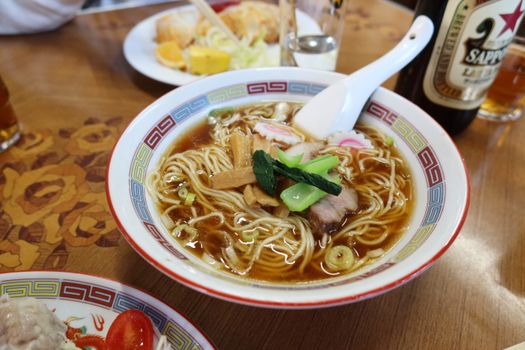
Photo: Hiroko Nakagawa / Pexels
Japanese
Shoyu Ramen
The diets react (see scores below)
Common Ingredients
- ramen noodles
- chicken broth
- soy sauce
- mirin
- chashu
- scallions
- nori
- soft-boiled egg
Specific recipes may vary.
Incompatible with 8 of 11 diets
Diet Ratings
Shoyu Ramen is fundamentally incompatible with a ketogenic diet. The primary offender is ramen noodles, which are wheat-based and contain roughly 50-60g of net carbs per serving on their own — exceeding the entire daily keto carb budget in a single component. Mirin is a sweet rice wine with significant sugar content, adding further carbs. The broth and soy sauce, while low-carb individually, are minor concerns compared to the noodles and mirin. The chashu pork, soft-boiled egg, nori, and scallions are keto-friendly, but the dish as a whole cannot be made keto without fundamentally replacing its core components.
Shoyu Ramen as described contains multiple animal-derived ingredients, making it clearly incompatible with a vegan diet. Chicken broth is an animal-based stock, chashu is braised pork belly, and the soft-boiled egg is a direct animal product. These three ingredients alone are sufficient to disqualify the dish. While ramen noodles, soy sauce, mirin, scallions, and nori are all plant-based, the presence of chicken broth, pork, and egg leaves no ambiguity.
Shoyu Ramen is fundamentally incompatible with the Paleo diet. Ramen noodles are made from wheat flour, a grain that is strictly excluded from Paleo. Soy sauce is a double violation — it contains both wheat (a grain) and soy (a legume). Mirin is a sweetened rice wine, introducing another grain (rice) along with added sugar and alcohol processing. Chashu (braised pork belly) is typically prepared with soy sauce, mirin, and added sugar, making it a processed meat product by Paleo standards. The combination of grains, legumes, and processed condiments makes this dish one of the clearest possible 'avoid' verdicts — there is virtually nothing Paleo-compliant about the core composition beyond the egg, scallions, nori, and the base pork itself.
Shoyu Ramen conflicts with Mediterranean diet principles on multiple fronts. The primary protein is chashu, a braised pork belly that is high in saturated fat — red/processed meat is limited to a few times per month in the Mediterranean diet. The noodles are refined wheat (not whole grain), contradicting the preference for whole grains. The broth is very high in sodium via soy sauce and mirin (which also adds sugar). There is no olive oil, the dish is not plant-forward, and it represents a highly processed, refined-grain-based meal with fatty pork as the centerpiece. While scallions, nori, and the egg offer minor nutritional value, they do not offset the core incompatibilities.
Shoyu Ramen is fundamentally incompatible with the carnivore diet. The dish is built around ramen noodles, which are wheat-based plant-derived carbohydrates — a core excluded food. Soy sauce is a fermented soy and wheat product, both of which are plant-derived legume and grain ingredients strictly forbidden. Mirin is a sweet rice-based alcohol, another plant-derived ingredient. Scallions are a plant vegetable, and nori is seaweed — both excluded. While the chashu pork, chicken broth, and soft-boiled egg are carnivore-compatible animal products, they are minor components of a dish that is structurally and fundamentally plant-based. This dish cannot be modified into a carnivore meal without completely reconstructing it — removing the noodles destroys the dish's identity. There is no debate within the carnivore community about wheat noodles, soy sauce, or plant vegetables; all are universally excluded.
Shoyu Ramen contains multiple explicitly excluded ingredients. Ramen noodles are a wheat-based grain product, making them directly excluded under Whole30's grain elimination rule. Soy sauce contains both wheat (a grain) and soy (a legume), both of which are excluded — coconut aminos would be the compliant substitute. Mirin is a sweet rice wine, containing both alcohol and rice (a grain), making it doubly excluded. Chashu (braised pork belly) is typically prepared with soy sauce, mirin, and added sugar, adding further non-compliant ingredients. This dish is fundamentally incompatible with Whole30 in its traditional form, with no straightforward modification that would preserve its identity as Shoyu Ramen.
Shoyu Ramen contains multiple high-FODMAP ingredients that make it unsuitable during the elimination phase. The ramen noodles are wheat-based, making them high in fructans — a major FODMAP trigger. Traditional chicken broth and chashu (braised pork belly) preparations frequently include garlic and onion, which are among the highest-fructan foods in the FODMAP system. Scallion greens are low-FODMAP but the white bulb portions (commonly used in ramen) are high in fructans. Soy sauce in small amounts (~2 tablespoons) is considered low-FODMAP by Monash, and mirin in small servings is generally tolerated. Nori (dried seaweed) is low-FODMAP. The soft-boiled egg is low-FODMAP. However, the wheat noodles alone disqualify this dish during strict elimination, and the near-certain presence of garlic and onion in the broth and chashu marinade compounds the problem significantly. This dish would require substantial modification — gluten-free noodles, garlic-free/onion-free broth and chashu preparation — to be considered during elimination.
Shoyu Ramen is highly problematic for the DASH diet primarily due to its extreme sodium content. A typical bowl contains 1,800–2,500mg of sodium or more, largely driven by the soy sauce (approximately 900mg per tablespoon) and chicken broth base. This can meet or exceed the entire daily sodium allowance for both standard DASH (<2,300mg) and low-sodium DASH (<1,500mg) guidelines in a single meal. Chashu (braised pork belly) adds saturated fat and additional sodium from its soy-based marinade. Refined ramen noodles offer little fiber compared to DASH-preferred whole grains. While there are some positive elements — scallions and nori provide modest potassium and magnesium, and the soft-boiled egg contributes lean protein — these benefits are overwhelmed by the sodium and saturated fat profile. The dish as commonly consumed in restaurants or prepared traditionally is fundamentally at odds with DASH dietary principles.
Shoyu Ramen presents a mixed Zone Diet profile. The broth base (chicken broth, soy sauce, mirin) is low in calories and Zone-friendly in small amounts, and the soft-boiled egg and scallions are favorable Zone ingredients. Nori is an excellent polyphenol-rich, low-calorie addition. However, the dish has two significant Zone challenges: (1) Ramen noodles are a high-glycemic refined carbohydrate — a classic 'unfavorable' Zone carb — and a typical bowl contains 50-70g of carbs predominantly from these noodles, far exceeding the 9-18g (1-2 blocks) ideal for a Zone meal. (2) Chashu (braised pork belly) is fatty and relatively high in saturated fat, making it a less favorable Zone protein compared to lean options. The dish is also protein-light relative to its carbohydrate load, making the 40/30/30 ratio difficult to achieve as served. The bowl could be modified toward Zone compliance by dramatically reducing noodle portion, substituting leaner protein (chashu replaced with chicken or a larger egg portion), and adding more non-starchy vegetables. As traditionally served, the macro ratio is heavily carb-dominant with inadequate lean protein, earning a caution rating.
Some Zone practitioners and Sears' later writings on the Mediterranean-Zone approach acknowledge that traditional Asian cuisine, with its emphasis on broths, vegetables, and fish/eggs, can be Zone-adapted more easily than Western processed foods. A modified shoyu ramen with half-portion noodles, extra egg whites, and added vegetables (bamboo shoots, bok choy, mushrooms) could approach Zone ratios. Mirin adds sugar but in small amounts contributes minimally. The anti-inflammatory omega-3 benefits of nori and the polyphenol content of soy sauce are also positives Sears would recognize in his later nutrigenomics-focused work.
Shoyu ramen presents a mixed anti-inflammatory profile. On the positive side, the dish contains several beneficial components: soy sauce and mirin provide fermented soy compounds with some antioxidant activity; nori (seaweed) is rich in iodine, minerals, and anti-inflammatory compounds including fucoxanthin; scallions offer quercetin and allicin-like compounds; the egg contributes choline and selenium; and chicken broth provides collagen and minerals. However, the dish has meaningful pro-inflammatory concerns. Chashu is braised pork belly — a high-fat red/processed meat that is high in saturated fat, placing it in the 'limit' category. Ramen noodles are refined carbohydrates with high glycemic load. Soy sauce and mirin add significant sodium and sugar respectively, which at elevated levels can promote inflammatory signaling. The broth base is generally fine, but traditional shoyu ramen is not a low-sodium dish. Overall, this is a moderate-to-high sodium, refined-carb dish with a fatty pork component — acceptable occasionally but not optimized for anti-inflammatory eating. It scores better than fast food ramen or heavily processed versions, and Japanese cuisine broadly emphasizes fermented foods, seaweed, and umami-forward broths, but the pork belly and refined noodles are the key limiting factors.
Some anti-inflammatory practitioners, particularly those aligned with traditional Asian dietary patterns (which show low population-level inflammatory disease burden), would argue that traditional Japanese ramen in its cultural context — with fermented soy, seaweed, and moderate portions — is relatively benign; Dr. Weil's emphasis on Asian mushrooms and whole soy foods reflects respect for Japanese dietary traditions. On the other hand, stricter anti-inflammatory and AIP-aligned approaches would flag the refined noodles, high sodium content, and pork belly as meaningful concerns that push this dish firmly toward avoidance for those managing active inflammation.
Shoyu ramen presents a mixed nutritional profile for GLP-1 patients. On the positive side, the broth is hydrating and easy to digest, the soft-boiled egg adds quality protein, and the overall dish is warm and gentle on the stomach. However, chashu (braised pork belly) is a high-fat, high-sodium ingredient that can worsen GLP-1 side effects like nausea and reflux. Ramen noodles are refined carbohydrates with low fiber and minimal protein density. Soy sauce and mirin contribute significant sodium and added sugar respectively. Total protein from a standard bowl is moderate (~15-20g from egg and chashu combined) but fat from pork belly is a concern. Fiber content is very low. The dish is not nutrient-dense per calorie relative to GLP-1 needs. It can be acceptable occasionally in a small portion with modifications — substituting chashu with chicken breast or tofu, reducing broth volume to limit sodium, and adding vegetables — but as served it falls short on multiple GLP-1 dietary priorities.
Some GLP-1-focused dietitians consider broth-based soups like ramen a practical option because the high water content supports hydration and the warm liquid format is well-tolerated when appetite is suppressed. Others caution that the high sodium content is particularly problematic for GLP-1 patients who are eating smaller volumes overall, as it can drive fluid retention and mask true hunger and thirst signals that are already blunted by the medication.
*See how scores were generated at our methodology page.
Nutritional profile
Six traits that cut across every diet.
Fiber & Plants
How much whole-plant food and fiber it delivers.
Healthy Fats
The quality of its fats (unsaturated, omega-3).
Whole / Unprocessed
How close it is to its natural, unprocessed form.
Gut Gentle
How easy it is on digestion (low FODMAP, few irritants).
Low Glycemic
How little it spikes your blood sugar.
Protein Density
How much protein it packs per calorie.
Controversy Index
Higher controversy = more disagreement between diets.
Diet-Specific Tips
 Zone — 4/10
View tips
- Ramen noodles are high-glycemic refined carbs — 'unfavorable' in Zone terminology and dominate the carb load
- Typical bowl is heavily carb-dominant, making 40/30/30 ratio very difficult to achieve as served
- Chashu pork belly is high in saturated fat — less favorable Zone protein
- Soft-boiled egg is a favorable Zone protein block
- Nori is a polyphenol-rich, Zone-favorable addition
- Scallions and broth are low-calorie, Zone-compatible ingredients
- Mirin adds sugar but in modest quantities
- Significant modifications (noodle reduction, leaner protein, added vegetables) would be needed for Zone compliance
 Anti-Inflammatory — 4/10
View tips
- Chashu (pork belly): high saturated fat, pro-inflammatory red/fatty meat — limit category
- Refined ramen noodles: high glycemic load, low fiber — pro-inflammatory
- Nori: rich in anti-inflammatory marine compounds (fucoxanthin, minerals)
- Scallions: quercetin and organosulfur compounds with anti-inflammatory activity
- Soft-boiled egg: mixed profile — choline and selenium beneficial, arachidonic acid a minor concern
- High sodium content from soy sauce and broth: associated with inflammatory pathways at excess levels
- Fermented soy (soy sauce): modest anti-inflammatory benefit from fermentation byproducts
- Chicken broth base: neutral to mildly beneficial (collagen, minerals)
 GLP-1 Friendly — 4/10
View tips
- Chashu pork belly is high in saturated fat, worsening nausea and reflux risk
- Ramen noodles are refined carbohydrates with negligible fiber
- High sodium from soy sauce and broth may be disproportionately concentrated given small portion sizes typical on GLP-1s
- Soft-boiled egg contributes useful protein and nutrients
- Broth base supports hydration, a GLP-1 priority
- Low overall fiber content fails to support constipation prevention
- Mirin adds unnecessary sugar with no nutritional benefit
- Dish is modifiable — swapping pork belly for lean protein improves rating significantly