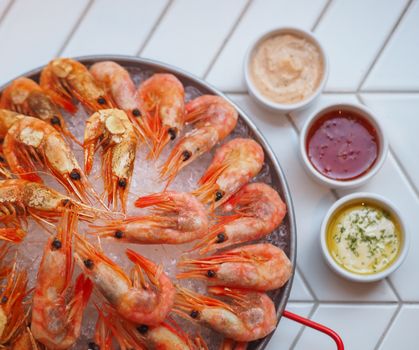
American
Shrimp Cocktail
The diets react (see scores below)
Common Ingredients
- jumbo shrimp
- ketchup
- horseradish
- lemon juice
- Worcestershire sauce
- hot sauce
- celery
Specific recipes may vary.
Incompatible with 2 of 11 diets
Diet Ratings
Shrimp itself is an excellent keto protein — virtually zero carbs, low fat, high protein. The problem lies in the cocktail sauce: ketchup is sugar-heavy (roughly 4-5g net carbs per tablespoon), and Worcestershire sauce adds a small amount of sugar as well. A standard cocktail sauce serving (3-4 tbsp) can easily add 15-20g net carbs, consuming a large portion of or exceeding the daily keto budget. Lemon juice, horseradish, hot sauce, and celery are largely benign in typical quantities. With portion control on the sauce — or substituting a keto-friendly cocktail sauce using sugar-free ketchup — shrimp cocktail can fit within keto. As typically served in restaurants or pre-packaged, the sauce is the dealbreaker.
Lazy keto practitioners who track only roughly may allow shrimp cocktail freely, focusing on the shrimp and dismissing a small sauce serving as negligible. Conversely, strict keto and carnivore-adjacent practitioners reject ketchup entirely due to its sugar content and would consider even a modest dip incompatible.
Shrimp Cocktail is unambiguously non-vegan. The primary ingredient is jumbo shrimp, a shellfish and therefore an animal product. Additionally, traditional Worcestershire sauce typically contains anchovies, adding a second animal-derived ingredient. All other components — ketchup, horseradish, lemon juice, hot sauce, and celery — are plant-based, but the dish is defined by and built around seafood.
Shrimp itself is fully paleo-approved as a natural seafood. However, the cocktail sauce introduces several problematic ingredients. Commercial ketchup typically contains refined sugar (high fructose corn syrup or cane sugar) and added salt, both of which are excluded from strict paleo. Worcestershire sauce commonly contains molasses, tamarind, anchovies, and sometimes soy or grain-based vinegar — the anchovies are fine but the added sugar and potential soy derivatives are not. Hot sauce is generally paleo-friendly if made from just peppers and vinegar, but many commercial brands add salt and preservatives. Lemon juice, horseradish (fresh/pure), and celery are all paleo-approved. The dish is borderline: the shrimp and most aromatics are clean, but the cocktail sauce as typically made is not strictly paleo due to refined sugar and additives. A homemade paleo version using compliant ketchup (no added sugar) and clean Worcestershire would be approvable.
Strict Cordain-school paleo would flag the added salt and any sugar in ketchup and Worcestershire sauce as clear violations. Some practitioners, however, argue that small amounts of these condiments used as a dip — rather than a primary ingredient — represent an acceptable real-world compromise, especially if choosing brands without refined sugar or making sauces from scratch.
Shrimp cocktail is primarily composed of jumbo shrimp, which is seafood and strongly encouraged in the Mediterranean diet at 2-3 times weekly. The dish is largely whole and minimally processed. Shrimp is lean, high in protein, and fits well within Mediterranean principles. The accompaniments — lemon juice, horseradish, celery, and hot sauce — are all Mediterranean-friendly. The main caution is the ketchup and Worcestershire sauce, which contain added sugars and sodium, though in cocktail sauce quantities these are relatively minor concerns. The dish is served cold without added fats, notably absent of olive oil, but this is a snack/appetizer context where that is acceptable. Overall, this is a solid seafood-forward dish that aligns well with Mediterranean eating patterns.
Some stricter Mediterranean diet interpretations would note that ketchup contains added sugars and the overall dish lacks olive oil and vegetables as primary components, suggesting it be consumed as an occasional rather than regular snack. Traditional Mediterranean seafood dishes typically feature olive oil, herbs, and fresh vegetables more prominently.
While shrimp itself is a carnivore-approved seafood, shrimp cocktail as traditionally prepared is dominated by non-carnivore ingredients. The cocktail sauce alone combines ketchup (tomatoes, sugar, vinegar), horseradish (plant root), and lemon juice (citrus fruit). The dish also includes Worcestershire sauce (contains tamarind, molasses, anchovies — mostly plant-derived), hot sauce (peppers, vinegar), and celery (a vegetable). Only the shrimp is carnivore-compliant. This dish is essentially a vehicle for plant-based sauces and a raw vegetable, making it incompatible with carnivore principles despite the animal protein centerpiece.
Shrimp is fully Whole30-compliant, as is horseradish, lemon juice, celery, and most hot sauces. The problem lies in the cocktail sauce components. Worcestershire sauce commonly contains anchovies and tamarind (fine), but many brands include added sugar or malt vinegar — requiring label-reading for a compliant version. Hot sauce is usually fine but some brands add sugar. Most critically, commercial ketchup almost universally contains added sugar (high-fructose corn syrup or cane sugar), making it non-compliant. However, Whole30-compliant ketchup does exist (sweetened with dates or fruit juice, or unsweetened). If all sauces are verified compliant — sugar-free ketchup, compliant Worcestershire, and compliant hot sauce — this dish is technically approved. Rated 'caution' because the dish as commonly prepared with standard store-bought ketchup and Worcestershire sauce would contain added sugar, requiring careful ingredient sourcing.
Official Whole30 guidelines allow compliant ketchup (unsweetened or fruit-juice-sweetened versions exist), so the dish is achievable. However, community practitioners note that cocktail sauce is a comfort-food condiment that may be difficult to source compliantly and could test the spirit of the program for those relying heavily on processed sauces.
Shrimp cocktail is largely low-FODMAP but the cocktail sauce contains several ingredients that require scrutiny. Shrimp itself is a high-protein, zero-FODMAP food. Lemon juice and hot sauce are generally low-FODMAP in typical amounts. Horseradish (plain, no additives) is low-FODMAP in small servings. Celery is low-FODMAP at up to 1 medium stalk (10g) per Monash, but becomes moderate-FODMAP at larger amounts due to polyols (mannitol). The main concerns are ketchup and Worcestershire sauce. Ketchup is low-FODMAP at 2 tablespoons (13g) per Monash — cocktail sauce typically uses ketchup as its base, and a standard cocktail sauce serving (3-4 tbsp) can push into moderate FODMAP territory depending on brand, as some use high-fructose corn syrup. Worcestershire sauce contains onion and garlic (fructans) and is rated low-FODMAP only at very small amounts (1 teaspoon); cocktail sauce recipes often use more than this threshold. The cumulative effect of ketchup quantity, Worcestershire sauce, and celery at a standard serving makes this dish borderline rather than clearly safe.
Monash University rates individual ingredients like ketchup and Worcestershire sauce as low-FODMAP at specific small servings, suggesting this dish could be approved if portions are carefully controlled. However, many clinical FODMAP practitioners advise caution with cocktail sauce during the elimination phase due to the combination of ketchup (potential HFCS), Worcestershire sauce (onion/garlic-derived fructans), and the realistic likelihood that total sauce volume consumed exceeds individual safe thresholds.
Shrimp cocktail has genuine DASH-compatible strengths: shrimp is a lean, low-saturated-fat protein rich in potassium and magnesium, and celery adds fiber and micronutrients. However, the cocktail sauce (ketchup base) introduces meaningful sodium and added sugar, and Worcestershire sauce and hot sauce add further sodium. A typical shrimp cocktail serving can deliver 400–700mg sodium depending on sauce quantity, which is notable on the standard 2,300mg/day DASH limit and more significant on the stricter 1,500mg/day target. Shrimp also contains moderate dietary cholesterol (~180mg per 3oz), which has historically prompted caution in some DASH-oriented clinical settings. The dish is not a core DASH food but is acceptable in moderation with portion-controlled sauce use.
NIH DASH guidelines emphasize limiting sodium and historically flagged high-cholesterol shellfish; however, updated clinical interpretations note that shrimp's cholesterol has minimal impact on LDL in most individuals (per 2020-2025 Dietary Guidelines removing the cholesterol cap), and some DASH practitioners now consider shrimp a lean protein suitable for regular inclusion — provided sodium from the sauce is carefully managed or reduced by using low-sodium ketchup and limiting Worcestershire sauce.
Shrimp cocktail is an excellent Zone-friendly snack. Shrimp is one of the leanest protein sources available — very high protein-to-fat ratio, negligible carbs, and naturally low in saturated fat. It maps cleanly to Zone protein blocks (approximately 7g protein per ounce of cooked shrimp). The celery adds a negligible, low-glycemic carb contribution. The main caution is the cocktail sauce: ketchup contains added sugar and has a moderate glycemic impact, and commercial cocktail sauce is essentially ketchup-based. However, the sauce is used in small condiment quantities, so its glycemic load in realistic portions is low. Horseradish, lemon juice, hot sauce, and Worcestershire sauce add negligible macros. As a snack, 3-5 jumbo shrimp with a tablespoon or two of cocktail sauce provides clean lean protein with a small controlled carb hit — easy to portion into a Zone block framework. The fat content is very low, which means it needs a fat source (e.g., a few almonds alongside) to complete a proper Zone snack, but as a protein-and-carb component it is excellent. This is a strongly favorable Zone food overall.
The ketchup base in cocktail sauce contains high-fructose corn syrup or added sugar in most commercial versions, which Sears classifies as unfavorable. Strict Zone practitioners might prefer a homemade version with no-sugar-added tomato sauce or simply substitute a fresh salsa to avoid the glycemic spike from sweetened ketchup. However, given the small portion size of sauce used in a typical serving, most Zone-aligned nutritionists would still consider this an acceptable snack choice.
Shrimp cocktail is a nutritionally mixed dish from an anti-inflammatory standpoint. Shrimp itself is a lean, low-calorie protein with modest anti-inflammatory credentials — it contains astaxanthin (a carotenoid antioxidant), selenium, and some omega-3s, though in smaller quantities than fatty fish. Its omega-6 to omega-3 ratio is reasonable. The accompaniments add complexity: horseradish is a genuine anti-inflammatory ally (contains glucosinolates and isothiocyanates, similar to other cruciferous vegetables), lemon juice provides vitamin C and flavonoids, celery offers antioxidants and apigenin, and hot sauce contributes capsaicin. The main concern is the cocktail sauce — commercial ketchup is high in added sugar and may contain high-fructose corn syrup, and Worcestershire sauce adds small amounts of sugar and sodium. However, the portions of these condiments are small relative to the whole dish. Shrimp is also relatively high in dietary cholesterol, though this is now considered less relevant to inflammation than saturated fat content, which is minimal here. Overall, this is a reasonably clean, protein-forward snack with some anti-inflammatory ingredients but held back by processed condiment components.
Most anti-inflammatory practitioners consider shrimp acceptable in moderation given its lean protein and astaxanthin content; however, some stricter anti-inflammatory and AIP protocols flag shellfish as a potential immunoreactive food for those with autoimmune conditions. The cocktail sauce's added sugar (from ketchup) is a mild concern across most frameworks, though the small portion size mitigates this significantly.
Shrimp cocktail is an excellent GLP-1-friendly snack. Jumbo shrimp are a lean, high-protein seafood with very low fat content — a typical 6-shrimp serving (~85g) delivers roughly 18-20g of protein at under 100 calories, making the protein-to-calorie ratio outstanding. Shrimp is easy to digest and works perfectly in small portions, aligning well with reduced appetite and slowed gastric emptying. The cocktail sauce introduces a small amount of added sugar via ketchup, but the serving quantity is minimal and not clinically significant. Horseradish adds a mild sharpness that most GLP-1 patients tolerate well, though those with active reflux or significant nausea should use it sparingly. Celery contributes fiber, water content, and crunch with negligible calories. Lemon juice and Worcestershire sauce add flavor with no meaningful nutritional downside. The one minor caution is the hot sauce, which in large amounts could aggravate reflux or nausea in sensitive patients — but at typical cocktail sauce quantities this is not a concern for most users. Overall, shrimp cocktail is a nutrient-dense, portion-friendly, high-protein, low-fat snack that checks nearly every GLP-1 dietary priority box.
*See how scores were generated at our methodology page.
Nutritional profile
Six traits that cut across every diet.
Fiber & Plants
How much whole-plant food and fiber it delivers.
Healthy Fats
The quality of its fats (unsaturated, omega-3).
Whole / Unprocessed
How close it is to its natural, unprocessed form.
Gut Gentle
How easy it is on digestion (low FODMAP, few irritants).
Low Glycemic
How little it spikes your blood sugar.
Protein Density
How much protein it packs per calorie.
Controversy Index
Higher controversy = more disagreement between diets.
Diet-Specific Tips
 Keto — 5/10
View tips
- Shrimp is zero net carb and keto-friendly protein
- Standard cocktail sauce (ketchup-based) contains significant added sugar — ~15-20g net carbs per typical serving
- Horseradish, hot sauce, lemon juice, and celery contribute minimal net carbs
- Dish can be made keto-compliant with sugar-free ketchup substitution
- Portion control on sauce is critical — this is highly dose-dependent
- Worcestershire sauce contains trace sugar but is negligible in small amounts
 Paleo — 5/10
View tips
- Shrimp is fully paleo-approved
- Commercial ketchup almost always contains refined sugar and added salt — both excluded from paleo
- Worcestershire sauce frequently contains molasses, sugar, and potential soy derivatives
- Hot sauce is typically paleo-friendly but check for additives
- Lemon juice, celery, and fresh horseradish are clean paleo ingredients
- Dish is paleo-compliant if cocktail sauce is homemade with no added sugar or salt
 Mediterranean — 8/10
View tips
- Shrimp is a core Mediterranean protein source (seafood 2-3x/week encouraged)
- Shrimp is lean and minimally processed in this preparation
- Lemon juice, horseradish, celery, and hot sauce are Mediterranean-compatible
- Ketchup contains added sugars and sodium — a minor concern in small quantities
- Worcestershire sauce adds minor processed condiment concern
- No olive oil or primary vegetables, but acceptable in snack/appetizer context
- Overall low in saturated fat and aligned with Mediterranean macronutrient profile
 Whole30 — 5/10
View tips
- Shrimp is fully Whole30-compliant
- Standard commercial ketchup contains added sugar — non-compliant; must source sugar-free or date/fruit-juice-sweetened ketchup
- Many Worcestershire sauces contain added sugar or malt vinegar (gluten) — label-reading required
- Hot sauce is usually compliant but some brands add sugar
- Horseradish, lemon juice, and celery are all fully compliant
- Dish is achievable on Whole30 with careful ingredient selection
 Low-FODMAP — 5/10
View tips
- Shrimp is zero-FODMAP and fully safe
- Ketchup is low-FODMAP at ≤2 tbsp (13g) but cocktail sauce often uses more
- Worcestershire sauce contains onion/garlic extracts — safe only at ≤1 tsp per Monash
- Celery is low-FODMAP at ≤1 stalk (10g) but contributes mannitol at higher amounts
- Commercial ketchup brands may contain HFCS, increasing fructose load
- Cumulative FODMAP stacking across multiple borderline ingredients raises overall risk
- Homemade cocktail sauce with FODMAP-safe ketchup and minimal Worcestershire would score higher
 DASH — 5/10
View tips
- Shrimp is lean with low saturated fat — aligns with DASH lean protein guidance
- Cocktail sauce (ketchup + Worcestershire) adds significant sodium — estimated 400–700mg per serving
- Ketchup adds moderate amounts of added sugar, which DASH limits
- Shrimp contains ~180mg dietary cholesterol per 3oz serving — historically flagged under older DASH interpretations
- Celery is a positive DASH-compatible ingredient adding fiber and potassium
- Using low-sodium ketchup and limiting sauce quantity would improve the DASH score meaningfully
- Portion size matters: a small appetizer portion is more acceptable than a large serving
 Zone — 8/10
View tips
- Shrimp is a premium lean Zone protein source — high protein, minimal fat, zero carbs
- Maps cleanly to Zone protein blocks at ~7g protein per ounce
- Cocktail sauce contains added sugar (ketchup base), but portion is small and glycemic load remains low
- Celery provides favorable, low-glycemic carb filler
- Fat content is near zero — requires pairing with a monounsaturated fat source for a complete Zone snack
- No saturated fat concerns; shrimp's omega-3 content supports Zone anti-inflammatory goals
- Easy to portion-control as a snack — 3-5 shrimp fits a 1-block protein serving
 Anti-Inflammatory — 5/10
View tips
- Shrimp provides lean protein, astaxanthin (carotenoid antioxidant), selenium, and modest omega-3s
- Horseradish contains glucosinolates and isothiocyanates with anti-inflammatory and detoxifying properties
- Capsaicin in hot sauce has documented anti-inflammatory effects
- Celery contributes apigenin and antioxidants
- Ketchup in cocktail sauce typically contains added sugar and potentially HFCS — a mild pro-inflammatory concern
- Worcestershire sauce adds minor sugar and sodium
- Low saturated fat profile overall supports anti-inflammatory goals
- Shellfish may be immunoreactive for individuals with autoimmune conditions
 GLP-1 Friendly — 8/10
View tips
- High protein density: ~18-20g protein per standard serving at under 100 calories
- Very low fat: shrimp is one of the leanest animal proteins available
- Easy to digest: shrimp is light and compatible with slowed gastric emptying
- Small portion friendly: satisfying protein hit in a compact, low-volume serving
- Cocktail sauce sugar is minimal at typical serving sizes — not clinically significant
- Horseradish and hot sauce may aggravate reflux or nausea in sensitive GLP-1 patients — recommend moderation
- Celery adds hydration support and a small fiber contribution
- No fried components, no refined grains, no empty calories