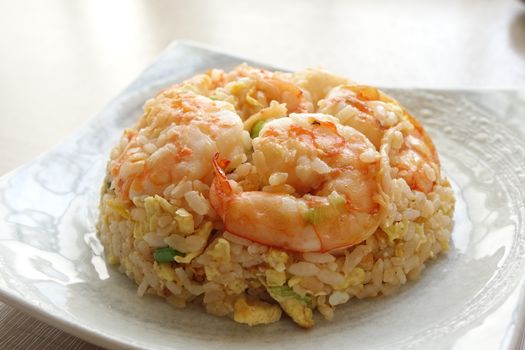
Chinese
Shrimp Fried Rice
The diets react (see scores below)
Common Ingredients
- jasmine rice
- shrimp
- eggs
- peas
- carrots
- scallions
- soy sauce
- sesame oil
Specific recipes may vary.
Incompatible with 5 of 11 diets
Diet Ratings
Shrimp Fried Rice is fundamentally incompatible with a ketogenic diet. The primary ingredient, jasmine rice, is a high-glycemic grain delivering roughly 40-45g of net carbs per cup cooked — easily exceeding the entire daily keto carb limit in a single serving. Peas and carrots add additional starch and sugar, further compounding the carb load. While shrimp, eggs, sesame oil, scallions, and soy sauce are individually keto-compatible, the rice base makes this dish impossible to fit into ketosis without a complete structural overhaul (e.g., cauliflower rice substitution).
Shrimp Fried Rice contains two distinct animal products: shrimp (seafood/shellfish) and eggs. Both are explicitly excluded under vegan dietary rules. Shrimp are animals, and eggs are an animal-derived product. The presence of either ingredient alone would disqualify this dish; together they make it unambiguously non-vegan. The plant-based components — jasmine rice, peas, carrots, scallions, soy sauce, and sesame oil — are all vegan-compliant, but they cannot offset the animal ingredients. A vegan version of fried rice is achievable by substituting tofu or tempeh for shrimp, omitting eggs or replacing them with a chickpea flour scramble, and retaining all other ingredients.
Shrimp Fried Rice contains multiple non-paleo ingredients that are firmly excluded by virtually all paleo authorities. Jasmine rice is a grain and is excluded under strict paleo rules. Soy sauce is a processed soy product (a legume derivative) and also contains wheat, making it doubly non-paleo. Sesame oil is a seed oil, which is excluded in favor of paleo-approved fats. Peas are legumes and also excluded. While shrimp, eggs, carrots, and scallions are paleo-approved, the foundational ingredients of this dish — rice, soy sauce, sesame oil, and peas — are all clear violations. This dish cannot be adapted into a paleo meal without fundamentally changing its identity.
Shrimp Fried Rice contains several elements that partially align with Mediterranean principles but has notable departures. Shrimp is an excellent Mediterranean protein, eaten 2-3 times weekly, and eggs and vegetables (peas, carrots, scallions) are acceptable. However, jasmine rice is a refined white grain rather than a whole grain, and the dish relies on soy sauce and sesame oil rather than olive oil as the primary fat — both non-traditional to the Mediterranean pattern. The overall dish is not highly processed, but its refined grain base, absence of olive oil, and sodium-heavy soy sauce seasoning make it a moderate mismatch. It is better than red meat dishes but falls short of a core Mediterranean meal.
Some Mediterranean diet practitioners argue that white rice is acceptable in moderation, as it appears in traditional Greek, Spanish (arroz), and Levantine cuisines; from this perspective, the shrimp and vegetable content could partially redeem the dish if olive oil were substituted for sesame oil. However, modern clinical guidelines (e.g., Willett et al., 1995 pyramid) consistently favor whole grains over refined rice.
Shrimp Fried Rice is fundamentally incompatible with the carnivore diet. The dish is built around jasmine rice, a grain that is entirely excluded on carnivore. It also contains multiple plant-based vegetables (peas, carrots, scallions), soy sauce (fermented soy — a legume-derived condiment), and sesame oil (a plant-derived oil). While shrimp and eggs are carnivore-compatible ingredients, they are minor components in a dish that is overwhelmingly plant-based and grain-centered. There is no version of this dish as described that could be considered carnivore-compliant without a complete reconstruction.
Shrimp Fried Rice contains multiple excluded ingredients. Jasmine rice is a grain and is explicitly prohibited on Whole30. Soy sauce contains soy (a legume) and typically wheat (a grain), both of which are excluded. These are not minor or debatable issues — rice and soy are core exclusions under the official Whole30 program. The dish cannot be made compliant without fundamentally changing its identity (removing the rice entirely and substituting coconut aminos for soy sauce would produce a completely different dish). The remaining ingredients — shrimp, eggs, peas, carrots, scallions, and sesame oil — are individually compliant, but the foundational components of the dish (rice and soy sauce) disqualify it outright.
Shrimp fried rice contains several low-FODMAP ingredients (jasmine rice, shrimp, eggs, carrots, sesame oil, and gluten-free soy sauce or tamari) but has three ingredients that require careful attention. Peas (green/garden peas) are high-FODMAP due to GOS and fructans — Monash rates them as high-FODMAP even at small servings, making them a significant concern. Scallions (green onions) are low-FODMAP only in the green tops; if the white bulb portions are included, they contribute fructans. Standard soy sauce contains wheat and is high-FODMAP due to fructans, though the small quantity used in cooking may fall below threshold — tamari (gluten-free soy sauce) is the safe swap. The dish can be made low-FODMAP with modifications (omit peas, use green tops of scallions only, use tamari), but as typically prepared it poses moderate FODMAP risk, particularly from peas and potentially scallion bulbs and wheat-based soy sauce.
Monash University rates green peas as high-FODMAP even at a 1/4 cup serving due to GOS content, but some clinical FODMAP practitioners note that very small amounts scattered through a dish may be tolerable for some individuals during reintroduction. The wheat in standard soy sauce is debated — the fermentation process and small serving size lead some practitioners to consider it borderline, but strict elimination phase guidance recommends tamari instead.
Shrimp fried rice contains several DASH-compatible ingredients — shrimp is a lean protein, eggs provide nutrients, and peas/carrots/scallions add vegetables and fiber. However, the dish is disqualifying in its standard preparation primarily due to soy sauce, which is extremely high in sodium (roughly 900–1,000mg per tablespoon). A typical restaurant or home serving can easily contain 1,500–2,500mg of sodium, approaching or exceeding the entire daily DASH sodium limit in a single dish. Jasmine rice is a refined white grain rather than a DASH-preferred whole grain. Sesame oil adds fat, though it is an unsaturated vegetable oil and not a primary concern. The overall dish is not categorically prohibited — the protein and vegetables are sound — but the sodium load from soy sauce makes it a significant DASH concern as commonly prepared.
Shrimp Fried Rice presents a mixed Zone profile. The shrimp is an excellent lean protein source, and eggs add additional quality protein — both are Zone-favorable. Peas, carrots, and scallions are acceptable low-glycemic vegetables. However, jasmine rice is the dominant carbohydrate and is a high-glycemic, Zone-unfavorable carb that Sears explicitly discourages. It causes rapid blood sugar spikes inconsistent with Zone's core goal of hormonal stability. Sesame oil is omega-6-heavy rather than monounsaturated, which conflicts with Zone's anti-inflammatory fat preference, though the quantity is small. Soy sauce adds sodium but minimal macro impact. The dish as typically prepared is rice-heavy, meaning the carbohydrate load far exceeds a Zone-balanced meal, and the glycemic index of jasmine rice undermines insulin control. To make it Zone-compatible, the rice portion would need to be dramatically reduced (to 1 block ≈ roughly 1/3 cup cooked) while dramatically increasing the vegetable content, making it a significant departure from the standard dish. The dish is not impossible to zone-balance with aggressive portion modification, but in its standard form it is difficult to use without careful reconstruction.
Shrimp Fried Rice presents a mixed anti-inflammatory profile. On the positive side, shrimp provides lean protein and contains astaxanthin, a potent antioxidant carotenoid, along with modest amounts of omega-3s. Eggs contribute choline and selenium. Peas and carrots add fiber, carotenoids (beta-carotene), and polyphenols. Scallions offer quercetin and sulfur compounds with anti-inflammatory properties. Sesame oil, used in small amounts as a finishing oil, contains sesamin and sesamol — lignans with demonstrated antioxidant activity. Soy sauce in moderate amounts is unlikely to be a significant concern, though its high sodium content is a minor flag. The main limitation is jasmine rice, a refined white rice with a high glycemic index that can spike blood sugar and trigger mild inflammatory responses — it lacks the fiber and nutrients of whole grains like brown rice. The dish as a whole is not heavily pro-inflammatory, but the refined carbohydrate base and typical restaurant preparation (which often uses higher-omega-6 oils not listed here, and generous sodium) prevent a stronger endorsement. As a home-cooked version with the listed ingredients, this rates as acceptable in moderation — a straightforward swap to brown rice would meaningfully improve the profile.
Some anti-inflammatory practitioners, including those aligned with Dr. Weil's broader dietary philosophy, would consider this dish acceptable given its lean protein, vegetables, and small amounts of anti-inflammatory sesame compounds — arguing that overall dietary pattern matters more than any single high-GI ingredient. Conversely, stricter low-glycemic anti-inflammatory protocols (such as those addressing metabolic syndrome or diabetes-related inflammation) would rate refined white rice more harshly, as rapid glucose spikes elevate CRP and other inflammatory markers.
Shrimp fried rice has a mixed GLP-1 profile. Shrimp and eggs provide solid lean protein, but the protein density per calorie is diluted by the jasmine rice base, which is a refined, low-fiber carbohydrate that spikes blood sugar and adds volume without much nutritional payoff. Sesame oil adds fat that can worsen nausea and bloating in GLP-1 patients, and traditional fried rice preparation uses enough oil to make the dish noticeably high-fat per serving. Peas, carrots, and scallions contribute modest fiber and micronutrients, but not enough to meaningfully offset the refined carb load. Soy sauce is high in sodium, which may contribute to water retention and is worth monitoring. The dish is not fried in the deep-fry sense, but stir-frying in oil still places it in moderate-fat territory. Portion sensitivity is high — a restaurant-sized serving is likely too large and too heavy for GLP-1 patients, but a small, home-prepared portion with extra shrimp and eggs and reduced oil could be acceptable.
Some GLP-1-focused dietitians would rate this more favorably if home-prepared with light oil, extra shrimp and eggs, and a brown rice or cauliflower rice substitution — arguing the shrimp-and-egg protein base makes it a practical, culturally familiar meal that patients will actually eat. Others flag that even moderate stir-fry oil combined with slowed gastric emptying reliably triggers nausea and reflux in a meaningful subset of GLP-1 patients, making it a dish to avoid during dose escalation periods.
*See how scores were generated at our methodology page.
Nutritional profile
Six traits that cut across every diet.
Fiber & Plants
How much whole-plant food and fiber it delivers.
Healthy Fats
The quality of its fats (unsaturated, omega-3).
Whole / Unprocessed
How close it is to its natural, unprocessed form.
Gut Gentle
How easy it is on digestion (low FODMAP, few irritants).
Low Glycemic
How little it spikes your blood sugar.
Protein Density
How much protein it packs per calorie.
Controversy Index
Higher controversy = more disagreement between diets.
Diet-Specific Tips
 Mediterranean — 4/10
View tips
- Shrimp is a Mediterranean-approved protein (seafood 2-3x/week)
- Jasmine rice is a refined white grain, not a whole grain
- Sesame oil replaces olive oil as the cooking fat — not Mediterranean-traditional
- Eggs and vegetables (peas, carrots, scallions) are positive inclusions
- High sodium from soy sauce is inconsistent with Mediterranean dietary patterns
- Dish is not heavily processed but is non-traditional in fat and grain choices
 Low-FODMAP — 5/10
View tips
- Jasmine rice is low-FODMAP and safe as the base carbohydrate
- Shrimp is a protein with no FODMAPs — fully safe
- Eggs are low-FODMAP and safe
- Green peas are HIGH-FODMAP due to GOS/fructans and are the primary concern in this dish
- Scallions: green tops only are low-FODMAP; white bulb portions contain fructans and must be avoided
- Standard soy sauce contains wheat (fructans) — tamari or gluten-free soy sauce is the low-FODMAP alternative
- Carrots and sesame oil are low-FODMAP and safe
- Dish is modifiable to be low-FODMAP but as traditionally prepared carries moderate risk
 DASH — 4/10
View tips
- Soy sauce is very high in sodium — a major DASH red flag, easily pushing sodium intake above 1,500–2,300mg in a single serving
- Jasmine rice is a refined grain; DASH emphasizes whole grains (e.g., brown rice) over white/refined rice
- Shrimp is a lean, low-saturated-fat protein consistent with DASH guidelines
- Eggs are acceptable in moderation under current DASH-aligned clinical guidance
- Peas, carrots, and scallions are DASH-positive vegetables contributing fiber, potassium, and micronutrients
- Sesame oil is an unsaturated vegetable oil, acceptable in small amounts under DASH
- Low-sodium soy sauce or tamari could substantially improve the sodium profile; brown rice substitution would improve whole grain alignment
- Restaurant portions are typically large, compounding sodium and calorie concerns
 Zone — 4/10
View tips
- Jasmine rice is a high-glycemic, Zone-unfavorable carbohydrate that dominates the dish
- Shrimp is an excellent lean Zone protein source
- Eggs add additional favorable Zone protein
- Peas and carrots are acceptable Zone carbohydrate sources but are secondary to rice in this dish
- Sesame oil is omega-6-dominant, conflicting with Zone's monounsaturated fat preference
- Dish would require dramatic rice reduction and vegetable expansion to approach Zone ratios
- Standard restaurant or home preparation is heavily rice-dominant, making Zone balancing impractical without significant modification
 Anti-Inflammatory — 5/10
View tips
- Jasmine rice is a refined, high-glycemic carbohydrate that can promote blood sugar spikes and mild inflammatory signaling
- Shrimp provides lean protein and astaxanthin, a potent anti-inflammatory carotenoid
- Eggs contribute choline and selenium with neutral-to-modest anti-inflammatory benefit
- Peas and carrots add fiber, beta-carotene, and polyphenols
- Scallions contain quercetin, a flavonoid with anti-inflammatory properties
- Sesame oil in small finishing amounts contributes lignans (sesamin, sesamol) with antioxidant activity
- High sodium from soy sauce is a minor concern; excess sodium may exacerbate inflammation in hypertensive individuals
- Substituting brown rice or cauliflower rice would significantly improve the anti-inflammatory profile
 GLP-1 Friendly — 5/10
View tips
- Shrimp and eggs are lean, high-quality protein sources but overall protein density per calorie is diluted by rice volume
- Jasmine rice is a refined carbohydrate with minimal fiber — low satiety value and blood sugar impact
- Sesame oil and stir-fry cooking add moderate fat that may worsen nausea, bloating, and reflux
- Peas and carrots add minor fiber and micronutrients but not enough to offset refined carb base
- High sodium from soy sauce warrants monitoring
- Restaurant portions are likely too large; home-prepared small portions with reduced oil significantly improve the profile
- Cauliflower rice or brown rice substitution would substantially improve fiber and glycemic impact