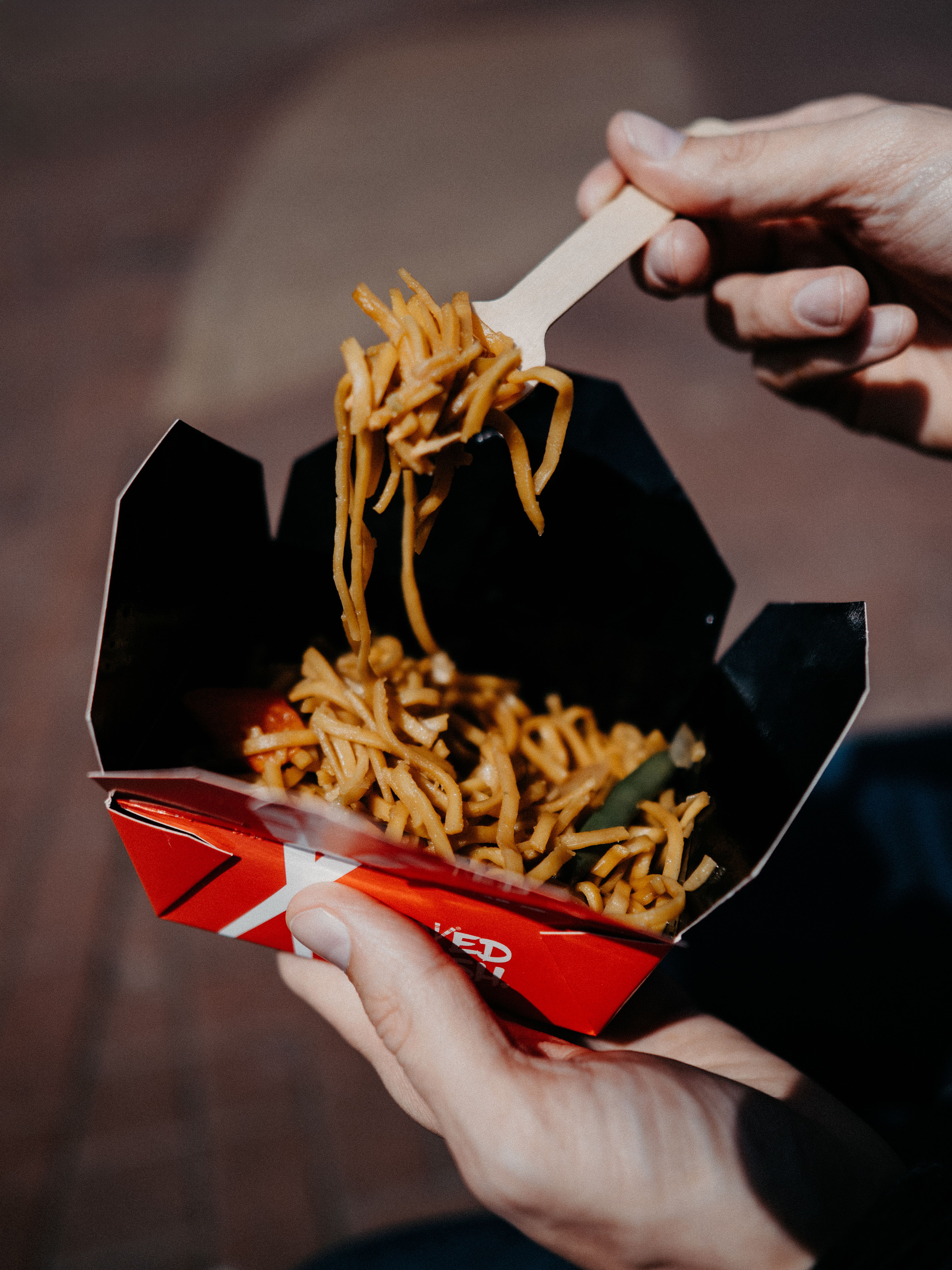
Photo: Lisa from Pexels / Pexels
Chinese
Shrimp Lo Mein
The diets react (see scores below)
Common Ingredients
- lo mein noodles
- shrimp
- bok choy
- carrots
- bean sprouts
- soy sauce
- oyster sauce
- sesame oil
Specific recipes may vary.
Incompatible with 6 of 11 diets
Diet Ratings
Shrimp Lo Mein is fundamentally incompatible with a ketogenic diet. The primary ingredient, lo mein noodles, are wheat-based and deliver an enormous carbohydrate load — a single serving easily contains 40-60g of net carbs from noodles alone, immediately exceeding or saturating the entire daily keto carb allowance. Oyster sauce also contains added sugars and starch thickeners, contributing additional net carbs. While the shrimp, bok choy, bean sprouts, sesame oil, and soy sauce are individually keto-friendly or neutral, the noodle base makes this dish categorically off-limits. There is no realistic portion size that would make this dish compatible with ketosis.
Shrimp Lo Mein contains multiple animal-derived ingredients that disqualify it from any vegan diet. Shrimp is seafood — a clear animal product. Oyster sauce is made from oyster extracts, also an animal-derived ingredient. These two components alone make this dish incompatible with veganism regardless of the plant-based ingredients (noodles, vegetables, soy sauce, sesame oil) that accompany them.
Shrimp Lo Mein is fundamentally incompatible with the paleo diet. The dish is built around lo mein noodles, which are wheat-based and one of the clearest paleo exclusions — grains are explicitly off-limits with unanimous agreement across all major paleo authorities. Soy sauce contains both wheat and soy (a legume), making it doubly disqualifying. Oyster sauce is a processed condiment typically containing added sugar and starch. Sesame oil is a seed oil, also excluded under paleo guidelines. While shrimp, bok choy, carrots, and bean sprouts are individually paleo-compatible (though bean sprouts from legume beans like mung beans are technically a gray area), the structural foundation of this dish — noodles, soy sauce, oyster sauce, and sesame oil — makes it impossible to rate anything other than a clear avoid. This is not a close call.
Shrimp Lo Mein contains several elements that partially align with Mediterranean diet principles but also diverge in notable ways. Shrimp is an excellent protein source consistent with the diet's emphasis on seafood 2-3 times weekly. The vegetables — bok choy, carrots, and bean sprouts — are wholesome, plant-based ingredients that fit well. However, lo mein noodles are refined wheat noodles, not a whole grain, which conflicts with Mediterranean preferences for whole grains. Soy sauce and oyster sauce are high-sodium processed condiments not found in Mediterranean cuisine, and sesame oil, while a plant-based fat, is not extra virgin olive oil — the canonical fat of the diet. The dish is not heavily processed or laden with red meat or added sugars, so it doesn't warrant an 'avoid,' but its reliance on refined noodles and non-Mediterranean condiments keep it from a full approval.
Some modern Mediterranean diet interpreters apply a broader 'plant-forward, seafood-inclusive' lens that would view this dish more favorably, noting that the shrimp and abundant vegetables are the dominant nutritional story, and that refined noodles in modest portions can be acceptable in the way white pasta is tolerated in Italian Mediterranean tradition.
Shrimp Lo Mein is almost entirely incompatible with the carnivore diet. While shrimp is an acceptable animal protein, it is completely overwhelmed by multiple prohibited ingredients. Lo mein noodles are a grain-based product (wheat flour), which is strictly excluded. Bok choy, carrots, and bean sprouts are plant vegetables with no place on a carnivore diet. Soy sauce is a fermented plant-based condiment derived from soybeans and wheat. Oyster sauce, while containing some oyster extract, is heavily processed with sugar, starch, and plant additives. Sesame oil is a plant-derived oil, explicitly forbidden. The only salvageable component is the shrimp itself, which represents a small fraction of the dish. This is a fundamentally plant- and grain-forward dish that contradicts virtually every core principle of the carnivore diet.
Shrimp Lo Mein contains multiple Whole30-excluded ingredients. Lo mein noodles are made from wheat, a grain that is explicitly excluded from the Whole30 program. Soy sauce contains soy (a legume) and wheat (a grain), both of which are excluded. Oyster sauce typically contains added sugar and sometimes other non-compliant additives. Additionally, lo mein itself falls into the 'pasta or noodles' category that is explicitly prohibited even under the 'no recreating junk food' rule. This dish is fundamentally incompatible with Whole30 in its standard form.
Shrimp Lo Mein as described contains multiple high-FODMAP ingredients that make it unsuitable during the elimination phase. The primary offenders are: (1) Lo mein noodles — these are wheat-based egg noodles, and wheat is high in fructans, a key FODMAP. This is the most significant problem and cannot be mitigated by portion control at any standard serving size. (2) Oyster sauce — commercially prepared oyster sauce typically contains garlic and/or onion as ingredients, both of which are very high in fructans. Even small amounts of garlic and onion can trigger symptoms. (3) Soy sauce — while regular soy sauce is generally considered low-FODMAP at 2 tablespoons per Monash, it is a minor concern in large amounts. The remaining ingredients — shrimp, bok choy, carrots, bean sprouts, and sesame oil — are all low-FODMAP at standard servings and would be fine. However, the wheat-based noodles alone make this dish a clear avoid. To make a FODMAP-friendly version, one would need to substitute rice noodles or gluten-free noodles for the lo mein, and replace oyster sauce with a FODMAP-safe alternative (e.g., a small amount of tamari plus oyster flavor without garlic/onion).
Shrimp Lo Mein contains several DASH-compatible ingredients — shrimp is a lean protein, and bok choy, carrots, and bean sprouts are excellent DASH vegetables rich in potassium, magnesium, and fiber. However, the dish is undermined primarily by its sodium content. Soy sauce and oyster sauce are extremely high in sodium (soy sauce contains ~900-1,000mg sodium per tablespoon, oyster sauce ~500mg per tablespoon), making a standard restaurant or home serving of this dish likely exceed 1,500-2,000mg of sodium in one meal alone — potentially exceeding the entire daily sodium allowance for low-sodium DASH adherents. Lo mein noodles are refined wheat noodles, not whole grain, which is suboptimal compared to DASH-preferred whole grains. Sesame oil adds some unsaturated fat which is acceptable, but the overall sodium load is the dominant concern. The dish could be made more DASH-compatible by substituting low-sodium soy sauce, reducing sauce quantities, and using whole wheat noodles, but as commonly prepared it warrants caution.
Shrimp Lo Mein has a mixed Zone profile. On the positive side, shrimp is an excellent lean protein source that fits well into Zone blocks, and the vegetables (bok choy, carrots, bean sprouts) are favorable low-glycemic carb sources rich in polyphenols and fiber. However, lo mein noodles are refined wheat noodles with a high glycemic index, which Sears would classify as an 'unfavorable' carbohydrate — they spike insulin and make the carb portion of the ratio harder to manage. Sesame oil is high in omega-6 polyunsaturated fat rather than the preferred monounsaturated fats, which conflicts with Sears' anti-inflammatory emphasis. The dish as typically served is also carbohydrate-heavy, tilting the macro ratio far beyond the 40% carb target. With deliberate portioning — reducing noodles significantly, increasing vegetables, and keeping shrimp as the dominant protein — this dish could be adapted to Zone proportions, but as traditionally prepared it skews the ratio unfavorably.
Some Zone practitioners apply a pragmatic approach: lo mein noodles, while unfavorable, are not categorically banned and can fit within 1 carb block if portioned to roughly 1/4 cup cooked. In Sears' later writings emphasizing polyphenols, the bok choy, carrots, and bean sprouts offer meaningful anti-inflammatory benefit that partially offsets the noodle concern. A practitioner following Mastering the Zone's flexible block approach might rate this a 6 with strict portion control.
Shrimp Lo Mein is a mixed dish from an anti-inflammatory perspective. On the positive side, shrimp provides lean protein and contains some astaxanthin (a potent antioxidant/carotenoid), selenium, and modest omega-3s. Bok choy and carrots are colorful, fiber-rich vegetables with meaningful antioxidant and anti-inflammatory properties. Bean sprouts add fiber and phytonutrients. Sesame oil contains sesamol and sesamin, which have demonstrated anti-inflammatory activity in research. On the concerning side, lo mein noodles are refined carbohydrates with a high glycemic index, which can spike blood sugar and promote inflammatory signaling — this is the primary liability of the dish. Soy sauce and oyster sauce contribute significant sodium, and oyster sauce typically contains added sugar and thickeners; neither is inherently inflammatory but both suggest a processed condiment load. The dish is not deep-fried and contains no trans fats or red meat, which keeps it from rating lower. Overall, this is an acceptable occasional meal but the refined noodle base and high-sodium sauces prevent an 'approve' rating. Substituting whole wheat or soba noodles and reducing sauce quantity would meaningfully improve its profile.
Some anti-inflammatory practitioners would rate this more favorably, citing the vegetable-to-noodle ratio and shrimp's lean protein and astaxanthin content as net positives — particularly compared to heavier takeout dishes. Others following stricter anti-inflammatory protocols flag refined wheat noodles and high-sodium processed sauces more severely, and note that shrimp's arachidonic acid content is a concern for those managing autoimmune inflammation.
Shrimp Lo Mein has a mixed nutritional profile for GLP-1 patients. Shrimp is an excellent lean protein source, and the vegetables (bok choy, carrots, bean sprouts) add fiber, micronutrients, and water content. However, lo mein noodles are refined carbohydrates with low fiber and minimal protein density, which dilutes the overall nutrient-per-calorie value of the dish. Sesame oil and oyster sauce add moderate fat and sodium respectively, which can contribute to nausea and bloating — common GLP-1 side effects. The dish is not fried, which is a meaningful positive. The primary concern is that the noodle base makes it calorie-dense relative to its protein and fiber contribution, and typical restaurant portions are far too large for GLP-1 patients. A home-prepared version with reduced noodles, increased shrimp and vegetables, and light use of sesame oil would score meaningfully higher (7-8). Standard restaurant servings score lower due to portion size, sodium load, and noodle-to-protein ratio.
Some GLP-1-focused dietitians view noodle dishes like lo mein as workable if patients practice strict portion control and load up on the protein and vegetable components, arguing that palatability and dietary adherence matter more than macro perfection. Others flag the high sodium content of soy and oyster sauce as a more pressing concern than the refined noodles, particularly for patients with blood pressure considerations.
*See how scores were generated at our methodology page.
Nutritional profile
Six traits that cut across every diet.
Fiber & Plants
How much whole-plant food and fiber it delivers.
Healthy Fats
The quality of its fats (unsaturated, omega-3).
Whole / Unprocessed
How close it is to its natural, unprocessed form.
Gut Gentle
How easy it is on digestion (low FODMAP, few irritants).
Low Glycemic
How little it spikes your blood sugar.
Protein Density
How much protein it packs per calorie.
Controversy Index
Higher controversy = more disagreement between diets.
Diet-Specific Tips
 Mediterranean — 5/10
View tips
- Shrimp is an approved Mediterranean seafood protein
- Bok choy, carrots, and bean sprouts add positive plant-based content
- Lo mein noodles are refined grains, not whole grain — a negative factor
- Sesame oil replaces extra virgin olive oil as the primary fat
- Soy sauce and oyster sauce are high-sodium, non-Mediterranean processed condiments
- No red meat, added sugars, or heavily processed ingredients
 DASH — 4/10
View tips
- Very high sodium from soy sauce and oyster sauce — likely 1,500–2,000mg+ per serving
- Shrimp is an excellent lean, low-fat DASH-compatible protein
- Bok choy, carrots, and bean sprouts are core DASH vegetables
- Lo mein noodles are refined grain, not whole grain as DASH recommends
- Sesame oil provides acceptable unsaturated fat
- Low-sodium soy sauce substitution would significantly improve DASH compatibility
- Portion size matters — smaller servings reduce sodium load proportionally
 Zone — 5/10
View tips
- Shrimp is an excellent lean Zone protein source — favorable
- Lo mein noodles are refined, high-glycemic carbs — unfavorable in Zone terminology
- Bok choy, carrots, and bean sprouts are favorable low-glycemic vegetables
- Sesame oil is omega-6 dominant, conflicting with Zone's anti-inflammatory fat preference
- As traditionally served, dish is heavily carb-skewed beyond 40% Zone target
- Soy and oyster sauce add sodium but minimal macro impact
- Dish can be adapted to Zone with significant noodle reduction and vegetable increase
 Anti-Inflammatory — 5/10
View tips
- Refined lo mein noodles raise glycemic load — primary anti-inflammatory liability
- Shrimp provides lean protein, astaxanthin, selenium, and modest omega-3s
- Bok choy and carrots are anti-inflammatory vegetables with antioxidants and fiber
- Sesame oil contains sesamol/sesamin with documented anti-inflammatory properties
- High sodium from soy sauce and oyster sauce; oyster sauce adds refined sugar
- No trans fats, no red meat, no deep frying — mitigating factors
- Whole grain noodle substitution would significantly improve rating
 GLP-1 Friendly — 5/10
View tips
- Shrimp is a high-quality lean protein — positive
- Refined lo mein noodles are low-fiber, low-protein, and calorie-dense — negative
- Vegetables (bok choy, carrots, bean sprouts) add fiber and water content — positive
- Sesame oil increases fat content per serving — mild negative for GI side effects
- Soy sauce and oyster sauce are high in sodium — flag for blood pressure and bloating
- Dish is not fried — positive for digestibility
- Typical restaurant portion is too large for GLP-1 patients — significant negative
- Home preparation with reduced noodles and increased shrimp/vegetables significantly improves the profile