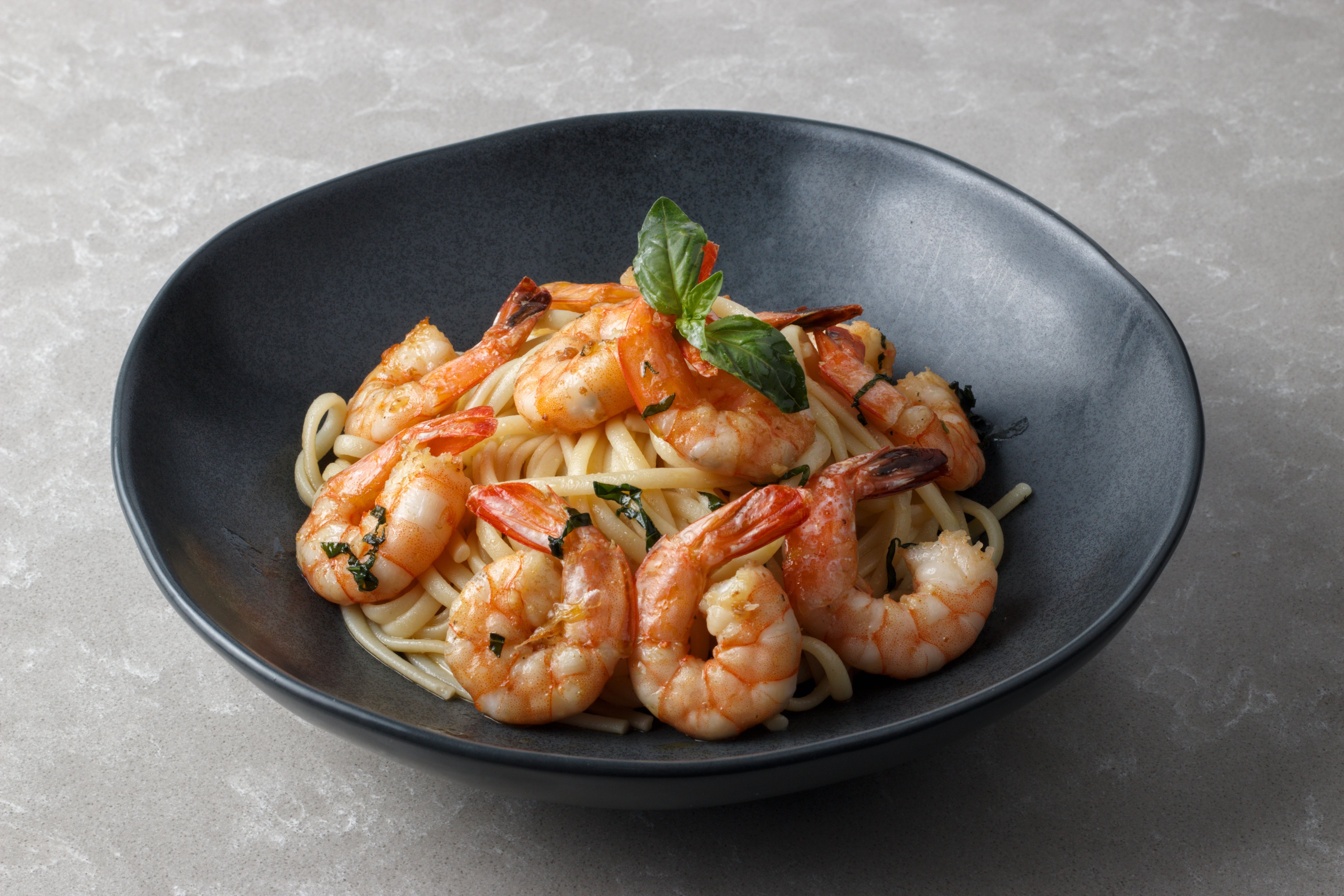
Photo: Adriano Bragi / Pexels
Italian
Shrimp Scampi over Linguine
The diets react (see scores below)
Common Ingredients
- shrimp
- linguine
- butter
- garlic
- white wine
- lemon
- parsley
Specific recipes may vary.
Incompatible with 6 of 11 diets
Diet Ratings
Linguine is a wheat-based pasta with roughly 40-45g net carbs per cooked cup, which alone exceeds or consumes the entire daily keto carb allowance. While the shrimp, butter, garlic, and lemon components are keto-friendly, the pasta base makes this dish incompatible with ketosis.
This dish contains shrimp (an animal) and butter (a dairy product), both of which are clearly excluded from a vegan diet. No vegan interpretation accommodates these ingredients.
Linguine is a wheat-based grain pasta, which is strictly excluded from paleo. Butter is dairy and also excluded by mainstream paleo. While shrimp, garlic, lemon, parsley, and white wine (in cooking) are acceptable or tolerable, the foundational components of this dish—pasta and butter—violate core paleo rules.
Shrimp is an excellent Mediterranean protein and seafood is encouraged 2-3 times weekly. Garlic, lemon, parsley, and white wine are all classic Mediterranean ingredients. However, this dish uses butter as the primary fat rather than olive oil, and refined linguine instead of whole-grain pasta. Swapping butter for extra virgin olive oil and using whole-wheat pasta would shift this dish firmly into the 'approve' range.
Some traditional Italian coastal interpretations would consider this dish acceptable, as small amounts of butter appear in some regional Italian cooking and refined pasta in moderate portions is part of traditional Italian Mediterranean eating. Modern clinical Mediterranean guidelines, however, emphasize olive oil over butter and whole grains over refined pasta.
While shrimp and butter are carnivore-approved, this dish is built on linguine (wheat pasta), which is a grain-based plant food strictly excluded from any carnivore protocol. It also includes garlic, white wine, lemon, and parsley — all plant-derived ingredients. The pasta base alone disqualifies the dish entirely.
This dish contains multiple excluded ingredients: linguine (a wheat-based grain pasta), butter (regular dairy butter is excluded; only ghee/clarified butter is allowed), and white wine (alcohol is excluded, even when cooked). Pasta dishes are also explicitly called out as 'recreating' off-limits foods.
This dish contains two major high-FODMAP ingredients: garlic cloves (high in fructans, no low-FODMAP serving exists) and wheat-based linguine (high in fructans). Both are flagged by Monash University as foods to strictly avoid during the elimination phase. Shrimp, butter, lemon, and parsley are low-FODMAP, but they cannot offset the garlic and wheat pasta.
Shrimp scampi over linguine has positive DASH elements (lean shrimp protein, garlic, lemon, parsley, and refined-but-modest linguine portion) but the dish is traditionally prepared with substantial butter, which is high in saturated fat that DASH limits. Shrimp itself is lean and low in saturated fat, making it DASH-compatible, but it is naturally higher in dietary cholesterol and is often cooked in salted butter or finished with parmesan, raising sodium. Swapping butter for olive oil, using whole-grain linguine, and adding vegetables would shift this toward approve.
Shrimp is an excellent lean Zone protein (low fat, high quality), but the dish is dominated by linguine, a high-glycemic refined-grain carbohydrate that is 'unfavorable' in Zone terms. Butter contributes saturated fat rather than the preferred monounsaturated fats. To fit the 40/30/30 ratio, pasta portion would need to be very small (roughly 1/2 cup cooked for a typical 3-block meal) and butter would ideally be swapped or supplemented with olive oil. As typically served in restaurants, the carb load far exceeds Zone proportions and the fat profile leans saturated.
Shrimp scampi over linguine has both beneficial and problematic elements from an anti-inflammatory perspective. Shrimp provides lean protein with some omega-3s, selenium, and astaxanthin (an anti-inflammatory carotenoid). Garlic, lemon, parsley, and white wine (in cooking) contribute polyphenols and anti-inflammatory compounds. However, the dish is built on refined white-flour linguine (refined carbohydrate with high glycemic load) and butter (saturated fat), both of which Dr. Weil's pyramid recommends limiting. The dish also lacks the colorful vegetables that anchor an anti-inflammatory meal. Swapping to whole-grain linguine, reducing butter, and substituting extra virgin olive oil would substantially improve the profile.
Mainstream Mediterranean-diet researchers (e.g., PREDIMED-aligned authorities) would likely rate a moderate portion of this dish more favorably, viewing it as a reasonable Mediterranean preparation given the seafood, garlic, herbs, and wine — particularly if olive oil partially replaces butter. Stricter anti-inflammatory protocols (AIP, Dr. Hyman's approach) would push toward 'avoid' due to the refined pasta and butter.
Shrimp is an excellent lean, high-protein option (about 20g protein per 3oz with minimal fat) that aligns well with GLP-1 priorities. However, this dish is built on butter (high saturated fat, which slows gastric emptying further and can worsen nausea/reflux) and refined linguine (low fiber, calorie-dense, easy to overportion). White wine adds alcohol, which is generally discouraged on GLP-1s. The dish can be made GLP-1-friendly with modifications: reduce butter, swap to whole-grain or chickpea/lentil linguine for fiber, increase shrimp portion to hit 25-30g protein, add vegetables (spinach, zucchini, cherry tomatoes), and skip or cook off the wine fully.
Some GLP-1 dietitians would rate this lower (avoid) because of the butter-and-refined-pasta base, which is a classic trigger combination for GLP-1 GI side effects. Others would rate it higher (approve) if portioned small with shrimp as the dominant component, viewing the butter as modest unsaturated-adjacent fat and the alcohol as cooked off.
*See how scores were generated at our methodology page.
Nutritional profile
Six traits that cut across every diet.
Fiber & Plants
How much whole-plant food and fiber it delivers.
Healthy Fats
The quality of its fats (unsaturated, omega-3).
Whole / Unprocessed
How close it is to its natural, unprocessed form.
Gut Gentle
How easy it is on digestion (low FODMAP, few irritants).
Low Glycemic
How little it spikes your blood sugar.
Protein Density
How much protein it packs per calorie.
Controversy Index
Higher controversy = more disagreement between diets.
Diet-Specific Tips
 Mediterranean — 5/10
View tips
- Shrimp aligns with seafood 2-3x/week recommendation
- Butter is not the canonical Mediterranean fat (olive oil preferred)
- Refined linguine instead of whole-grain pasta
- Garlic, lemon, parsley, and white wine are Mediterranean staples
- No vegetables or legumes included in the dish
 DASH — 5/10
View tips
- Butter contributes saturated fat that DASH restricts
- Refined linguine instead of whole-grain pasta
- Shrimp is lean protein but higher in cholesterol
- Garlic, lemon, and parsley are DASH-friendly flavor agents (low sodium)
- Sodium varies by preparation; restaurant versions often exceed home-cooked
 Zone — 4/10
View tips
- Shrimp is a favorable lean protein
- Linguine is a high-glycemic unfavorable carb
- Butter provides saturated rather than monounsaturated fat
- Typical restaurant portions break 40/30/30 ratio
- Garlic, lemon, parsley add polyphenols with no downside
 Anti-Inflammatory — 5/10
View tips
- shrimp provides lean protein, selenium, and astaxanthin
- garlic, parsley, and lemon contribute anti-inflammatory polyphenols
- refined white linguine is a high-glycemic refined carbohydrate
- butter adds saturated fat (Dr. Weil recommends limiting)
- lacks colorful vegetables typical of anti-inflammatory meals
- white wine in cooking is largely neutral after reduction
 GLP-1 Friendly — 5/10
View tips
- Shrimp is high-protein and very lean — strong positive
- Butter is high saturated fat — can worsen GLP-1 nausea/reflux
- Linguine is refined grain — low fiber, easy to overportion
- White wine introduces alcohol concern (though much cooks off)
- No vegetables — misses fiber and nutrient density opportunity
- Portion-sensitive: pasta-heavy plates undermine protein-forward eating