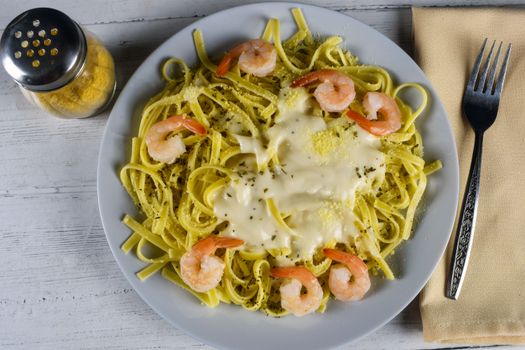
Photo: douglas miller / Pexels
Italian
Shrimp Scampi with Linguine
The diets react (see scores below)
Common Ingredients
- linguine
- shrimp
- butter
- garlic
- white wine
- lemon juice
- parsley
- red pepper flakes
Specific recipes may vary.
Incompatible with 6 of 11 diets
Diet Ratings
Shrimp Scampi with Linguine is fundamentally incompatible with a ketogenic diet due to the linguine pasta, which is a refined grain-based ingredient delivering roughly 40-45g of net carbs per typical serving (around 2oz dry). This single ingredient alone blows past most individuals' entire daily net carb budget. The remaining components — shrimp, butter, garlic, white wine, lemon juice, parsley, and red pepper flakes — are largely keto-friendly or acceptable in small quantities, but the pasta is a non-negotiable disqualifier. White wine adds a small additional carb load (~2-4g per serving). As a dish, it cannot be made keto-compliant without fundamentally substituting the linguine (e.g., zucchini noodles or shirataki noodles), at which point it becomes a different dish entirely.
Shrimp Scampi with Linguine contains multiple animal-derived ingredients that are categorically excluded from a vegan diet. Shrimp is seafood — an animal product — and butter is a dairy derivative. Both are clear violations of vegan principles. There is no ambiguity here: this dish is not vegan in any meaningful sense. The remaining ingredients (linguine, garlic, white wine, lemon juice, parsley, red pepper flakes) are plant-based, but the presence of shrimp and butter makes the dish entirely incompatible with vegan eating.
Shrimp Scampi with Linguine is not paleo-compatible in its traditional form. The primary disqualifying ingredient is linguine, a wheat-based pasta that is a grain and explicitly excluded from the paleo diet. Butter is a dairy product, also excluded under strict paleo guidelines. White wine is alcohol, which falls into a gray area but is a minor concern compared to the grains and dairy. The remaining ingredients — shrimp, garlic, lemon juice, parsley, and red pepper flakes — are all paleo-approved. However, the foundational components of the dish (pasta and butter) make this a clear avoid. A paleo adaptation would require substituting linguine with zucchini noodles or spaghetti squash and replacing butter with ghee, olive oil, or coconut oil.
Shrimp Scampi with Linguine has a solid Mediterranean foundation — shrimp is an excellent seafood protein encouraged 2-3 times weekly, garlic, lemon juice, parsley, white wine, and red pepper flakes are all staple Mediterranean flavors. However, two ingredients pull it away from core principles: butter is used as the primary fat instead of extra virgin olive oil, and regular linguine is a refined grain rather than a whole grain pasta. The dish is not a poor choice overall, but these substitutions mean it falls into the 'acceptable with modification' category rather than a full approval.
Traditional Italian coastal cuisine, particularly from regions like Campania and Liguria, commonly uses butter alongside or instead of olive oil in seafood pasta dishes, and white pasta is the historical norm. From a traditional Mediterranean culinary standpoint, this dish is quite authentic; modern clinical Mediterranean diet guidelines (e.g., Willett et al., Harvard) are stricter about olive oil primacy and whole grains than regional practice has historically been.
Shrimp Scampi with Linguine is fundamentally incompatible with the carnivore diet. The dish is built around linguine, a wheat-based pasta that is entirely plant-derived and excluded on any tier of carnivore eating. Beyond the pasta, nearly every other ingredient also violates carnivore principles: garlic (plant), parsley (plant herb), red pepper flakes (plant spice), lemon juice (fruit), and white wine (fermented plant product). The shrimp and butter are the only carnivore-compatible components. This dish is a classic Italian pasta preparation with the animal protein (shrimp) playing a supporting role in a largely plant-and-grain-based dish.
Shrimp Scampi with Linguine contains two clearly excluded ingredients: linguine (a wheat-based pasta/grain product) and butter (dairy, not ghee or clarified butter). Linguine is a wheat grain pasta, which is explicitly excluded under the grains rule. Regular butter is excluded dairy — only ghee and clarified butter are permitted. While shrimp, garlic, white wine, lemon juice, parsley, and red pepper flakes are all Whole30-compatible, the dish as described cannot be made compliant without fundamentally reconstructing it (replacing linguine with a vegetable-based alternative and swapping butter for ghee). The presence of two core excluded ingredients makes this a clear avoid.
Shrimp Scampi with Linguine contains two high-FODMAP ingredients that make it unsuitable during the elimination phase. First, regular wheat-based linguine is high in fructans and is a clear avoid at any standard serving size. Second, garlic is one of the highest-FODMAP foods tested by Monash University, containing significant fructans even in small amounts — it cannot be made safe simply by using less. White wine is generally considered low-FODMAP at a standard serving (around 150ml), and the small amount used in cooking further reduces concern. Butter, shrimp, lemon juice, parsley, and red pepper flakes are all low-FODMAP. However, the combination of wheat linguine and garlic are disqualifying for the elimination phase. The dish could be made low-FODMAP with gluten-free pasta (rice or corn-based linguine) and garlic-infused oil substituted for whole garlic cloves.
Shrimp Scampi with Linguine has both DASH-friendly and DASH-problematic elements. Shrimp is a lean protein low in saturated fat and rich in nutrients, which aligns well with DASH principles. Garlic, lemon juice, parsley, and red pepper flakes are all DASH-positive. White wine in cooking is generally acceptable. However, butter is a source of saturated fat, which DASH limits — traditional scampi recipes are often butter-heavy. Linguine, while not a whole grain, is acceptable in moderation. The main concerns are the quantity of butter used (saturated fat) and the potential for added sodium from the shrimp itself (shrimp can be high in dietary cholesterol and is sometimes sold pre-treated with sodium-based preservatives). As a composite dish, it sits in the 'caution' zone: acceptable with modifications such as substituting olive oil for most or all of the butter, using whole wheat linguine, and ensuring shrimp is fresh or low-sodium.
NIH DASH guidelines emphasize limiting saturated fat and butter is a direct source, placing butter-heavy preparations in the caution-to-avoid range. However, many updated DASH-oriented clinicians note that moderate butter use in an otherwise lean, vegetable-adjacent dish may be acceptable, especially if olive oil is substituted — some contemporary DASH interpretations focus more on overall dietary pattern than single ingredients.
Shrimp Scampi with Linguine has both Zone-favorable and Zone-unfavorable elements. Shrimp is an excellent lean protein source — very low in fat and high in protein, making it a near-ideal Zone protein block. However, the dish has two structural problems. First, linguine is a high-glycemic refined grain pasta, an 'unfavorable' Zone carbohydrate that causes rapid insulin spikes; a traditional restaurant serving would represent multiple carb blocks of the wrong kind. Second, butter is the primary fat, which is saturated fat — the Zone strongly favors monounsaturated fats like olive oil instead. A typical scampi serving would be carb-heavy (pasta dominates), fat-skewed toward saturated (butter), with the protein ratio potentially correct but everything else out of balance. That said, the dish is salvageable with Zone modifications: swap linguine for zucchini noodles or dramatically reduce the pasta portion, replace or cut the butter with olive oil, and pair with a large vegetable side. As prepared traditionally, the pasta volume and butter content make it difficult to hit the 40/30/30 ratio without significant restructuring.
Shrimp Scampi with Linguine presents a mixed anti-inflammatory profile. On the positive side, shrimp contains some omega-3 fatty acids and selenium, and is a lean protein with low saturated fat. Garlic is well-established as anti-inflammatory, red pepper flakes contain capsaicin with anti-inflammatory properties, parsley provides antioxidants and vitamin C, lemon juice adds polyphenols, and white wine in cooking quantities contributes minimal alcohol with some resveratrol-adjacent compounds. The dish also features garlic prominently, which supports an anti-inflammatory rating. However, the dish has notable concerns: butter is a saturated fat that anti-inflammatory protocols recommend limiting, and linguine is a refined carbohydrate that spikes blood sugar and lacks the fiber of whole grains. The combination of butter and refined pasta pulls the dish meaningfully toward the pro-inflammatory side. Substituting whole wheat or legume-based pasta and replacing butter with extra virgin olive oil would substantially improve the anti-inflammatory profile. As written, the dish sits in caution territory — the beneficial ingredients (shrimp, garlic, herbs, lemon) are offset by the refined pasta base and butter fat.
Some anti-inflammatory practitioners, including those aligned with Mediterranean diet principles, would rate this more favorably, noting that butter in modest culinary amounts is less concerning than processed fats, and that shrimp's astaxanthin content (a potent carotenoid) is genuinely anti-inflammatory. Conversely, stricter anti-inflammatory protocols would flag shrimp's moderate arachidonic acid content and refined pasta more harshly, potentially pushing the score lower.
Shrimp scampi with linguine is a mixed dish for GLP-1 patients. Shrimp is an excellent lean protein source — roughly 20-24g protein per 3 oz serving with very low fat — which strongly supports the #1 priority. However, the traditional preparation relies on a significant amount of butter, which adds saturated fat and can worsen GLP-1 side effects like nausea, reflux, and bloating. White wine contributes minimal alcohol per serving but is still a consideration. Linguine is a refined grain with low fiber, which works against the #2 priority and does little to support blood sugar stability or digestive health. The garlic and red pepper flakes are generally fine in moderate amounts, though red pepper flakes may trigger reflux in sensitive patients. Lemon juice and parsley are beneficial for flavor and micronutrients without downsides. The dish can be made significantly more GLP-1 friendly by reducing butter substantially, substituting olive oil, using whole wheat or legume-based pasta for fiber, and controlling portion size of the pasta while increasing the shrimp-to-pasta ratio.
Some GLP-1-focused dietitians accept a modest amount of butter as a practical accommodation for palatability and adherence, arguing that the lean protein from shrimp offsets the fat concern in a reasonably portioned serving. Others are stricter about saturated fat given slowed gastric emptying, which prolongs exposure to fat in the stomach and may amplify nausea and reflux risk on GLP-1 medications.
*See how scores were generated at our methodology page.
Nutritional profile
Six traits that cut across every diet.
Fiber & Plants
How much whole-plant food and fiber it delivers.
Healthy Fats
The quality of its fats (unsaturated, omega-3).
Whole / Unprocessed
How close it is to its natural, unprocessed form.
Gut Gentle
How easy it is on digestion (low FODMAP, few irritants).
Low Glycemic
How little it spikes your blood sugar.
Protein Density
How much protein it packs per calorie.
Controversy Index
Higher controversy = more disagreement between diets.
Diet-Specific Tips
 Mediterranean — 5/10
View tips
- Shrimp is an encouraged Mediterranean seafood protein
- Butter used instead of extra virgin olive oil as primary fat
- Refined linguine rather than whole grain pasta
- Garlic, lemon, parsley, white wine are classic Mediterranean aromatics
- No red meat, no added sugars, no highly processed ingredients
- Easy to modify: swap butter for olive oil, use whole wheat linguine
 DASH — 5/10
View tips
- Shrimp is lean protein, DASH-approved but watch for sodium-treated varieties
- Butter contributes saturated fat, which DASH explicitly limits
- Linguine is refined grain — whole wheat pasta would improve DASH alignment
- Garlic, lemon, parsley, red pepper flakes are all DASH-positive ingredients
- White wine adds negligible concern in cooking quantities
- Dish can be made more DASH-compliant by replacing butter with olive oil and using whole grain pasta
 Zone — 5/10
View tips
- Shrimp is a lean, Zone-favorable protein source — ideal protein block material
- Linguine is a refined, high-glycemic carbohydrate classified as 'unfavorable' in Zone terminology
- Butter provides saturated fat rather than preferred monounsaturated fats (olive oil, avocado)
- Traditional portion sizes skew heavily carb-dominant, breaking the 40/30/30 ratio
- White wine and lemon juice contribute negligible carbs and are Zone-neutral
- Garlic and parsley are favorable low-glycemic vegetables with polyphenol benefits
- Dish is easily modified toward Zone compliance by reducing pasta and substituting olive oil for butter
 Anti-Inflammatory — 5/10
View tips
- Shrimp provides lean protein, omega-3s, selenium, and astaxanthin (anti-inflammatory carotenoid)
- Garlic is a well-supported anti-inflammatory ingredient
- Red pepper flakes (capsaicin) and parsley add anti-inflammatory phytonutrients
- Butter is a saturated fat — flagged for limiting in anti-inflammatory diets
- Linguine is a refined carbohydrate lacking fiber — whole grain or legume pasta would be preferred
- White wine in cooking amounts is largely neutral; alcohol cooks off significantly
- Overall dish is nutritionally mixed: beneficial protein and aromatics undercut by refined carb base and saturated fat
 GLP-1 Friendly — 5/10
View tips
- Shrimp is a high-quality lean protein — strong positive
- Butter is a significant source of saturated fat — worsens GLP-1 GI side effects
- Linguine is a refined grain — low fiber, low nutrient density per calorie
- No meaningful fiber in this dish as traditionally prepared
- Red pepper flakes may worsen reflux in sensitive GLP-1 patients
- White wine adds minimal but non-zero alcohol
- Dish is highly modifiable: olive oil swap, whole grain or legume pasta, increased shrimp ratio all improve score
- Portion sensitivity high — pasta volume is easy to over-serve relative to reduced GLP-1 appetite