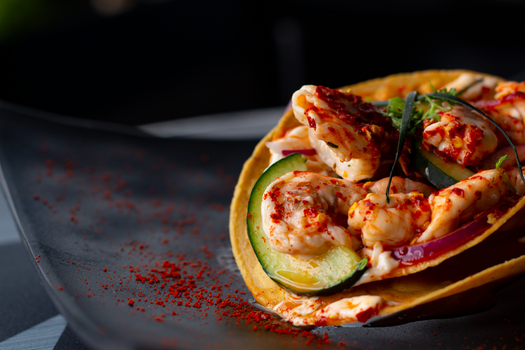
Photo: Alondra Medina / Pexels
Mexican
Shrimp Tacos
The diets react (see scores below)
Common Ingredients
- shrimp
- corn tortillas
- green cabbage
- lime
- chipotle in adobo
- Mexican crema
- cilantro
- avocado
Specific recipes may vary.
Incompatible with 6 of 11 diets
Diet Ratings
Shrimp tacos as described are clearly incompatible with a ketogenic diet primarily due to the corn tortillas, which are a grain-based, high-carb ingredient. A standard corn tortilla contains approximately 12-15g net carbs each, and tacos typically use two per serving, putting the tortillas alone at 24-30g net carbs — potentially exceeding the entire daily keto budget in one dish. The chipotle in adobo sauce also contains added sugar and some starch, adding further carbs. The remaining ingredients — shrimp, cabbage, lime, Mexican crema, avocado, and cilantro — are largely keto-friendly or manageable in small portions, but the tortillas are the disqualifying element. This dish cannot be made keto-compatible without a fundamental structural change (e.g., swapping corn tortillas for lettuce wraps or cheese shells).
Shrimp Tacos contain multiple animal-derived ingredients that are entirely incompatible with a vegan diet. Shrimp is seafood — an animal product — and serves as the primary protein. Mexican crema is a dairy product made from cream, also excluded under vegan rules. These two ingredients alone make the dish clearly non-vegan. The remaining ingredients (corn tortillas, green cabbage, lime, chipotle in adobo, cilantro, avocado) are all plant-based, but they cannot offset the presence of animal products.
Shrimp Tacos as prepared contain multiple non-paleo ingredients that disqualify the dish outright. Corn tortillas are made from corn, a grain explicitly excluded from the paleo diet. Mexican crema is a dairy product, also excluded. Chipotle in adobo sauce typically contains added sugar, salt, and vinegar — making it a processed food with non-paleo additives. While the core protein (shrimp) is fully paleo-approved, and several other ingredients (cabbage, lime, cilantro, avocado) are clean paleo foods, the foundational structure of the dish — the tortilla — and two additional ingredients are clear violations. This is not a borderline case; corn and dairy are unambiguous exclusions across all major paleo frameworks.
Shrimp tacos align well with Mediterranean principles in several respects: shrimp is an excellent seafood protein encouraged 2-3 times weekly, avocado provides healthy monounsaturated fats, and cabbage, lime, and cilantro are fresh plant-based vegetables. Corn tortillas are a whole grain option preferable to refined flour tortillas. However, two ingredients temper the score: Mexican crema is a high-fat dairy product not typical of Mediterranean eating (though moderate dairy is acceptable), and chipotle in adobo sauce is a moderately processed condiment with added sugars and sodium. The overall dish is not a Mediterranean staple but contains many compatible elements, making it a reasonable occasional choice rather than a dietary cornerstone.
Some Mediterranean diet interpretations would score this higher, noting that shrimp is a strongly encouraged seafood, whole-grain corn tortillas parallel traditional flatbreads used in Mediterranean cuisines, and the fresh vegetable components align closely with plant-forward principles. The crema could easily be substituted with Greek yogurt, which some practitioners would accept as equivalent.
Shrimp Tacos are almost entirely incompatible with the carnivore diet. While shrimp itself is a carnivore-approved animal protein, it is surrounded by a large number of plant-based ingredients that are strictly excluded. Corn tortillas are a grain-based food and a core exclusion. Green cabbage, lime, cilantro, and avocado are all plant foods with no place on a carnivore diet. Chipotle in adobo is a heavily processed plant-based condiment containing peppers, vinegar, spices, and typically sugar. Mexican crema is dairy, which is debated but sometimes included — however, in this context it is a minor ingredient in an otherwise entirely non-carnivore dish. The dish as a whole is a classic plant-forward Mexican preparation that happens to contain shrimp; it cannot be considered carnivore in any iteration of the diet.
This dish contains multiple excluded ingredients. Corn tortillas are made from corn, which is a grain explicitly excluded on Whole30. Additionally, corn tortillas function as wraps/tortillas, which are explicitly named in the 'no recreating baked goods/junk food' rule. Mexican crema is a dairy product (similar to sour cream) and is therefore excluded. Chipotle in adobo sauce typically contains added sugar and may contain other non-compliant ingredients. Even if the individual components could be made compliant in isolation, the dish as structured is a taco — a wrap/tortilla-based format explicitly prohibited by Whole30 rules. The shrimp, cabbage, lime, cilantro, and avocado are all compliant, but the foundational structure of the dish and multiple key ingredients disqualify it entirely.
This dish contains two significant high-FODMAP ingredients that make it problematic during elimination. Chipotle in adobo sauce is high-FODMAP because adobo sauce typically contains garlic and onion (fructans) as primary ingredients — this alone would disqualify the dish. Mexican crema is a high-lactose dairy product similar to sour cream, making it high-FODMAP in standard serving sizes. Avocado adds a third concern: Monash rates it low-FODMAP only at 1/8 of a fruit (~30g), but tacos typically include a much more generous portion. The remaining ingredients are generally low-FODMAP: shrimp is safe, corn tortillas are low-FODMAP (2 tortillas is a safe serving), green cabbage is low-FODMAP at standard servings, lime juice is fine, and cilantro is low-FODMAP. However, the chipotle in adobo and Mexican crema together represent non-negotiable high-FODMAP components that cannot be consumed safely during elimination phase without substitution.
Some FODMAP practitioners might allow a very small drizzle of crema (lactase enzyme or lactose-free crema would resolve the dairy issue), and chipotle powder without adobo sauce could substitute for the chipotle-in-adobo. With ingredient swaps this dish could become low-FODMAP, but as written with standard recipe proportions, it should be avoided during elimination.
Shrimp tacos have a mixed DASH profile. On the positive side, shrimp is a lean, low-fat protein that fits DASH guidelines, corn tortillas are a whole-grain option with moderate sodium, green cabbage is an excellent DASH vegetable, lime and cilantro add flavor without sodium, and avocado provides heart-healthy monounsaturated fats and potassium. However, two ingredients raise concerns: chipotle in adobo sauce is high in sodium (adobo sauce can contain 200–400mg per tablespoon) and may push the dish toward the DASH sodium limit quickly, and Mexican crema is a full-fat dairy product high in saturated fat, which DASH explicitly limits in favor of low-fat dairy alternatives. The combination of these two ingredients tips this dish from 'approve' to 'caution.' With substitutions — low-sodium chipotle seasoning or a small portion of chipotles with reduced adobo, and Greek yogurt or low-fat sour cream in place of crema — this dish could easily reach 'approve' territory.
NIH DASH guidelines specifically limit full-fat dairy and high-sodium condiments like adobo sauce, keeping this in caution range. However, updated clinical interpretations note that the overall dish is nutrient-dense and portion-controlled use of crema and chipotle in adobo may be acceptable within a broader DASH-compliant dietary pattern, particularly for non-hypertensive individuals following standard (2,300mg) rather than low-sodium DASH.
Shrimp tacos have a solid Zone foundation but require careful portioning to hit the 40/30/30 ratio. Shrimp is an excellent lean protein source (very low fat, high protein density), and avocado provides ideal monounsaturated fat. Green cabbage and lime are favorable low-glycemic carbs. However, two key issues push this into caution territory: (1) Corn tortillas are a higher-glycemic grain carb — Zone classifies grains as 'unfavorable' carbohydrates, and even one standard corn tortilla (~15g net carbs) counts as nearly 2 carb blocks, making it easy to overshoot the carb allocation. (2) Mexican crema is a high-saturated-fat dairy ingredient that Zone discourages in favor of monounsaturated fats. Chipotle in adobo adds minimal carbs but contains some sugar and sodium. The dish CAN be Zone-balanced with discipline: use one small corn tortilla, generous shrimp (3-4 oz), pile on the cabbage, use avocado as the primary fat, and minimize or substitute the crema with a lighter option. In restaurant portions, however, two or three tortillas easily push carbs well above Zone targets while the crema adds saturated fat, throwing off all three ratios simultaneously.
Some Zone practitioners argue corn tortillas, being a whole grain with fiber, are more acceptable than white flour tortillas and can be used as a single carb block. Dr. Sears' later writings (The Anti-Inflammation Zone) place more emphasis on polyphenols and omega-3s than on strict glycemic avoidance, which would credit the chipotle's polyphenol content and shrimp's lean protein more favorably. Under this lens, a carefully portioned shrimp taco with one small tortilla could be considered a reasonable Zone meal rather than merely a caution food.
Shrimp tacos have a genuinely mixed anti-inflammatory profile. On the positive side, shrimp provides lean protein, selenium, and some omega-3s (though modest compared to fatty fish), avocado contributes monounsaturated fats and anti-inflammatory oleic acid, lime and cilantro add polyphenols and vitamin C, green cabbage delivers glucosinolates and fiber with known anti-inflammatory properties, and chipotle/adobo spices contribute capsaicin which has anti-inflammatory activity. Corn tortillas are a whole grain option preferable to refined flour. The main concern is Mexican crema — a full-fat dairy product high in saturated fat — which is a 'limit' ingredient under anti-inflammatory principles. Chipotle in adobo sauce may also contain added sugar, sodium, and preservatives depending on the canned brand. Shrimp itself carries some nuance: it is low in fat and rich in astaxanthin (a potent antioxidant carotenoid), but some anti-inflammatory protocols flag its relatively high cholesterol content and the fact that farmed shrimp may be fed inflammatory grain-based diets. Overall this dish leans toward acceptable with modifications — swapping crema for a plain Greek yogurt sauce or reducing the quantity meaningfully improves the profile.
Most anti-inflammatory frameworks would view shrimp positively given its lean protein and astaxanthin content, and Dr. Weil's pyramid includes seafood broadly. However, some stricter anti-inflammatory practitioners note that farmed shrimp's feed composition can shift its fatty acid profile unfavorably, and that full-fat dairy like crema introduces saturated fat load; choosing wild-caught shrimp and substituting crema would shift this dish closer to an 'approve' rating.
Shrimp tacos have a genuinely strong nutritional foundation for GLP-1 patients — shrimp is a lean, high-protein seafood with excellent protein density per calorie, and corn tortillas are lower in fat and more nutrient-dense than flour tortillas. Green cabbage adds meaningful fiber and crunch with minimal calories. However, this dish as composed has two meaningful drawbacks: chipotle in adobo sauce is moderately spicy and acidic, which can worsen nausea and reflux that GLP-1 medications already predispose patients to, and Mexican crema is a high-fat dairy ingredient that adds saturated fat and calories with little protein payoff. Avocado contributes healthy unsaturated fat but adds fat load to an already fat-moderate dish. Portion size is also a real concern — two tacos with standard toppings likely deliver only 15-20g of protein while pushing fat into a range that may slow an already-delayed gastric emptying further. The dish is rescuable with modifications: swap crema for plain Greek yogurt, reduce or omit chipotle, and add extra shrimp.
Some GLP-1-focused dietitians would rate this higher, noting that shrimp tacos in moderate portions represent exactly the kind of culturally appropriate, whole-food meal that supports long-term adherence — and that the fat from avocado and crema is modest enough per taco to be tolerated by most patients. Others maintain that the spice level and combined fat load from crema plus avocado make this a reliable GI trigger, particularly in the first several months on medication when gastric sensitivity is highest.
*See how scores were generated at our methodology page.
Nutritional profile
Six traits that cut across every diet.
Fiber & Plants
How much whole-plant food and fiber it delivers.
Healthy Fats
The quality of its fats (unsaturated, omega-3).
Whole / Unprocessed
How close it is to its natural, unprocessed form.
Gut Gentle
How easy it is on digestion (low FODMAP, few irritants).
Low Glycemic
How little it spikes your blood sugar.
Protein Density
How much protein it packs per calorie.
Controversy Index
Higher controversy = more disagreement between diets.
Diet-Specific Tips
 Mediterranean — 6/10
View tips
- Shrimp is a strongly encouraged seafood protein (2-3x/week)
- Corn tortillas are a whole grain, preferable to refined flour alternatives
- Avocado provides Mediterranean-compatible healthy monounsaturated fats
- Fresh cabbage, lime, and cilantro are plant-forward additions
- Mexican crema is a high-fat dairy not typical of Mediterranean diet
- Chipotle in adobo is a processed ingredient with added sugars and sodium
- Non-Mediterranean cuisine but ingredient-level compatibility is reasonable
 DASH — 5/10
View tips
- Shrimp is a lean, DASH-approved protein source
- Corn tortillas are a whole-grain, moderate-sodium base
- Chipotle in adobo sauce is high in sodium — a significant DASH concern
- Mexican crema is full-fat dairy, which DASH limits in favor of low-fat alternatives
- Avocado provides DASH-valued potassium and healthy monounsaturated fats
- Cabbage is an excellent DASH vegetable adding fiber and micronutrients
- Substituting Greek yogurt for crema and reducing adobo sauce would significantly improve DASH compatibility
 Zone — 5/10
View tips
- Shrimp is an excellent lean Zone protein source — nearly pure protein with minimal fat
- Avocado provides ideal monounsaturated fat, well-aligned with Zone fat block goals
- Corn tortillas are 'unfavorable' high-glycemic grain carbs in Zone terminology; easy to over-block
- Mexican crema adds saturated fat, which Zone discourages in favor of monounsaturated sources
- Green cabbage and lime are favorable low-glycemic Zone carbs that offset some carb quality concerns
- Chipotle in adobo adds polyphenols (anti-inflammatory positive) but contains added sugar
- Dish is Zone-compatible with strict portioning but easily imbalanced in typical restaurant servings
 Anti-Inflammatory — 6/10
View tips
- Shrimp provides lean protein and astaxanthin (antioxidant carotenoid) — anti-inflammatory positive
- Avocado contributes monounsaturated fats and oleic acid — strong anti-inflammatory benefit
- Green cabbage delivers glucosinolates and fiber — anti-inflammatory positive
- Chipotle pepper contains capsaicin — anti-inflammatory active compound
- Mexican crema is full-fat dairy high in saturated fat — 'limit' ingredient under anti-inflammatory principles
- Chipotle in adobo (canned) may contain added sugar and preservatives — mild concern
- Corn tortillas are preferable to refined flour alternatives — neutral to positive
- Farmed vs. wild-caught shrimp distinction affects omega-3 and contaminant profile
 GLP-1 Friendly — 5/10
View tips
- Shrimp is an excellent lean protein source — roughly 20g protein per 3oz serving with very low fat
- Corn tortillas preferred over flour: lower fat, some fiber, more nutrient-dense per calorie
- Chipotle in adobo is spicy and acidic — a meaningful GLP-1 side effect risk for nausea and reflux
- Mexican crema adds saturated fat with minimal protein contribution — a net negative for GLP-1 patients
- Avocado provides healthy unsaturated fat but increases overall fat load per serving
- Cabbage adds fiber and water content — positive for digestion and constipation prevention
- Portion sensitivity: protein yield per taco is relatively low; two tacos may fall short of the 15-30g per meal protein target
- Dish is highly modifiable: Greek yogurt for crema and reduced chipotle would meaningfully improve the rating