Photo: Mariam Antadze / Pexels
Chinese
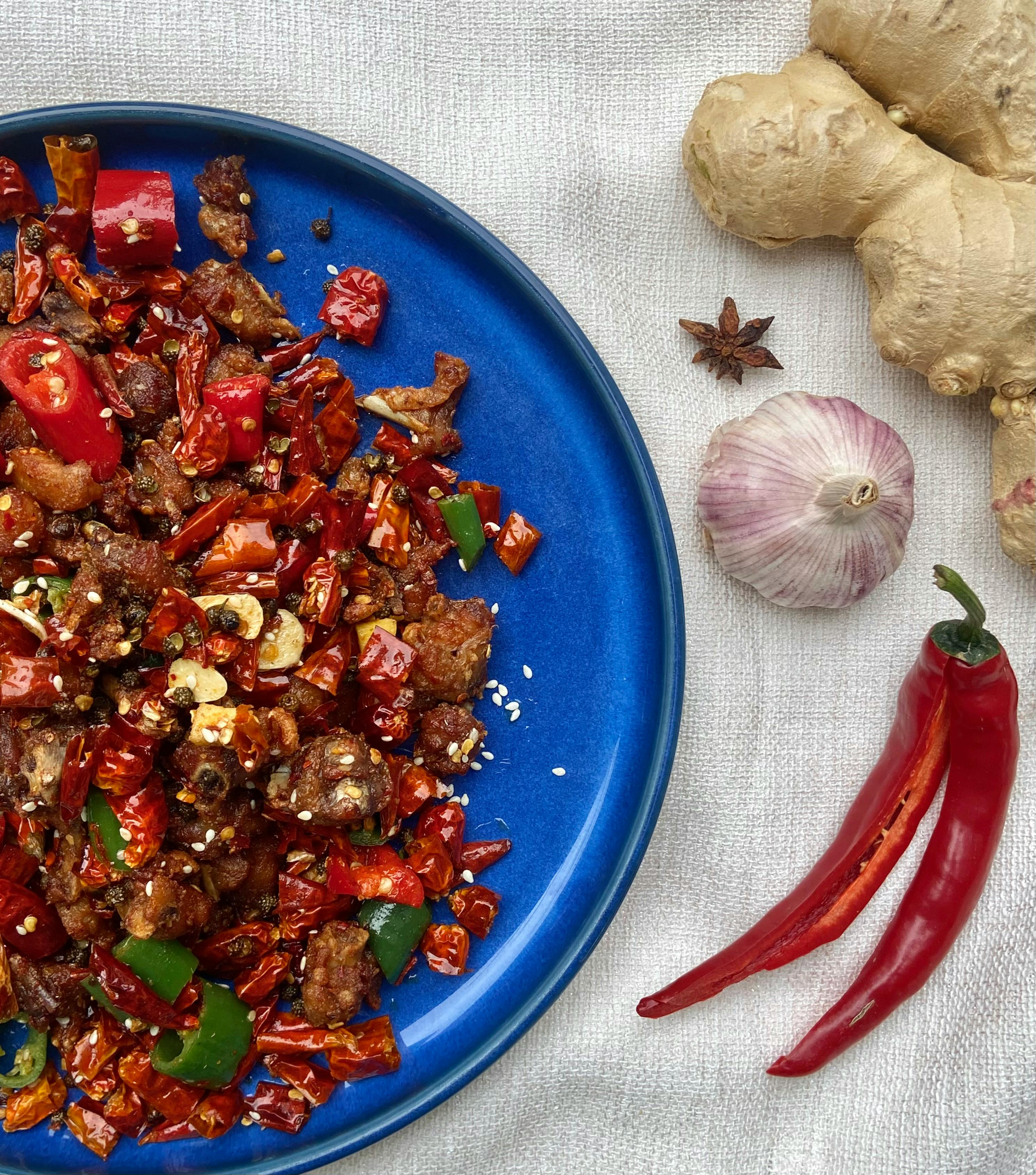
Sichuan Mala Chicken
The diets react (see scores below)
Common Ingredients
- chicken thighs
- Sichuan peppercorns
- dried red chiles
- doubanjiang
- garlic
- ginger
- scallions
- soy sauce
Specific recipes may vary.
Incompatible with 7 of 11 diets
Diet Ratings
Sichuan Mala Chicken is built around chicken thighs — an excellent keto protein source with good fat content. The aromatics (garlic, ginger, scallions, dried chiles, Sichuan peppercorns) contribute minimal net carbs in typical cooking quantities. The two ingredients of concern are doubanjiang (fermented broad bean and chili paste) and soy sauce. Doubanjiang contains fermented beans, which add a small but non-trivial carb load, and many commercial versions include added sugars or starches. Soy sauce is low-carb but adds up. Together, and depending on portion sizes used, these condiments could push a serving into a moderate carb range (estimated 6–12g net carbs per serving). The dish is workable on keto with careful portioning or by using tamari (lower-carb soy sauce) and checking the doubanjiang label for added sugars, but it is not a clean approve out of the box.
Strict keto practitioners who track every gram would flag doubanjiang as a hidden carb and sugar source and advise avoiding restaurant-prepared versions entirely, arguing the dish cannot reliably be kept within daily limits without full ingredient control.
Sichuan Mala Chicken contains chicken thighs as its primary protein, which is poultry — a direct animal product entirely incompatible with a vegan diet. There is no ambiguity here. The remaining ingredients (Sichuan peppercorns, dried red chiles, doubanjiang, garlic, ginger, scallions, soy sauce) are all plant-based, but the dish is fundamentally defined by and built around animal flesh.
While chicken thighs, Sichuan peppercorns, dried red chiles, garlic, ginger, and scallions are all paleo-compliant, this dish contains three clearly non-paleo ingredients that disqualify it. Doubanjiang (fermented broad bean and chili paste) is a legume-based condiment and therefore excluded. Soy sauce contains both wheat (a grain) and soy (a legume), making it doubly non-compliant. These are not minor or trace additions — they are foundational flavor-building ingredients central to the dish's identity. The dish as traditionally prepared cannot be considered paleo.
Sichuan Mala Chicken is built around chicken thighs, which fall into the 'moderate' category of the Mediterranean diet — acceptable a few times per week but not a daily staple. The dish has several Mediterranean-compatible elements: garlic, ginger, scallions, and dried chiles are all whole, plant-based aromatics consistent with Mediterranean principles. However, doubanjiang (fermented broad bean chili paste) and soy sauce are sodium-heavy fermented condiments not part of traditional Mediterranean cuisine, and the dish uses no olive oil as the fat base. The overall flavor profile and technique are distinctly non-Mediterranean, but the ingredient list is not inherently harmful. The primary concerns are the high sodium load from doubanjiang and soy sauce, and the absence of olive oil as the cooking fat. Chicken itself is a moderate-category protein.
Some modern Mediterranean diet practitioners take a broader view, noting that fermented legume-based pastes like doubanjiang share functional similarities with Mediterranean fermented foods, and that aromatic vegetables, lean poultry, and spices are universally encouraged. From this perspective, the dish could be adapted into a Mediterranean framework by substituting olive oil and reducing sodium.
Sichuan Mala Chicken is fundamentally incompatible with the carnivore diet. While chicken thighs are an acceptable animal protein, virtually every other ingredient in this dish is plant-derived or plant-processed and explicitly excluded from carnivore: Sichuan peppercorns and dried red chiles are plant spices, doubanjiang is a fermented soybean-chili paste (legume-based), garlic and ginger are plant roots, scallions are a vegetable, and soy sauce is a fermented grain/legume product. The dish is defined by its plant-based flavor profile — the mala (numbing-spicy) characteristic comes entirely from plant compounds. There is no version of this dish that can be made carnivore-compliant without completely reconstructing it from scratch. The animal component (chicken thighs) is acceptable, but it constitutes only a fraction of the overall ingredient list and is entirely overshadowed by excluded plant foods and processed condiments.
This dish contains two excluded ingredients. Soy sauce is made from soybeans (a legume) and often wheat (a grain), making it explicitly excluded on Whole30. Doubanjiang (spicy fermented bean paste) is similarly excluded as it is a fermented soybean and broad bean paste — a legume-based condiment that also typically contains wheat and added sugar. These are not edge cases; soy sauce and fermented bean pastes are clearly off-limits. The remaining ingredients — chicken thighs, Sichuan peppercorns, dried red chiles, garlic, ginger, and scallions — are all Whole30-compliant. A modified version could substitute coconut aminos for soy sauce and omit or replace doubanjiang with a compliant chili paste, but as listed this dish must be avoided.
Sichuan Mala Chicken contains multiple high-FODMAP ingredients that make it unsuitable during the elimination phase. Garlic is one of the highest-FODMAP foods tested by Monash University, containing significant fructans even in small amounts. Doubanjiang (spicy fermented broad bean paste) is a double FODMAP offender — fermented broad beans contain GOS, and garlic/onion are standard components of the paste. Scallion bulbs (white parts) are high in fructans, though the green tops are low-FODMAP. Dried red chiles at larger quantities may also be problematic. The combination of garlic and doubanjiang alone is sufficient to classify this dish as high-FODMAP, with no realistic way to reformulate it while keeping the authentic flavor profile.
Sichuan Mala Chicken is fundamentally incompatible with DASH diet principles due to its high-sodium ingredient profile. Doubanjiang (fermented broad bean chili paste) is extremely high in sodium, often containing 400-600mg per tablespoon, and soy sauce adds another 800-1,000mg per tablespoon — together these two ingredients alone can easily push a single serving well beyond the DASH daily sodium limit of 2,300mg (or the stricter 1,500mg target). Chicken thighs also introduce moderate saturated fat compared to leaner DASH-preferred cuts like chicken breast. While the dish does include DASH-positive aromatics (garlic, ginger, scallions) and the protein source is poultry rather than red meat, the sodium burden from the fermented and soy-based condiments is disqualifying. The Sichuan peppercorns and dried chiles themselves are fine, but they cannot offset the sodium and saturated fat concerns of the overall dish as traditionally prepared.
Sichuan Mala Chicken has a mixed Zone profile. The primary protein (chicken thighs) is lean enough to serve as a Zone protein block but contains more fat than ideal Zone sources like skinless chicken breast. The aromatics and spices (Sichuan peppercorns, dried red chiles, garlic, ginger, scallions) are low-glycemic and polyphenol-rich — actually excellent Zone additions. The main concerns are: (1) chicken thighs have higher saturated fat than Zone-preferred skinless breast; (2) doubanjiang (fermented broad bean and chili paste) contains moderate sodium and some added sugars, and its glycemic and inflammatory profile is mixed; (3) soy sauce adds sodium. On the positive side, this dish has no high-glycemic carbohydrate load, the chiles and Sichuan peppercorns are strong polyphenol sources (aligned with Sears' anti-inflammatory framework), and the dish is fundamentally protein-forward with low-carb aromatics. To Zone-ify this dish, swap thighs for skinless breast, control doubanjiang portions, and pair with a large serving of low-glycemic vegetables rather than rice.
Some Zone practitioners and later Sears writings (The Anti-Inflammation Zone) place greater emphasis on polyphenols and omega-3 balance than strict fat type. Under that lens, the heavy polyphenol load from chiles, Sichuan peppercorns, garlic, and ginger could partially offset concerns about chicken thigh fat, pushing this dish closer to a moderate approval — especially if skin is removed and it is portioned carefully.
Sichuan Mala Chicken has a genuinely mixed anti-inflammatory profile. On the positive side, the dish is rich in potent anti-inflammatory spices: Sichuan peppercorns contain hydroxy-alpha-sanshool and antioxidants, dried red chiles provide capsaicin (a well-documented anti-inflammatory compound), garlic and ginger are strongly anti-inflammatory with research-backed effects on CRP and NF-κB pathways, and scallions contribute flavonoids. Chicken thighs are a moderate-category protein — acceptable lean-ish poultry, though darker meat has more saturated fat than breast. The main concerns are doubanjiang (fermented broad bean and chili paste), which typically contains significant sodium and may include additives depending on the brand, and soy sauce, another high-sodium ingredient. While fermented foods can offer probiotic benefits, the sodium load is notable. There are no trans fats, refined sugars, or seed oils listed, which is a significant positive. The dish would rate higher if made with lower-sodium versions of doubanjiang and soy sauce, or if chicken breast were used. As-written for a generally healthy person, the anti-inflammatory spice base is a strong asset, but the sodium content and moderate saturated fat from thighs keep it in caution territory.
Some anti-inflammatory practitioners (particularly those following AIP or autoimmune-focused protocols) would rate this lower due to nightshade ingredients — dried red chiles and doubanjiang — arguing that capsaicin and solanine-related compounds can trigger gut permeability and inflammation in sensitive individuals. Mainstream anti-inflammatory authorities like Dr. Weil, however, explicitly endorse chili peppers for their capsaicin content as anti-inflammatory, placing this dish more favorably.
Sichuan Mala Chicken presents multiple significant concerns for GLP-1 patients. The primary protein source is chicken thighs, which are notably higher in fat than breast meat — a meaningful drawback given that high-fat meals worsen GLP-1 side effects including nausea, bloating, and reflux. More critically, this dish is built around an intensely spicy, high-stimulation flavor profile: Sichuan peppercorns produce a numbing-tingling sensation that can irritate the GI tract, dried red chiles add significant capsaicin heat, and doubanjiang (fermented spicy bean paste) is both spicy and relatively high in sodium. Together, this combination is likely to worsen nausea, reflux, and GI discomfort in patients whose gastric emptying is already slowed. The garlic, ginger, and scallions are positive contributors — ginger in particular may mildly help with nausea — and soy sauce adds umami with minimal fat. But these positives are substantially outweighed by the fat content of thighs and the extreme spice load. This dish is not portion-friendly in the GLP-1 context: the spice and fat effects are not easily mitigated by eating a smaller serving.
Some GLP-1 clinicians note that spice tolerance is highly individual — patients with pre-existing high spice tolerance may experience fewer GI symptoms, and ginger is a documented anti-nausea ingredient. A small number of RDs working with GLP-1 patients also argue that the fermented ingredients in doubanjiang may offer modest gut-health benefits, though this does not outweigh the overall spice and fat burden for most patients.
*See how scores were generated at our methodology page.
Nutritional profile
Six traits that cut across every diet.
Fiber & Plants
How much whole-plant food and fiber it delivers.
Healthy Fats
The quality of its fats (unsaturated, omega-3).
Whole / Unprocessed
How close it is to its natural, unprocessed form.
Gut Gentle
How easy it is on digestion (low FODMAP, few irritants).
Low Glycemic
How little it spikes your blood sugar.
Protein Density
How much protein it packs per calorie.
Controversy Index
Higher controversy = more disagreement between diets.
Diet-Specific Tips
 Keto — 5/10
View tips
- Chicken thighs are high-fat, keto-friendly protein
- Doubanjiang may contain added sugars and bean-derived carbs
- Soy sauce adds small carb load; tamari is a cleaner substitute
- Aromatics (garlic, ginger, scallions) are low-carb in typical amounts
- Dried chiles and Sichuan peppercorns are negligible in carbs
- Total net carbs per serving estimated 6–12g depending on condiment quantities
- Restaurant versions less controllable; home preparation preferred
 Mediterranean — 5/10
View tips
- Chicken thighs are acceptable in moderation — not a daily staple
- Garlic, ginger, scallions, and dried chiles are whole plant foods consistent with Mediterranean principles
- Doubanjiang and soy sauce introduce high sodium and are non-traditional to Mediterranean cuisine
- No olive oil used as primary fat — cooking fat source is unspecified or non-Mediterranean
- Not a Mediterranean dish, but not fundamentally incompatible if eaten occasionally
 Zone — 5/10
View tips
- Chicken thighs are higher in saturated fat than Zone-ideal skinless breast — a moderate concern
- Sichuan peppercorns, dried chiles, garlic, and ginger are polyphenol-rich, supporting Sears' anti-inflammatory emphasis
- Doubanjiang adds fermented flavor but contributes sodium and trace sugars — use in small quantities
- No high-glycemic carbohydrates in the dish itself — protein-forward with low-carb aromatics
- Dish needs a low-GI vegetable side (not white rice) to complete Zone macronutrient balance
- Soy sauce sodium is a minor concern for overall health but does not affect Zone macronutrient ratios
 Anti-Inflammatory — 6/10
View tips
- Capsaicin in dried red chiles is a well-documented anti-inflammatory compound
- Garlic and ginger are strongly anti-inflammatory, suppressing NF-κB and reducing CRP
- Sichuan peppercorns contain antioxidants and anti-inflammatory alkaloids
- Chicken thighs are moderate-category protein with more saturated fat than breast
- Doubanjiang and soy sauce contribute significant sodium, a concern for systemic inflammation at high intake
- No trans fats, refined sugars, or high-omega-6 seed oils in ingredient list
- Fermented doubanjiang may offer probiotic benefits depending on preparation
- Autoimmune-sensitive individuals may react to nightshade ingredients (chiles)