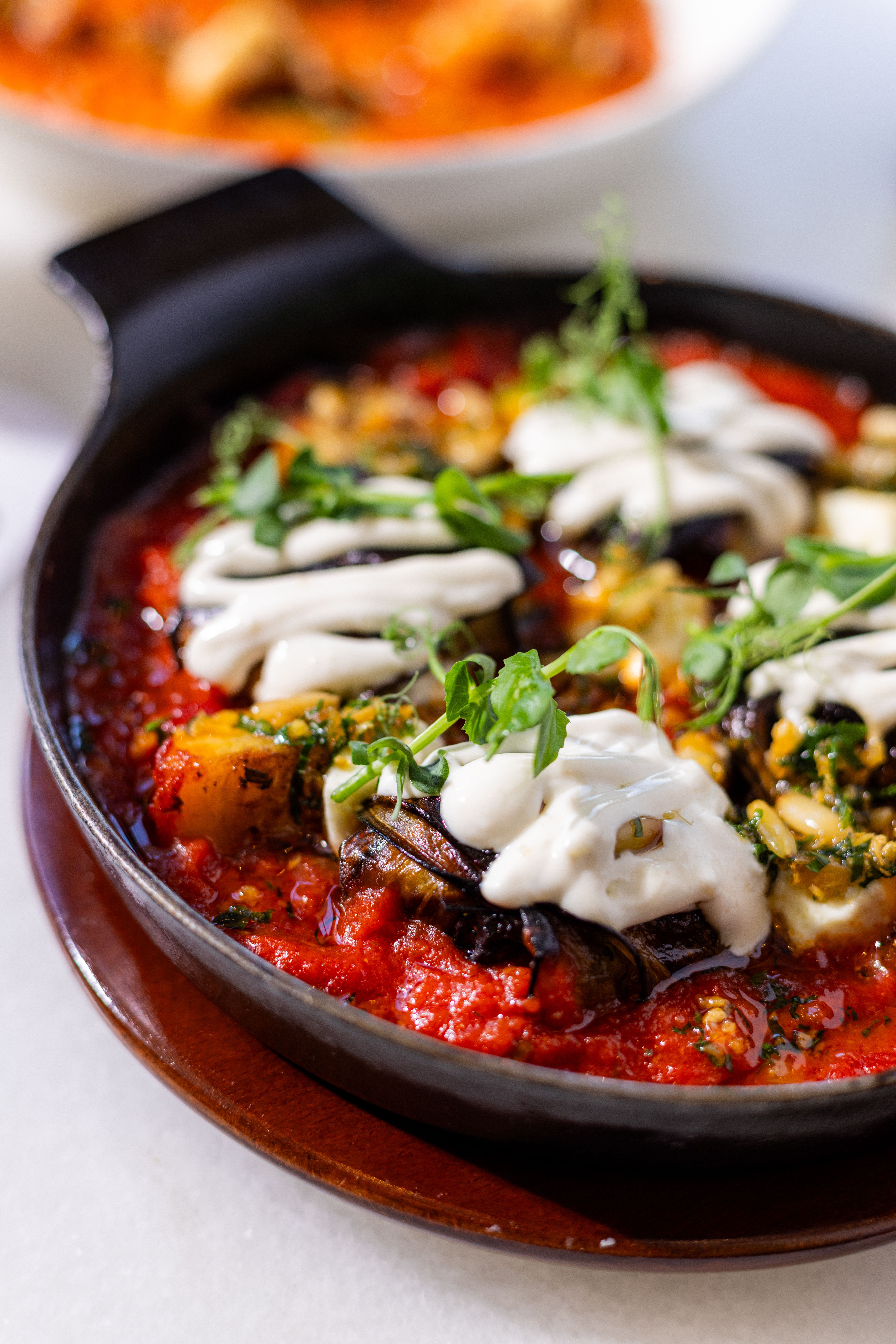
Photo: Anthony Rahayel / Pexels
Mediterranean
Sicilian Caponata
The diets react (see scores below)
Common Ingredients
- eggplant
- celery
- tomatoes
- green olives
- capers
- red wine vinegar
- sugar
- pine nuts
Specific recipes may vary.
Incompatible with 3 of 11 diets
Diet Ratings
Sicilian Caponata is fundamentally incompatible with a ketogenic diet in its traditional form. The dish explicitly includes added sugar as an ingredient, which is a zero-tolerance violation under keto rules. Beyond the sugar, red wine vinegar adds a small carb load, and celery and tomatoes contribute additional net carbs. While eggplant, olives, and capers are individually keto-friendly, the sweet-and-sour agrodolce profile of this dish relies on sugar, making the standard preparation a clear avoid. A heavily modified sugar-free version with portion control could potentially be cautioned, but as traditionally prepared, this dish does not fit ketogenic eating.
Sicilian Caponata as described is entirely plant-based. Every ingredient — eggplant, celery, tomatoes, green olives, capers, red wine vinegar, sugar, and pine nuts — is derived from plants with no animal products or animal-derived ingredients present. This is a whole-food-forward dish with minimal processing, featuring vegetables, a fruit-based acid, and nuts. The agrodolce (sweet-sour) flavor profile comes from vinegar and sugar, both vegan-compliant. Pine nuts provide healthy fats and a small amount of plant protein. This is an excellent example of traditional Mediterranean plant-based cooking.
Sicilian Caponata contains several paleo-approved ingredients — eggplant, celery, tomatoes, green olives, capers, red wine vinegar, and pine nuts are all whole, unprocessed foods that fit the paleo framework. However, the dish is critically undermined by added sugar, which is a refined sweetener explicitly excluded from the paleo diet. Traditional caponata relies on the sweet-sour (agrodolce) balance achieved with sugar and vinegar, so the sugar is not incidental — it is structural to the recipe. Without reformulation (e.g., substituting a small amount of honey or medjool dates), this dish cannot be considered paleo-compliant. Capers and olives may occasionally contain added salt or brine, which is a secondary concern under strict paleo rules. The overall dish lands in caution territory rather than avoid because the non-compliant element (sugar) is a single, swappable ingredient rather than a foundational structural component like a grain or legume.
Sicilian Caponata is a traditional Mediterranean dish built almost entirely on plant-based ingredients — eggplant, tomatoes, celery, olives, capers, and pine nuts — all of which are staples of the Mediterranean diet. It is typically prepared with olive oil and embodies the vegetable-forward, flavor-rich cooking of Sicily. The small amount of added sugar used to balance the sweet-sour (agrodolce) flavor profile is the only element that gives slight pause under strict modern Mediterranean diet guidelines, as it is a traditional technique rather than a health-forward addition. Overall, the dish is nutrient-dense, rich in fiber, healthy fats, and antioxidants.
Strict modern clinical interpretations of the Mediterranean diet discourage any added sugar, even in small culinary quantities; a purist would suggest omitting or substituting the sugar. However, traditional Sicilian and broader Southern Italian practice has long included agrodolce preparations, and most Mediterranean diet authorities accept this as culturally authentic and nutritionally negligible in context.
Sicilian Caponata is entirely plant-based with zero animal-derived ingredients. Every single component — eggplant, celery, tomatoes, green olives, capers, red wine vinegar, sugar, and pine nuts — is explicitly excluded from the carnivore diet. This dish contains no meat, fish, seafood, eggs, or animal fats of any kind. Sugar and plant oils (from pine nuts and olives) compound the violation. This is one of the clearest possible 'avoid' cases on the carnivore diet.
Sicilian Caponata as described contains sugar, which is an explicitly excluded ingredient on Whole30. Added sugar in any form — real or artificial — is prohibited for the full 30 days. All other ingredients (eggplant, celery, tomatoes, green olives, capers, red wine vinegar, pine nuts) are Whole30-compliant, but the presence of sugar disqualifies the dish as traditionally prepared. A compliant version could theoretically be made by omitting the sugar or substituting with a compliant sweetener such as fruit juice, but the dish as listed cannot be approved.
Sicilian Caponata contains several individually manageable ingredients, but eggplant is the primary FODMAP concern. Monash rates eggplant as low-FODMAP at 75g (about 1/2 cup) but high-FODMAP at larger servings due to fructans. In a caponata, eggplant is the dominant bulk ingredient, and a typical side serving will likely exceed the safe threshold. Celery is low-FODMAP at 1 stalk (10g) but becomes high-FODMAP at larger amounts due to mannitol — in a cooked, blended dish it's difficult to control intake. Tomatoes (canned or fresh) are low-FODMAP at standard servings. Green olives, capers, red wine vinegar, sugar, and pine nuts are all low-FODMAP at typical serving sizes. No onion or garlic is listed in this version, which is notable — traditional caponata often includes both, and their absence significantly improves FODMAP compatibility. The dish's overall safety hinges heavily on portion size of eggplant and celery, making it a borderline caution rather than a clear avoid.
Monash University considers eggplant low-FODMAP at 75g, but clinical FODMAP practitioners often flag eggplant-dominant dishes as risky during strict elimination because realistic serving sizes in cooked preparations (where eggplant shrinks and concentrates) are easy to misjudge. Some practitioners advise avoiding eggplant-heavy dishes entirely during the elimination phase.
Sicilian Caponata contains several DASH-friendly ingredients — eggplant, celery, and tomatoes are excellent vegetables rich in potassium, fiber, and magnesium. Pine nuts provide healthy unsaturated fats. However, the dish is significantly moderated by two concerns: (1) Green olives and capers are both high-sodium ingredients; capers can contain 200–300mg sodium per tablespoon and olives are similarly sodium-dense, pushing the dish's sodium load well above what a DASH-focused side dish should carry. (2) Added sugar, while modest in this application, is a component DASH limits. The vinegar-sugar agrodolce base is a classic preparation but adds refined sugar. As commonly prepared, the sodium from olives and capers makes this a 'caution' item rather than a clear approval, though it is not processed or high in saturated fat. Using low-sodium or rinsed capers and reduced-sodium olives would substantially improve the DASH profile.
NIH DASH guidelines broadly encourage vegetables and unsaturated fats, which dominate this dish's ingredient list — some DASH-oriented dietitians may approve Caponata in moderate portions, arguing the vegetable and healthy fat content outweighs the modest sodium from olives and capers. However, conservative DASH practitioners focused on the <1,500mg/day sodium target would flag the cumulative sodium from these ingredients as a meaningful concern.
Sicilian Caponata is a vegetable-forward dish centered on eggplant, celery, and tomatoes — all Zone-favorable low-glycemic carbohydrates rich in polyphenols, which aligns well with Dr. Sears' anti-inflammatory emphasis. Green olives and pine nuts provide monounsaturated fat, which is ideal in Zone methodology. Capers and red wine vinegar add flavor without meaningful macro disruption. However, the dish contains added sugar, which is a Zone red flag — it raises the glycemic load and disrupts the favorable carb profile. The amount of sugar matters significantly; traditional caponata can range from a teaspoon to several tablespoons per batch. Additionally, as a side dish with no protein, it cannot stand alone as a Zone meal or snack — it would need to be carefully paired with a lean protein source to complete the 40/30/30 ratio. The fat content from olives and pine nuts is positive but may be difficult to portion precisely as a fat block. Overall, this is a conditionally useful Zone dish: the vegetable base is excellent, but the added sugar and lack of protein require attention.
A Zone-strict practitioner might rate this higher (6-7) if the sugar is minimal (1 tsp per serving) or substituted with a zero-glycemic sweetener, as the remaining ingredients are nearly ideal Zone carb and fat sources. Conversely, a stricter reading of Sears' 'favorable' carb lists would flag any added sugar as disqualifying for a clean Zone side, pushing the score lower. The dish's classification depends heavily on preparation specifics.
Sicilian Caponata is largely an anti-inflammatory dish anchored by several high-value ingredients. Eggplant provides nasunin (a potent anthocyanin antioxidant in the skin) and chlorogenic acid, both associated with reduced oxidative stress. Tomatoes deliver lycopene and vitamin C. Green olives contribute monounsaturated fats, polyphenols, and oleuropein — compounds with well-documented anti-inflammatory properties. Capers are exceptionally rich in quercetin and kaempferol, among the highest concentrations of flavonoids in any food. Pine nuts offer monounsaturated fats and some omega-3 content. Celery provides luteolin and apigenin, both anti-inflammatory flavones. The red wine vinegar is benign to mildly beneficial (acetic acid, trace polyphenols). The one meaningful concern is added sugar, which is pro-inflammatory and lowers the score — traditional recipes use enough sugar (sometimes 1-2 tablespoons for a full batch) to create an agrodolce profile, though the amount per serving is modest. The dish is also typically cooked in olive oil (implied by the cuisine context), which would be a significant positive. Overall, the dish is predominantly plant-based Mediterranean fare with strong antioxidant and polyphenol load, offset slightly by added sugar. Score lands at 7 — solidly approvable with a note about sugar.
A small but credible camp within anti-inflammatory and autoimmune-focused nutrition (notably AIP and Dr. Tom O'Bryan's framework) would flag eggplant as a nightshade and caution that solanine and other alkaloids may trigger inflammatory responses in individuals with autoimmune conditions or gut permeability issues — though mainstream anti-inflammatory authorities including Dr. Weil consider nightshades beneficial for the general population due to their antioxidant content. The added sugar, while small per serving, is also a point of contention for stricter anti-inflammatory practitioners.
Sicilian Caponata is a vegetable-forward Mediterranean dish with meaningful fiber from eggplant, celery, and tomatoes, and some healthy unsaturated fats from green olives and pine nuts. However, it has no primary protein source, which is the top dietary priority for GLP-1 patients. The added sugar (traditional in caponata for sweet-sour balance) adds empty calories in a context where every calorie must be nutrient-dense. The olive oil typically used to sauté the eggplant adds fat, and eggplant is notorious for absorbing large amounts of oil during cooking, which can increase fat content significantly. The red wine vinegar is unlikely to cause issues in small amounts, and capers and olives provide sodium but are GLP-1-neutral in moderate portions. Overall, this is a reasonable side dish if paired with a high-protein main, but it cannot stand alone as a GLP-1-friendly meal component and the sugar and potentially high fat from oil-soaked eggplant are real drawbacks.
Some GLP-1-focused RDs view caponata favorably as a high-fiber, plant-based Mediterranean dish that supports digestive health and satiety, particularly for patients who struggle with vegetable intake — the small serving size typical of a side dish limits sugar and fat exposure. Others flag the oil-absorption issue with eggplant and the added sugar as meaningful concerns given reduced caloric budgets, recommending modified versions with less oil and sugar substituted or omitted.
*See how scores were generated at our methodology page.
Nutritional profile
Six traits that cut across every diet.
Fiber & Plants
How much whole-plant food and fiber it delivers.
Healthy Fats
The quality of its fats (unsaturated, omega-3).
Whole / Unprocessed
How close it is to its natural, unprocessed form.
Gut Gentle
How easy it is on digestion (low FODMAP, few irritants).
Low Glycemic
How little it spikes your blood sugar.
Protein Density
How much protein it packs per calorie.
Controversy Index
Higher controversy = more disagreement between diets.
Diet-Specific Tips
 Vegan — 9/10
View tips
- All ingredients are 100% plant-derived
- Whole-food, minimally processed preparation
- Eggplant as the primary ingredient is a nutritious, fiber-rich vegetable
- Pine nuts contribute healthy fats and plant-based protein
- No hidden animal-derived ingredients such as anchovies, which are sometimes added to traditional caponata recipes but are absent here
- Red wine vinegar is plant-based and vegan-compliant
- Sugar in standard granulated form is vegan (no bone char filtering concern at ingredient level)
 Paleo — 4/10
View tips
- Refined sugar is a disqualifying ingredient — explicitly excluded from the paleo diet
- Most other ingredients (eggplant, tomatoes, celery, pine nuts, olives, capers, red wine vinegar) are paleo-approved whole foods
- Sugar could be substituted with honey or dates for a paleo-friendly version
- Commercially jarred olives and capers often contain added salt, a minor concern under strict paleo
- The agrodolce profile is achievable without refined sugar, making this dish easily reformulated
 Mediterranean — 8/10
View tips
- Predominantly plant-based ingredients (eggplant, tomatoes, celery)
- Olives and capers are classic Mediterranean staples
- Pine nuts provide healthy fats and are diet-approved
- Traditional Sicilian agrodolce technique uses a small amount of added sugar
- No meat, refined grains, or highly processed components
- Typically prepared with extra virgin olive oil
- Culturally authentic Mediterranean dish
 Low-FODMAP — 5/10
View tips
- Eggplant is low-FODMAP at ≤75g but high-FODMAP at larger servings (fructans) — easily exceeded in caponata
- Celery contains mannitol and is only low-FODMAP at very small amounts (1 stalk/10g)
- No garlic or onion listed — a major FODMAP benefit vs. traditional recipes
- Green olives, capers, red wine vinegar, sugar, and pine nuts are all low-FODMAP at standard servings
- Dose-dependent nature of both primary vegetables makes portion control critical
- Cooked eggplant shrinks significantly, making volume-based portion estimation unreliable
 DASH — 5/10
View tips
- Eggplant, celery, and tomatoes are core DASH vegetables rich in potassium and fiber
- Green olives and capers contribute significant sodium, conflicting with DASH sodium limits
- Pine nuts provide DASH-approved unsaturated fats
- Added sugar (agrodolce base) is a limited ingredient in DASH
- No saturated fat or red meat — aligns with DASH fat guidelines
- Low-sodium versions using rinsed capers and reduced-sodium olives would score higher (7-8)
 Zone — 5/10
View tips
- Eggplant, celery, and tomatoes are Zone-favorable low-glycemic vegetables rich in polyphenols
- Added sugar is a Zone concern — raises glycemic load and disrupts favorable carb profile
- Green olives and pine nuts provide desirable monounsaturated fat (Zone-approved fat sources)
- No protein present — cannot function as a standalone Zone meal or snack without pairing
- Red wine vinegar may slightly blunt glycemic response, a minor positive
- Anti-inflammatory ingredient profile (polyphenols, omega-9 fats) aligns with Sears' later Zone refinements
- Portion control critical — sugar quantity and fat quantity per serving determine Zone compatibility
 Anti-Inflammatory — 7/10
View tips
- Capers: exceptionally high in quercetin and kaempferol flavonoids — among the most anti-inflammatory ingredients available
- Green olives: monounsaturated fats and oleuropein with well-documented anti-inflammatory properties
- Eggplant: nasunin anthocyanin and chlorogenic acid — strong antioxidants; nightshade caveat for autoimmune-sensitive individuals
- Tomatoes: lycopene and vitamin C, anti-inflammatory in mainstream frameworks
- Added sugar: pro-inflammatory ingredient that modestly lowers the overall score
- Pine nuts and olive oil (implied): heart-healthy monounsaturated fats
- Celery: luteolin and apigenin flavones with anti-inflammatory activity
- No refined grains, no processed ingredients, no trans fats — whole-food Mediterranean profile
 GLP-1 Friendly — 5/10
View tips
- No protein — must be paired with a high-protein main to meet GLP-1 dietary priorities
- Good fiber content from eggplant, celery, and tomatoes supports digestion and GLP-1 side effect management
- Added sugar is a drawback given the need for nutrient-dense calories
- Eggplant absorbs significant cooking oil, potentially making fat content higher than it appears
- Olives and pine nuts provide healthy unsaturated fats but add caloric density in a small-appetite context
- Portion-friendly as a side dish — drawbacks are mitigated at small serving sizes
- Mediterranean profile is broadly compatible with GLP-1 dietary guidance when fat and sugar are moderated