Photo: Willians Huerta / Pexels
Mexican
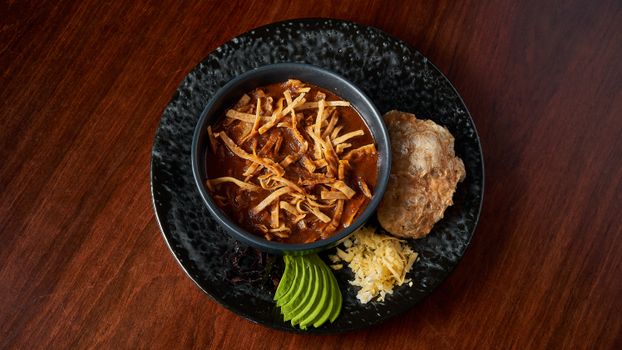
Sopa de Tortilla
The diets react (see scores below)
Common Ingredients
- tomatoes
- corn tortillas
- chile pasilla
- chicken broth
- onion
- garlic
- avocado
- queso fresco
Specific recipes may vary.
Incompatible with 6 of 11 diets
Diet Ratings
Sopa de Tortilla is fundamentally incompatible with ketogenic eating. The defining ingredient — corn tortillas — is a high-carb grain product with roughly 12-15g net carbs per tortilla, and traditional recipes use multiple tortillas cut into strips as the base of the soup. Even a modest serving could easily deliver 30-50g of net carbs from the tortillas alone, blowing the entire daily carb budget. While some individual ingredients are keto-friendly (chicken broth, avocado, garlic, onion in small amounts, chile pasilla), they cannot offset the disqualifying carb load from corn tortillas. Queso fresco adds some fat and protein but is minor. This dish is defined by its tortilla strips — removing them would fundamentally change the dish into something else entirely.
Sopa de Tortilla as described contains two animal-derived ingredients: chicken broth (made from chicken, an animal product) and queso fresco (a fresh dairy cheese). These are not trace contaminants but listed ingredients. The base of tomatoes, corn tortillas, chile pasilla, onion, garlic, and avocado is entirely plant-based, but the dish as presented is not vegan. A vegan version is easily achievable by substituting vegetable broth for chicken broth and omitting or replacing queso fresco with a plant-based cheese or nutritional yeast.
Sopa de Tortilla (Tortilla Soup) is fundamentally non-paleo due to two core non-compliant ingredients. Corn tortillas are made from corn, a grain explicitly excluded from the paleo diet. Queso fresco is a fresh dairy cheese, also excluded under paleo rules. These are not minor or trace ingredients — corn tortillas are the defining, structural component of this dish, and queso fresco is a standard topping. The remaining ingredients (tomatoes, chile pasilla, chicken broth, onion, garlic, avocado) are all paleo-friendly, but the presence of grains and dairy places this dish firmly in the 'avoid' category with no ambiguity.
Sopa de Tortilla is a vegetable-forward soup with many Mediterranean-compatible ingredients: tomatoes, onion, garlic, avocado, and chile pasilla are all whole plant foods that align well with Mediterranean principles. Chicken broth adds minimal concern. The main sticking point is the corn tortillas — a refined grain product not native to Mediterranean tradition — and queso fresco, a dairy component acceptable in moderation. The dish contains no red meat, no added sugars, and no heavy processing, making it reasonably compatible overall. However, the reliance on corn tortillas as a base starch (rather than whole grains like farro, barley, or whole wheat) and the absence of olive oil as the primary fat source prevent a full approval. With modifications — such as using baked whole-grain tortillas and drizzling with olive oil — this dish could score higher.
Some modern Mediterranean diet practitioners take a broader, pattern-based view that emphasizes whole plant foods and minimal processing over strict ingredient origin. Under this lens, corn tortillas (especially stone-ground) and a vegetable-rich broth-based soup like this could be considered compatible, particularly given the avocado, tomatoes, and aromatics that mirror Mediterranean staples.
Sopa de Tortilla is almost entirely plant-based and directly violates every core principle of the carnivore diet. The dish is built on corn tortillas (grain), tomatoes (fruit/vegetable), chile pasilla (plant), onion and garlic (vegetables), and avocado (fruit). While chicken broth is an animal-derived ingredient, it is a minor component surrounded by exclusively plant foods. Queso fresco is a dairy product, but its presence does not redeem a dish that is fundamentally a plant-based soup. There is no meaningful animal protein present. This dish has no place on a carnivore diet under any interpretation of the protocol.
Sopa de Tortilla (tortilla soup) contains corn tortillas, which are excluded on Whole30 for two independent reasons: (1) corn is a grain and therefore excluded, and (2) tortillas are explicitly named in the 'no recreating junk food/baked goods' rule as a disallowed item. All other ingredients — tomatoes, chile pasilla, chicken broth, onion, garlic, and avocado — are Whole30-compliant. However, queso fresco is a dairy cheese, which is also excluded. Two separate violations make this dish clearly non-compliant.
Sopa de Tortilla contains multiple high-FODMAP ingredients that make it unsuitable during the elimination phase. Onion and garlic are among the highest-FODMAP foods tested by Monash University, both loaded with fructans and problematic at any cooking amount — including when used to flavor broth. Queso fresco is a soft, fresh cheese with significant lactose content, rating as high-FODMAP. Avocado is low-FODMAP only at 1/8 of a fruit (30g) per Monash; standard soup garnish portions typically exceed this. Chile pasilla (dried pasilla chili) has limited Monash data but dried chilis in typical cooking quantities may contribute polyols. The combination of onion, garlic, and queso fresco alone would make this dish a clear avoid during elimination, regardless of the other ingredients.
Sopa de Tortilla contains several DASH-friendly ingredients — tomatoes, onion, and garlic provide potassium, antioxidants, and fiber; avocado adds heart-healthy monounsaturated fats and potassium; and chile pasilla offers vitamins and phytonutrients. However, the dish requires moderation due to a few concerns. Chicken broth is commonly high in sodium (standard commercial broth can contribute 700–900mg per cup), which is a significant issue for DASH's sodium limits. Corn tortillas are acceptable as a whole grain but add carbohydrate density when fried (as is traditional). Queso fresco is a full-fat cheese, which DASH limits in favor of low-fat dairy. The overall dish can be made DASH-compatible with low-sodium broth, baked (not fried) tortilla strips, and reduced or omitted cheese, but as commonly prepared it sits in the caution range due to sodium and full-fat dairy content.
NIH DASH guidelines flag high-sodium broths and full-fat dairy as concerns, recommending low-sodium versions and low-fat dairy alternatives. However, updated clinical interpretations note that the whole-food base of this dish — vegetables, avocado, legume-adjacent ingredients — aligns well with DASH principles, and some DASH-oriented dietitians would approve a home-prepared version using low-sodium broth and a small amount of queso fresco as a garnish within daily dairy limits.
Sopa de Tortilla presents a mixed Zone profile. The base ingredients — tomatoes, onion, garlic, chile pasilla, and chicken broth — are excellent Zone-friendly components: low-glycemic vegetables, rich in polyphenols, and virtually fat-free. Avocado contributes ideal monounsaturated fat, aligning well with Zone fat block guidelines. The primary concern is the corn tortillas, which are a higher-glycemic carbohydrate source that Sears classifies as 'unfavorable' — they spike the glycemic load of the dish, particularly when fried (as is traditional). Queso fresco adds modest saturated fat and some protein, though the protein content overall is low (no primary protein listed), making it difficult to hit the 30% protein target without significant modification. As served traditionally, the dish skews carb-heavy with insufficient lean protein to balance the blocks. With portion control on the tortilla strips, addition of lean protein (shredded chicken is a common variation), and generous avocado, this dish can be brought closer to Zone ratios — but as described, it requires careful adjustment.
Some Zone practitioners following Sears' later anti-inflammatory framework (The Anti-Inflammation Zone, Zone Perfect) might rate this more favorably given the strong polyphenol content from tomatoes, chile pasilla, and garlic, plus the ideal monounsaturated fat from avocado. They would argue that a small quantity of corn tortilla strips can fit within a 1-block unfavorable carb allocation and that the soup's vegetable-forward profile partially compensates. Others would note the absence of lean protein makes this structurally incompatible with Zone meal guidelines as presented.
Sopa de Tortilla has a mixed anti-inflammatory profile. On the positive side, tomatoes are rich in lycopene (a powerful antioxidant), onion and garlic provide quercetin and allicin with well-documented anti-inflammatory effects, chile pasilla offers capsaicin and antioxidant polyphenols, and avocado contributes monounsaturated fats and anti-inflammatory oleic acid. Chicken broth, while not a primary protein here, adds a clean base without significant inflammatory burden. Queso fresco is a relatively low-fat fresh cheese used as a topping — a modest source of saturated fat but in typical small garnish quantities, its impact is limited. The main concern is the corn tortillas: while whole corn has some fiber and nutrients, tortillas (especially commercially made ones) are a refined carbohydrate with a moderately high glycemic load. Fried tortilla strips, as commonly prepared in this dish, would add pro-inflammatory refined carbohydrates and potentially omega-6-heavy seed oils used in frying — though the recipe here doesn't specify frying. If the tortillas are baked or lightly toasted rather than deep-fried, the dish improves notably. The nightshade ingredients (tomatoes, chile) are beneficial for the general population in the mainstream anti-inflammatory view. Overall, this is a vegetable-forward soup with meaningful anti-inflammatory contributors but pulled down slightly by refined corn tortillas and queso fresco.
The nightshade vegetables (tomatoes, chile pasilla) are valued by mainstream anti-inflammatory authorities like Dr. Weil for their lycopene and capsaicin content, but Autoimmune Protocol (AIP) and practitioners like Dr. Tom O'Bryan advise excluding nightshades for individuals with autoimmune conditions, citing lectins and solanine as potential triggers. Additionally, some anti-inflammatory frameworks flag corn as a refined grain with a pro-inflammatory glycemic response, while others consider whole corn a neutral-to-beneficial grain with fiber.
Sopa de Tortilla is a vegetable-forward, broth-based soup with moderate nutritional value for GLP-1 patients. The tomato-chile base with chicken broth provides a light, easy-to-digest foundation that suits slowed gastric emptying well. However, the dish as listed has no primary protein source, which is a significant drawback given the 100-120g daily protein priority. The corn tortilla strips add refined carbohydrates with modest fiber. Avocado contributes healthy unsaturated fat but also adds caloric density in a dish already low in protein. Queso fresco adds a small amount of protein and calcium but also saturated fat. The pasilla chile is mild enough that it is unlikely to worsen reflux or nausea for most patients. The broth base supports hydration, which is a genuine benefit. This dish could move toward 'approve' territory if chicken or a legume were added to boost protein substantially, making it a more complete GLP-1-friendly meal. As written, it functions better as a side or starter than a standalone meal.
Some GLP-1-focused dietitians would rate this more favorably as a low-fat, easy-to-digest option that supports hydration and tolerability on difficult symptom days, accepting the low protein as a trade-off. Others would rate it lower, emphasizing that meals without at least 15g of protein actively work against muscle preservation goals and represent a missed nutritional opportunity given reduced overall intake.
*See how scores were generated at our methodology page.
Nutritional profile
Six traits that cut across every diet.
Fiber & Plants
How much whole-plant food and fiber it delivers.
Healthy Fats
The quality of its fats (unsaturated, omega-3).
Whole / Unprocessed
How close it is to its natural, unprocessed form.
Gut Gentle
How easy it is on digestion (low FODMAP, few irritants).
Low Glycemic
How little it spikes your blood sugar.
Protein Density
How much protein it packs per calorie.
Controversy Index
Higher controversy = more disagreement between diets.
Diet-Specific Tips
 Mediterranean — 6/10
View tips
- Tomatoes, onion, garlic, and avocado are whole plant foods strongly aligned with Mediterranean principles
- Corn tortillas are a non-Mediterranean grain and represent a refined carbohydrate base
- Queso fresco is a dairy component acceptable in moderation under Mediterranean guidelines
- Chicken broth is a minor ingredient and poses no significant concern
- No red meat, added sugars, or heavily processed ingredients
- Olive oil is not listed as an ingredient, missing a key Mediterranean fat source
- Chile pasilla is a whole food vegetable ingredient with no dietary concern
 DASH — 5/10
View tips
- Chicken broth is typically high in sodium — a primary DASH concern; low-sodium broth significantly improves compatibility
- Tomatoes, onion, garlic, and avocado are DASH-approved whole foods rich in potassium and beneficial fats
- Queso fresco is a full-fat dairy product, which DASH limits; reduces score compared to a low-fat cheese alternative
- Corn tortillas are acceptable as a grain serving, but traditional frying increases saturated fat and calories
- No red meat, no added sugars, no tropical oils — positives for DASH alignment
- Avocado contributes heart-healthy monounsaturated fats and potassium, consistent with DASH goals
- Portion control on tortilla strips and cheese is important to keep sodium and saturated fat within DASH limits
 Zone — 5/10
View tips
- Corn tortillas are a high-glycemic, 'unfavorable' Zone carbohydrate — portion must be minimized
- No primary lean protein source listed — fails Zone's 30% protein requirement without modification
- Avocado is an ideal Zone monounsaturated fat source
- Tomatoes, onion, garlic, and chile pasilla are low-glycemic, polyphenol-rich Zone-favorable carbs
- Chicken broth base adds negligible macros but supports flavor without compromising Zone ratios
- Queso fresco contributes some protein and saturated fat — acceptable in small portions
- Traditional preparation often fries tortilla strips, increasing unfavorable fat and caloric density
 Anti-Inflammatory — 6/10
View tips
- Tomatoes: high in lycopene and antioxidants — anti-inflammatory (nightshade caveat for autoimmune individuals)
- Garlic and onion: allicin and quercetin with strong anti-inflammatory evidence
- Chile pasilla: capsaicin and polyphenols support anti-inflammatory rating
- Avocado: monounsaturated fats and oleic acid — anti-inflammatory positive
- Corn tortillas: refined carbohydrate with moderate glycemic load — mild negative
- Queso fresco: small amounts of saturated fat — minimal concern at typical garnish quantities
- Preparation method matters: baked/toasted tortillas are preferable to fried strips cooked in seed oils
 GLP-1 Friendly — 5/10
View tips
- No primary protein source — falls short of the 15-30g per meal protein target
- Broth base is easy to digest and supports hydration
- Corn tortilla strips add refined carbs with limited fiber contribution
- Avocado provides healthy unsaturated fat but increases caloric density without adding protein
- Queso fresco adds modest protein but also saturated fat
- Pasilla chile is mild and unlikely to worsen GI side effects
- Best used as a starter or side; needs added protein (chicken, beans) to function as a main meal