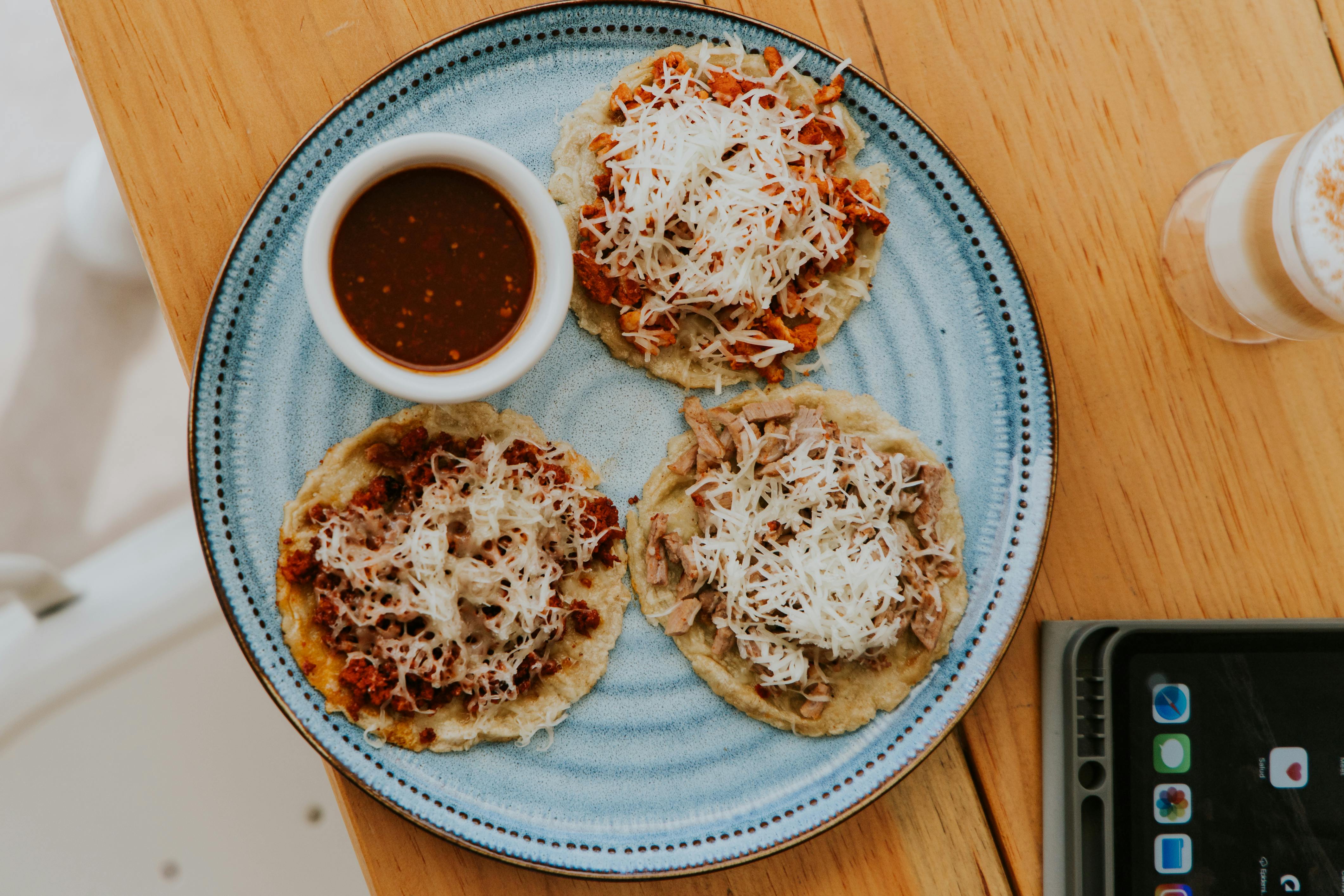
Photo: Amar Preciado / Pexels
Mexican
Sopes with Beans and Cheese
The diets react (see scores below)
Common Ingredients
- masa harina
- refried beans
- queso fresco
- Mexican crema
- lettuce
- salsa
- onion
- cilantro
Specific recipes may vary.
Incompatible with 6 of 11 diets
Diet Ratings
Sopes are fundamentally incompatible with a ketogenic diet. The base is made from masa harina (corn flour), which is a high-carb grain product — a single sope shell contains roughly 20-30g of net carbs on its own, instantly approaching or exceeding the entire daily keto carb limit. Refried beans compound the problem significantly, adding another 15-20g of net carbs per serving. Together, the two primary components alone deliver 35-50g of net carbs, which would break or severely compromise ketosis. The toppings (queso fresco, crema, lettuce, salsa, onion, cilantro) are relatively low-carb, but they cannot offset the massive carb load from the base and beans. There is no meaningful portion size of this dish that would be keto-compatible.
This dish contains two clear animal-derived ingredients: queso fresco (a fresh dairy cheese made from cow's or goat's milk) and Mexican crema (a dairy-based sour cream). Both are direct animal products that are unambiguous violations of vegan dietary rules. The base ingredients — masa harina, refried beans, lettuce, salsa, onion, and cilantro — are all fully plant-based and would be approved individually. However, the presence of dairy in two separate toppings makes the dish as described non-vegan. A vegan version could be made by substituting queso fresco with a plant-based cheese and replacing Mexican crema with cashew crema or a similar dairy-free alternative.
Sopes with Beans and Cheese contains multiple core paleo violations with no ambiguity. Masa harina is processed corn (a grain), which is strictly excluded from all paleo frameworks. Refried beans are a legume, also universally rejected by paleo. Queso fresco and Mexican crema are dairy products, excluded across all major paleo authorities. These three ingredients — grain, legume, and dairy — form the structural foundation of this dish, making it fundamentally incompatible with the paleo diet. The remaining ingredients (lettuce, salsa, onion, cilantro) are paleo-compliant, but they are minor garnishes that cannot offset the core violations.
Sopes with beans and cheese contain a mix of Mediterranean-compatible and less-ideal elements. The refried beans are an excellent legume source, strongly aligned with Mediterranean principles. Fresh vegetables (lettuce, onion, cilantro) and salsa add plant-forward value. However, masa harina is a refined/processed corn flour, not a whole grain, which conflicts with Mediterranean preferences for whole grains. Queso fresco and Mexican crema are dairy products acceptable in moderation, but crema adds saturated fat. The dish lacks olive oil as the fat source. Overall, it is a largely plant-based snack with legumes and vegetables at its core, but the refined grain base and dairy components keep it in the 'caution' range rather than a clear approval.
Some Mediterranean diet interpreters might rate this more favorably, noting that legume-centered dishes with fresh vegetables mirror traditional Mediterranean eating patterns, and that corn-based foods are whole-food plant staples in their traditional context — traditional masa preparation (nixtamalization) preserves nutritional value and some practitioners accept it as analogous to whole grain flatbreads common in Mediterranean cuisine.
Sopes with Beans and Cheese is entirely incompatible with the carnivore diet. Every primary component violates carnivore principles: masa harina is a corn-based grain product, refried beans are legumes, and the toppings include lettuce, salsa, onion, and cilantro — all plant foods. Even the dairy components (queso fresco and Mexican crema) are secondary to an overwhelmingly plant-based dish. There are no animal proteins present, and the dish's foundation is built on grains and legumes, two of the most excluded food categories on the carnivore diet.
Sopes with Beans and Cheese contains multiple excluded ingredients. Masa harina is a corn-based grain product, which is excluded on Whole30. Refried beans are legumes, also excluded. Queso fresco is dairy (cheese), excluded. Mexican crema is dairy (sour cream-like product), excluded. Additionally, sopes themselves are a corn-based fried dough platform, which falls squarely into the 'no recreating baked goods/junk food' rule — they are essentially a tortilla/flatbread analog. This dish fails on at least four separate Whole30 criteria simultaneously.
Sopes with Beans and Cheese contain multiple high-FODMAP ingredients that make this dish unsuitable during the elimination phase. Refried beans are high in GOS (galacto-oligosaccharides) at any standard serving, making them a clear FODMAP trigger. Queso fresco and Mexican crema are dairy products with significant lactose content, both problematic in standard portions. Onion is one of the highest-fructan foods tested by Monash University and is a major FODMAP trigger even in small amounts. While masa harina (nixtamalized corn flour) is generally low-FODMAP, and cilantro, lettuce, and salsa (depending on ingredients) may be acceptable, the combination of refried beans, fresh cheese, crema, and onion creates a dish with multiple high-FODMAP stacks that cannot be easily mitigated by portion control.
Sopes with beans and cheese present a mixed DASH diet profile. The masa harina base (a whole-grain corn product) and beans provide fiber, potassium, and plant-based protein — all DASH-friendly components. Vegetables like lettuce, onion, cilantro, and salsa add micronutrients with minimal calories. However, several ingredients raise concerns: refried beans are commonly made with lard and significant added sodium (canned refried beans can contain 400-500mg sodium per half cup); queso fresco, while lower in fat than aged cheeses, still contributes saturated fat and sodium (~200-300mg per oz); and Mexican crema is a full-fat dairy product high in saturated fat, which DASH explicitly limits in favor of low-fat dairy. The combination of these sodium-contributing ingredients could easily push a single snack serving toward 600-900mg sodium, a meaningful portion of the DASH daily limit. With modifications — homemade low-sodium refried beans, reduced crema or low-fat substitution — this dish could score higher.
NIH DASH guidelines restrict full-fat dairy and high-sodium processed foods like commercial refried beans, which would push this dish toward a lower score. However, updated clinical interpretations note that beans are a DASH superfood, masa provides whole-grain benefits, and modest portions of queso fresco and crema in a vegetable-rich dish may be acceptable within a broader DASH-compliant eating pattern, especially if sodium is managed elsewhere in the day.
Sopes with beans and cheese present significant Zone Diet challenges. The dominant macronutrient is carbohydrate from masa harina (corn dough), which is a high-glycemic refined corn product — an 'unfavorable' carb in Zone terminology. A typical sope base (~40-50g masa) delivers roughly 25-30g net carbs with a high glycemic load, making it difficult to balance within the 40/30/30 ratio. The refried beans add additional carbs (though they contribute some protein and fiber, improving their glycemic profile slightly). The protein component is weak — queso fresco and beans together provide incomplete protein without a dedicated lean protein source, falling well short of the ~25g lean protein target per Zone meal/snack. Mexican crema adds saturated fat rather than preferred monounsaturated fat. On the positive side, lettuce, onion, cilantro, and salsa are favorable low-glycemic Zone vegetables, and the overall dish is not nutritionally empty. However, the carb-heavy masa base with minimal lean protein and saturated fat dominance makes this a difficult fit for Zone ratios. It could theoretically be portioned carefully (one small sope), but the structural imbalance is inherent to the dish. As a snack category item, the carb load is especially disproportionate.
Sopes with beans and cheese present a mixed anti-inflammatory profile. On the positive side, refried beans are an excellent source of fiber, plant protein, and polyphenols, which support gut health and reduce inflammatory markers. Salsa, onion, and cilantro contribute antioxidants, quercetin, and anti-inflammatory phytonutrients. Masa harina (nixtamalized corn) is a whole grain-adjacent ingredient with modest fiber and is minimally processed compared to refined flour. However, the dish includes queso fresco and Mexican crema, both full-fat dairy products that contribute saturated fat and are in the 'limit' category under anti-inflammatory guidelines. Refried beans are often prepared with lard or added saturated fat — if so, this further elevates the inflammatory concern. The dish lacks omega-3 sources, antioxidant-rich vegetables beyond garnishes, and relies on refined starch as its structural base. Overall, the anti-inflammatory positives (beans, alliums, fresh salsa, cilantro) partially offset the negatives (full-fat dairy, potential lard in refried beans, refined corn base), placing this firmly in the 'caution' range — acceptable occasionally but not a regular anti-inflammatory meal staple.
Traditional whole-food advocates like Dr. Weil would likely view beans, fresh salsa, and onion as genuinely beneficial components worth emphasizing, potentially scoring this more favorably. Conversely, stricter anti-inflammatory and autoimmune protocol (AIP) practitioners would flag corn/masa as a grain to avoid and full-fat dairy as pro-inflammatory, pushing the score lower.
Sopes with beans and cheese present a mixed nutritional profile for GLP-1 patients. The masa harina base is a refined corn product that is moderate in calories but low in protein and fiber per serving, and the thick fried or griddle-cooked masa disc is heavier and denser than ideal given slowed gastric emptying. Refried beans are the strongest asset here — they contribute meaningful plant-based protein and fiber, supporting both muscle preservation and GI motility. Queso fresco is relatively lower in fat than many Mexican cheeses but still adds saturated fat with limited protein payoff. Mexican crema is the most problematic ingredient: it is high in saturated fat and calories with minimal nutritional value, which can worsen nausea and bloating on GLP-1s. The toppings — lettuce, salsa, onion, cilantro — are low-calorie, hydrating, and digestive-friendly. Overall, this dish leans carbohydrate- and fat-forward rather than protein-forward, and the crema and cheese combination adds a fatty load that conflicts with GLP-1 tolerability guidelines. In a small portion with crema omitted or minimized and beans maximized, it becomes more acceptable, but as standardly prepared it does not meet the protein-first, low-fat priorities for GLP-1 patients.
Some GLP-1-focused dietitians accept bean-based Mexican dishes as reasonable moderate-protein, high-fiber options when portion size is controlled and fatty toppings are reduced, noting that refried beans provide a meaningful protein-fiber combination in a small volume. Others flag the masa base and crema as triggering nausea and delayed gastric emptying symptoms in GLP-1 patients, particularly early in treatment, and recommend avoiding dense corn-based preparations entirely until GI tolerance is established.
*See how scores were generated at our methodology page.
Nutritional profile
Six traits that cut across every diet.
Fiber & Plants
How much whole-plant food and fiber it delivers.
Healthy Fats
The quality of its fats (unsaturated, omega-3).
Whole / Unprocessed
How close it is to its natural, unprocessed form.
Gut Gentle
How easy it is on digestion (low FODMAP, few irritants).
Low Glycemic
How little it spikes your blood sugar.
Protein Density
How much protein it packs per calorie.
Controversy Index
Higher controversy = more disagreement between diets.
Diet-Specific Tips
 Mediterranean — 5/10
View tips
- Refried beans are an excellent legume source, strongly encouraged
- Masa harina is a refined/processed grain, not a whole grain — conflicts with Mediterranean principles
- Queso fresco and Mexican crema are acceptable dairy in moderation but add saturated fat
- Fresh vegetables (lettuce, onion, cilantro, salsa) are positive Mediterranean-aligned elements
- No olive oil as fat source — misses a core Mediterranean staple
- No red meat or highly processed ingredients — avoids worst offenders
 DASH — 5/10
View tips
- Refried beans provide DASH-valued fiber, potassium, and plant protein but are often high in sodium and lard
- Queso fresco adds saturated fat and sodium, though in smaller amounts than aged cheeses
- Mexican crema is a full-fat dairy product, contrary to DASH low-fat dairy recommendations
- Masa harina is a whole-grain corn base consistent with DASH grain recommendations
- Vegetables (lettuce, onion, cilantro, salsa) are strongly DASH-aligned
- Combined sodium from refried beans, queso fresco, and salsa may be substantial
- Low-sodium homemade refried beans and reduced or omitted crema would improve DASH compatibility
 Zone — 4/10
View tips
- Masa harina is a high-glycemic corn-based carb classified as 'unfavorable' in Zone — dominates the macronutrient profile
- Refried beans add more carbohydrates; though fiber helps, the net carb load is high
- No lean protein source — queso fresco and beans together are insufficient to meet Zone's ~7g/block protein target for a balanced snack
- Mexican crema contributes saturated fat, not preferred monounsaturated fat
- Favorable elements: lettuce, onion, cilantro, salsa are low-glycemic Zone-friendly vegetables
- The 40/30/30 ratio is structurally difficult to achieve with this dish without major ingredient modification
- As a snack, the carb-to-protein imbalance is even more pronounced than it would be in a full meal
 Anti-Inflammatory — 5/10
View tips
- Refried beans are a strong anti-inflammatory ingredient — high in fiber, plant protein, and polyphenols
- Queso fresco and Mexican crema are full-fat dairy — categorized as 'limit' in anti-inflammatory frameworks
- Salsa, onion, and cilantro provide meaningful antioxidants and anti-inflammatory phytonutrients
- Masa harina is a minimally processed nixtamalized corn base — modest fiber, not equivalent to refined flour but not a whole grain
- Refried beans may contain lard depending on preparation, adding saturated fat
- No omega-3 sources present; limited antioxidant-dense vegetables beyond garnishes
 GLP-1 Friendly — 4/10
View tips
- Masa harina base is dense, low in protein, and slow to digest — conflicts with slowed gastric emptying on GLP-1s
- Refried beans are the best ingredient: meaningful plant protein and fiber in a small volume
- Mexican crema is high in saturated fat and calories with no protein benefit — worsens nausea and bloating risk
- Queso fresco adds saturated fat with limited protein contribution
- No primary animal or high-density protein source — difficult to hit 15-30g protein per meal from this dish alone
- Vegetable toppings (lettuce, salsa, onion, cilantro) are GLP-1 friendly and contribute hydration and micronutrients
- Dish is portion-sensitive: a single small sope with beans maximized and crema omitted is far more acceptable than a standard serving