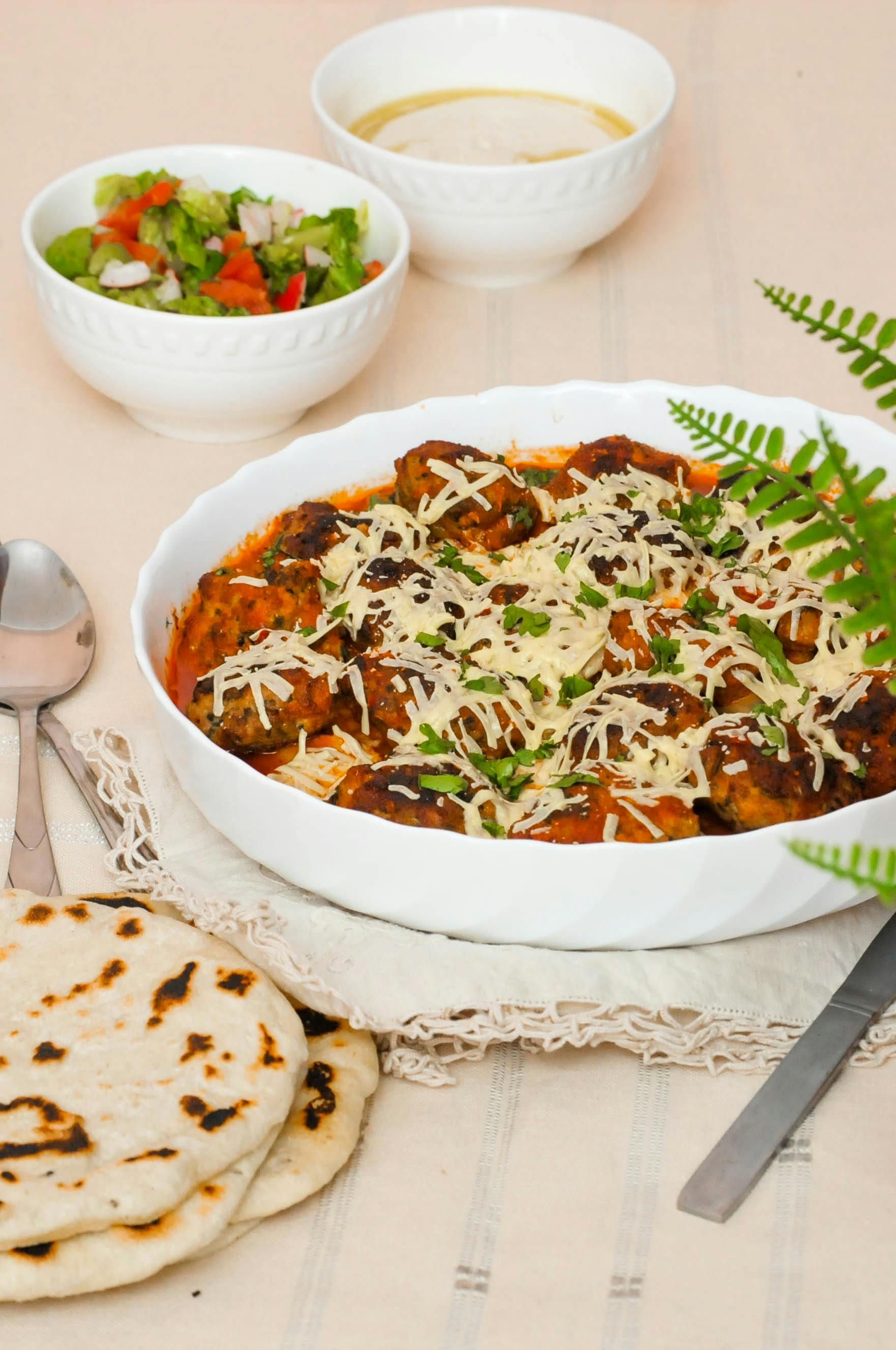
Photo: hamzaoui fatma / Pexels
Mediterranean
Soutzoukakia
The diets react (see scores below)
Common Ingredients
- ground beef
- cumin
- garlic
- tomatoes
- red wine
- onion
- olive oil
- cinnamon
Specific recipes may vary.
Incompatible with 4 of 11 diets
Diet Ratings
Soutzoukakia is a Greek spiced meatball dish served in tomato-wine sauce. The ground beef base is excellent for keto — high protein and fat with zero carbs. The spices (cumin, garlic, cinnamon) add negligible carbs. However, two ingredients introduce meaningful carb load: the tomato-based sauce and the red wine. Tomatoes contribute roughly 3-4g net carbs per 100g, and red wine adds sugars and residual carbs (though much alcohol cooks off, residual sugars remain). Together in a full serving, the sauce could push net carbs to 8-12g per portion. Without bread or rice accompaniment, this is manageable within a daily keto budget, but the tomato-wine sauce requires portion awareness. The dish is traditionally served over rice or with bread, which must be omitted entirely on keto.
Strict keto practitioners may flag the red wine entirely, arguing that even small amounts of residual sugars and the potential insulin response from alcohol make it incompatible; they would suggest substituting with beef broth and a splash of red wine vinegar instead.
Soutzoukakia is a Greek/Mediterranean meatball dish whose primary protein is ground beef, a direct animal product. This immediately disqualifies it from any vegan diet. All remaining ingredients (cumin, garlic, tomatoes, red wine, onion, olive oil, cinnamon) are plant-based, but the presence of ground beef makes the dish entirely incompatible with vegan principles regardless of the supporting ingredients.
Soutzoukakia is a Greek spiced meatball dish whose core ingredients are largely paleo-compliant. Ground beef is an unprocessed animal protein, and the aromatics and spices — cumin, garlic, onion, cinnamon — are all whole, naturally occurring ingredients available to hunter-gatherers. Olive oil is a preferred fat in the paleo framework. Tomatoes are a whole vegetable (technically fruit) and fully approved. The one ingredient that introduces nuance is red wine: alcohol is a gray-area item in paleo — it is fermented and processed, not a hunter-gatherer staple, but small amounts used in cooking (where most alcohol burns off) are tolerated by many paleo practitioners. No grains, legumes, dairy, refined sugars, or seed oils are present. Overall, this is a clean, whole-food dish with only minor ambiguity around the wine.
Strict paleo authorities, including Loren Cordain's original framework, would flag the red wine even in cooking, as alcohol is a post-agricultural product and a metabolic toxin regardless of quantity. However, most modern paleo communities (Mark Sisson, Robb Wolf) consider small culinary use of wine acceptable.
Soutzoukakia is a traditional Greek-Egyptian spiced meatball dish made primarily with ground beef, which is classified as red meat. The Mediterranean diet explicitly limits red meat to only a few times per month or once weekly at most. While the dish includes several Mediterranean-positive ingredients — olive oil as the cooking fat, tomatoes, garlic, onion, red wine, and aromatic spices like cumin and cinnamon — the primary protein source (ground beef) fundamentally conflicts with Mediterranean diet principles. The overall dish is not a staple and should be treated as an occasional indulgence rather than a regular meal.
Some traditional Mediterranean diet researchers, particularly those studying Greek and broader Eastern Mediterranean culinary heritage, note that dishes like soutzoukakia represent authentic regional cuisine and can fit within the diet when consumed infrequently (a few times per month). The vegetable-rich tomato sauce, use of olive oil, and aromatic spices partially offset the red meat concern, and some practitioners would rate it 'caution' rather than 'avoid' given its cultural legitimacy and moderate portion context.
Soutzoukakia is a Mediterranean spiced meatball dish that, while built on a carnivore-compatible base of ground beef, is overwhelmingly non-carnivore due to its ingredient list. The dish contains multiple plant-derived foods: tomatoes (plant fruit), onion (plant), garlic (plant), olive oil (plant oil), red wine (fermented plant product), cumin (plant spice), and cinnamon (plant spice). Only the ground beef itself is carnivore-approved. With 7 out of 8 ingredients being plant-derived, this dish fundamentally violates the core carnivore principle of eating exclusively animal products. Even the most permissive carnivore practitioners who allow occasional spices would not sanction tomatoes, onion, olive oil, and red wine together in a single dish.
Soutzoukakia (Greek spiced meatballs in tomato sauce) uses wholly compliant core ingredients: ground beef, cumin, garlic, tomatoes, onion, olive oil, and cinnamon are all Whole30-approved. Red wine is the one ingredient that requires attention. Alcohol is excluded on Whole30; however, red wine vinegar is explicitly allowed, and cooking wine used purely as a flavor component during cooking (where alcohol cooks off) sits in a gray area. The official Whole30 program excludes all forms of alcohol including cooking wine, so if red wine is added as an ingredient rather than used as red wine vinegar, it is technically non-compliant. Substituting red wine vinegar or omitting it entirely would make this dish fully compliant. As written, with actual red wine, this dish should be rated with caution pending substitution.
The official Whole30 program (Melissa Urban) explicitly excludes alcohol in all forms, including cooking wine, as the rules focus on the ingredient itself rather than whether it 'cooks off.' However, some community members argue that a small amount of wine used in cooking, where alcohol fully evaporates, does not meaningfully violate the program's intent — a view not endorsed by official Whole30 guidelines.
Soutzoukakia contains two major high-FODMAP ingredients that make this dish unsuitable during the elimination phase: garlic (very high in fructans — among the highest-FODMAP foods tested by Monash, even tiny amounts are problematic) and onion (also very high in fructans, a primary trigger for IBS symptoms). These are core flavoring ingredients in this dish and cannot simply be reduced to a 'safe' serving size — there is no low-FODMAP serving for garlic or onion. The remaining ingredients are generally fine: ground beef is low-FODMAP, cumin is low-FODMAP in culinary amounts, canned or fresh tomatoes are low-FODMAP at standard servings (though larger amounts of canned tomato can become moderate), red wine is low-FODMAP in small amounts (~150ml), olive oil is low-FODMAP, and cinnamon is low-FODMAP. However, the garlic and onion alone make this dish a clear avoid during elimination phase.
Soutzoukakia are Greek spiced meatballs in tomato sauce. The dish has several DASH-positive elements: tomatoes provide potassium and lycopene, olive oil is a heart-healthy fat, garlic and onion are encouraged, and spices like cumin and cinnamon add flavor without sodium. However, the primary protein is ground beef, which DASH limits due to saturated fat content — DASH guidelines recommend limiting red meat and preferring lean poultry or fish. The saturated fat burden depends heavily on the fat percentage of the ground beef used (lean 93/7 is far more acceptable than 80/20). Red wine in cooking largely cooks off but contributes minimally. There is no inherently high-sodium ingredient listed, which is a positive distinguishing factor compared to many red meat dishes. Overall, this dish is acceptable in moderation and with lean ground beef, but falls short of a core DASH meal due to red meat as the primary protein.
NIH DASH guidelines explicitly limit red meat consumption as a category due to saturated fat content. However, updated clinical interpretations note that when lean ground beef (≥93% lean) is used in moderate portions, the saturated fat load can fall within DASH targets, and some DASH-aligned dietitians consider occasional lean red meat acceptable within the overall dietary pattern rather than an absolute exclusion.
Soutzoukakia are Greek spiced meatballs in tomato-wine sauce, featuring ground beef as the primary protein. From a Zone perspective, the dish has both favorable and unfavorable elements. The tomato-based sauce, garlic, onion, and aromatic spices (cumin, cinnamon) are anti-inflammatory and polyphenol-rich — very much in the Zone spirit. Olive oil as the cooking fat is ideal monounsaturated fat. However, ground beef is typically a fattier protein source than the Zone's preferred lean proteins (skinless chicken, fish, egg whites). Unless made with very lean ground beef (90%+ lean), the saturated fat content will be notable, pushing the fat ratio toward saturated rather than monounsaturated, and potentially unbalancing the 30% fat target with the wrong fat profile. The carbohydrate contribution from tomatoes, onion, and red wine is low-glycemic and reasonable in quantity, meaning this dish lacks favorable carb blocks on its own and would need to be paired with Zone-approved vegetables or low-GI carbs to hit the 40% carb target. The dish is workable in the Zone with lean beef and careful portioning, but requires meal construction effort to balance macros.
Zone practitioners who follow Sears' later anti-inflammatory writings (The Anti-Inflammation Zone, 2005) may be more permissive with lean red meat, noting that the polyphenol-rich spices (cumin, cinnamon), tomatoes, and red wine actively support the anti-inflammatory goals of the Zone. Some would rate this more favorably if lean beef is used, viewing the overall dish as Mediterranean and polyphenol-dense. The original Enter the Zone (1995) was stricter about limiting red meat in favor of fish and poultry.
Soutzoukakia is a Greek-style spiced meatball dish in tomato-wine sauce that presents a genuinely mixed anti-inflammatory profile. On the positive side, the dish is rich in anti-inflammatory ingredients: olive oil provides oleocanthal and monounsaturated fats; garlic, cumin, and cinnamon are well-documented anti-inflammatory spices; tomatoes contribute lycopene and polyphenols; and red wine adds resveratrol. The spice profile is particularly strong — cumin, garlic, and cinnamon are all emphasized in anti-inflammatory frameworks. The ground beef, however, is the complicating factor. Red meat is categorized as 'limit' in anti-inflammatory guidelines due to saturated fat content, arachidonic acid, and associations with elevated inflammatory markers (CRP, IL-6) in research. The dish's anti-inflammatory spice and sauce components partially offset the pro-inflammatory potential of the beef, but do not neutralize it. As a main course where beef is the primary protein in meaningful quantity, this dish cannot be rated 'approve' under strict anti-inflammatory principles. The Mediterranean context and preparation method — where spices, tomatoes, and olive oil dominate the flavor profile — make it considerably better than, say, a plain beef burger, and it is quite reasonable as an occasional dish.
Some anti-inflammatory practitioners, particularly those following Dr. Weil's broader Mediterranean-style framework, would view this dish more favorably given the density of anti-inflammatory spices, olive oil, and tomato sauce — arguing that the overall dietary pattern matters more than any single ingredient. Conversely, stricter anti-inflammatory protocols (such as those focused on autoimmune conditions) would rate this more harshly, flagging beef's arachidonic acid and saturated fat content as meaningfully pro-inflammatory regardless of accompanying ingredients.
Soutzoukakia are Greek spiced meatballs braised in a tomato-wine sauce. The dish provides meaningful protein from ground beef and beneficial nutrients from tomatoes, garlic, onion, and olive oil. However, ground beef (typically 80/20 or 85/15) carries moderate-to-high saturated fat per serving, which can worsen GLP-1 side effects like nausea, bloating, and slowed gastric emptying. The red wine used in cooking largely reduces in alcohol content through simmering, making it a lower concern than drinking alcohol directly, though some residual alcohol and calories remain. Cumin, garlic, and cinnamon are generally well-tolerated and anti-inflammatory. Olive oil is a preferred unsaturated fat. The tomato braising sauce adds fiber, hydration, and lycopene. The main drawbacks are the fat content of ground beef and the small amount of residual alcohol from wine, both of which can aggravate GI side effects. Using leaner ground beef (93/7 or extra-lean) and moderate portion sizing (2-3 meatballs) would significantly improve this dish's GLP-1 compatibility. Fiber content is low unless served with a high-fiber side.
Some GLP-1-focused dietitians accept lean red meat dishes like this in moderation given the solid protein contribution and Mediterranean fat profile, while others flag any ground beef dish as higher-risk due to unpredictable fat content and its tendency to sit heavily in a slowed stomach — individual GI tolerance varies considerably and some patients find red meat harder to digest on GLP-1 medications even when fat content is moderate.
*See how scores were generated at our methodology page.
Nutritional profile
Six traits that cut across every diet.
Fiber & Plants
How much whole-plant food and fiber it delivers.
Healthy Fats
The quality of its fats (unsaturated, omega-3).
Whole / Unprocessed
How close it is to its natural, unprocessed form.
Gut Gentle
How easy it is on digestion (low FODMAP, few irritants).
Low Glycemic
How little it spikes your blood sugar.
Protein Density
How much protein it packs per calorie.
Controversy Index
Higher controversy = more disagreement between diets.
Diet-Specific Tips
 Keto — 5/10
View tips
- Ground beef is keto-friendly and high in fat and protein
- Tomato sauce contributes moderate net carbs (~3-4g per 100g)
- Red wine adds residual sugars after cooking, increasing net carb count
- Spices (cumin, cinnamon, garlic) are negligible in carbs at culinary quantities
- Must be served without traditional accompaniments (rice, bread) on keto
- Total net carbs per serving estimated 8-12g depending on sauce quantity — fits keto if portioned carefully
 Paleo — 8/10
View tips
- Ground beef — unprocessed animal protein, fully approved
- Olive oil — preferred paleo fat source
- Cumin, garlic, cinnamon, onion — whole herbs/aromatics, fully approved
- Tomatoes — whole food, paleo-compliant
- Red wine — fermented/processed, gray-area; culinary use widely tolerated but not strictly paleo
- No grains, legumes, dairy, seed oils, or refined sugar present
 Whole30 — 6/10
View tips
- Ground beef is fully compliant
- Spices (cumin, cinnamon, garlic) are all Whole30-approved
- Olive oil, onion, and tomatoes are compliant
- Red wine (alcohol) is officially excluded on Whole30
- Red wine vinegar would be an acceptable compliant substitute
- All other ingredients are whole, unprocessed, and program-friendly
 DASH — 5/10
View tips
- Ground beef is a red meat, limited on DASH due to saturated fat
- Saturated fat content highly dependent on beef fat percentage (lean vs. regular)
- No high-sodium ingredients listed — a significant positive
- Tomatoes, garlic, onion are DASH-encouraged vegetables
- Olive oil aligns with DASH preference for unsaturated vegetable oils
- Spice-forward flavoring reduces need for added salt
- Moderate portion of this dish fits within DASH's limited red meat allowance
 Zone — 5/10
View tips
- Ground beef is a fatty protein; lean beef (90%+) required to approach Zone-favorable protein status
- Olive oil provides ideal monounsaturated fat — Zone-approved
- Tomatoes, onion, garlic, and spices are low-glycemic, anti-inflammatory, and polyphenol-rich
- Red wine adds trace polyphenols; small quantity in cooking is acceptable
- Dish is low in carbohydrates overall — must be paired with vegetables or low-GI carbs to achieve 40% carb ratio
- Cinnamon and cumin have anti-inflammatory properties consistent with Zone philosophy
- No high-glycemic carbohydrates present, but also no meaningful carb blocks in the dish itself
 Anti-Inflammatory — 5/10
View tips
- Ground beef is the primary protein — red meat is 'limit' in anti-inflammatory guidelines due to saturated fat and arachidonic acid
- Olive oil provides oleocanthal, a potent anti-inflammatory compound
- Garlic is a strongly anti-inflammatory ingredient with documented effects on CRP and IL-6
- Cumin and cinnamon are both anti-inflammatory spices emphasized in the framework
- Tomatoes contribute lycopene and polyphenols; cooking increases lycopene bioavailability
- Red wine adds resveratrol, which is included in Dr. Weil's anti-inflammatory pyramid
- Onion provides quercetin, an anti-inflammatory flavonoid
- No processed ingredients, trans fats, refined carbohydrates, or added sugars
 GLP-1 Friendly — 5/10
View tips
- Ground beef provides good protein but moderate-to-high saturated fat depending on lean percentage — a significant concern for GLP-1 GI side effects
- Braised preparation is preferable to fried — easier to digest and lower in added fat
- Red wine reduces substantially during cooking but contributes residual alcohol and empty calories
- Olive oil is a preferred unsaturated fat — positive factor in moderation
- Tomato sauce adds hydration, fiber, and micronutrients
- Spices (cumin, cinnamon, garlic) are well-tolerated and anti-inflammatory
- Low fiber overall — should be paired with a fiber-rich side such as legumes or vegetables
- Portion sensitivity is high — 2-3 small meatballs is appropriate; larger servings risk GI discomfort