Photo: Nano Erdozain / Pexels
Chinese
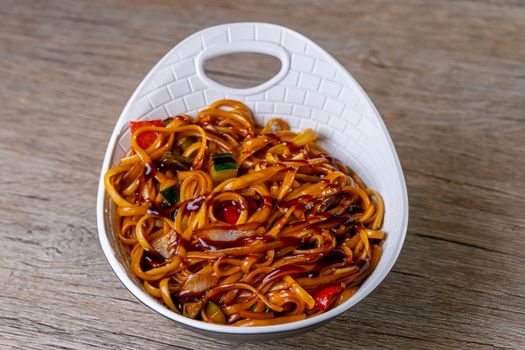
Soy Sauce Noodles
The diets react (see scores below)
Common Ingredients
- egg noodles
- bean sprouts
- scallions
- dark soy sauce
- light soy sauce
- sesame oil
- sugar
- garlic
Specific recipes may vary.
Incompatible with 8 of 11 diets
Diet Ratings
Soy Sauce Noodles are fundamentally incompatible with a ketogenic diet. The primary ingredient, egg noodles, is a wheat-based grain product that is extremely high in net carbohydrates — a single serving can contain 40-60g of net carbs, instantly exceeding or maxing out the entire daily keto carb budget. Added sugar further compounds the problem. While minor ingredients like sesame oil, garlic, scallions, and bean sprouts are relatively low-carb in isolation, they cannot offset the massive carb load from the noodles themselves. This dish has no realistic portion size that would keep it keto-compatible.
Egg noodles are the disqualifying ingredient here. Traditional Chinese egg noodles are made with wheat flour and eggs, which are an animal product excluded from all vegan diets. The remainder of the dish — bean sprouts, scallions, dark and light soy sauce, sesame oil, sugar, and garlic — is entirely plant-based. However, the egg noodles as listed make this dish non-vegan. The dish could easily be made vegan by substituting rice noodles, wheat noodles (without egg), or other plant-based noodles.
Soy Sauce Noodles is fundamentally incompatible with the Paleolithic diet. Egg noodles are a grain-based product (typically wheat flour), which is explicitly excluded from paleo. Soy sauce (both dark and light) is a fermented soy product — a legume derivative and highly processed condiment also containing wheat — violating both the legume and grain exclusions. Bean sprouts are sprouted legumes (mung beans), also excluded. Sesame oil is a seed oil on the avoid list. Refined sugar is explicitly banned. The only paleo-compliant ingredients in this dish are scallions and garlic. This dish has virtually no redeeming paleo qualities and represents multiple core violations simultaneously.
Soy sauce noodles present a mixed Mediterranean diet profile. The egg noodles are refined grain pasta, which the Mediterranean diet discourages in favor of whole grains — though pasta in moderate portions has a long tradition in Mediterranean cuisines like Italian. Bean sprouts, scallions, and garlic are plant-based positives. However, sesame oil replaces the preferred extra virgin olive oil, soy sauce adds significant sodium and is a highly processed condiment not part of traditional Mediterranean eating, and the added sugar contradicts diet principles. Overall, the dish is plant-forward but relies on non-Mediterranean fats, processed condiments, and refined grains without the redeeming fiber and nutrient density of whole-grain or legume-based alternatives.
Some modern Mediterranean diet interpretations focus on the overall dietary pattern rather than strict ingredient sourcing, and would view this dish's vegetable content and lack of red meat or saturated fat as broadly compatible. Egg noodles with vegetables could be loosely analogized to pasta dishes common in Southern Italian Mediterranean cuisine, especially in moderate portions.
Soy Sauce Noodles is entirely plant-based with zero animal-derived ingredients. Egg noodles are a grain-based product (wheat flour), bean sprouts and scallions are vegetables, soy sauce is a fermented soy (legume) product, sesame oil is a plant-derived oil, sugar is a refined plant carbohydrate, and garlic is a plant. Every single ingredient violates carnivore diet principles. There is no animal product present whatsoever, making this one of the most incompatible dish types possible for the carnivore diet.
This dish contains multiple excluded ingredients. Egg noodles are made from wheat (a grain), which is strictly excluded on Whole30. Both dark and light soy sauce contain soy (a legume) and typically wheat, both of which are excluded. Sugar is an added sweetener, also excluded. This dish fails on at least three separate Whole30 rules simultaneously, making it firmly in the 'avoid' category. Additionally, even if compliant substitutes were used (e.g., coconut aminos for soy sauce, no sugar), noodles as a pasta/noodle format are explicitly listed as a prohibited recreated food under Rule 4.
This dish contains two high-FODMAP ingredients that make it unsuitable during the elimination phase regardless of portion size. Garlic is one of the highest fructan-containing foods and is a clear 'avoid' at any amount per Monash University. Egg noodles are typically made from wheat flour, which is high in fructans and must be avoided during elimination. Scallions (green onions) add further fructan load if the white bulb portions are included — though the green tops alone are low-FODMAP, recipes rarely specify this distinction. Soy sauce in small quantities (1 tablespoon) is generally considered low-FODMAP as the fermentation process and dilution reduce FODMAP content, and sesame oil, sugar, and bean sprouts are low-FODMAP. However, the combination of wheat-based egg noodles and garlic makes this dish a clear avoid for the elimination phase.
Soy Sauce Noodles are a DASH concern primarily due to the sodium content of the dual soy sauce base (dark and light soy sauce). A single tablespoon of light soy sauce contains approximately 900-1,000mg of sodium, and dark soy sauce adds further sodium on top of that. A typical serving of this dish can easily deliver 1,500-2,500mg of sodium — potentially exceeding the entire daily sodium budget for both standard DASH (<2,300mg) and low-sodium DASH (<1,500mg) targets in one meal. Egg noodles are refined carbohydrates rather than the whole grains emphasized by DASH. Sesame oil is a vegetable oil and acceptable in small amounts, and bean sprouts, scallions, and garlic are DASH-friendly vegetables, but these positives are overwhelmed by the extreme sodium load from the soy sauces. Added sugar is a minor concern. There is no lean protein or meaningful source of potassium, calcium, magnesium, or fiber to offset the negatives.
Soy Sauce Noodles is a carbohydrate-dominant dish with virtually no protein or favorable fat content, making it essentially impossible to fit into a Zone-balanced meal as served. Egg noodles are a high-glycemic refined carbohydrate — one of the foods Dr. Sears explicitly discourages — and they form the overwhelming bulk of this dish. The added sugar further elevates the glycemic load. Sesame oil provides some fat but is omega-6 heavy (polyunsaturated), not the monounsaturated fat the Zone prioritizes. Bean sprouts offer minimal low-GI carbs and negligible protein. Scallions and garlic are Zone-favorable but present in trivial quantities. The dish has no lean protein source whatsoever, so the 40/30/30 macro ratio is completely out of reach. The sodium content from dual soy sauces is also very high. Even with creative portioning, there is no realistic way to balance this dish into Zone blocks without fundamentally deconstructing or supplementing it so heavily that the dish itself is no longer the meal.
Soy sauce noodles present a mixed anti-inflammatory profile. On the positive side, garlic is a well-established anti-inflammatory ingredient with allicin and organosulfur compounds that reduce inflammatory markers. Bean sprouts provide fiber, vitamins, and modest antioxidants. Scallions contribute flavonoids and quercetin. Sesame oil, particularly cold-pressed/unrefined, contains sesamol and sesamin — lignans with documented antioxidant and anti-inflammatory properties — though its high omega-6 content and use as a finishing oil (rather than cooking oil) temper concerns. The core problem is the egg noodle base: refined wheat noodles are a refined carbohydrate that can spike blood sugar and modestly promote inflammatory markers (CRP, IL-6) in some individuals, and the dish lacks whole grain substitutes. Soy sauce (both dark and light) is heavily sodium-laden and processed — high sodium intake is associated with inflammation at excess levels, and the added sugar, while small, adds to the refined carbohydrate burden. The dish has no meaningful omega-3 source, no significant antioxidant-rich colorful vegetables, and no anti-inflammatory protein. It is not actively harmful in a single serving but offers little anti-inflammatory benefit and relies on refined carbs as its base.
Some anti-inflammatory practitioners note that fermented soy products (including traditionally brewed soy sauce) may offer modest gut-supportive benefits via fermentation byproducts, and sesame oil's lignan content is highlighted in some Asian dietary research as beneficial. However, most mainstream anti-inflammatory guidance would not credit heavily sodium-processed soy sauce with meaningful anti-inflammatory value, and the refined noodle base remains a consistent concern across frameworks.
Soy sauce noodles are a low-protein, moderate-carbohydrate dish built around refined egg noodles with minimal nutritional density per calorie. The primary macronutrient is carbohydrate from the noodles, with negligible protein — a significant problem for GLP-1 patients who need 15–30g protein per meal to preserve muscle mass. Bean sprouts contribute a small amount of fiber and water content, which is a modest positive. Sesame oil adds flavor but also fat, and the sugar in the sauce adds empty calories. Dark and light soy sauce together can contribute substantial sodium, which may worsen water retention or bloating. The dish is easy to digest and small-portion friendly, which works in its favor, but the near-absence of protein and low fiber content make it a poor standalone meal for GLP-1 patients. It could be elevated to acceptable if paired with a substantial protein source (tofu, shrimp, chicken breast) and the noodle portion is kept small, but as described it falls short of GLP-1 dietary priorities.
Some GLP-1-focused dietitians may rate this more leniently as an occasional comfort food given its easy digestibility and low fat content, which reduces GI side effect risk — a meaningful consideration for patients struggling with nausea. Others would flag the refined noodle base and added sugar as counterproductive even in small portions, given the premium on nutrient density when total calorie intake is significantly reduced.
*See how scores were generated at our methodology page.
Nutritional profile
Six traits that cut across every diet.
Fiber & Plants
How much whole-plant food and fiber it delivers.
Healthy Fats
The quality of its fats (unsaturated, omega-3).
Whole / Unprocessed
How close it is to its natural, unprocessed form.
Gut Gentle
How easy it is on digestion (low FODMAP, few irritants).
Low Glycemic
How little it spikes your blood sugar.
Protein Density
How much protein it packs per calorie.
Controversy Index
Higher controversy = more disagreement between diets.
Diet-Specific Tips
 Mediterranean — 4/10
View tips
- Egg noodles are refined grains, not whole grains — misaligned with Mediterranean principles
- No extra virgin olive oil; sesame oil is a non-traditional fat substitute
- Bean sprouts, scallions, and garlic provide plant-based value
- Dark and light soy sauce are highly processed, high-sodium condiments not part of Mediterranean tradition
- Added sugar contradicts Mediterranean diet guidelines
- No protein source to anchor the meal nutritionally
- Overall dish is plant-forward but relies on non-Mediterranean flavor and fat foundations
 Anti-Inflammatory — 5/10
View tips
- Refined egg noodles as the base — high glycemic load, low fiber, pro-inflammatory potential
- Garlic is a genuine anti-inflammatory positive with allicin and organosulfur compounds
- Sesame oil contains anti-inflammatory lignans (sesamol, sesamin) but is high in omega-6
- High sodium content from dual soy sauces may promote inflammation at regular/high intake
- Added sugar contributes to refined carbohydrate burden
- Bean sprouts and scallions offer modest antioxidant and flavonoid benefits
- No omega-3 source, no significant colorful vegetables, no anti-inflammatory protein
 GLP-1 Friendly — 4/10
View tips
- Very low protein — no primary protein source listed, fails the 15–30g per meal target
- Refined egg noodles are low in fiber and nutrient-dense calories
- Bean sprouts provide minimal fiber and high water content — modest positive
- Sesame oil adds saturated and unsaturated fat; small amount acceptable but adds calories without protein
- Added sugar in sauce contributes empty calories — counterproductive on reduced-calorie intake
- High sodium from dual soy sauces may contribute to bloating
- Easy to digest — a positive for patients with GLP-1-related GI sensitivity
- Can be made GLP-1 appropriate by adding a lean protein and reducing portion size of noodles