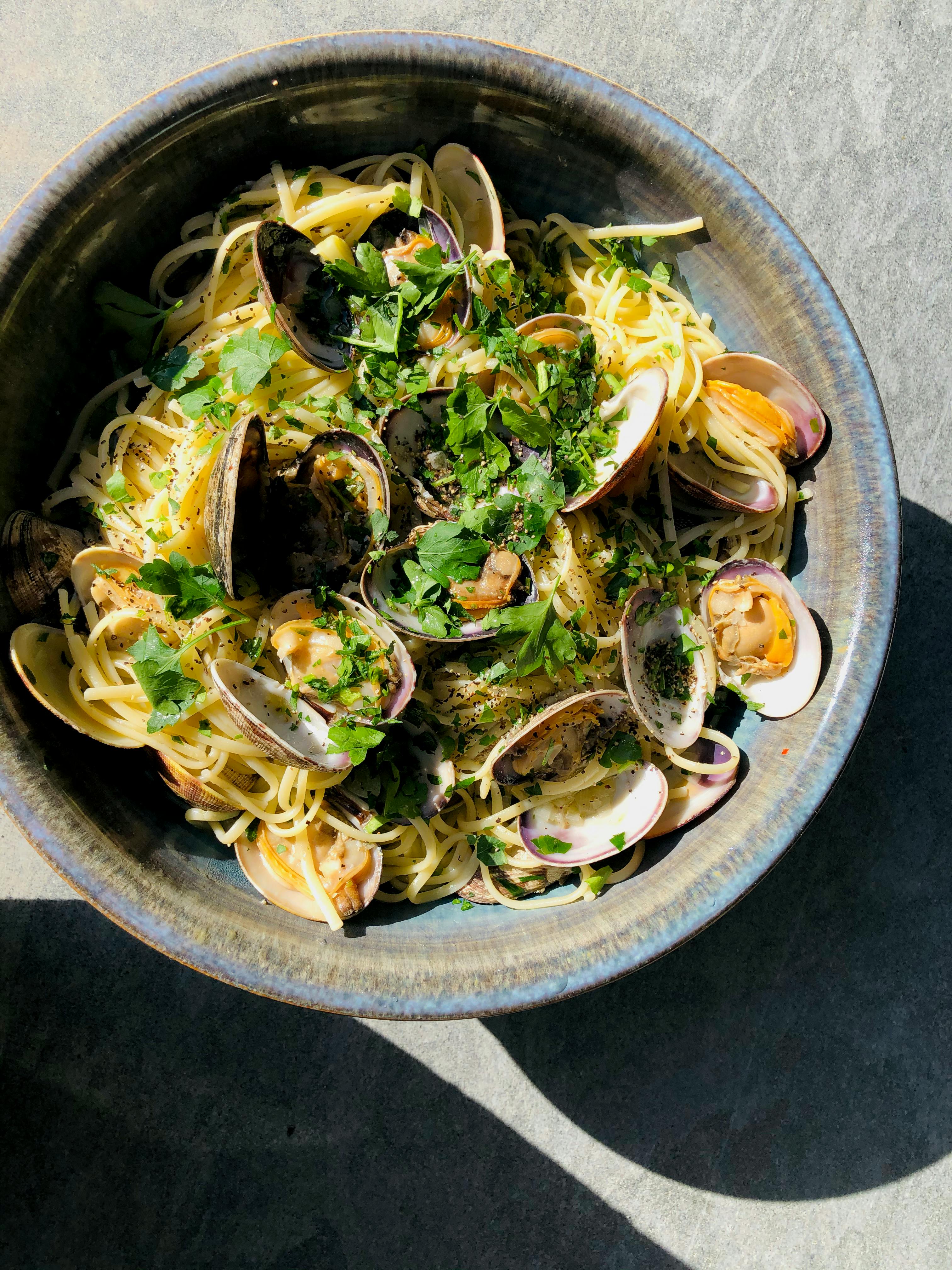
Photo: Laurel Segel / Pexels
Italian
Spaghetti alle Vongole
The diets react (see scores below)
Common Ingredients
- spaghetti
- clams
- white wine
- garlic
- olive oil
- parsley
- red pepper flakes
- lemon
Specific recipes may vary.
Incompatible with 6 of 11 diets
Diet Ratings
Spaghetti alle Vongole is fundamentally incompatible with a ketogenic diet due to spaghetti being the primary component. A standard serving of spaghetti (roughly 80-100g dry) contains approximately 60-70g of net carbs, far exceeding the entire daily keto allowance in a single dish. The remaining ingredients — clams, olive oil, garlic, white wine, parsley, lemon — are largely keto-friendly or low-impact, but they cannot offset the massive carbohydrate load from the pasta. The dish as traditionally prepared is a grain-based meal and therefore incompatible with ketosis. A keto adaptation using zucchini noodles or hearts of palm pasta would flip the verdict entirely, but the dish as named and traditionally constituted must be avoided.
Spaghetti alle Vongole contains clams as its primary protein, which are shellfish and therefore an animal product. This dish is unambiguously non-vegan. All remaining ingredients — spaghetti, white wine, garlic, olive oil, parsley, red pepper flakes, and lemon — are plant-based, but the clams alone disqualify the dish entirely under any definition of veganism.
Spaghetti alle Vongole is disqualified from a paleo perspective primarily because of spaghetti, which is made from wheat — a grain explicitly excluded from all paleo frameworks. Grains are rejected due to their anti-nutrient content (gluten, lectins, phytic acid) and their absence from Paleolithic diets. The remaining ingredients are largely paleo-compliant: clams are an excellent ancestral protein source, olive oil is an approved fat, garlic and parsley are approved herbs, red pepper flakes and lemon are paleo-friendly. White wine occupies a gray area (alcohol is debated in paleo), but it is a minor component used in cooking. None of these compliant ingredients can redeem a dish whose foundational ingredient — pasta — is a core avoid item. To make this paleo-compatible, the spaghetti would need to be replaced entirely with a substitute such as zucchini noodles or spaghetti squash.
Spaghetti alle Vongole is a quintessential Mediterranean dish that aligns excellently with the diet's core principles. Clams are shellfish/seafood, strongly encouraged 2-3 times weekly. Extra virgin olive oil is the primary fat, as prescribed. Garlic, parsley, lemon, and red pepper flakes are classic Mediterranean aromatics. White wine is a traditional Mediterranean cooking ingredient. The only minor consideration is that spaghetti is a refined grain rather than a whole grain pasta, which slightly reduces the score from a perfect 10, but pasta in moderate portions is a well-accepted staple of traditional Mediterranean (particularly Italian and Greek) cuisine and does not undermine the dish's overall healthfulness.
Spaghetti alle Vongole is almost entirely incompatible with the carnivore diet. While clams are an animal product and would be acceptable on their own, they are overwhelmed by a list of strictly prohibited ingredients. Spaghetti is a grain-based pasta — a core excluded food. Garlic, parsley, red pepper flakes, and lemon are all plant-derived and excluded. Olive oil is a plant oil, explicitly off-limits. White wine is a fermented plant product with sugars and compounds incompatible with carnivore. The only salvageable component is the clams themselves, but the dish as prepared cannot be adapted without a complete reconstruction.
Spaghetti alle Vongole is disqualified primarily by its base ingredient: spaghetti is a wheat-based pasta, which falls squarely under the excluded grains category on Whole30. Grains (including wheat and all wheat-derived pasta) are explicitly prohibited for the full 30 days. Additionally, even if a grain-free pasta substitute were used, pasta/noodles are specifically listed among the 'no recreating' prohibited food forms under Rule 4 — meaning a compliant noodle substitute made from, say, zucchini or hearts of palm would technically be allowed as a vegetable, but a pasta-shaped noodle product is off-limits. The remaining ingredients — clams, white wine (cooking alcohol used in small amounts as a flavoring is generally accepted), garlic, olive oil, parsley, red pepper flakes, and lemon — are all Whole30-compliant. However, the spaghetti alone is a definitive disqualifier.
Spaghetti alle Vongole contains two clear high-FODMAP ingredients that make it unsuitable during the elimination phase. First, regular wheat spaghetti is high in fructans — a primary FODMAP — and would need to be substituted with a gluten-free or rice-based pasta to be safe. Second, garlic is one of the highest-FODMAP foods tested by Monash University, containing very high levels of fructans even in small amounts. Clams are a low-FODMAP protein, white wine is low-FODMAP in small quantities (up to ~150ml), olive oil is safe, parsley is low-FODMAP, red pepper flakes are low-FODMAP at typical seasoning amounts, and lemon juice is low-FODMAP. However, the combination of wheat spaghetti and garlic — both staple, structural ingredients in this dish as traditionally prepared — makes it high-FODMAP without significant recipe modifications. The dish cannot be made compliant simply by adjusting portion sizes; ingredient substitutions are required (gluten-free pasta + garlic-infused oil instead of garlic cloves).
Spaghetti alle Vongole aligns reasonably well with several DASH principles but has notable caveats. Clams are an excellent lean protein source rich in potassium, magnesium, and iron, and are explicitly encouraged in DASH as a seafood option. Olive oil is a preferred unsaturated fat. Garlic, parsley, lemon, and red pepper flakes are DASH-friendly aromatics with no meaningful sodium contribution. However, clams are naturally moderately high in sodium (canned clams especially, with ~600-900mg per serving), and restaurant or home preparations often add salt during cooking. Spaghetti, while a refined grain rather than a whole grain, is not categorically excluded from DASH but is less ideal than whole-wheat pasta. White wine contributes minimal nutritional concern in cooking quantities. The dish lacks saturated fat issues and contains no red meat, full-fat dairy, or added sugars, making it better than average. Portion control on pasta and sodium awareness (particularly if using canned clams or added salt) are the key DASH considerations. A home-prepared version using fresh clams, low-sodium broth if any, and whole-wheat spaghetti would push this closer to a full approval.
NIH DASH guidelines emphasize shellfish as an approved lean protein and do not categorically flag moderate seafood sodium; however, some conservative DASH clinicians following the 1,500mg low-sodium DASH protocol would caution that clams' natural sodium content plus cooking salt can make a full portion of this dish approach or exceed a meaningful fraction of the daily sodium budget, warranting careful portioning.
Spaghetti alle Vongole has a genuinely mixed Zone profile. The clams are an excellent lean protein source — low in fat, high in quality protein, and rich in omega-3s and zinc, making them an ideal Zone protein block. Olive oil provides the preferred monounsaturated fat, and the garlic, parsley, lemon, and white wine contribute polyphenols and anti-inflammatory compounds that align with Sears' later nutritional focus. However, the spaghetti is the central problem: regular white spaghetti is a high-glycemic, 'unfavorable' carbohydrate in Zone terminology that spikes insulin and is difficult to portion-control in a traditional restaurant serving. A standard pasta serving (200-250g cooked) delivers far too many carbohydrate blocks (10-12+) with too high a glycemic load to maintain the 40/30/30 ratio. To make this dish Zone-compatible, one would need to dramatically reduce the pasta portion (roughly 60-70g cooked, ~2 carb blocks), increase the clam quantity, and supplement with a large vegetable side. As typically served, the carbohydrate load is severely imbalanced relative to the protein and fat content.
Spaghetti alle Vongole is a well-balanced dish with several strong anti-inflammatory components. Clams are an excellent source of omega-3 fatty acids, zinc, selenium, and vitamin B12, all of which support immune regulation and reduce inflammatory markers. Olive oil provides oleocanthal and monounsaturated fats with well-documented anti-inflammatory effects. Garlic contains allicin and organosulfur compounds linked to reduced CRP and IL-6. Parsley is rich in flavonoids (apigenin, luteolin) and vitamin C. Red pepper flakes contribute capsaicin, a recognized anti-inflammatory compound. Lemon adds vitamin C and flavonoids. White wine contributes some polyphenols but is a mild pro-inflammatory factor. The main limitation is refined white pasta (spaghetti), which is a refined carbohydrate that can spike blood glucose and modestly promote inflammation — this is the primary reason the score doesn't reach 8 or higher. Substituting whole grain or legume-based pasta would significantly improve the profile. Overall, the dish's anti-inflammatory ingredients outweigh its one problematic component, making it approvable in the context of a generally healthy diet.
Most anti-inflammatory guidance would view this dish favorably, but some practitioners (particularly those following stricter low-glycemic or autoimmune protocols) would caution against regular consumption due to the refined wheat pasta, which raises blood glucose and may promote intestinal permeability in gluten-sensitive individuals. Additionally, some updated anti-inflammatory guidelines recommend avoiding alcohol entirely — including the white wine used here — given emerging research suggesting no safe level, while Dr. Weil's framework treats moderate wine consumption as acceptable.
Spaghetti alle Vongole has genuine strengths for GLP-1 patients but is held back primarily by its refined carbohydrate base. Clams are an excellent protein source — lean, high in iron, zinc, B12, and omega-3s — and the olive oil, garlic, lemon, and parsley add micronutrient value with minimal saturated fat. However, traditional spaghetti is a refined grain with limited fiber and moderate glycemic impact, which undercuts blood sugar stability and nutrient density per calorie. The white wine cooks off substantially but is worth noting for patients monitoring alcohol intake. Red pepper flakes may irritate sensitive GI tracts, which is relevant given slowed gastric emptying. The dish is also relatively low in total protein per standard restaurant serving unless clams are very generous — a typical portion may deliver only 15-20g protein depending on clam volume. Olive oil is a positive fat source but the quantity used affects total fat load. Overall this is a Mediterranean-style dish with real nutritional merit, but the refined pasta base and moderate protein density per calorie place it in caution territory unless modified (e.g., whole wheat or legume-based pasta, extra clams).
Some GLP-1-focused dietitians accept pasta dishes like this in moderate portions, noting that clams are among the most nutrient-dense proteins available and the overall fat profile is favorable; they argue portion control on GLP-1 medications naturally limits carbohydrate intake to manageable levels. Others caution that refined pasta is filling in small volumes without delivering adequate fiber or protein density, making it a suboptimal calorie choice when appetite is already suppressed.
*See how scores were generated at our methodology page.
Nutritional profile
Six traits that cut across every diet.
Fiber & Plants
How much whole-plant food and fiber it delivers.
Healthy Fats
The quality of its fats (unsaturated, omega-3).
Whole / Unprocessed
How close it is to its natural, unprocessed form.
Gut Gentle
How easy it is on digestion (low FODMAP, few irritants).
Low Glycemic
How little it spikes your blood sugar.
Protein Density
How much protein it packs per calorie.
Controversy Index
Higher controversy = more disagreement between diets.
Diet-Specific Tips
 Mediterranean — 9/10
View tips
- Clams are an excellent seafood protein, fully aligned with Mediterranean fish/seafood guidelines
- Extra virgin olive oil as the sole fat source is ideal
- Garlic, parsley, lemon, and chili flakes are canonical Mediterranean flavor builders
- White wine used in cooking is a traditional Mediterranean practice
- Refined white spaghetti is not a whole grain, but moderate pasta consumption is a recognized feature of traditional Mediterranean Italian cuisine
- No processed ingredients, added sugars, or unhealthy fats present
 DASH — 6/10
View tips
- Clams are a DASH-approved lean seafood protein rich in potassium and magnesium
- Olive oil provides heart-healthy monounsaturated fat consistent with DASH
- Refined spaghetti is less preferred than whole-wheat pasta under DASH guidelines
- Clams carry moderate natural sodium; canned clams significantly elevate sodium load
- No saturated fat, red meat, added sugar, or full-fat dairy — low negative risk profile
- Preparation method (fresh vs. canned clams, added salt) significantly affects DASH compatibility
- Alcohol from white wine is largely cooked off but DASH does not emphasize alcohol
- Portion control of pasta servings is important for DASH calorie and refined carb limits
 Zone — 5/10
View tips
- Clams are an ideal Zone lean protein — low fat, high protein, rich in omega-3s
- Spaghetti (white pasta) is a high-glycemic 'unfavorable' carbohydrate in Zone methodology
- Standard restaurant portion of pasta far exceeds Zone carbohydrate block limits
- Olive oil provides preferred monounsaturated fat
- White wine, garlic, parsley, and lemon add polyphenols with anti-inflammatory benefit
- Dish can be Zone-adapted with drastically reduced pasta and increased clam portions
- No saturated fat concerns; fat profile is favorable
 Anti-Inflammatory — 7/10
View tips
- Clams: high in omega-3 fatty acids, zinc, selenium — strong anti-inflammatory protein source
- Extra virgin olive oil: oleocanthal and MUFAs with well-established anti-inflammatory activity
- Garlic: allicin and organosulfur compounds reduce CRP and IL-6
- Red pepper flakes: capsaicin is a recognized anti-inflammatory phytonutrient
- Parsley: rich in apigenin, luteolin, and vitamin C
- Lemon: flavonoids and vitamin C support antioxidant activity
- Refined white spaghetti: pro-inflammatory refined carbohydrate, raises blood glucose — main limiting factor
- White wine: minor pro-inflammatory element; some protocols exclude all alcohol
 GLP-1 Friendly — 5/10
View tips
- Clams are a lean, high-quality protein with excellent micronutrient density (B12, iron, zinc)
- Refined spaghetti is low in fiber and reduces nutrient density per calorie
- Olive oil is a preferred unsaturated fat but quantity affects total fat load
- Standard serving may provide only 15-20g protein depending on clam-to-pasta ratio
- Red pepper flakes may worsen GI discomfort in sensitive GLP-1 patients
- White wine contributes minimal alcohol after cooking but warrants awareness
- Whole wheat or legume-based pasta substitution would meaningfully improve this dish's score
- Small-portion friendly due to satiety from clam protein and fat from olive oil