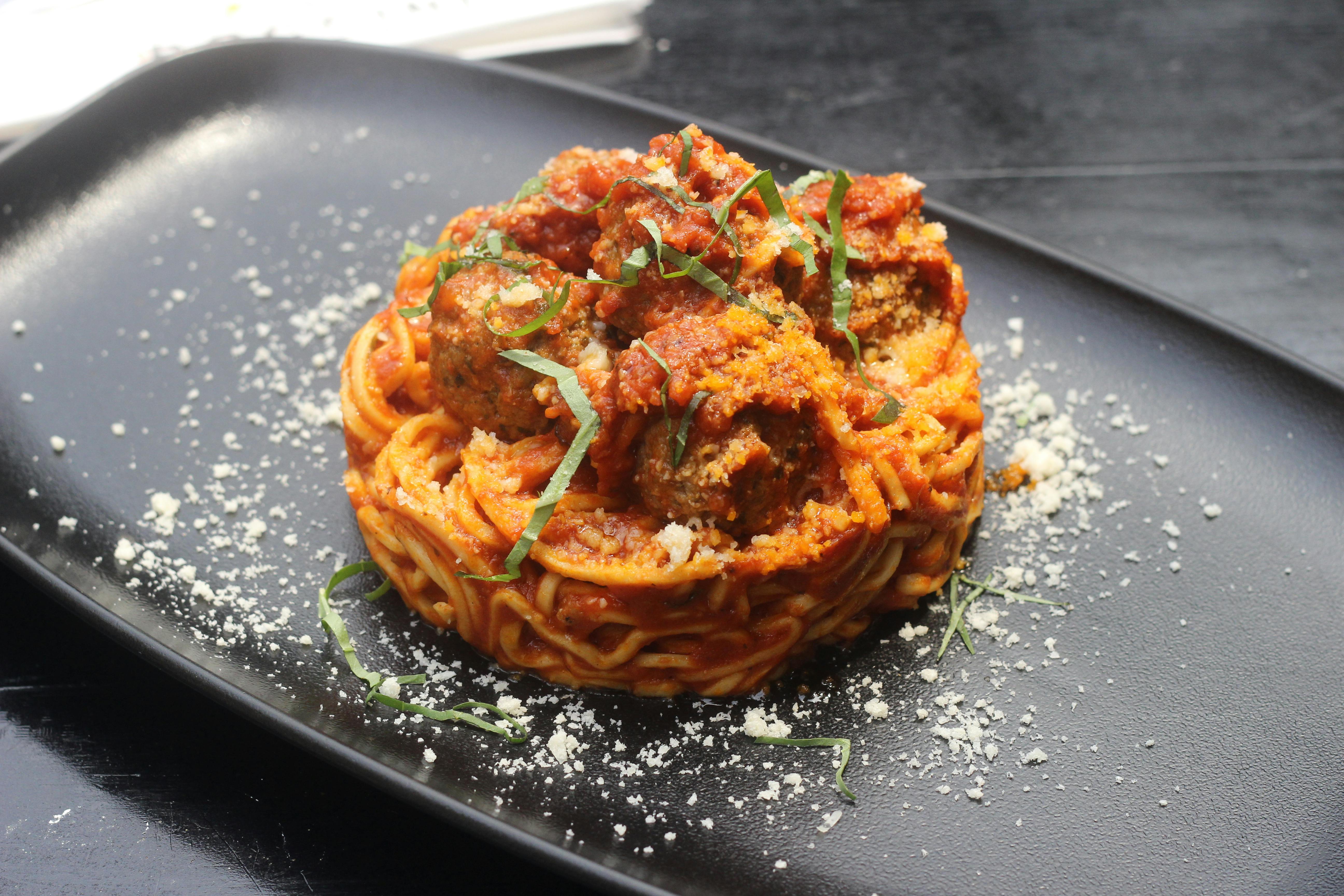
Photo: Mahmoud Salem / Pexels
Italian
Spaghetti and Meatballs
The diets react (see scores below)
Common Ingredients
- spaghetti
- ground beef
- ground pork
- breadcrumbs
- eggs
- marinara sauce
- Parmesan
- basil
Specific recipes may vary.
Incompatible with 7 of 11 diets
Diet Ratings
Spaghetti and meatballs is fundamentally incompatible with ketogenic eating. Spaghetti alone delivers approximately 40-43g of net carbs per standard 1-cup cooked serving, immediately pushing most individuals over or right at their entire daily carb limit. The breadcrumbs in the meatballs add further carbs, and marinara sauce typically contains added sugars and significant carbohydrate content. The combination of refined grain pasta, breadcrumb-bound meatballs, and sugary tomato sauce makes this dish a high-carb, moderate-fat meal — the exact opposite of the keto macronutrient target of 70-80% fat and under 20-50g net carbs daily.
Spaghetti and meatballs contains multiple animal products that are categorically incompatible with a vegan diet. Ground beef and ground pork are the primary proteins and core components of the dish. Eggs are used as a binder in the meatballs, and Parmesan is a dairy-based cheese. There is no ambiguity here — this dish violates vegan principles on at least four distinct ingredients.
Spaghetti and Meatballs contains multiple non-paleo ingredients that disqualify it clearly and unambiguously. Spaghetti is a wheat-based grain — one of the most explicitly excluded foods in all paleo frameworks. Breadcrumbs (used as a meatball binder) are also grain-derived and prohibited. Parmesan is a dairy product, excluded under paleo rules. Marinara sauce, while tomato-based, is typically a processed product that may contain added salt, sugar, and preservatives. The only paleo-compliant ingredients in this dish are ground beef, ground pork, eggs, and fresh basil. The dish as presented is fundamentally incompatible with the paleo diet and would require a complete structural overhaul — swapping spaghetti for zucchini noodles or spaghetti squash, replacing breadcrumbs with almond flour, and eliminating Parmesan — to approach paleo compliance.
Spaghetti and meatballs combines two problematic elements for the Mediterranean diet: refined white pasta and a substantial portion of red meat (ground beef and pork). Red meat is explicitly limited to a few times per month in the Mediterranean dietary pattern, and ground pork in particular is high in saturated fat. The meatballs also contain breadcrumbs made from refined grain. Refined white spaghetti lacks the fiber and nutrients of whole grain alternatives. While some individual ingredients—eggs, Parmesan, marinara sauce, basil—are acceptable in moderation, the dish as a whole is anchored by two 'avoid' or 'limit' categories simultaneously, making it a poor fit as a regular meal.
Some traditional Southern Italian and Sicilian culinary traditions did incorporate pork and beef in pasta dishes, particularly for celebratory meals. A strict once-monthly framing of red meat consumption could technically allow this dish on rare occasions, and substituting whole wheat spaghetti would partially improve its profile. Modern Mediterranean diet adaptations sometimes permit small amounts of lean red meat blended with vegetables or legumes to reduce overall saturated fat load.
Spaghetti and Meatballs is fundamentally incompatible with the carnivore diet. The dish is built around spaghetti, a grain-based pasta that is entirely plant-derived and directly violates the core rule of eating exclusively animal products. The marinara sauce is plant-based (tomatoes, garlic, herbs). The meatballs themselves contain breadcrumbs (grain filler) and basil (plant herb), making even the animal-protein component non-compliant. Parmesan cheese is a dairy product with moderate debate, but it's irrelevant here given the overwhelming plant-based violations. While ground beef, ground pork, and eggs are carnivore-approved ingredients, they are buried within a dish that is structurally and compositionally a plant-food delivery vehicle.
Spaghetti and Meatballs contains multiple Whole30-excluded ingredients. Spaghetti is a grain-based pasta, which is explicitly excluded under the grains rule. Breadcrumbs in the meatballs are also grain-derived and excluded. Parmesan is a dairy product, which is excluded (ghee and clarified butter are the only dairy exceptions). These are not edge cases or ambiguous items — grains and dairy are foundational exclusions of the Whole30 program. Even if one were to substitute compliant ingredients (e.g., zucchini noodles, grain-free binders, nutritional yeast), the resulting dish would approach a 'recreated' pasta dish, which conflicts with the spirit of the program.
Spaghetti and Meatballs as traditionally prepared contains multiple high-FODMAP ingredients that make it unsuitable during the elimination phase. Regular wheat spaghetti is high in fructans and must be avoided. The breadcrumbs in meatballs are almost certainly wheat-based, adding another fructan source. Most marinara sauces contain onion and garlic, both of which are among the highest-fructan foods and must be strictly avoided on low-FODMAP. Even small amounts of garlic or onion in sauce are enough to trigger symptoms. Parmesan is generally low-FODMAP in small amounts (hard aged cheeses have minimal lactose), eggs are low-FODMAP, ground beef and pork are low-FODMAP, and fresh basil is low-FODMAP — but the combination of wheat pasta, wheat breadcrumbs, and onion/garlic-laden marinara sauce makes this dish clearly high-FODMAP without significant modifications. A low-FODMAP version would require gluten-free pasta, gluten-free breadcrumbs, and a homemade sauce using garlic-infused oil instead of garlic/onion.
Spaghetti and meatballs as typically prepared presents several challenges for the DASH diet. The meatballs combine ground beef and ground pork — both red/processed meats that DASH explicitly limits due to saturated fat content. Parmesan cheese and marinara sauce add notable sodium, and breadcrumbs further contribute sodium and refined carbohydrates. Regular spaghetti is a refined grain rather than the whole grain pasta DASH recommends. On the positive side, the dish includes tomato-based marinara (a vegetable source rich in potassium and lycopene) and basil, and pasta provides some filling carbohydrates. With modifications — whole wheat spaghetti, leaner turkey or chicken meatballs, low-sodium marinara, reduced Parmesan — this dish could score higher. As commonly prepared, it sits in the caution range: not categorically off-limits but requiring significant portion control and ideally reformulation to align with DASH principles.
Spaghetti and meatballs presents multiple Zone Diet challenges. The spaghetti itself is a high-glycemic refined carbohydrate — one of the most iconic 'unfavorable' Zone carbs — that spikes insulin and disrupts the hormonal balance Zone is designed to maintain. The meatball blend of ground beef and pork is fattier than Zone's preferred lean proteins (skinless chicken, fish, egg whites), contributing excess saturated fat beyond the 10-15g/meal target. Breadcrumbs add more refined carbs. On the positive side, the dish does provide protein and the marinara sauce contributes tomato-based polyphenols (lycopene) that align with Zone's anti-inflammatory goals. Parmesan adds protein. The dish is theoretically 'zoneable' by dramatically reducing pasta portion (replacing with zucchini noodles would be better), using leaner meatballs (turkey or lean beef), and loading up on a side salad or vegetables to rebalance the carb ratio toward low-glycemic sources — but as traditionally prepared, the macro ratio is badly skewed toward high-GI carbs with excess saturated fat, making it a Zone 'unfavorable' meal requiring significant modification to fit the 40/30/30 framework.
Spaghetti and meatballs presents a mixed anti-inflammatory profile. On the negative side, refined white spaghetti is a refined carbohydrate that spikes blood glucose and promotes inflammatory signaling; ground beef and pork together deliver significant saturated fat and arachidonic acid, both pro-inflammatory at higher intakes; and Parmesan adds modest full-fat dairy. Breadcrumbs reinforce the refined carbohydrate load. On the positive side, marinara sauce is a meaningful bright spot — cooked tomatoes provide lycopene (a potent carotenoid antioxidant), and fresh basil contributes anti-inflammatory polyphenols. Eggs contribute choline and selenium. The dish is not inherently toxic or filled with trans fats or additives, but its core structure — refined pasta + red/processed meat combination — is precisely the dietary pattern anti-inflammatory research consistently associates with elevated CRP and IL-6. It can fit into an anti-inflammatory lifestyle occasionally if portions are moderate, pasta is swapped for whole grain or legume-based, and meat portions are reduced, but as typically prepared it sits in caution territory rather than approval.
Spaghetti and meatballs in a standard serving presents a mixed nutritional profile for GLP-1 patients. The meatballs made from ground beef and pork provide meaningful protein (roughly 20-25g per typical restaurant or home serving), but the fat content is a significant concern — ground beef and pork are saturated-fat-heavy proteins that can worsen nausea, bloating, and reflux, which are already amplified by slowed gastric emptying on GLP-1 medications. The refined white spaghetti contributes fast-digesting carbohydrates with minimal fiber, failing the fiber priority. Breadcrumbs add refined carbs without nutritional benefit. Parmesan adds small amounts of protein but also saturated fat. Marinara sauce is genuinely positive — tomatoes provide lycopene, some fiber, and hydration. The dish is also portion-sensitive: a standard restaurant serving is large and calorie-dense in a way that is poorly suited to the reduced appetite and slowed gastric emptying on GLP-1s. A modified home version — leaner beef or turkey meatballs, whole wheat or legume-based pasta, smaller portion — would rate meaningfully higher.
Some GLP-1-focused dietitians accept traditional pasta dishes in controlled portions, arguing that the protein from meatballs and the tomato base make it a better choice than many processed convenience foods, and that patient adherence matters more than ingredient perfection. Others flag the saturated fat load from beef-pork meatballs and refined pasta as reliably problematic for GLP-1 GI side effects, particularly in the first months of dose escalation.
*See how scores were generated at our methodology page.
Nutritional profile
Six traits that cut across every diet.
Fiber & Plants
How much whole-plant food and fiber it delivers.
Healthy Fats
The quality of its fats (unsaturated, omega-3).
Whole / Unprocessed
How close it is to its natural, unprocessed form.
Gut Gentle
How easy it is on digestion (low FODMAP, few irritants).
Low Glycemic
How little it spikes your blood sugar.
Protein Density
How much protein it packs per calorie.
Controversy Index
Higher controversy = more disagreement between diets.
Diet-Specific Tips
 DASH — 4/10
View tips
- Ground beef and ground pork are red meats high in saturated fat, which DASH limits
- Parmesan cheese and marinara sauce contribute significant sodium, potentially pushing a serving well toward the 2,300mg daily limit
- Regular spaghetti is a refined grain; DASH recommends whole grains
- Marinara sauce provides potassium, lycopene, and vegetable nutrients consistent with DASH
- Portion size is critical — a large serving amplifies all negative factors
- Substituting whole wheat pasta, lean poultry meatballs, and low-sodium marinara would significantly improve DASH compatibility
 Zone — 4/10
View tips
- Spaghetti is a high-glycemic refined carbohydrate, explicitly 'unfavorable' in Zone terminology
- Ground beef/pork blend exceeds Zone's preference for lean protein and raises saturated fat above ideal
- Breadcrumbs add additional refined carb load
- Traditional portions would heavily skew the 40/30/30 ratio toward carbohydrates and fat
- Marinara sauce provides beneficial polyphenols and lycopene, a Zone anti-inflammatory positive
- Could be partially rehabilitated by substituting zucchini noodles, reducing pasta to a small block serving, and using leaner meat
- As prepared, essentially impossible to hit Zone ratios without dramatic portion restructuring
 Anti-Inflammatory — 4/10
View tips
- Refined white spaghetti raises blood glucose and promotes inflammatory cytokine production
- Ground beef and pork provide saturated fat and arachidonic acid, both pro-inflammatory in excess
- Red meat consumption is consistently linked to elevated inflammatory markers (CRP, IL-6) in epidemiological research
- Cooked tomato marinara sauce delivers lycopene and other antioxidants, a genuine anti-inflammatory benefit
- Basil contributes flavonoids and polyphenols with anti-inflammatory activity
- Parmesan adds saturated fat but in modest quantities as a topping
- Whole grain pasta substitution would meaningfully improve the inflammatory profile
 GLP-1 Friendly — 4/10
View tips
- Moderate protein from meatballs (~20-25g) but sourced from high-saturated-fat beef and pork
- Refined white spaghetti provides minimal fiber and spikes blood sugar rapidly
- High saturated fat content from ground beef, ground pork, and Parmesan worsens GLP-1 GI side effects
- Standard serving size is large and calorie-dense — poorly matched to reduced appetite and slowed gastric emptying
- Marinara sauce is a positive contributor — lycopene, some fiber, hydration
- Breadcrumbs add refined carbohydrates with no nutritional value
- Dish is highly modifiable — leaner protein and whole grain or legume pasta would substantially improve the rating