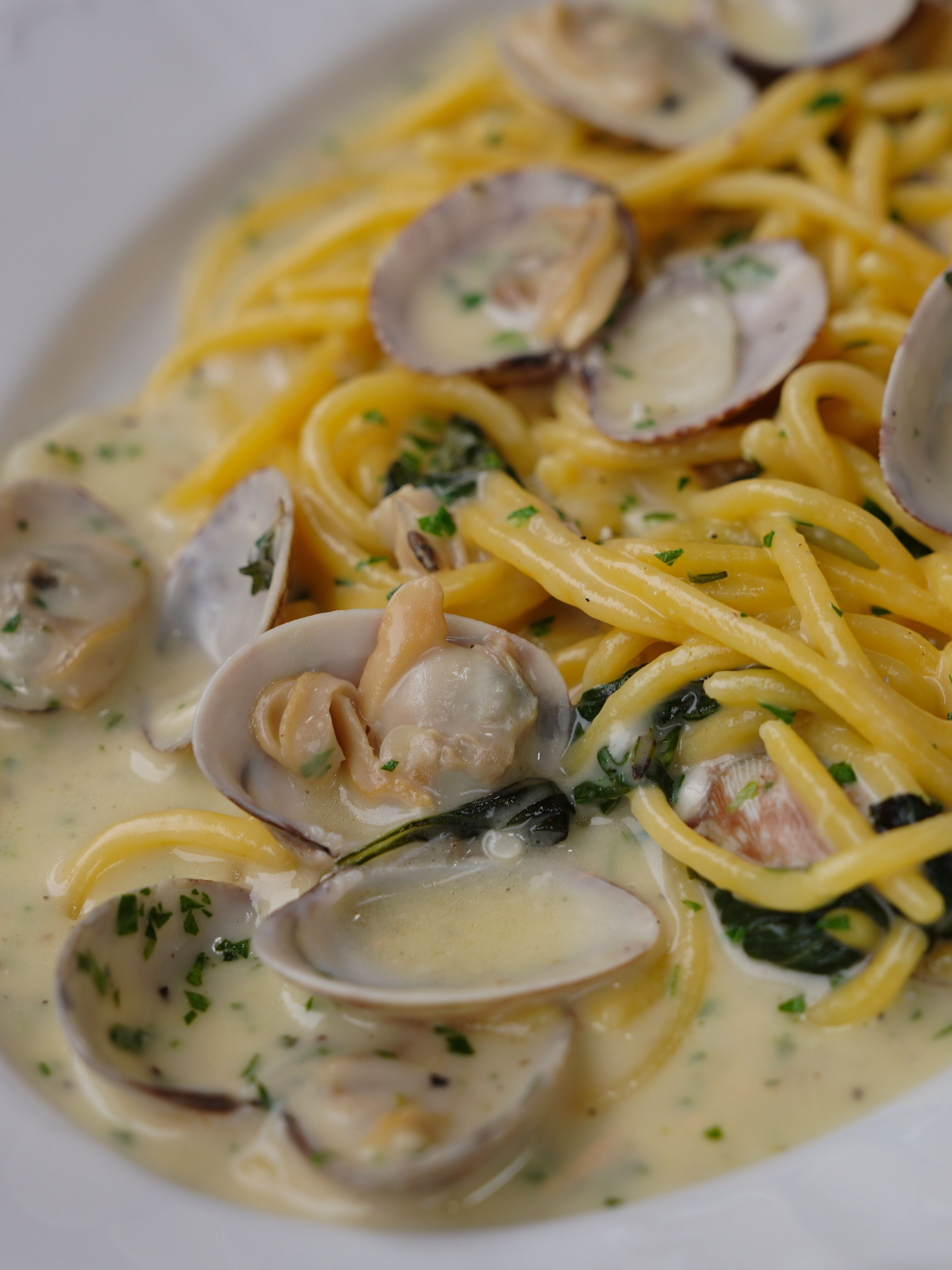
Italian
Spaghetti Frutti di Mare
The diets react (see scores below)
Common Ingredients
- spaghetti
- shrimp
- mussels
- clams
- squid
- tomatoes
- white wine
- garlic
Specific recipes may vary.
Incompatible with 6 of 11 diets
Diet Ratings
Spaghetti Frutti di Mare is fundamentally incompatible with a ketogenic diet. The primary issue is spaghetti, a refined grain pasta that delivers approximately 40-45g of net carbs per standard 80-100g dry serving — enough to single-handedly exceed or max out an entire day's keto carb budget. The remaining ingredients (shrimp, mussels, clams, squid) are actually keto-friendly protein sources with minimal carbs, and garlic, tomatoes, and white wine add modest additional carbs. However, the pasta base is the disqualifying factor with no ambiguity. Even a half-portion would compromise ketosis for most individuals. The dish could theoretically be reimagined with a zucchini noodle or shirataki noodle substitute, but as presented in its standard Italian form, it must be avoided.
Spaghetti Frutti di Mare is entirely incompatible with a vegan diet. The dish's defining characteristic is its mixed seafood protein base — shrimp, mussels, clams, and squid are all unambiguously animal products. While the pasta, tomatoes, white wine, and garlic are plant-based, the seafood ingredients constitute the core of the dish and cannot be considered incidental. No meaningful debate exists within the vegan community regarding the status of shrimp, mussels, clams, or squid — all are animals and all are excluded under vegan principles.
Spaghetti Frutti di Mare is disqualified from a paleo perspective primarily due to spaghetti, a wheat-based grain pasta, which is one of the clearest non-paleo foods across all paleo authorities. The seafood components — shrimp, mussels, clams, and squid — are excellent paleo proteins and would be fully approved on their own. Tomatoes, garlic, and white wine are more acceptable (wine is a caution-level gray area). However, spaghetti is the structural foundation of the dish, and no paleo framework accommodates wheat pasta. The dish as presented cannot be modified into compliance without fundamentally changing its identity.
Spaghetti Frutti di Mare is a quintessential Mediterranean dish that exemplifies core principles of the diet. The mixed seafood (shrimp, mussels, clams, squid) provides an excellent protein source that Mediterranean guidelines encourage 2-3 times weekly. Tomatoes, garlic, and white wine form a classic, nutrient-rich sauce with antioxidants and anti-inflammatory properties. Spaghetti, while a refined grain, is consumed in traditional Mediterranean portions and is a staple of southern Italian cuisine. The dish is entirely whole-ingredient based with no processed foods, added sugars, or unhealthy fats. Olive oil would naturally be used in preparation, further aligning it with Mediterranean principles.
Spaghetti Frutti di Mare is almost entirely incompatible with the carnivore diet. While the seafood components (shrimp, mussels, clams, squid) are carnivore-approved animal proteins, they are completely overshadowed by the dominant plant-based and processed ingredients. Spaghetti is a grain-based food and a core exclusion on any tier of carnivore. Tomatoes are plant-derived and excluded. Garlic is a plant. White wine is a fermented plant product. The entire dish as prepared is a carnivore violation — the seafood cannot be separated from the context of this fundamentally plant-and-grain-based pasta dish.
Spaghetti Frutti di Mare contains spaghetti, which is a wheat-based grain pasta. Grains are explicitly excluded on the Whole30 program. Additionally, the dish itself is a pasta dish, which falls directly under the 'no recreating pasta or noodles' rule. While the seafood components (shrimp, mussels, clams, squid), tomatoes, garlic, and white wine (an allowed vinegar/cooking wine type) are all individually compliant or acceptable, the foundational ingredient — spaghetti — is a hard disqualifier. This dish cannot be made Whole30-compliant without fundamentally changing its identity.
Spaghetti Frutti di Mare contains two definitive high-FODMAP ingredients that make it unsuitable during the elimination phase. First, regular wheat-based spaghetti is high in fructans and must be avoided entirely during elimination — there is no safe serving size for standard wheat pasta. Second, garlic is one of the highest-FODMAP foods tested by Monash University, rich in fructans, and must be completely avoided even in small amounts. These two ingredients alone disqualify the dish. The seafood components (shrimp, mussels, clams, squid) are all low-FODMAP and perfectly safe. Tomatoes are low-FODMAP at standard serving sizes (up to ~65g canned or one medium fresh). White wine is low-FODMAP at one standard drink (~150ml). However, the combination of wheat spaghetti and garlic makes this dish a clear avoid without significant modification — specifically substituting gluten-free pasta and replacing garlic with garlic-infused oil.
Spaghetti Frutti di Mare combines several DASH-friendly components — lean seafood (shrimp, mussels, clams, squid) rich in protein, magnesium, and potassium; tomatoes providing lycopene, fiber, and potassium; garlic with cardiovascular benefits; and olive oil-based preparation typical of Italian cuisine. The spaghetti, while refined pasta, is not categorically excluded from DASH. However, this dish raises moderate concerns: shellfish like shrimp and clams are naturally higher in sodium (shrimp ~190mg/100g, clams ~56mg/100g raw, but can concentrate during cooking), and restaurant or prepared versions often add significant salt, pushing sodium well above DASH targets. White wine adds negligible nutritional concern in small culinary amounts. The refined spaghetti could be swapped for whole wheat pasta to better align with DASH whole grain guidance. As prepared at home with minimal added salt, this dish can be DASH-compatible; restaurant versions are typically over-salted and portions of pasta tend to be large.
NIH DASH guidelines emphasize lean protein and seafood as core components, which this dish centers on, and some DASH-oriented clinicians would approve this as a strong seafood-forward meal aligned with the Mediterranean-DASH overlap (MIND diet). However, conservative DASH practitioners flag the sodium load from shellfish and typical Italian restaurant preparation, as well as the use of refined pasta rather than whole grain, keeping this in the caution range without specific preparation controls.
Spaghetti Frutti di Mare has an excellent protein base — shrimp, mussels, clams, and squid are all lean, low-fat seafood sources that are highly favorable in Zone terms, rich in omega-3s and low in saturated fat. Tomatoes, garlic, and white wine add polyphenols and anti-inflammatory compounds Sears explicitly endorses. However, spaghetti is the central problem: as a refined, high-glycemic carbohydrate, it is classified as an 'unfavorable' carb in Zone methodology. A typical restaurant serving of pasta dramatically skews the macronutrient ratio toward carbohydrates, making it very difficult to hit the 40/30/30 target without significant portion adjustment. To Zone-balance this dish, pasta quantity would need to be drastically reduced (roughly 1/4 to 1/3 of a standard serving) while increasing the seafood-to-pasta ratio. The dish lacks a fat component to complete Zone blocks — olive oil would need to be added. With careful portioning, this dish can be made Zone-compatible, but as typically served it is carbohydrate-heavy and protein-light relative to Zone requirements.
Spaghetti Frutti di Mare is a predominantly anti-inflammatory dish. The mixed seafood base — shrimp, mussels, clams, and squid — provides lean protein, omega-3 fatty acids (especially mussels and clams), zinc, selenium, and other minerals with anti-inflammatory properties. Tomatoes contribute lycopene and antioxidants, particularly when cooked. Garlic is a well-established anti-inflammatory ingredient with allicin and organosulfur compounds. White wine adds polyphenols in small culinary quantities. The dish is prepared without saturated fat-heavy ingredients, processed components, or seed oils — using a Mediterranean-style cooking approach that broadly aligns with anti-inflammatory principles. The main limiting factor is the refined white pasta (spaghetti), which raises glycemic load and lacks fiber compared to whole grain alternatives. This is why the score sits at 7 rather than higher — the pasta base is a moderate inflammatory concern under anti-inflammatory frameworks that emphasize whole grains. The overall dish profile remains net positive due to the seafood density and vegetable components.
Nightshade concerns aside, the refined pasta is the main point of contention: strict anti-inflammatory protocols (including some interpretations of Dr. Weil's guidance) recommend whole grain pasta exclusively, which would push this dish into 'caution' territory. Additionally, shrimp and squid have higher omega-6 to omega-3 ratios than fatty fish, and some anti-inflammatory practitioners consider farmed shrimp potentially pro-inflammatory due to farming practices and antibiotic use.
Spaghetti Frutti di Mare has a genuinely positive nutritional profile for a GLP-1 patient, anchored by the mixed seafood component. Shrimp, mussels, clams, and squid are all lean, high-protein, easily digestible proteins with minimal saturated fat and good omega-3 content — exactly what GLP-1 guidelines prioritize. Tomatoes add fiber, lycopene, and water content. Garlic is well-tolerated and anti-inflammatory. White wine cooks off substantially, leaving negligible alcohol. The limiting factor is the spaghetti: refined pasta is a low-fiber, moderate-glycemic refined grain that contributes empty carbohydrate calories relative to its nutritional value. On a reduced-appetite GLP-1 diet where every bite must count, a large pasta base displaces more nutrient-dense options. Additionally, a standard restaurant portion of spaghetti is far too large for most GLP-1 patients — portion control is critical here. The dish scores a 6: the protein component is strong and the preparation is low-fat and non-fried, but the refined grain base and portion size concern hold it at caution rather than approve. A home-prepared version with reduced pasta, added vegetables, or a whole-grain/legume pasta substitute would push this toward approve.
Some GLP-1-focused dietitians would rate this higher, arguing that seafood-forward pasta dishes are among the most GLP-1-compatible restaurant options available — low fat, high protein, no frying, and manageable in small portions. Others maintain that refined pasta should be categorically limited because reduced appetite means patients cannot afford low-nutrient-density carbohydrates at any portion size, and would recommend substituting chickpea or whole wheat pasta to address both fiber and glycemic concerns.
*See how scores were generated at our methodology page.
Nutritional profile
Six traits that cut across every diet.
Fiber & Plants
How much whole-plant food and fiber it delivers.
Healthy Fats
The quality of its fats (unsaturated, omega-3).
Whole / Unprocessed
How close it is to its natural, unprocessed form.
Gut Gentle
How easy it is on digestion (low FODMAP, few irritants).
Low Glycemic
How little it spikes your blood sugar.
Protein Density
How much protein it packs per calorie.
Controversy Index
Higher controversy = more disagreement between diets.
Diet-Specific Tips
 Mediterranean — 9/10
View tips
- Abundant mixed seafood aligns with Mediterranean recommendation of 2-3 servings per week
- Tomatoes and garlic provide antioxidants and anti-inflammatory compounds
- White wine used in cooking is a traditional Mediterranean culinary technique
- No processed ingredients, added sugars, or unhealthy fats
- Spaghetti is a refined grain rather than whole grain, though traditional Mediterranean portions are modest
- Classic southern Italian preparation rooted in authentic Mediterranean culinary tradition
 DASH — 6/10
View tips
- Mixed seafood provides lean protein aligned with DASH recommendations
- Shrimp and shellfish carry moderate natural sodium; cooking concentrates it further
- Refined spaghetti preferred over whole wheat in most preparations — misses DASH whole grain emphasis
- Tomatoes and garlic are DASH-positive ingredients rich in potassium and antioxidants
- White wine in culinary quantity is negligible concern
- Sodium content highly variable: home-cooked with minimal salt scores higher (~7-8), restaurant versions score lower (~4-5)
- No saturated fat or red meat concerns; olive oil-based preparation typical and DASH-compatible
- Portion size of pasta critical — standard restaurant servings often exceed DASH grain serving recommendations
 Zone — 5/10
View tips
- Spaghetti is a refined, high-glycemic 'unfavorable' carb — dominant ingredient in typical serving
- Mixed seafood (shrimp, mussels, clams, squid) is an ideal lean Zone protein source
- Tomatoes and garlic contribute favorable low-glycemic carbs and polyphenols
- White wine adds minimal carbs but contributes polyphenol benefit
- No significant fat source present — olive oil needed to complete Zone fat block
- Standard restaurant portion is wildly out of Zone ratio; aggressive pasta reduction required
- Omega-3 content from seafood aligns well with Sears' anti-inflammatory dietary emphasis
 Anti-Inflammatory — 7/10
View tips
- Mussels and clams are rich in omega-3 fatty acids and anti-inflammatory minerals (zinc, selenium)
- Garlic provides allicin and organosulfur anti-inflammatory compounds
- Cooked tomatoes offer bioavailable lycopene and antioxidants
- Refined white spaghetti raises glycemic load and lacks fiber — a moderate pro-inflammatory concern
- Lean seafood protein with no saturated fat sources (no butter, cream, or cheese)
- White wine used in culinary quantity — minimal alcohol, some polyphenol benefit
- Mediterranean-style dish consistent with anti-inflammatory eating patterns
- Whole grain spaghetti substitution would meaningfully improve the anti-inflammatory profile
 GLP-1 Friendly — 6/10
View tips
- Mixed seafood (shrimp, mussels, clams, squid) provides lean, high-quality protein with low saturated fat
- Seafood component supports omega-3 intake and easy digestibility
- Refined spaghetti is low in fiber and displaces nutrient-dense calories on a reduced appetite diet
- Standard restaurant portion size is too large for most GLP-1 patients — portion control is essential
- Tomato-based sauce adds hydration, fiber, and micronutrients without added fat
- White wine cooks off substantially; residual alcohol content is negligible
- Low-fat, non-fried preparation is favorable for GLP-1 GI side effect management
- Home preparation with whole grain or legume-based pasta would significantly improve the rating