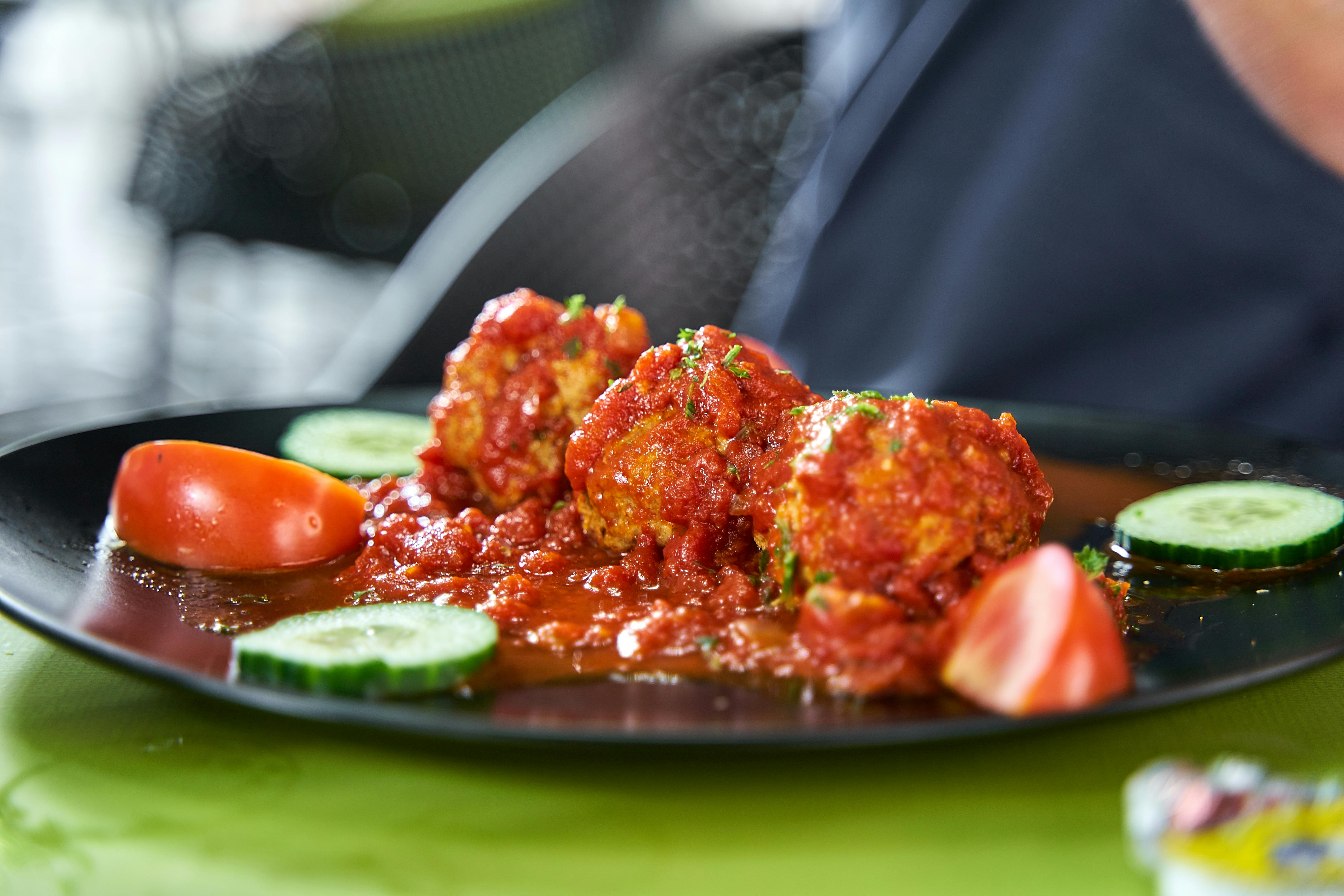
Photo: Wijs (Wise) / Pexels
Spanish
Spanish Albóndigas
The diets react (see scores below)
Common Ingredients
- ground beef
- ground pork
- onion
- garlic
- tomato sauce
- white wine
- almonds
- parsley
Specific recipes may vary.
Incompatible with 4 of 11 diets
Diet Ratings
Spanish Albóndigas (meatballs in tomato-wine sauce) are built on a keto-friendly protein base of ground beef and pork, but the tomato sauce and white wine introduce meaningful carbohydrates that require attention. Tomato sauce typically contains 6-10g net carbs per half-cup, and white wine adds roughly 3-4g net carbs per 3oz used in cooking. Almonds are keto-acceptable and may substitute for breadcrumbs as a binder, which is a positive sign. Onion and garlic add minor carbs but are used in small amounts. The key concern is the cumulative carb load from the sauce and wine in a standard serving — likely 8-15g net carbs per serving, which is manageable within a daily keto budget but requires portion discipline. The dish is not inherently high-fat enough to be an ideal keto snack without added fat. Traditional recipes sometimes include bread as a binder, which would push this toward 'avoid' — the almond-based version is assumed here.
Some strict keto practitioners would flag the white wine and tomato sauce combination as too carb-variable and insulin-spiking to recommend even with portion control, preferring meatballs served in a pure cream or olive oil-based sauce instead.
Spanish Albóndigas are meatballs made with ground beef and ground pork as the primary ingredients. Both are animal flesh and are categorically excluded from a vegan diet. There is no ambiguity here — this dish is fundamentally built on animal products and cannot be considered vegan in any way. The remaining ingredients (onion, garlic, tomato sauce, white wine, almonds, parsley) are plant-based, but they serve only as supporting components to a meat-based dish.
Spanish Albóndigas are largely paleo-compatible, with ground beef and pork as clean protein sources, and onion, garlic, parsley, and almonds all being unambiguously paleo-approved. The tomato sauce is acceptable provided it contains no added sugar, preservatives, or salt — store-bought versions frequently contain these additives, making ingredient scrutiny essential. The primary gray-area ingredient is white wine: alcohol is debated within the paleo community, generally landing in 'caution' territory as a natural but processed fermented product. Taken together, the dish is a strong paleo candidate contingent on sourcing clean tomato sauce and acknowledging the wine as a concession — both common in real-world paleo practice.
Strict Cordain-school paleo would flag the white wine as a non-trivial violation, as Loren Cordain excludes alcohol entirely in 'The Paleo Diet.' Additionally, commercially prepared tomato sauce almost universally contains added salt and often sugar, which Cordain and other strict practitioners would disqualify — making a homemade, unsalted tomato base a requirement for full compliance.
Spanish Albóndigas are primarily composed of ground beef and ground pork — both red meats that the Mediterranean diet limits to only a few times per month. The combination of two red meats in one dish significantly increases saturated fat intake and contradicts core Mediterranean principles. While the dish does include several positive Mediterranean elements (garlic, onion, tomato sauce, white wine, almonds, parsley), these supporting ingredients cannot offset the primary protein concern. The dish earns a slightly higher score than the floor because it is a traditional Iberian preparation with whole-food supporting ingredients and no processed or refined components beyond the meat itself.
Traditional Spanish cuisine is legitimately part of the broader Mediterranean culinary landscape, and Albóndigas have deep roots in Iberian and Moorish cooking traditions. Some Mediterranean diet scholars argue that occasional, portion-controlled servings of traditional meat dishes — especially when prepared with whole-food aromatics, nuts, wine, and tomato — are culturally consonant with the diet's spirit, as long as red meat remains infrequent overall.
Spanish Albóndigas are fundamentally incompatible with the carnivore diet. While the base proteins — ground beef and ground pork — are carnivore-approved, the dish is heavily laden with plant-derived ingredients that are all excluded. Onion, garlic, tomato sauce, white wine, almonds, and parsley are all plant foods. Tomato sauce and white wine introduce sugars, plant compounds, and fermented plant derivatives. Almonds are nuts, strictly excluded. The dish as prepared cannot be adapted without a near-complete reconstruction — it would no longer be Albóndigas. Even the most liberal carnivore practitioners (Saladino's animal-based approach) would not approve almonds, wine, or tomato sauce. This is a clear avoid.
Spanish Albóndigas (meatballs in tomato-wine sauce) are largely Whole30-compatible as listed. Ground beef and pork are allowed proteins, onion, garlic, parsley, and almonds are all compliant whole foods, and white wine used as a cooking ingredient is acceptable under Whole30 rules (alcohol cooks off and is used as a flavor component, not consumed as a drink). Tomato sauce needs label scrutiny — many commercial tomato sauces contain added sugar, citric acid additives, or other non-compliant ingredients, so a homemade or carefully vetted compliant version is required. The white wine inclusion is technically allowed but may raise eyebrows in the community since it involves alcohol as an ingredient. Overall the dish is spirit-compliant and protein-forward, but the tomato sauce's commercial form is the primary risk factor.
Official Whole30 guidelines permit cooking with wine as a flavoring ingredient, and alcohol-based ingredients used in cooking are generally accepted. However, some community members and coaches argue that intentionally cooking with alcohol — even if it largely evaporates — conflicts with the program's spirit of eliminating alcohol entirely for 30 days; Melissa Urban has not explicitly addressed cooking wine as categorically excluded, leaving some ambiguity in practice.
Spanish Albóndigas as described contain two major high-FODMAP ingredients that are disqualifying during the elimination phase: onion and garlic. Both are among the highest-FODMAP foods tested by Monash University, rich in fructans, and problematic even in small quantities. Garlic is high-FODMAP at any culinary amount, and onion is similarly problematic. The tomato sauce may also contain onion and garlic as base ingredients, compounding the issue. Ground beef and ground pork are low-FODMAP proteins. White wine is generally low-FODMAP in small servings (up to ~150ml). Almonds are low-FODMAP at small servings (10 almonds per Monash) but become moderate-to-high at larger amounts due to GOS and excess fructose. Parsley is low-FODMAP. The fundamental problem is that onion and garlic are structural flavor components of this dish and cannot be incidentally avoided — they are cooked into the meatballs and sauce, making the dish unsuitable during elimination phase.
Spanish Albóndigas present a mixed DASH profile. The dish combines ground beef and ground pork — both red meats that DASH guidelines recommend limiting due to saturated fat and potential sodium content. However, the recipe includes several DASH-positive ingredients: onion, garlic, tomato sauce (rich in potassium and lycopene), parsley, and almonds (a DASH-approved nut source of magnesium and healthy fats). The tomato-based sauce and wine-braised preparation are more favorable than frying. The concern lies primarily in the dual red meat base, which contributes saturated fat, and the tomato sauce, which depending on preparation can carry moderate sodium. As a snack-portion dish (tapas-style, small servings), the saturated fat and sodium burden per serving is meaningfully reduced compared to a main course portion. DASH allows lean meat in limited quantities (≤6 oz/day), so small tapas portions of albóndigas are borderline acceptable rather than outright prohibited. Substituting ground turkey or chicken would improve the DASH score significantly.
NIH DASH guidelines explicitly limit red meat and recommend lean poultry or fish as primary proteins, placing a beef-and-pork meatball firmly in the 'limit' category. However, updated clinical interpretations note that when red meat is consumed in small tapas-sized portions alongside DASH-positive accompaniments like tomatoes, garlic, and nuts, the overall dietary pattern impact may be acceptable within a largely DASH-compliant diet — particularly for non-hypertensive individuals on the standard 2,300mg sodium threshold.
Spanish Albóndigas present a mixed Zone profile. The dish provides solid protein from ground beef and pork, but the combination of two fatty meats raises saturated fat concerns — Zone protocol favors lean proteins like skinless chicken or fish. The fat content will likely exceed Zone-ideal monounsaturated fat ratios, though almonds in the recipe do contribute beneficial monounsaturated fats, partially offsetting this. The tomato sauce and onion provide favorable low-glycemic carbohydrates with polyphenols (lycopene from tomatoes), which aligns well with Sears' anti-inflammatory emphasis. White wine adds minimal carbs in cooking but is largely a non-issue. Garlic and parsley are Zone-positive polyphenol sources. As a snack, portion control is key — a small serving (2-3 meatballs) could be sized to fit roughly 1-2 Zone protein blocks, but the saturated fat from the beef/pork blend would need to be accounted for. The dish lacks a complementary low-glycemic carbohydrate side to complete the 40/30/30 ratio as served, making it incomplete as a standalone Zone snack without pairing with vegetables or fruit.
In Sears' earlier Zone writing, mixed ground beef and pork would be categorized as 'unfavorable' protein due to higher saturated fat content. However, his later anti-inflammatory work (The Anti-Inflammation Zone) acknowledges that not all saturated fat is equally problematic, and the presence of almonds (monounsaturated fat) and polyphenol-rich tomatoes, garlic, and parsley meaningfully improves this dish's Zone profile. Some Zone practitioners would consider this a reasonable occasional protein source if portioned carefully alongside low-glycemic vegetables.
Spanish Albóndigas present a mixed anti-inflammatory profile. On the pro-inflammatory side, the combination of ground beef and ground pork (both red/processed meats) contributes saturated fat and arachidonic acid, which are associated with elevated inflammatory markers — these are explicitly in the 'limit' category under anti-inflammatory guidelines. However, the dish also contains several meaningful anti-inflammatory elements: garlic is a well-established anti-inflammatory ingredient with allicin and organosulfur compounds; tomato sauce provides lycopene and antioxidants; almonds offer monounsaturated fats, vitamin E, and polyphenols; parsley contributes flavonoids and antioxidant compounds; onion adds quercetin; and white wine, used in cooking, contributes minimally. The dish is not fried in seed oils and does not contain refined carbohydrates, trans fats, or processed additives, which keeps it from being firmly in the 'avoid' category. As a snack/tapas portion, the quantity of red meat per serving is likely moderate, which mitigates (but does not eliminate) concern. Overall, this is an occasional, moderate-sized indulgence that leans slightly pro-inflammatory due to its protein base, but the anti-inflammatory supporting ingredients meaningfully offset the score.
Some anti-inflammatory practitioners, particularly those following Mediterranean diet variants (like Dr. Weil's pyramid), would be more permissive here, noting that small portions of red meat within an otherwise plant-rich dietary pattern are acceptable and that the Mediterranean-style aromatics and tomato sauce substantially improve the dish's overall profile. Conversely, stricter anti-inflammatory protocols (such as those addressing autoimmune conditions) would flag both the beef and pork more strongly and potentially downgrade the score to a 3–4.
Spanish Albóndigas are meatballs made from a ground beef and pork blend, simmered in a tomato-based sauce with white wine and almonds. They offer a meaningful protein contribution per serving, which is a genuine positive for GLP-1 patients. However, the dual-meat base of beef and pork typically carries a moderate-to-high saturated fat load depending on the fat percentage of the ground meat used, which can worsen GLP-1 side effects like nausea, bloating, and reflux due to slowed gastric emptying. The white wine introduces alcohol, even if most of it cooks off, which adds concern. Almonds contribute healthy unsaturated fats but also add to overall fat density per serving. The tomato sauce provides some fiber and lycopene, and the dish is moderately easy to digest when portion-controlled. As a snack category item, portions are likely small, which mitigates some fat concerns, but the saturated fat from the meat blend remains the primary limiting factor. This is not an ideal GLP-1 food but is acceptable occasionally in small portions if made with leaner meat ratios.
Some GLP-1-focused dietitians would rate this more favorably if made with lean ground beef (90%+ lean) and a minimal pork ratio, arguing that the protein density and satiety value outweigh the fat concerns at a tapas-sized portion. Others would flag the fatty pork component and alcohol in white wine as consistent triggers for nausea and GI discomfort, particularly in the first months of GLP-1 therapy when side effects are most pronounced, and would recommend avoiding entirely during that window.
*See how scores were generated at our methodology page.
Nutritional profile
Six traits that cut across every diet.
Fiber & Plants
How much whole-plant food and fiber it delivers.
Healthy Fats
The quality of its fats (unsaturated, omega-3).
Whole / Unprocessed
How close it is to its natural, unprocessed form.
Gut Gentle
How easy it is on digestion (low FODMAP, few irritants).
Low Glycemic
How little it spikes your blood sugar.
Protein Density
How much protein it packs per calorie.
Controversy Index
Higher controversy = more disagreement between diets.
Diet-Specific Tips
 Keto — 5/10
View tips
- Ground beef and pork provide excellent keto-friendly protein and fat
- Tomato sauce contributes 6-10g net carbs per serving — the primary concern
- White wine adds 3-4g net carbs and may not fully cook off
- Almonds as binder is keto-friendly vs. traditional breadcrumb versions
- Cumulative carb load of 8-15g per serving requires portion awareness
- No added sugars detected in ingredient list
- Dish lacks sufficient fat content to be an ideal keto snack on its own
 Paleo — 6/10
View tips
- Ground beef and ground pork are unprocessed, paleo-approved proteins
- Onion, garlic, parsley, and almonds are fully paleo-compliant
- White wine is a 'caution' ingredient — alcohol is debated but broadly tolerated in moderation by mainstream paleo
- Tomato sauce must be verified free of added sugar, salt, and preservatives — homemade preferred
- No grains, legumes, dairy, or seed oils present
- Overall dish is close to paleo-compliant with minor sourcing considerations
 Whole30 — 6/10
View tips
- Ground beef and pork are fully Whole30-compliant proteins
- White wine as a cooking ingredient is technically allowed under Whole30 rules
- Tomato sauce must be checked for added sugar or non-compliant additives — homemade is safest
- Almonds, onion, garlic, and parsley are all compliant whole foods
- Dish is protein- and vegetable-forward, aligning well with Whole30 spirit
- Commercial tomato sauce is a common source of hidden non-compliant ingredients
 DASH — 4/10
View tips
- Dual red meat (beef + pork) base increases saturated fat — DASH discourages red meat
- Small tapas portion size mitigates saturated fat and sodium load per serving
- Tomato sauce provides potassium and lycopene but may contribute moderate sodium
- Almonds are a DASH-approved ingredient rich in magnesium and healthy fats
- Onion, garlic, and parsley are DASH-compatible flavor components
- No deep frying noted — braised/sauced preparation is preferable to pan-frying
- Substituting lean ground turkey or chicken would upgrade this to a higher DASH score
 Zone — 5/10
View tips
- Mixed beef and pork protein carries higher saturated fat than Zone-preferred lean proteins
- Almonds provide favorable monounsaturated fat content
- Tomato sauce and onion are low-glycemic, polyphenol-rich carbohydrates
- Garlic and parsley contribute anti-inflammatory polyphenols aligned with Sears' protocol
- White wine in cooking contributes negligible carb load
- Dish is protein-and-fat dominant; needs low-glycemic carb pairing to achieve 40/30/30 balance
- As a snack, small portion (2-3 meatballs) can approximate 1-2 Zone protein blocks with careful sizing
 Anti-Inflammatory — 5/10
View tips
- Ground beef and ground pork are red meats high in saturated fat and arachidonic acid — categorized as 'limit' in anti-inflammatory guidelines
- Garlic provides allicin and organosulfur anti-inflammatory compounds
- Tomato sauce contributes lycopene and antioxidants
- Almonds offer vitamin E, monounsaturated fats, and polyphenols
- Parsley and onion add flavonoids (apigenin, quercetin)
- No trans fats, refined carbohydrates, seed oils, or artificial additives present
- Portion size as a tapas/snack limits total red meat exposure
 GLP-1 Friendly — 5/10
View tips
- Moderate-to-high saturated fat from beef and pork blend — worsens GLP-1 GI side effects
- Meaningful protein source per serving — supports muscle preservation priority
- White wine contains alcohol — generally flagged as avoid on GLP-1 guidelines even in cooked dishes
- Almonds add healthy unsaturated fats but increase overall fat density
- Tomato sauce contributes modest fiber and micronutrients
- Small snack-sized portions reduce overall fat load — portion sensitivity is key
- Low fiber overall — does not meaningfully support the fiber priority
- Easy to digest when slow-cooked and portion-controlled