Photo: Caio Niceas / Pexels
American
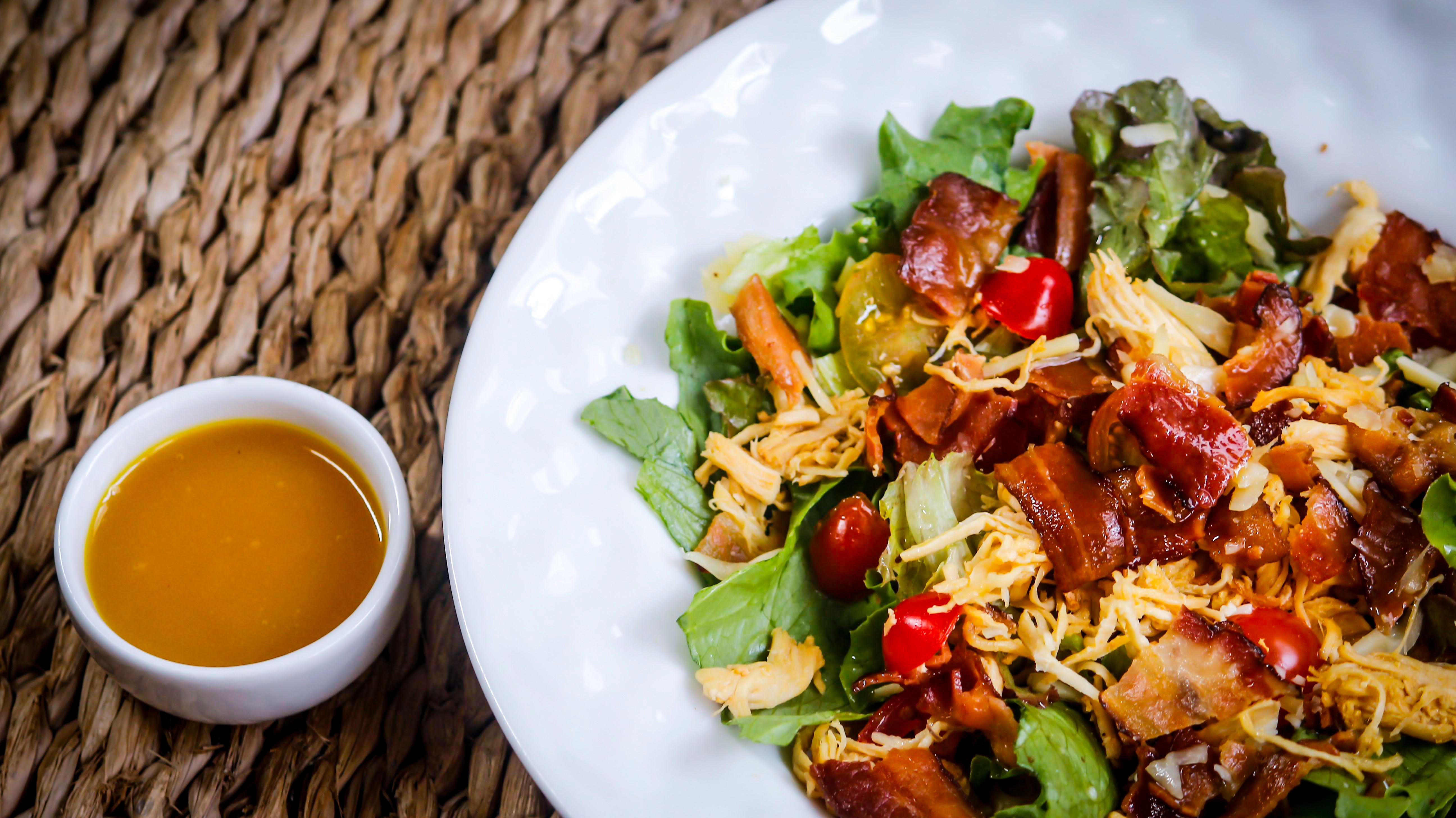
Spinach Salad with Bacon
The diets react (see scores below)
Common Ingredients
- baby spinach
- bacon
- hard-boiled eggs
- red onion
- button mushrooms
- red wine vinegar
- Dijon mustard
- sugar
Specific recipes may vary.
Incompatible with 6 of 11 diets
Diet Ratings
The base of this salad — baby spinach, bacon, hard-boiled eggs, and mushrooms — is solidly keto-friendly, offering high fat, quality protein, and very low net carbs. Red onion adds minimal carbs in small quantities. The dressing is the problem: the inclusion of sugar is a direct keto violation. Classic warm bacon dressing recipes use sugar (sometimes 1-2 tsp per serving) to balance the vinegar. Dijon mustard typically contains a small amount of sugar as well. If the sugar is omitted or substituted with a zero-carb sweetener and the dressing is made conservatively, this dish becomes keto-approved. As prepared with sugar, it earns a caution rating — the amount of sugar matters greatly, and a restaurant or standard recipe version likely pushes it into problematic territory depending on portion.
Strict keto practitioners would rate this 'avoid' outright due to the explicit sugar ingredient in the dressing, arguing that any added sugar has no place in a ketogenic diet regardless of quantity, as it signals poor food choices and can disrupt ketosis in sensitive individuals.
This dish contains multiple animal products that are unambiguously non-vegan: bacon (pork, a meat product) and hard-boiled eggs (an animal product excluded under all mainstream vegan definitions). These are core, non-optional ingredients central to the dish's identity, not trace contaminants. The plant-based components — baby spinach, red onion, mushrooms, red wine vinegar, Dijon mustard, and sugar — are all vegan-friendly, but they do not offset the presence of animal products in the same dish.
This spinach salad contains three non-paleo ingredients that disqualify it in its standard form. Bacon is a processed meat typically cured with added salt, nitrates, and often sugar — making it a processed food by paleo standards. Dijon mustard commonly contains white wine, salt, and additives that place it outside strict paleo. Most critically, sugar (refined) is explicitly excluded from the paleo diet. The base ingredients — baby spinach, hard-boiled eggs, red onion, button mushrooms — are all paleo-approved, and red wine vinegar is generally accepted. However, the combination of processed bacon, refined sugar, and processed condiments makes this dish non-compliant in its current form without significant modifications.
This dish is anchored by bacon as its primary protein, which is a processed red meat — one of the clearest violations of Mediterranean diet principles. Bacon is high in saturated fat, sodium, and nitrates, and processed meats are explicitly discouraged. The added sugar in the dressing further conflicts with Mediterranean guidelines. While several ingredients are genuinely Mediterranean-friendly — baby spinach, red onion, mushrooms, red wine vinegar, and Dijon mustard are all acceptable or encouraged — they cannot offset the dominance of processed meat and added sugar. The hard-boiled eggs are fine in moderation, but the dish as a whole is defined by its least compatible ingredient.
This dish is fundamentally incompatible with the carnivore diet. While bacon and hard-boiled eggs are carnivore-approved ingredients, the dish is built on a base of baby spinach — a plant food that is categorically excluded. Additional plant-based ingredients include red onion, button mushrooms, red wine vinegar, Dijon mustard (contains plant-derived seeds and vinegar), and sugar. The majority of the ingredients are plant-derived, and the dish's identity is a salad centered on leafy greens. Even if one stripped out every non-carnivore element, what remains would simply be bacon and eggs — not this dish. There is universal consensus in the carnivore community that leafy green salads are off the table entirely.
This spinach salad contains sugar as a listed ingredient, which is explicitly excluded on the Whole30 program. Added sugar in any form — real or artificial — is a core elimination item for the full 30 days. All other ingredients (baby spinach, hard-boiled eggs, red onion, button mushrooms, red wine vinegar, Dijon mustard) are either clearly compliant or available in compliant versions, and bacon can be compliant if it contains no sugar or non-compliant additives. However, the presence of sugar as a direct ingredient makes this dish a clear avoid. The salad could easily be made Whole30-compliant by removing the sugar and ensuring the bacon and Dijon mustard contain no excluded ingredients.
This salad contains multiple high-FODMAP ingredients that make it unsuitable during the elimination phase. Red onion is one of the highest-FODMAP foods tested by Monash University, loaded with fructans — even small amounts (a few slices) exceed safe thresholds. Button mushrooms are high in polyols (mannitol) and are flagged as high-FODMAP at standard serving sizes (Monash rates them as high-FODMAP even at 75g). Together, these two ingredients alone would disqualify the dish. The remaining ingredients are largely low-FODMAP: baby spinach is safe, bacon is low-FODMAP (plain, cured), hard-boiled eggs are safe, red wine vinegar is low-FODMAP in typical amounts, Dijon mustard is generally low-FODMAP in small quantities, and sugar is low-FODMAP. However, the red onion and button mushrooms are non-negotiable high-FODMAP offenders at any realistic serving size in this dish.
This salad features baby spinach, a quintessential DASH superfood rich in potassium, magnesium, and fiber, along with DASH-friendly ingredients like red onion, mushrooms, and red wine vinegar. However, bacon — the primary protein — is explicitly problematic for DASH: it is high in sodium, saturated fat, and processed meat components that DASH guidelines advise limiting or avoiding. A typical 2-3 strip bacon serving adds 400-600mg sodium and significant saturated fat. Hard-boiled eggs are a moderate concern (DASH historically limited dietary cholesterol, though current guidelines have softened on this). The Dijon mustard adds modest sodium, and the sugar in the dressing, while small, represents added sugar DASH discourages. The dish is not a DASH failure — the vegetable base is excellent — but bacon as the featured protein prevents approval. Substituting turkey bacon or grilled chicken would substantially improve the rating. Rated as a composite dish in its standard American preparation.
NIH DASH guidelines explicitly limit processed meats like bacon due to high sodium and saturated fat, placing this dish firmly in the caution-to-avoid zone for the protein component. However, some updated clinical interpretations note that if bacon is used sparingly (1 strip as a garnish rather than a primary protein), the overall dish profile — dominated by spinach, mushrooms, and a vinegar-based dressing — could be considered acceptable in the context of an otherwise DASH-compliant day, and the 2020-2025 Dietary Guidelines' relaxed cholesterol stance similarly rehabilitates the eggs somewhat.
This spinach salad has a solid Zone foundation but requires careful attention to two problematic elements. Baby spinach, mushrooms, and red onion are excellent low-glycemic Zone carbohydrates — colorful, high-fiber vegetables that Sears consistently approves. Hard-boiled eggs provide decent lean protein (though the yolk adds saturated fat). Red wine vinegar and Dijon mustard are Zone-friendly condiments with negligible glycemic impact. The problems are bacon and sugar. Bacon is a processed, high-saturated-fat, high-sodium protein source — not a lean Zone protein. It can serve as a fat block rather than a primary protein block, but using it as the primary protein is unfavorable. The sugar in the dressing adds unnecessary high-glycemic carbohydrates that push the ratio away from Zone balance. With modifications — treating bacon as a flavoring/fat garnish (1-2 strips), relying on eggs as the primary protein, and eliminating or minimizing the sugar in the dressing — this salad can become Zone-friendly. As written, the bacon-heavy version with sugar dressing is workable but suboptimal.
Some Zone practitioners in Sears' later anti-inflammatory framework (particularly post-'The OmegaRx Zone') are less strict about saturated fat from whole food sources like bacon used in small quantities, arguing that the inflammatory index matters more than saturated fat content per se. In that framing, a small amount of quality bacon as a flavoring agent alongside eggs and low-GI vegetables is reasonably acceptable, pushing the score closer to 6.
This classic American spinach salad presents a genuinely mixed anti-inflammatory profile. On the positive side, baby spinach is rich in antioxidants (vitamins C, E, beta-carotene), folate, and vitamin K, all associated with reduced inflammatory markers. Button mushrooms provide some anti-inflammatory benefit (though less so than Asian mushrooms). Red onion contributes quercetin, a potent flavonoid. Red wine vinegar and Dijon mustard are relatively neutral to mildly beneficial. Hard-boiled eggs are moderate — they contain some pro-inflammatory arachidonic acid but also anti-inflammatory choline and selenium. The significant problem is bacon as the primary protein: it is processed red meat, high in saturated fat and sodium, and linked to increased inflammatory markers (CRP, IL-6) in research. It falls squarely in the 'avoid' category of the anti-inflammatory framework. The addition of sugar in the dressing, even in small amounts, adds unnecessary pro-inflammatory load. If the bacon were replaced with salmon, walnuts, or avocado, this salad would score much higher. As composed, the anti-inflammatory foundation of spinach and red onion is undercut by the processed meat and added sugar.
Some practitioners take a more permissive view of occasional bacon, arguing that the overall dietary pattern matters more than any single ingredient, and that the high antioxidant load from spinach and onion partially offsets the saturated fat burden. However, most anti-inflammatory diet authorities including Dr. Weil explicitly categorize processed meats as foods to limit or avoid, making this a fairly consistent caution verdict across major frameworks.
This classic American spinach salad has a split personality for GLP-1 patients. The positives are real: baby spinach is nutrient-dense, high in fiber, and easy to digest; hard-boiled eggs contribute quality protein and are well-tolerated on GLP-1s; mushrooms and red onion add fiber and micronutrients with minimal calories; and the vinegar-mustard dressing is low-fat and low-calorie. The problem is bacon as the primary protein. Bacon is high in saturated fat, heavily processed, and a known trigger for GLP-1 GI side effects including nausea and reflux. It delivers relatively little protein per gram of fat compared to lean alternatives. The small amount of sugar in the dressing is a minor concern. The dish is not nutritionally empty — spinach and eggs carry real value — but the protein anchor is the wrong choice for GLP-1 patients, and the fat load from bacon can worsen gastric-emptying-related discomfort. A simple swap to grilled chicken breast or additional hard-boiled eggs would move this dish into approve territory. As written, it earns a cautious middle score.
Some GLP-1-focused dietitians accept small amounts of bacon as a flavor enhancer rather than a primary protein, arguing that a 1–2 strip portion alongside eggs keeps fat manageable while improving palatability and dietary adherence. Others hold firm that processed meats with high saturated fat content should be categorically limited given GLP-1 patients' heightened sensitivity to fatty foods and the medication's known interaction with gastric motility.
*See how scores were generated at our methodology page.
Nutritional profile
Six traits that cut across every diet.
Fiber & Plants
How much whole-plant food and fiber it delivers.
Healthy Fats
The quality of its fats (unsaturated, omega-3).
Whole / Unprocessed
How close it is to its natural, unprocessed form.
Gut Gentle
How easy it is on digestion (low FODMAP, few irritants).
Low Glycemic
How little it spikes your blood sugar.
Protein Density
How much protein it packs per calorie.
Controversy Index
Higher controversy = more disagreement between diets.
Diet-Specific Tips
 Keto — 5/10
View tips
- Baby spinach is very low net-carb and keto-friendly
- Bacon and hard-boiled eggs provide excellent fat and protein macros
- Button mushrooms and red onion are low-carb in standard salad portions
- Sugar in the dressing is a direct keto violation and the primary concern
- Dijon mustard often contains small amounts of added sugar
- Dish is easily modified to keto-compliant by replacing sugar with erythritol or omitting it
- Net carbs without sugar are likely under 5g per serving; with sugar, depends on quantity used
 DASH — 4/10
View tips
- Baby spinach is a top-tier DASH vegetable: high potassium, magnesium, and fiber
- Bacon is high in sodium (~400-600mg per 2-3 strips) and saturated fat — a DASH-discouraged processed meat
- Hard-boiled eggs are moderately acceptable under current guidelines but were historically limited in DASH
- Dijon mustard contributes additional sodium
- Sugar in the dressing represents added sugar, discouraged by DASH
- Mushrooms and red onion are DASH-positive vegetables
- Red wine vinegar dressing base is DASH-compatible
- Overall dish can be improved significantly by swapping bacon for a lean protein
 Zone — 5/10
View tips
- Baby spinach, mushrooms, and red onion are ideal Zone low-glycemic carbohydrates
- Bacon is a processed, high-saturated-fat protein — unfavorable as the primary protein in Zone methodology
- Hard-boiled eggs provide lean protein but whole eggs add saturated fat from yolks
- Sugar in the dressing introduces unnecessary high-glycemic carbohydrates
- Red wine vinegar and Dijon mustard are Zone-neutral and support anti-inflammatory eating
- Dish can be made Zone-compliant by using bacon sparingly as a fat garnish and removing or minimizing sugar
 Anti-Inflammatory — 4/10
View tips
- Baby spinach: rich in antioxidants, vitamins C/E/K, folate — anti-inflammatory base
- Red onion: high in quercetin, a potent anti-inflammatory flavonoid
- Bacon: processed red meat high in saturated fat and sodium — pro-inflammatory, in the 'limit/avoid' category
- Hard-boiled eggs: mixed profile — arachidonic acid vs. choline/selenium
- Button mushrooms: mild anti-inflammatory benefit
- Added sugar in dressing: small but unnecessary pro-inflammatory contribution
- Red wine vinegar + Dijon mustard: neutral to mildly positive
 GLP-1 Friendly — 5/10
View tips
- Bacon as primary protein is high in saturated fat and processed — a known GLP-1 GI trigger
- Hard-boiled eggs provide quality protein and are well-tolerated
- Baby spinach is nutrient-dense, high in fiber, and easy to digest
- Vinegar-mustard dressing is low-fat and low-calorie — a positive
- Small amount of sugar in dressing is a minor concern
- Mushrooms and red onion add fiber and micronutrients
- Overall protein content is moderate-to-low for a main dish given bacon's poor protein-to-fat ratio
- Dish is easily modified — swapping bacon for lean protein would significantly improve the rating