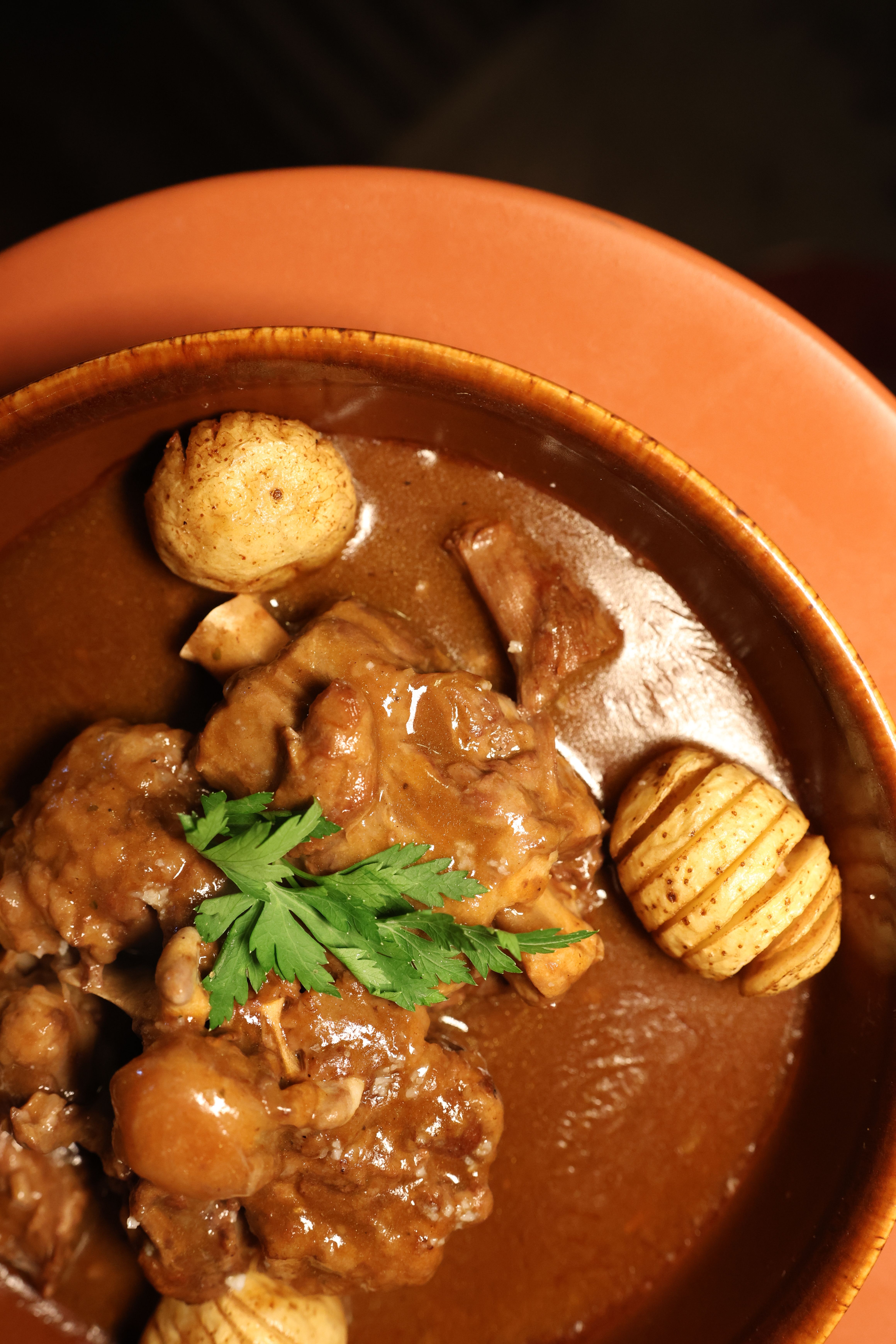
Photo: Kuiyibo Campos / Pexels
Mediterranean
Stifado
The diets react (see scores below)
Common Ingredients
- beef chuck
- pearl onions
- red wine
- tomatoes
- cinnamon
- bay leaf
- cloves
- olive oil
Specific recipes may vary.
Incompatible with 5 of 11 diets
Diet Ratings
Stifado is a Greek braised beef stew that has several keto-friendly elements but also notable concerns. Beef chuck is an excellent high-fat, high-protein keto protein source. Olive oil, bay leaf, cinnamon, and cloves are all keto-compatible. The problems lie in the pearl onions, red wine, and tomatoes. Pearl onions are significantly higher in carbs than most alliums — a typical stifado uses a large quantity (often 500g+), contributing 8-15g net carbs per serving. Red wine adds residual sugars and carbs (roughly 3-4g per 100ml, and stifado uses a generous amount). Tomatoes contribute additional net carbs (~3-5g per serving). Combined, a standard serving could push 15-25g net carbs, which is manageable for those with a 50g daily limit but risky for strict 20g practitioners. With careful portion control, reduced wine, and fewer onions, this dish can fit into a flexible keto framework.
Strict keto practitioners argue that the red wine and pearl onion quantities in a traditional stifado make it fundamentally incompatible, as the combination easily exceeds a strict 20g daily carb budget in a single serving, leaving no room for other meals. They would recommend a heavily modified version or avoidance altogether.
Stifado is a Greek/Mediterranean braised beef stew. Its primary protein is beef chuck, which is a direct animal product (mammal flesh). This unambiguously disqualifies it from any vegan diet. No version of this dish as described is vegan-compatible, and there is no meaningful debate within the vegan community about consuming beef.
Stifado is largely paleo-friendly at its core — beef chuck is an excellent unprocessed protein, pearl onions are whole vegetables, tomatoes are paleo-approved fruits, olive oil is a preferred fat, and spices like cinnamon, bay leaf, and cloves are all hunter-gatherer compatible. The dish scores well on its primary components. However, red wine introduces a meaningful gray area: alcohol is debated within the paleo community and represents a processed fermented product. While wine is made from grapes (paleo-approved), the fermentation and concentration of sugars/alcohol place it in the caution category. Without the red wine, this dish would comfortably score 8-9. The red wine's role as a braising liquid (used in meaningful quantity) pulls the overall verdict to caution rather than approve.
Some paleo practitioners, including those following Mark Sisson's Primal Blueprint approach, treat dry red wine as an acceptable occasional indulgence given its grape origins and polyphenol content, and would approve this dish outright. Conversely, stricter Cordain-school adherents would flag any alcohol as non-paleo and recommend replacing the wine with bone broth and a splash of apple cider vinegar.
Stifado is a traditional Greek beef stew, and while it features several Mediterranean-friendly ingredients — olive oil, tomatoes, aromatic spices, and vegetables — its primary protein is beef chuck, a red meat high in saturated fat. Mediterranean diet guidelines restrict red meat to only a few times per month. The dish is not processed and uses whole, quality ingredients, which prevents it from scoring at the lowest end, but the red meat base fundamentally conflicts with the diet's core principles for regular consumption. The wine, tomatoes, onions, olive oil, and spices are all aligned with the diet, making this an occasional, culturally authentic treat rather than a regular staple.
Traditional Greek and broader Eastern Mediterranean culinary practice has long included slow-braised meat dishes like stifado for festive or Sunday meals. Some Mediterranean diet authorities, including those referencing the original Cretan dietary patterns, acknowledge that small portions of lean red meat in traditional preparations — especially those rich in vegetables, olive oil, and aromatics — are culturally integral and acceptable on an occasional basis, perhaps once or twice a month.
Stifado is fundamentally incompatible with the carnivore diet. While the base protein — beef chuck — is an excellent carnivore food, the dish is built around multiple plant-derived ingredients that are strictly excluded. Pearl onions and tomatoes are vegetables/fruits. Red wine is a fermented plant product. Cinnamon, bay leaf, and cloves are plant spices. Olive oil is a plant-based oil. Together, these non-animal ingredients define the dish's character and cannot be considered incidental — they are structural to Stifado. The beef chuck alone would score highly, but this dish as prepared is essentially a plant-heavy stew with some beef in it.
Stifado is a Greek braised beef stew that is largely Whole30-friendly in concept — beef chuck, pearl onions, tomatoes, cinnamon, bay leaf, cloves, and olive oil are all fully compliant ingredients. However, the traditional recipe calls for red wine, which is alcohol and explicitly excluded on Whole30. Alcohol in all forms is prohibited regardless of the quantity used or whether it is cooked off. The dish cannot be considered compliant as traditionally prepared. A compliant version could be made by substituting the red wine with beef broth, compliant tomato paste, or a splash of red wine vinegar to approximate the acidity and depth.
Stifado is high-FODMAP primarily due to pearl onions, which are a concentrated source of fructans — one of the most problematic FODMAPs. Onions are high-FODMAP at any cooking amount and cannot be made safe by reducing portion size when they are a core structural ingredient of the dish. Red wine in cooking quantities may also contribute moderate FODMAP load (fructans/polyols), though small amounts are generally tolerated. Beef chuck, olive oil, tomatoes (in moderate amounts), cinnamon, bay leaf, and cloves are low-FODMAP ingredients. However, the pearl onions are irreplaceable in stifado — they define the dish — and cannot be simply omitted or swapped without fundamentally changing the recipe. Even if onions are removed from the braise, the fructans leach into the cooking liquid throughout the long stew, contaminating the entire dish.
Stifado is a Greek braised beef stew that presents a mixed DASH profile. On the positive side, it features DASH-friendly ingredients: pearl onions (vegetables), tomatoes (vegetables rich in potassium), olive oil (heart-healthy unsaturated fat), and aromatic spices with no added sodium. However, the primary protein — beef chuck — is a fatty cut of red meat with significant saturated fat content, which DASH guidelines explicitly limit. DASH does not exclude red meat entirely but recommends limiting it, preferring lean poultry and fish. The red wine adds minimal concern in cooking (alcohol largely cooks off, though DASH doesn't explicitly endorse alcohol). The dish is naturally low in sodium assuming no added salt beyond seasoning, which is a positive. The main issue is the saturated fat from beef chuck: a typical serving could deliver 6–9g saturated fat depending on portion size and fat trimming. This places it in the 'caution' category — acceptable occasionally in moderate portions, but not a core DASH staple. Using a leaner cut (e.g., lean beef round or substituting lamb leg trimmed of fat) and trimming visible fat would improve the DASH compatibility meaningfully.
NIH DASH guidelines categorize red meat as a food to limit due to saturated fat, recommending no more than a few servings per week. However, some updated clinical interpretations of DASH note that lean cuts of beef in moderate portions, especially in a vegetable-rich preparation with olive oil like stifado, can fit within overall dietary fat and calorie targets — particularly for non-hypertensive individuals following the standard 2,300mg sodium threshold.
Stifado is a Greek braised beef stew that has several Zone-compatible elements but also some notable concerns. On the positive side, olive oil is an ideal monounsaturated fat source, tomatoes and pearl onions are low-to-moderate glycemic vegetables with good polyphenol content, and the aromatic spices (cinnamon, cloves, bay leaf) are anti-inflammatory. However, beef chuck is a fatty cut with significant saturated fat, which conflicts with Zone's preference for lean proteins. Red wine adds residual sugars and carbohydrates that must be accounted for in block calculations. The dish can be made Zone-compatible with careful portion control — a modest 3 oz serving of chuck alongside the vegetable-rich braise — but the fatty protein source requires balancing. The red wine reduction, if substantial, adds unfavorable carb load. Pearl onions are 'favorable' Zone carbs in moderation. Overall, this is a real-world dish that Zone practitioners could include occasionally with attention to protein portioning and pairing with additional low-GI vegetables to hit the 40/30/30 ratio.
Some Zone practitioners and Sears' later anti-inflammatory writings acknowledge that the omega-3 content of grass-fed beef chuck, combined with the polyphenol-rich tomatoes, red wine, cinnamon, and cloves, make Stifado a reasonable anti-inflammatory meal. If grass-fed beef is used, the saturated fat concern is reduced and the omega-6/omega-3 ratio improves. In that context, some would rate this higher (6-7) as a Zone-friendly Mediterranean meal.
Stifado is a Greek braised beef stew with a genuinely mixed anti-inflammatory profile. On the positive side, it features several strongly anti-inflammatory components: olive oil provides oleocanthal and monounsaturated fats; tomatoes supply lycopene and antioxidants; cinnamon and cloves are potent anti-inflammatory spices with polyphenols; red wine contributes resveratrol; and pearl onions provide quercetin and prebiotic fiber. These ingredients collectively represent some of the best elements of Mediterranean anti-inflammatory eating. However, the primary protein — beef chuck — is a fatty red meat high in saturated fat and arachidonic acid, both of which are associated with pro-inflammatory signaling and elevated inflammatory markers (CRP, IL-6) in research. Beef chuck in particular is a high-fat cut. The braising method at least doesn't add problematic fats, and the dish is rich in vegetables and spices. Overall, the anti-inflammatory spice and vegetable base partially offsets the red meat concern, but beef chuck consumed regularly would conflict with anti-inflammatory principles. Occasional consumption in the context of an otherwise anti-inflammatory diet is acceptable — this is a 'caution' rather than 'avoid' because of the strong supporting cast of anti-inflammatory ingredients.
Dr. Weil's framework places red meat in the 'use sparingly' category, and many anti-inflammatory researchers would rate any beef-forward dish no higher than caution regardless of supporting ingredients. However, some Mediterranean diet researchers argue that traditional dishes like stifado — where red meat is used in small portions alongside abundant vegetables, spices, and olive oil — fit within an anti-inflammatory Mediterranean pattern and should not be treated the same as processed or conventionally prepared red meat.
Stifado is a Greek braised beef stew built around beef chuck, which is a fatty cut with significant saturated fat content. While the dish offers meaningful protein, the cut choice and cooking method (slow braising in olive oil and red wine) result in a higher fat per serving than is ideal for GLP-1 patients. Red wine in the braising liquid introduces alcohol, which — even when much of it cooks off — adds empty calories and some residual alcohol content. Pearl onions, tomatoes, and the aromatic spices (cinnamon, cloves, bay leaf) are all GLP-1-friendly: they add fiber, micronutrients, and are easy to digest. Olive oil is a preferred unsaturated fat, which is a positive. The spice profile is mild and unlikely to worsen reflux or nausea. The main liabilities are the fatty cut of beef and the red wine. A modified version using a leaner cut (eye of round, sirloin) and replacing wine with beef broth would score considerably higher. As served traditionally, this is a caution — acceptable occasionally in a modest portion but not a GLP-1 staple.
Some GLP-1-focused dietitians accept braised fatty cuts like chuck in small portions because the slow-cook method improves digestibility and the fat content may be partially rendered off; others flag any fatty red meat as problematic due to slower gastric emptying already caused by the medication, increasing the risk of nausea and reflux. The red wine addition is also handled inconsistently — some clinicians consider the residual alcohol in a cooked dish negligible, while others recommend avoiding it entirely given liver considerations during GLP-1 therapy.
*See how scores were generated at our methodology page.
Nutritional profile
Six traits that cut across every diet.
Fiber & Plants
How much whole-plant food and fiber it delivers.
Healthy Fats
The quality of its fats (unsaturated, omega-3).
Whole / Unprocessed
How close it is to its natural, unprocessed form.
Gut Gentle
How easy it is on digestion (low FODMAP, few irritants).
Low Glycemic
How little it spikes your blood sugar.
Protein Density
How much protein it packs per calorie.
Controversy Index
Higher controversy = more disagreement between diets.
Diet-Specific Tips
 Keto — 5/10
View tips
- Beef chuck is high-fat and protein-rich — core keto food
- Pearl onions used in large quantities, significantly raising net carbs
- Red wine contributes residual sugars and carbs (~3-4g per 100ml)
- Tomatoes add additional net carbs (~3-5g per serving)
- Combined net carbs per standard serving estimated 15-25g
- Olive oil and spices are fully keto-compatible
- Portion control and recipe modification can bring this into keto range
 Paleo — 6/10
View tips
- Beef chuck is a paleo-approved unprocessed protein
- Olive oil is a preferred paleo fat
- Pearl onions, tomatoes, and all spices are fully paleo-compliant
- Red wine is the primary concern — alcohol is debated within the paleo community
- No grains, legumes, dairy, seed oils, or refined sugar present
- Dish would be approvable if red wine were substituted with bone broth
 DASH — 5/10
View tips
- Beef chuck is a fatty red meat cut — high in saturated fat, which DASH limits
- Pearl onions and tomatoes contribute DASH-positive vegetables with potassium and fiber
- Olive oil is the recommended fat source in DASH guidelines
- No added sodium from processed ingredients — naturally low-sodium preparation
- Spices (cinnamon, cloves, bay leaf) add flavor without sodium
- Red wine used in cooking is not a DASH concern at typical braising quantities
- Portion control is key — a smaller serving (3–4 oz beef) improves DASH compatibility
- Substituting a leaner beef cut would raise the score to 6–7
 Zone — 5/10
View tips
- Beef chuck is a fatty cut — higher saturated fat than Zone's preferred lean proteins like chicken breast or fish
- Olive oil is an ideal Zone monounsaturated fat source
- Pearl onions and tomatoes are favorable, low-glycemic Zone carbohydrates with good polyphenol content
- Red wine adds residual sugar and carbohydrates requiring careful block accounting
- Spices (cinnamon, cloves, bay leaf) are anti-inflammatory and Zone-positive
- Portion control critical — a small serving of chuck (3 oz) can fit Zone protein blocks but the fat content may exceed the 10-15g fat target per meal
- Grass-fed beef would significantly improve the omega-3/omega-6 ratio and overall Zone compatibility
 Anti-Inflammatory — 5/10
View tips
- Beef chuck is a fatty cut of red meat — high in saturated fat and arachidonic acid, both pro-inflammatory
- Olive oil contributes oleocanthal, a natural COX inhibitor with anti-inflammatory properties
- Cinnamon and cloves are among the most antioxidant-rich spices, with demonstrated anti-inflammatory activity
- Tomatoes provide lycopene and vitamin C; cooking increases lycopene bioavailability
- Pearl onions supply quercetin, a flavonoid associated with reduced inflammatory markers
- Red wine adds resveratrol, though total alcohol content remains a consideration
- Traditional Mediterranean preparation context partially mitigates red meat concern
 GLP-1 Friendly — 4/10
View tips
- Beef chuck is a high-saturated-fat cut — not ideal for GLP-1 patients
- Red wine introduces alcohol and empty calories; residual alcohol content is a concern
- Olive oil is a preferred unsaturated fat — a positive
- Pearl onions and tomatoes contribute fiber and micronutrients
- Mild aromatic spices (cinnamon, cloves) are well-tolerated and unlikely to worsen GI side effects
- Braising improves digestibility compared to dry-heat cooking methods
- Portion sensitivity is high — a small serving is more manageable than a full bowl
- Leaner protein substitution (sirloin, eye of round) would significantly improve the GLP-1 profile