Photo: Kenneth Surillo / Pexels
The diets react (see scores below)
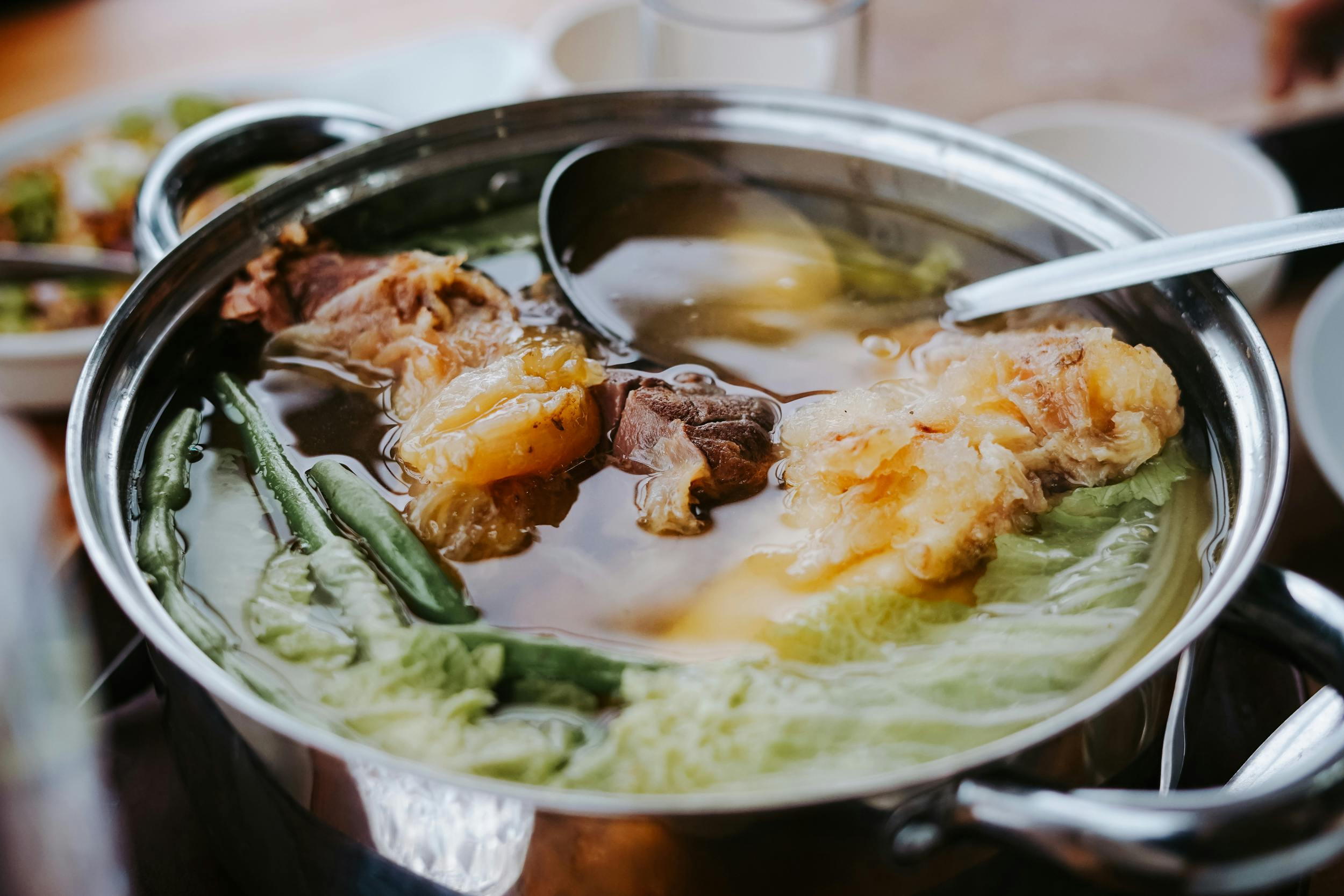
Common Ingredients
- thinly sliced beef
- Napa cabbage
- tofu
- shirataki noodles
- enoki mushrooms
- soy sauce
- mirin
- sugar
Specific recipes may vary.
Incompatible with 6 of 11 diets
Diet Ratings
Traditional sukiyaki is heavily incompatible with keto due to its sweet cooking broth (warishita), which combines soy sauce, mirin, and added sugar. Mirin is a sweet rice wine with significant sugar content, and sukiyaki recipes typically call for substantial amounts of sugar to create the characteristic sweet-savory glaze. Together, the mirin and sugar can add 15-25g of net carbs per serving from the sauce alone. While several individual ingredients are keto-friendly — thinly sliced beef (excellent), tofu (acceptable), shirataki noodles (near-zero net carbs), Napa cabbage (low carb), and enoki mushrooms (low carb) — the signature sweet sauce fundamentally disqualifies this dish as prepared. A heavily modified version omitting sugar and mirin entirely would be a different dish altogether.
Sukiyaki as described contains thinly sliced beef as its primary protein, which is a direct animal product and an unambiguous violation of vegan dietary principles. There is no debate within the vegan community about beef — it is the flesh of a slaughtered animal. The dish does include several plant-based components (tofu, shirataki noodles, Napa cabbage, enoki mushrooms, soy sauce, mirin, sugar), meaning a vegan adaptation is theoretically possible by omitting the beef and using additional tofu or plant protein, but the dish as listed is not vegan-compatible.
Sukiyaki contains multiple non-paleo ingredients that disqualify it. Tofu is a soy-based legume product — clearly excluded from paleo. Soy sauce is a fermented soy and wheat product — doubly problematic as both a legume and grain derivative. Mirin is a sweetened rice wine — a grain-based alcohol with added sugar. Refined sugar is explicitly excluded. Shirataki noodles, while low-carb, are a processed konjac product that contradicts the unprocessed paleo philosophy. The thinly sliced beef, Napa cabbage, and enoki mushrooms are paleo-compliant, but the foundational soy-mirin-sugar broth and tofu make this dish fundamentally incompatible with the paleo framework.
Sukiyaki is centered on thinly sliced beef as its primary protein, which directly conflicts with Mediterranean diet principles that limit red meat to a few times per month. The dish also contains added sugar and mirin (a sweet rice wine), contributing refined sugars and sweetened sauces that are discouraged. While several ingredients are Mediterranean-friendly — tofu and shirataki noodles provide plant-based bulk, Napa cabbage and enoki mushrooms are excellent vegetables, and the dish is not deep-fried — these positives are overshadowed by the red meat focus and the sweet, sugar-heavy broth. Soy sauce is high in sodium, which is not a core Mediterranean concern but adds to the processed condiment profile. The absence of olive oil and the non-Mediterranean culinary tradition further distance this dish from the dietary pattern.
Some Mediterranean diet interpreters might rate this as 'caution' rather than 'avoid,' noting that beef is consumed in small, thin slices shared among multiple people (making per-serving portions modest), and that the dish's vegetable and tofu content is substantial. If beef is treated as a flavoring agent rather than a main portion, occasional consumption could fit within the 'few times per month' red meat allowance.
Sukiyaki is fundamentally incompatible with the carnivore diet. While the dish does contain beef as its primary protein, the vast majority of its ingredients are plant-derived or heavily processed plant-based products. Napa cabbage, enoki mushrooms, tofu (soy-based), and shirataki noodles (konjac root) are all plant foods explicitly excluded from the carnivore diet. The broth/sauce itself — a combination of soy sauce (fermented soy and wheat), mirin (rice-based sweet wine), and sugar — compounds the violation with plant-derived, processed, and sugar-laden condiments. There is essentially nothing salvageable about this dish as a whole for a carnivore practitioner; the beef slices could theoretically be eaten in isolation, but the dish as prepared and presented is incompatible.
Sukiyaki contains multiple Whole30-excluded ingredients. Soy sauce is soy-based and therefore excluded (a compliant substitute like coconut aminos would be needed). Mirin is a sweet rice wine that contains both alcohol and rice/grains, making it doubly excluded. Sugar is an added sugar, which is explicitly excluded. Tofu is a soy product, also excluded as a legume derivative. These are not edge cases — soy, alcohol, grains, and added sugar are all core exclusions of the Whole30 program.
Sukiyaki contains several ingredients that are individually manageable on a low-FODMAP diet but collectively create concern around portion sizes and preparation specifics. Thinly sliced beef is low-FODMAP. Shirataki noodles (konjac-based) are low-FODMAP. Firm tofu is low-FODMAP in standard servings (~170g). Napa cabbage is low-FODMAP at small servings (75g) but becomes moderate-high in fructans at larger portions, and sukiyaki typically uses generous amounts. Enoki mushrooms are a notable concern — Monash rates them as high-FODMAP even at modest servings due to polyols (mannitol), making them the most problematic ingredient. Soy sauce is low-FODMAP in small amounts (2 tablespoons). Mirin contains some fructose but is typically used in small quantities where it remains low-FODMAP. Sugar is low-FODMAP in standard cooking amounts. The dish as traditionally served is borderline: the enoki mushrooms and the risk of large Napa cabbage portions push it into caution territory. Substituting enoki with oyster mushrooms or omitting mushrooms entirely would significantly improve the FODMAP profile.
Monash University rates enoki mushrooms as high-FODMAP even at small servings due to mannitol content, which many clinical FODMAP practitioners would use as grounds to avoid this dish entirely during elimination. Additionally, Napa cabbage portion control in a shared hot-pot-style dish is difficult to manage in practice, as diners often consume well above the low-FODMAP threshold of 75g.
Sukiyaki contains a mix of DASH-friendly ingredients (Napa cabbage, tofu, shirataki noodles, enoki mushrooms) alongside elements that conflict with DASH principles. The primary concerns are: (1) Red meat (thinly sliced beef) is discouraged on DASH, which recommends limiting red meat and preferring lean poultry or fish; (2) The seasoning base of soy sauce, mirin, and sugar is high in sodium and added sugars — a typical sukiyaki broth can contribute 800–1,500mg of sodium per serving, a significant portion of the DASH daily limit; (3) Added sugar from mirin and table sugar conflicts with DASH's recommendation to limit sweets. On the positive side, the vegetable and tofu components are DASH-aligned, and shirataki noodles are low-calorie and low-sodium. The dish is not categorically off-limits but requires meaningful modification (reduced soy sauce, low-sodium soy sauce, leaner protein substitution, reduced sugar) to be DASH-compatible.
NIH DASH guidelines explicitly limit red meat and high-sodium condiments like soy sauce, placing sukiyaki in a cautious category. However, some DASH-oriented clinicians note that when portion sizes of beef are small (as is typical in sukiyaki), the dish is predominantly plant-based with tofu and vegetables, and suggest that using low-sodium soy sauce and reducing sugar can make it acceptable within a flexible DASH framework.
Sukiyaki presents a mixed Zone Diet picture. On the positive side, it contains several Zone-friendly components: tofu and beef provide protein (though beef is fattier than ideal lean protein), napa cabbage and enoki mushrooms are excellent low-glycemic vegetables, tofu adds vegetarian protein, and shirataki noodles are essentially zero-carb and zero-calorie (made from konjac), making them a Zone-neutral or even Zone-positive ingredient. However, the sukiyaki sauce is a significant concern. The combination of mirin and added sugar creates a high-glycemic, high-sugar broth that the ingredients absorb during cooking. Traditional sukiyaki sauce (warishita) can contain substantial amounts of sugar — this pushes the carbohydrate fraction toward high-glycemic sources, disrupting the Zone's emphasis on low-glycemic carbs. The thinly sliced beef (typically ribeye or chuck) carries higher saturated fat than Zone-preferred lean proteins like chicken breast or fish. With careful modification — reducing or eliminating added sugar, using only a small amount of mirin, and choosing a leaner cut of beef — sukiyaki could be brought closer to Zone compliance. As traditionally prepared, the sweet broth and fatty beef require cautious portioning to maintain the 40/30/30 ratio without spiking insulin.
Some Zone practitioners note that the overall vegetable load (napa cabbage, mushrooms) and the near-zero carb shirataki noodles help offset the sugary broth, especially if portions are modest. Dr. Sears' later anti-inflammatory writings also acknowledge that naturally occurring sugars in traditional sauces, when diluted across a large vegetable-heavy dish, may have less glycemic impact than consuming pure sugar equivalents. A strict early-Zone reading, however, would flag the mirin-sugar combination as 'unfavorable' carbohydrate.
Sukiyaki is a mixed dish from an anti-inflammatory standpoint. On the positive side, it contains several strongly anti-inflammatory ingredients: tofu (whole soy food, emphasized in anti-inflammatory diets), shirataki noodles (fiber-rich, low-glycemic konjac), enoki mushrooms (Asian mushrooms are specifically recommended in anti-inflammatory frameworks for their beta-glucans and immune-modulating properties), and Napa cabbage (cruciferous vegetable with antioxidants and fiber). These ingredients provide meaningful anti-inflammatory benefit. The primary concern is the thinly sliced beef, which is red meat — categorized as 'limit' in anti-inflammatory protocols due to saturated fat content and arachidonic acid, which can promote inflammatory eicosanoids. Sukiyaki-style beef is typically well-marbled (often wagyu or ribeye), making it higher in saturated fat than lean cuts. The sweet broth (mirin and added sugar) introduces moderate added sugar, which is pro-inflammatory in excess — though the per-serving dose in a shared hot pot is likely moderate. Soy sauce contributes high sodium, which is not a direct inflammatory trigger but is worth noting for overall health. The dish is not inherently avoid-worthy given its plant-based components and the relatively small amount of beef per serving in a traditional communal preparation, but the red meat and added sugar prevent approval. Best consumed occasionally rather than regularly.
Most anti-inflammatory practitioners would rate sukiyaki as borderline caution-to-avoid primarily because of the red meat; Dr. Weil's framework places red meat in the 'limit' category and emphasizes it should not be a regular feature. However, some integrative nutrition approaches note that the overall dish matrix — rich in fiber, phytonutrients from vegetables and mushrooms, and isoflavones from tofu — partially offsets the pro-inflammatory impact of small amounts of red meat, especially if lean cuts are substituted.
Sukiyaki is a mixed dish with meaningful GLP-1-compatible strengths and notable drawbacks. On the positive side, it contains tofu and shirataki noodles (low-calorie, easy to digest), Napa cabbage and enoki mushrooms (fiber, micronutrients, high water content), and tofu adds plant protein with moderate fat. However, the primary protein is thinly sliced beef, which is typically a fatty cut (ribeye or chuck roll is traditional) — delivering saturated fat that can worsen GLP-1 nausea, bloating, and reflux. The sauce — soy sauce, mirin, and sugar — creates a high-sugar, high-sodium broth that adds empty calories and contributes to blood sugar spikes, both counterproductive on GLP-1 medications. Portion control matters significantly here: a small serving leaning heavily on tofu, cabbage, shirataki, and mushrooms with minimal beef and sauce is reasonably GLP-1 compatible, but a typical restaurant portion of beef-forward sukiyaki with full broth consumption is problematic.
Some GLP-1-focused dietitians view sukiyaki favorably as a broth-based, vegetable-rich Japanese dish where patients naturally self-limit portion size; they consider the beef acceptable if lean cuts are substituted. Others flag the sugar-mirin sauce as a meaningful glycemic concern given the calorie scarcity context of GLP-1 eating, and highlight that fatty beef is one of the more reliably reported GI triggers in this patient population.
*See how scores were generated at our methodology page.
Nutritional profile
Six traits that cut across every diet.
Fiber & Plants
How much whole-plant food and fiber it delivers.
Healthy Fats
The quality of its fats (unsaturated, omega-3).
Whole / Unprocessed
How close it is to its natural, unprocessed form.
Gut Gentle
How easy it is on digestion (low FODMAP, few irritants).
Low Glycemic
How little it spikes your blood sugar.
Protein Density
How much protein it packs per calorie.
Controversy Index
Higher controversy = more disagreement between diets.
Diet-Specific Tips
 Low-FODMAP — 5/10
View tips
- Enoki mushrooms are high-FODMAP due to mannitol (polyol) — a significant red flag even at small servings
- Napa cabbage is low-FODMAP at ≤75g but portions in sukiyaki often exceed this threshold
- Beef, shirataki noodles, and firm tofu are safely low-FODMAP
- Soy sauce is low-FODMAP at ≤2 tablespoons per serving
- Mirin and sugar are low-FODMAP in typical cooking quantities
- Dish can be made more FODMAP-friendly by substituting or omitting enoki mushrooms and controlling cabbage portions
 DASH — 4/10
View tips
- Red meat (beef) is a DASH-limited food; DASH recommends ≤6oz lean meat/day and favors poultry/fish over red meat
- Soy sauce contributes high sodium — standard soy sauce has ~900mg sodium per tablespoon; low-sodium soy sauce reduces this by ~40%
- Mirin and added sugar increase refined carbohydrate and added sugar content, conflicting with DASH guidelines
- Tofu is a DASH-approved plant protein (legume/nut/seed category)
- Napa cabbage, enoki mushrooms, and shirataki noodles are low-sodium, nutrient-dense DASH-friendly vegetables
- Dish is predominantly plant-based in volume, but the seasoning profile undermines DASH compatibility
- Low-sodium soy sauce substitution and reduced sugar would raise the score to 6–7
 Zone — 5/10
View tips
- High-sugar sukiyaki sauce (mirin + added sugar) raises glycemic load significantly
- Shirataki noodles are Zone-neutral: virtually zero net carbs and calories
- Napa cabbage and enoki mushrooms are Zone-favorable low-glycemic vegetables
- Thinly sliced beef is typically a fatty cut (ribeye/chuck), higher in saturated fat than Zone-preferred lean proteins
- Tofu adds Zone-friendly vegetarian protein and helps balance macros
- Dish can be Zone-adapted by reducing sugar in the broth and choosing leaner beef cuts
 Anti-Inflammatory — 5/10
View tips
- Red meat (beef) is pro-inflammatory; limit per anti-inflammatory guidelines — especially if high-fat cut like wagyu
- Tofu is a whole soy food, specifically emphasized as anti-inflammatory
- Enoki mushrooms are among the Asian mushrooms highlighted for beta-glucans and anti-inflammatory immune support
- Shirataki noodles are low-glycemic, high-fiber, and metabolically neutral
- Napa cabbage provides antioxidants and cruciferous fiber
- Mirin and added sugar contribute moderate glycemic load to the broth
- Soy sauce adds significant sodium but is not directly inflammatory at culinary doses
- Overall dish is vegetable-forward in composition, partially mitigating red meat concerns
 GLP-1 Friendly — 5/10
View tips
- Fatty beef (traditional cut) increases saturated fat and GLP-1 GI side effect risk
- Sugar and mirin in sauce add glycemic load and empty calories
- Tofu provides plant protein and is easy to digest
- Shirataki noodles are low-calorie and gut-friendly — strong GLP-1 benefit
- Napa cabbage and enoki mushrooms add fiber, water content, and micronutrients
- High sodium from soy sauce warrants caution given dehydration risk on GLP-1s
- Dish is highly portion-sensitive — beef-to-vegetable ratio determines overall rating
- Can be made more GLP-1 compatible by substituting lean protein and reducing sauce sugar