This dish contains raw or undercooked ingredients. Consume at your discretion.
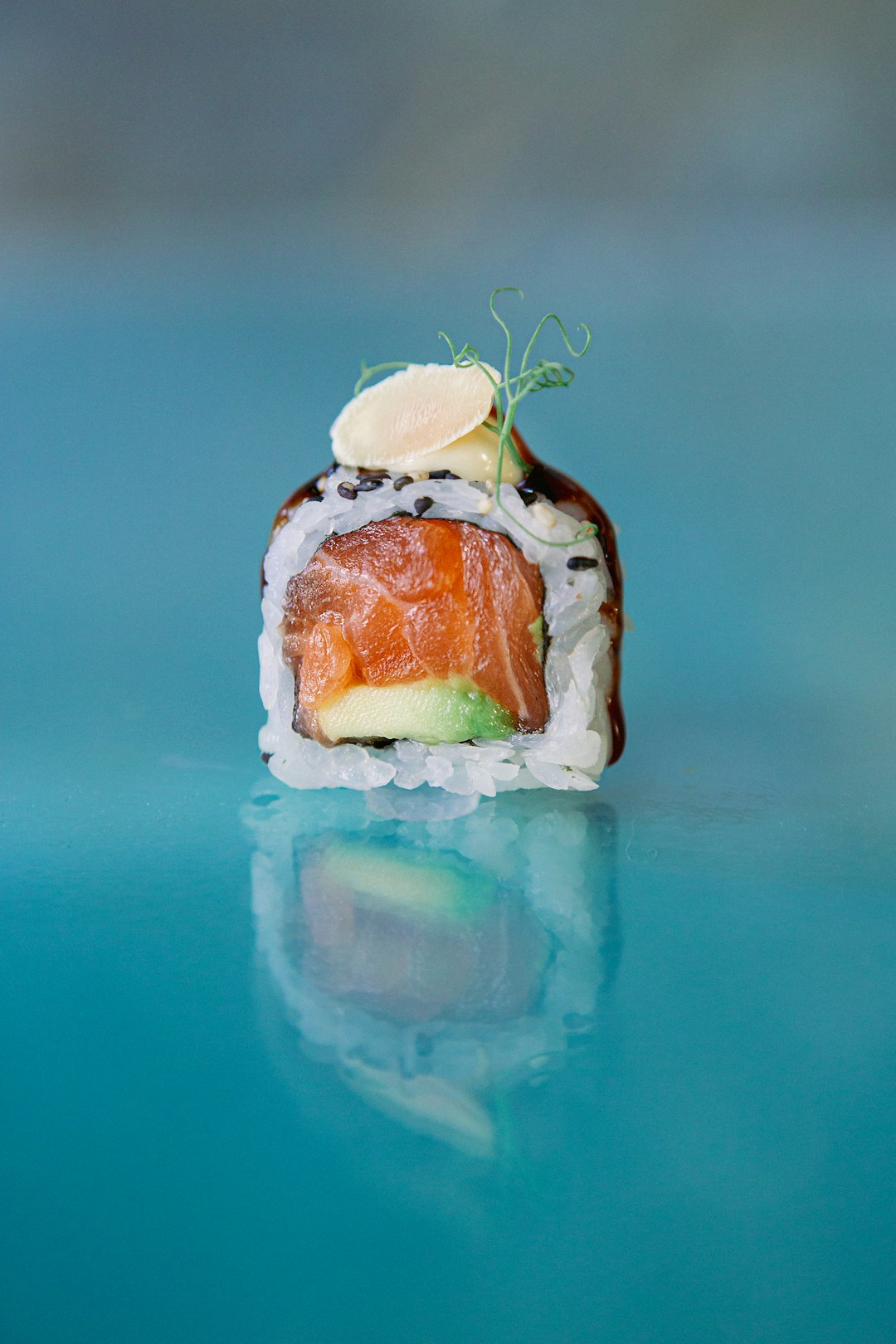
Photo: Ahtziri Lagarde / Unsplash
Japanese
Salmon Avocado Roll
The diets react (see scores below)
Common Ingredients
- sushi rice
- salmon
- avocado
- nori
- soy sauce
Specific recipes may vary.
Incompatible with 5 of 11 diets
Diet Ratings
Sushi rice is the dominant carbohydrate component and is typically sweetened with sugar, pushing a single roll to roughly 30-45g net carbs. This alone can exceed a full day's keto carb budget, regardless of the otherwise keto-friendly salmon, avocado, and nori.
This dish contains salmon, which is a fish and an animal product. Vegan diets exclude all fish and seafood without exception.
This dish contains sushi rice (a grain) and soy sauce (made from soy/wheat, a legume-based fermented product with added salt), both of which are excluded from a standard paleo diet. While salmon, avocado, and nori are excellent paleo ingredients, the foundational components of the roll violate core paleo principles.
Paul Jaminet's Perfect Health Diet, which has significant overlap with and respect within the paleo community, considers white rice a 'safe starch' low in anti-nutrients and would view sushi rice more favorably. However, soy sauce remains problematic across nearly all paleo interpretations due to soy and wheat content.
Salmon is an excellent fatty fish rich in omega-3s and strongly aligned with Mediterranean diet principles, and avocado contributes healthy monounsaturated fats. However, sushi rice is a refined white grain often prepared with added sugar, and soy sauce is a high-sodium processed condiment, both of which run counter to Mediterranean emphasis on whole grains and minimal processed foods. Overall acceptable in moderation due to the strong protein and healthy fat profile.
Some modern Mediterranean diet interpretations focus primarily on the overall fat and protein quality, in which case the omega-3-rich salmon and avocado would justify an approve rating, treating the small amount of white rice as a minor concession similar to occasional refined grains in traditional Mediterranean meals.
While salmon is an excellent carnivore-approved protein, this dish is dominated by plant-based ingredients: sushi rice (a grain), avocado (a plant fat), nori (seaweed), and soy sauce (fermented soy with wheat). Only one of five ingredients is animal-derived, making this incompatible with the carnivore diet.
This dish contains sushi rice (a grain) and soy sauce (made from soy, a legume, and typically contains wheat). Both are explicitly excluded on Whole30. While salmon, avocado, and nori are compliant, the core components of this roll violate the program's rules.
Most ingredients are low-FODMAP: sushi rice, salmon, and nori are all Monash-approved at standard servings. However, avocado is the problem ingredient — Monash rates it low-FODMAP only at 1/8 of an avocado (30g); at 1/2 avocado it becomes high-FODMAP due to sorbitol. A typical sushi roll contains roughly 1/4 to 1/2 avocado, placing it in moderate-to-high FODMAP territory. Soy sauce is low-FODMAP at 2 tablespoons. The dish hovers near the threshold depending on how much avocado is used per roll.
Monash University lists avocado as low-FODMAP at 1/8 fruit (30g), so technically a roll using a thin slice could be tolerated. However, clinical FODMAP practitioners often advise caution because real-world sushi servings exceed the Monash safe threshold, and sorbitol accumulates across the meal if other polyol-containing foods are eaten.
Salmon is an excellent DASH-approved fatty fish rich in omega-3s, and avocado provides heart-healthy monounsaturated fats, potassium, and fiber. However, the dish has significant DASH drawbacks: sushi rice is a refined white grain (DASH emphasizes whole grains), and soy sauce is extremely high in sodium (~900-1000mg per tablespoon), which can quickly push intake past DASH limits. Without soy sauce or with low-sodium soy sauce used sparingly, this dish would rate as approve.
A salmon avocado roll has excellent Zone-friendly components (salmon for omega-3-rich lean protein, avocado for monounsaturated fat), but the sushi rice is a high-glycemic 'unfavorable' carbohydrate in Zone terminology. White rice spikes blood sugar quickly, which works against the insulin-stabilizing goal of Zone. The roll can fit into a Zone meal if portioned carefully—typically limiting to one small roll and balancing with extra vegetables (seaweed salad, edamame) to dilute the glycemic load. Standalone, the macro ratio skews heavily toward carbs (~65% carb from rice), violating the 40/30/30 target.
Salmon provides omega-3 fatty acids (EPA/DHA) that actively reduce inflammatory markers, avocado contributes monounsaturated fats and carotenoids, and nori offers minerals and antioxidants. The main drawback is the refined white sushi rice, which has a high glycemic load and can promote inflammation, and the soy sauce adds significant sodium. Overall the dish leans anti-inflammatory due to the strength of the salmon and avocado, but the white rice base prevents a top-tier score.
Dr. Weil's Anti-Inflammatory Pyramid permits modest amounts of white basmati or sushi rice as a low-impact refined grain, supporting an approve rating. However, stricter anti-inflammatory frameworks (e.g., the IF Rating system and low-glycemic protocols) flag white rice's glycemic load as pro-inflammatory and would rate this dish as caution rather than approve. Salmon sourcing is also debated — wild salmon is unambiguously anti-inflammatory, while farmed Atlantic salmon has a higher omega-6:omega-3 ratio that some practitioners view less favorably.
Salmon provides high-quality protein and beneficial omega-3 fats, and avocado adds fiber and unsaturated fat — both excellent for GLP-1 patients. However, a standard salmon avocado roll (6-8 pieces) typically delivers only 10-15g protein against 40-50g of white sushi rice, which is a refined carb that is low in fiber and nutrient density per calorie. Soy sauce adds significant sodium. Portion-friendly format is a plus, but the protein-to-carb ratio is suboptimal unless paired with extra protein (edamame, sashimi).
Some GLP-1 clinicians consider sushi rolls a reasonable choice because the small portions match reduced appetite and salmon offers omega-3s; others discourage them because white rice dominates the calorie load and crowds out protein, recommending sashimi or naruto-style (cucumber-wrapped) rolls instead.
*See how scores were generated at our methodology page.
Nutritional profile
Six traits that cut across every diet.
Fiber & Plants
How much whole-plant food and fiber it delivers.
Healthy Fats
The quality of its fats (unsaturated, omega-3).
Whole / Unprocessed
How close it is to its natural, unprocessed form.
Gut Gentle
How easy it is on digestion (low FODMAP, few irritants).
Low Glycemic
How little it spikes your blood sugar.
Protein Density
How much protein it packs per calorie.
Controversy Index
Higher controversy = more disagreement between diets.
Diet-Specific Tips
 Mediterranean — 6/10
View tips
- Salmon provides omega-3 fatty acids (highly encouraged)
- Avocado contributes healthy monounsaturated fats
- Nori adds nutrient-dense sea vegetables
- Sushi rice is a refined grain, often sweetened
- Soy sauce is high in sodium and processed
- No olive oil, the canonical Mediterranean fat
 Low-FODMAP — 5/10
View tips
- Avocado contains sorbitol — high-FODMAP above 30g serving
- Sushi rice, salmon, and nori are all low-FODMAP
- Soy sauce is low-FODMAP at standard servings (2 tbsp)
- Real-world sushi roll portions likely exceed safe avocado threshold
- No garlic, onion, or wheat — otherwise clean profile
 DASH — 5/10
View tips
- Salmon provides omega-3 fatty acids (DASH-recommended lean protein)
- Avocado contributes potassium, magnesium, fiber, and unsaturated fats
- Sushi rice is refined, not whole grain (DASH prefers brown rice)
- Soy sauce is very high in sodium — major concern for DASH sodium limits
- Low-sodium soy sauce or minimal dipping significantly improves the rating
- Nori adds minerals with negligible sodium impact in small amounts
 Zone — 6/10
View tips
- Salmon is an ideal Zone protein with omega-3 anti-inflammatory benefits
- Avocado provides favorable monounsaturated fat
- Sushi rice is high-glycemic and Zone-unfavorable
- Macronutrient ratio is carb-dominant, not 40/30/30
- Soy sauce is acceptable in moderation
- Requires portion control and vegetable pairing to fit Zone meal structure
 Anti-Inflammatory — 7/10
View tips
- Omega-3-rich salmon (EPA/DHA reduces CRP and IL-6)
- Avocado provides monounsaturated fat and antioxidants
- Nori contributes minerals and polyphenols
- Refined white sushi rice has high glycemic load
- Soy sauce adds sodium (and gluten unless tamari)
- Wild vs. farmed salmon affects omega-3 quality
 GLP-1 Friendly — 6/10
View tips
- Salmon provides lean protein and omega-3s
- Avocado contributes fiber and healthy unsaturated fat
- White sushi rice is refined and low in fiber/protein
- Low overall protein density per roll (~10-15g)
- Soy sauce is high in sodium
- Easy to digest and portion-friendly