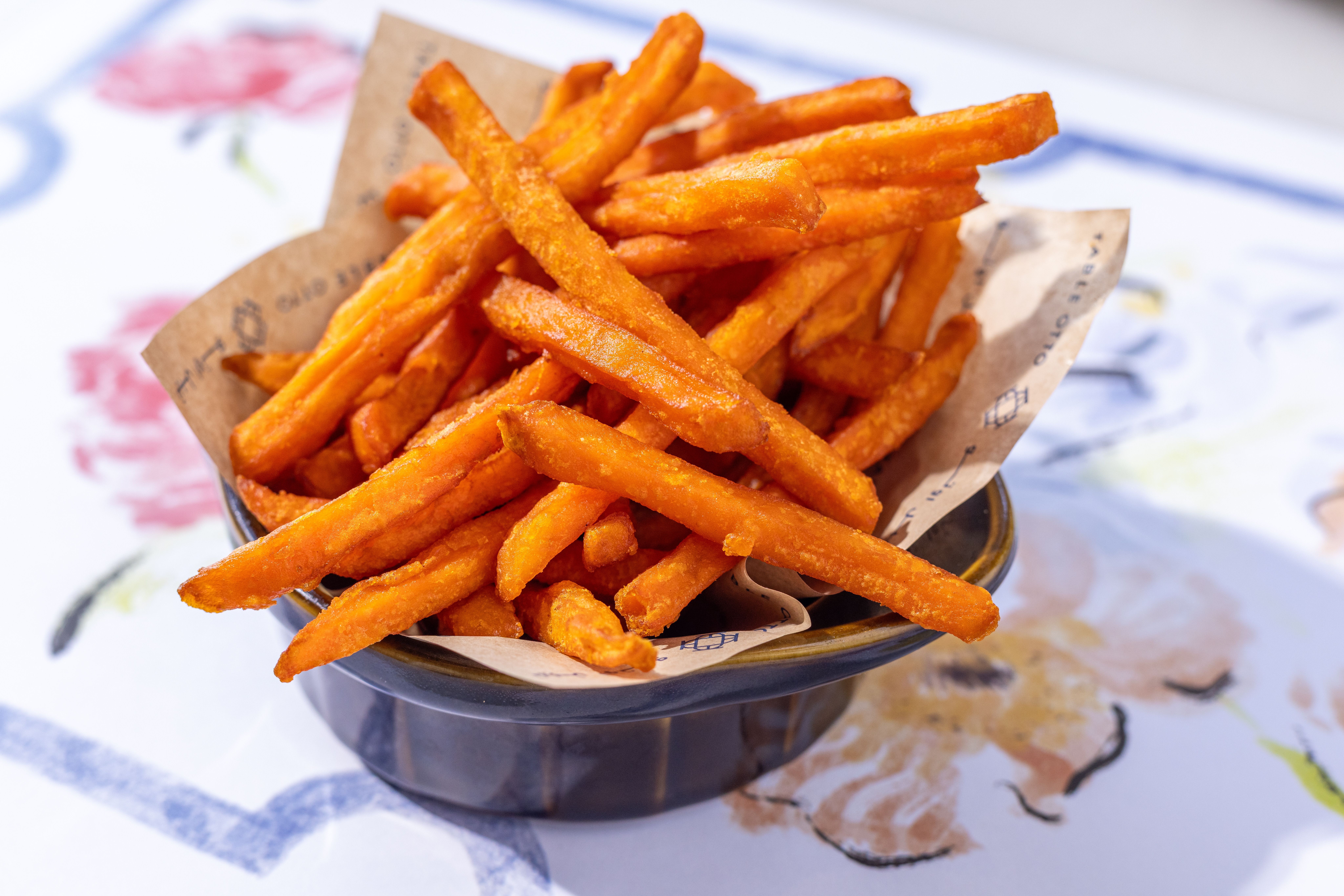
Photo: Anthony Rahayel / Pexels
American
Sweet Potato Fries
The diets react (see scores below)
Common Ingredients
- sweet potatoes
- olive oil
- sea salt
- smoked paprika
- cornstarch
- black pepper
Specific recipes may vary.
Incompatible with 4 of 11 diets
Diet Ratings
Sweet potato fries are fundamentally incompatible with a ketogenic diet. Sweet potatoes are a high-starch root vegetable with approximately 17-20g of net carbs per 100g serving. A typical serving of fries (150-200g) would deliver 25-40g of net carbs — potentially blowing the entire daily carb budget in one side dish. Cornstarch in the coating adds additional carbs and is a refined grain product explicitly excluded from keto. The olive oil and seasonings are keto-friendly, but they cannot offset the overwhelming carbohydrate load from the base ingredient. No portion size of sweet potato fries is realistically compatible with maintaining ketosis.
Sweet potato fries made with sweet potatoes, olive oil, sea salt, smoked paprika, cornstarch, and black pepper are entirely plant-based with no animal-derived ingredients whatsoever. Every component is clearly vegan: sweet potatoes are a nutrient-dense whole food, olive oil is a plant-derived fat, cornstarch is derived from corn, and all seasonings are plant-origin. The dish is minimally processed and built around a whole-food vegetable base. The use of cornstarch for crispiness is a common technique and does not affect vegan status. This scores a 9 rather than 10 primarily because olive oil is a refined/processed fat rather than a whole food, which some whole-food plant-based advocates note, though this is a very minor consideration.
Sweet potato fries contain two clear paleo violations: cornstarch (a grain-derived processed starch, excluded from all paleo frameworks) and sea salt (added salt is excluded under strict paleo rules). While sweet potatoes and olive oil are paleo-approved, and smoked paprika and black pepper are acceptable spices, the presence of cornstarch — a processed corn derivative — is a firm disqualifier. Salt is also flagged under strict paleo guidelines as an agricultural-era additive. The dish as formulated cannot be considered paleo-compliant.
Sweet potato fries made with olive oil, sea salt, smoked paprika, and black pepper align well with Mediterranean diet principles. Sweet potatoes are a nutrient-dense vegetable rich in fiber, vitamins, and antioxidants. Extra virgin olive oil is the canonical fat of the Mediterranean diet. The spices used are wholly compatible. The small amount of cornstarch used as a coating agent is a minor refined starch but inconsequential at typical quantities. The preparation method (baking or light frying in olive oil) keeps this dish plant-forward and minimally processed, fitting well within Mediterranean dietary patterns.
Some stricter Mediterranean diet interpretations flag deep-frying as a preparation method that adds excess fat and reduces nutritional quality, and cornstarch as a refined grain additive to avoid. If these fries are deep-fried rather than oven-roasted, the score and verdict could shift toward caution under more conservative clinical guidelines.
Sweet Potato Fries are entirely plant-based and contain zero animal products, making them completely incompatible with the carnivore diet at every tier. The primary ingredient, sweet potato, is a starchy root vegetable explicitly excluded from all carnivore protocols. Every other ingredient — olive oil (plant fat), smoked paprika (plant spice), cornstarch (plant starch), and black pepper (plant spice) — is also plant-derived. There is no animal-derived component whatsoever in this dish. This is as clear-cut an 'avoid' as exists in carnivore diet assessment.
This dish contains cornstarch, which is explicitly excluded on the Whole30 program. Cornstarch is listed as a prohibited ingredient alongside other excluded items like carrageenan and MSG. Beyond the cornstarch issue, 'french fries' (including sweet potato fries) are specifically called out in the Whole30 rules as a food that violates the spirit of the program, even if made with compliant ingredients — they are listed alongside chips, tots, and other junk-food recreations that are not allowed. Both of these factors independently make this dish non-compliant.
Sweet potato fries are FODMAP-sensitive primarily due to the sweet potato itself. Monash University rates sweet potato as low-FODMAP at 70g (about 1/2 cup) but high-FODMAP at 100g or more due to moderate-to-high levels of mannitol (a polyol). A typical restaurant or homemade serving of fries easily exceeds 100g, making this a dose-dependent caution rather than a clear approve or avoid. The other ingredients — olive oil, sea salt, smoked paprika, cornstarch, and black pepper — are all low-FODMAP and present no concern. If portion size is carefully controlled to stay under 70g of sweet potato, the dish can be considered low-FODMAP, but in practice most servings of fries exceed this threshold.
Monash University technically approves sweet potato at 70g, but clinical FODMAP practitioners often advise caution with sweet potato fries as a side dish because standard serving sizes routinely exceed the safe threshold. Some practitioners recommend avoiding sweet potato entirely during strict elimination to reduce ambiguity and mannitol exposure.
Sweet potatoes are an excellent DASH food — rich in potassium, magnesium, fiber, and beta-carotene, and explicitly aligned with DASH vegetable guidelines. However, the preparation method (oven-frying with olive oil and sea salt) introduces considerations that shift this from a pure 'approve.' Olive oil is a DASH-approved vegetable oil, but added oil increases caloric density and fat content, requiring portion control. The sea salt adds sodium — while the amount per serving is likely modest in home preparation (estimated 150–300mg depending on quantity used), it still counts toward the daily DASH sodium limit. Cornstarch is a refined starch with minimal nutritional value but is used in small quantities as a coating agent. Smoked paprika and black pepper are DASH-neutral. The primary concern is that baked fries, even with healthy ingredients, can stray from DASH ideals if portions are large or salt is heavy-handed. This dish is substantially healthier than deep-fried versions and can fit comfortably within DASH with modest portions and salt restraint.
Some DASH clinicians would rate this closer to 7-8 (approve), arguing that oven-baked sweet potato fries with olive oil represent a clearly DASH-aligned preparation — the NIH DASH guidelines broadly endorse vegetables and vegetable oils, and the sodium from a moderate pinch of sea salt is unlikely to be clinically significant. Others maintain that the added salt and oil warrant a 'caution' label to reinforce the importance of portion control and sodium awareness.
Sweet potato fries occupy a nuanced position in Zone methodology. Sweet potatoes themselves are classified as 'unfavorable' carbohydrates in Dr. Sears' original Zone framework due to their moderate-to-high glycemic index (especially when cooked), placing them alongside other starchy vegetables he recommends limiting. However, sweet potatoes are nutritionally dense — rich in polyphenols, fiber, beta-carotene, and vitamins — which aligns with Sears' later anti-inflammatory emphasis. The frying preparation (even oven-baked with olive oil) concentrates the carbohydrates and raises the glycemic load compared to boiled sweet potato. The cornstarch coating further elevates the glycemic impact with no nutritional benefit. The olive oil is a Zone-positive fat. As a side dish with no protein, this dish alone cannot form a Zone-balanced meal and would need to be carefully portioned (small amount, ~1-2 carb blocks) alongside a lean protein and additional low-glycemic vegetables. The smoked paprika provides polyphenols, a minor positive. Overall, this is a high-carb side that requires strict portion control and complementary protein/fat pairing to fit Zone ratios.
Dr. Sears' later works (The OmegaRx Zone, Zone Perfect Meals in Minutes) show increased appreciation for colorful, polyphenol-rich vegetables including sweet potatoes, particularly for their anti-inflammatory properties. Some Zone practitioners treat sweet potatoes as an acceptable 'unfavorable' carb usable in moderate portions, noting their fiber content lowers net carbs relative to white potatoes. The olive oil component is genuinely Zone-favorable, and the overall dish is far preferable to white potato fries. Context matters: as a small portion within a properly balanced Zone plate, this is workable.
Sweet potato fries made with olive oil, smoked paprika, black pepper, and sea salt have a solidly anti-inflammatory foundation. Sweet potatoes are rich in beta-carotene (a carotenoid antioxidant), vitamin C, anthocyanins, and fiber — all associated with reduced inflammatory markers. Olive oil contributes oleocanthal and monounsaturated fats with well-documented anti-inflammatory properties. Smoked paprika and black pepper add polyphenols and piperine respectively, with piperine notably enhancing bioavailability of other anti-inflammatory compounds. Cornstarch is the one ingredient that tempers the rating — it is a refined carbohydrate with no nutritional benefit and a high glycemic load, which can transiently spike blood sugar and modestly promote inflammatory signaling. The quantity used as a coating agent is small, however, limiting its impact. The preparation method matters: oven-baking or air-frying preserves the anti-inflammatory profile far better than deep-frying. Assuming home preparation (oven or air fryer) and modest portioning, this dish earns an approve rating, though the cornstarch and the higher glycemic index of sweet potatoes relative to non-starchy vegetables prevent a higher score.
Most anti-inflammatory practitioners including Dr. Weil view sweet potatoes favorably given their antioxidant density and fiber content. However, some stricter low-glycemic and blood-sugar-focused anti-inflammatory protocols caution that sweet potatoes — especially in fry form where fiber density per bite is lower and the glycemic impact is slightly elevated — can trigger insulin and inflammatory responses in insulin-resistant individuals; Paul Jaminet's Perfect Health Diet and some AIP practitioners recommend limiting starchy tubers or pairing them with fat and protein to blunt glycemic response.
Sweet potato fries made at home with olive oil, sea salt, smoked paprika, cornstarch, and black pepper are a meaningful step up from deep-fried restaurant versions. Sweet potatoes offer fiber (~3-4g per medium serving), beta-carotene, potassium, and a moderate glycemic load when baked. The olive oil is an unsaturated fat, which is preferred over saturated fat, and the quantity used in home baking is typically modest. However, this dish has no meaningful protein, making it a poor standalone choice for GLP-1 patients whose every calorie needs to count toward protein targets. The cornstarch adds refined starch with no nutritional benefit. The overall carbohydrate load is moderate-to-high relative to protein and fiber content, and the glycemic response may be faster than whole sweet potato due to the high surface area and starch coating. As a side dish paired with a high-protein main, a small portion is acceptable. On its own or in large portions, it occupies caloric space without advancing the protein or fiber priorities that matter most on GLP-1 therapy. Smoked paprika and black pepper at typical quantities are well tolerated and pose no GI concern.
Some GLP-1-focused dietitians view baked sweet potato preparations favorably as a fiber-containing, nutrient-dense carbohydrate that supports satiety and micronutrient intake in patients eating very small volumes; others caution that the low protein density makes it a poor caloric investment given the dramatically reduced appetite these patients experience, and recommend reserving carbohydrate portions for higher-fiber whole-food forms like plain roasted sweet potato rather than a fry preparation with added starch coating.
*See how scores were generated at our methodology page.
Nutritional profile
Six traits that cut across every diet.
Fiber & Plants
How much whole-plant food and fiber it delivers.
Healthy Fats
The quality of its fats (unsaturated, omega-3).
Whole / Unprocessed
How close it is to its natural, unprocessed form.
Gut Gentle
How easy it is on digestion (low FODMAP, few irritants).
Low Glycemic
How little it spikes your blood sugar.
Protein Density
How much protein it packs per calorie.
Controversy Index
Higher controversy = more disagreement between diets.
Diet-Specific Tips
 Vegan — 9/10
View tips
- Sweet potatoes are a whole-food, nutrient-dense plant ingredient — ideal for vegan diets
- Olive oil is plant-derived with no animal ingredients
- Cornstarch is derived from corn — fully plant-based
- All seasonings (sea salt, smoked paprika, black pepper) are plant-origin or mineral
- No animal products, dairy, eggs, or animal-derived additives present
- Cooking method (oven or air-fryer implied) does not introduce non-vegan elements
 Mediterranean — 8/10
View tips
- Sweet potatoes are a nutrient-dense, fiber-rich vegetable strongly encouraged in Mediterranean eating
- Extra virgin olive oil used as the fat source aligns perfectly with Mediterranean principles
- Spices (smoked paprika, black pepper, sea salt) are traditional and health-supportive
- Cornstarch is a minor refined starch but negligible at typical coating quantities
- Preparation method matters — oven-roasting keeps this dish highly compatible, deep-frying is less ideal
- No added sugars, processed ingredients, or animal products present
 Low-FODMAP — 5/10
View tips
- Sweet potato is low-FODMAP only at ≤70g due to mannitol content
- Standard fry portions typically exceed 70g, pushing into high-FODMAP territory
- Olive oil is low-FODMAP (FODMAPs are water-soluble, not fat-soluble)
- Cornstarch, smoked paprika, sea salt, and black pepper are all low-FODMAP
- Mannitol is the primary FODMAP concern — a polyol found in sweet potato
- Dose-dependency makes this a practical caution rather than a blanket avoid
 DASH — 6/10
View tips
- Sweet potatoes are a DASH-approved vegetable high in potassium, fiber, and magnesium
- Olive oil is a DASH-recommended vegetable oil but adds caloric density
- Sea salt contributes sodium — amount depends on preparation; home recipes typically add 150–300mg per serving
- Cornstarch is a refined carbohydrate with minimal nutritional benefit but used in small amounts
- No saturated fat, trans fat, or added sugar
- Oven-baked preparation is far preferable to deep-frying
- Portion control is important — a large serving increases sodium, fat, and calorie load
- Low-sodium preparation (reducing or omitting sea salt) would move this closer to an 'approve' rating
 Zone — 4/10
View tips
- Sweet potatoes classified as 'unfavorable' carbohydrate in original Zone framework due to moderate-to-high glycemic index
- Cornstarch coating adds refined starch with no nutritional value, elevating glycemic impact
- Olive oil is a Zone-ideal monounsaturated fat — a genuine positive
- No protein present — this dish alone cannot balance Zone macronutrient ratios
- High carbohydrate density makes portion control critical (small serving = 1-2 carb blocks)
- Rich in polyphenols and beta-carotene — aligns with Sears' anti-inflammatory focus in later writings
- Significantly preferable to white potato fries from a Zone perspective
 Anti-Inflammatory — 7/10
View tips
- Sweet potatoes rich in beta-carotene, vitamin C, and anthocyanins with strong antioxidant and anti-inflammatory evidence
- Olive oil provides oleocanthal and MUFAs with well-documented anti-inflammatory action
- Smoked paprika and black pepper contribute polyphenols and piperine
- Cornstarch is a refined carbohydrate with high glycemic index — minor concern given small quantity used as coating
- Preparation method (oven vs. deep-fry) significantly affects the inflammatory profile
- Moderate glycemic load of sweet potatoes may be a consideration for insulin-resistant individuals
 GLP-1 Friendly — 5/10
View tips
- No protein content — does not support the 15-30g per meal protein target
- Moderate fiber (~3-4g per serving) — a positive but not exceptional contribution
- Baked with olive oil (unsaturated fat) — preferable to deep-fried versions
- Cornstarch coating adds refined starch with no nutritional value
- Sweet potato provides beta-carotene, potassium, and B6 — good micronutrient density
- Moderate glycemic load — portion size matters significantly
- Works best as a small side paired with a high-protein main dish
- Not a protein-dense or calorie-efficient choice for GLP-1 patients eating small volumes