Photo: Fernando Capetillo / Pexels
Mexican
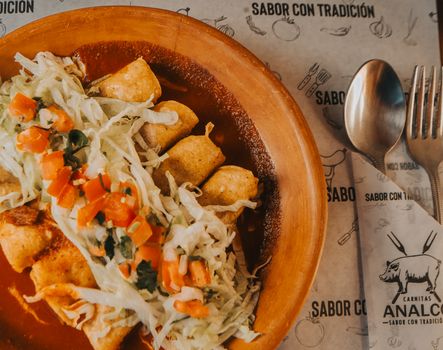
Tacos Dorados
The diets react (see scores below)
Common Ingredients
- corn tortillas
- shredded chicken
- lettuce
- Mexican crema
- queso fresco
- salsa verde
- onion
- vegetable oil
Specific recipes may vary.
Incompatible with 7 of 11 diets
Diet Ratings
Tacos Dorados are fundamentally built on corn tortillas, which are a high-carb grain product. A single standard corn tortilla contains roughly 10-12g net carbs, and a typical serving of 3 tacos dorados would deliver 30-36g net carbs from the tortillas alone — consuming most or all of the daily keto allowance in one dish, with no nutritional benefit toward ketosis. The deep-frying in vegetable oil adds inflammatory omega-6 fats, which is also suboptimal. While the fillings (shredded chicken, lettuce, crema, queso fresco, salsa verde, onion) are mostly keto-friendly in isolation, the corn tortilla shell is the structural and defining component of this dish and cannot be reduced to a token portion without fundamentally changing the recipe. This dish is incompatible with ketogenic dietary goals.
Tacos Dorados as described contain multiple animal products that are unequivocally non-vegan. Shredded chicken is poultry (animal flesh), Mexican crema is a dairy product (animal-derived), and queso fresco is a fresh cheese made from cow's or goat's milk (animal-derived). Any single one of these ingredients would disqualify the dish; all three together make this clearly incompatible with a vegan diet. The plant-based components — corn tortillas, lettuce, salsa verde, onion, and vegetable oil — are vegan-friendly, but they do not offset the animal-derived ingredients present.
Tacos Dorados contains multiple non-paleo ingredients that disqualify it from any paleo consideration. Corn tortillas are a grain product — corn is explicitly excluded from the paleo diet. Mexican crema and queso fresco are dairy products, also excluded. Vegetable oil is a seed oil, one of the most clearly avoided ingredients in paleo. While shredded chicken, lettuce, onion, and salsa verde (tomatoes, tomatillos, herbs) are paleo-compliant, the foundational structure of this dish — tortillas fried in vegetable oil, topped with dairy — makes it incompatible with paleo principles. There is no meaningful way to adapt this dish without replacing its core identity.
Tacos Dorados are a mixed bag from a Mediterranean diet perspective. The positive elements include corn tortillas (a whole grain), lean shredded chicken (acceptable in moderation), fresh vegetables like lettuce and onion, and salsa verde (tomatoes, tomatillos, herbs — all plant-forward). However, the dish is fried in vegetable oil rather than extra virgin olive oil, which is a departure from the Mediterranean fat paradigm. Mexican crema and queso fresco add moderate saturated fat from dairy, which is permissible but not ideal in quantity. The frying method adds extra refined fat and calories. Overall, this is a modestly acceptable dish — the protein is lean, the vegetables are present, and the tortillas are whole-grain — but the frying method and dairy toppings prevent a full approval.
Some Mediterranean diet interpreters would rate this more favorably, noting that corn tortillas are a minimally processed whole grain, chicken is a lean protein explicitly allowed in moderation, and the vegetable-forward toppings align well with Mediterranean principles. From a flexible, pattern-based view (rather than strict adherence to olive oil and no frying), this dish could be considered a reasonable occasional meal.
Tacos Dorados is fundamentally incompatible with the carnivore diet. The dish is built on a corn tortilla base, which is a grain-derived plant food and a core excluded item on any tier of carnivore eating. Beyond the tortillas, the majority of ingredients are plant-derived: lettuce, salsa verde, onion, and vegetable oil are all strictly off-limits. The shredded chicken is the only carnivore-appropriate component, and even the Mexican crema and queso fresco (dairy) would only be debated rather than central concerns — they are overshadowed by the overwhelmingly plant-based structure of the dish. Vegetable oil (likely soybean or canola) is a processed plant oil, which is among the most condemned items across all carnivore and ancestral health communities. This dish cannot be modified into a carnivore meal without essentially deconstructing it entirely.
Tacos Dorados contains multiple Whole30-excluded ingredients. Corn tortillas are made from corn, which is a grain explicitly excluded from the Whole30 program. Mexican crema is a dairy product (soured cream), also explicitly excluded. Queso fresco is a fresh cheese, another excluded dairy product. Even if those two dairy items were removed, the corn tortillas alone would disqualify this dish. Additionally, even if compliant substitutes were found for every ingredient, assembling them into a taco/tortilla format would violate Rule 4 ('no recreating junk food'), as tortillas and wraps are explicitly listed as off-limits even when made with compliant ingredients.
Tacos Dorados as described contain multiple high-FODMAP ingredients that make the dish unsuitable during the elimination phase. Onion is a major fructan source and is high-FODMAP at any meaningful culinary quantity — even small amounts used for flavoring render a dish non-compliant. Queso fresco is a fresh cheese with moderate-to-high lactose content, similar to ricotta or cottage cheese, and is problematic at standard serving sizes. Mexican crema is a cultured dairy product with significant lactose. Salsa verde typically contains onion and sometimes garlic, adding further fructan load. While corn tortillas and shredded chicken are low-FODMAP, and lettuce and vegetable oil are safe, the combination of onion, queso fresco, Mexican crema, and likely-onion-containing salsa verde creates stacked FODMAP hits that push this dish firmly into the avoid category for the elimination phase.
Tacos Dorados present a mixed DASH profile. The dish has a solid foundation: corn tortillas are whole grain and low in sodium, shredded chicken is a lean protein explicitly encouraged by DASH, lettuce and onion contribute vegetables, and salsa verde adds potassium-rich tomatillos with minimal sodium concern. However, several components create friction with DASH principles. The deep-frying or pan-frying in vegetable oil (the 'dorado' preparation) adds significant fat and calories. Mexican crema is a full-fat dairy product high in saturated fat, which DASH limits. Queso fresco contributes moderate sodium (typically 200-350mg per ounce) and saturated fat. Together, the crema and queso fresco push the dish toward the saturated fat and sodium thresholds DASH recommends limiting. The overall dish is not disqualifying — lean chicken, corn tortillas, and fresh toppings keep it from the 'avoid' category — but the frying method and full-fat dairy toppings require meaningful portion control and modification to fit comfortably within DASH guidelines.
NIH DASH guidelines explicitly limit full-fat dairy and fried foods, which would push this dish toward a lower score. However, updated clinical interpretations note that recent meta-analyses have not consistently shown full-fat dairy to worsen cardiovascular outcomes, and some DASH-oriented dietitians allow moderate amounts of queso fresco and crema given their strong cultural role and relatively small serving sizes in this context.
Tacos Dorados present a mixed Zone profile. The shredded chicken is an excellent lean protein source, and salsa verde, onion, and lettuce contribute favorable low-glycemic carbohydrates with polyphenols. However, several elements require careful management. Corn tortillas are a higher-glycemic grain carbohydrate — Zone classifies grains as 'unfavorable' and limits them to 0-1 servings/day, though small corn tortillas (each ~9-10g net carbs) can fit within 1-2 carb blocks if portioned carefully. The deep-frying in vegetable oil (likely omega-6-heavy seed oil such as sunflower or corn oil) is problematic from both a fat-type and caloric standpoint — Zone strongly discourages omega-6-heavy oils due to pro-inflammatory eicosanoid effects. Mexican crema adds saturated fat, and queso fresco adds additional saturated fat and some protein. Together, the crema and queso push the fat profile toward saturated rather than the preferred monounsaturated fats. The dish can be made Zone-compatible with strict portioning — 2 small tortillas, generous chicken, light crema/queso, and extra lettuce/salsa — but as typically served, the fried tortillas, seed oil, and dairy fat make it a meal requiring significant attention to stay within Zone ratios.
Some Zone practitioners following Sears' later anti-inflammatory work (The Anti-Inflammation Zone, Zone Diet later editions) may be more lenient about small amounts of saturated fat from dairy like crema and queso fresco, viewing them as acceptable in modest portions within an otherwise balanced meal. Additionally, traditional corn tortillas are a whole-food grain with moderate fiber content, and a few Zone practitioners treat 1-2 small tortillas as manageable 'unfavorable' carb blocks rather than foods to avoid, especially when the rest of the meal is well-balanced with lean protein and vegetables.
Tacos Dorados present a mixed anti-inflammatory profile. On the positive side, corn tortillas are a whole grain option with decent fiber, shredded chicken is a lean protein (moderate in the anti-inflammatory framework), salsa verde provides anti-inflammatory benefits from tomatillos, garlic, and chili peppers (antioxidants, capsaicin, quercetin), onions add quercetin and polyphenols, and lettuce contributes micronutrients. However, the dish has meaningful concerns: the frying in vegetable oil (likely high-omega-6 seed oil such as corn, sunflower, or soybean oil) is the primary issue — deep or shallow frying at high heat with these oils generates oxidized lipids and increases omega-6 load, which is pro-inflammatory. Mexican crema (full-fat dairy) and queso fresco add saturated fat, which is flagged as a 'limit' category. The combination of fried tortillas plus full-fat dairy keeps this firmly in caution territory. If the dish were prepared with less oil or air-fried, and crema were reduced or swapped for a plant-based topping, it could score higher.
The vegetable oil used for frying is the main contested element. Mainstream nutrition science (AHA) considers many seed oils acceptable or even heart-healthy due to their polyunsaturated fat content. However, most anti-inflammatory protocols (including Dr. Weil's framework and functional medicine practitioners) caution against regular use of high-omega-6 refined seed oils, particularly at frying temperatures where oxidation occurs. The type of oil used significantly affects the overall verdict.
Tacos Dorados are fried tacos — corn tortillas are deep-fried in vegetable oil until crispy, which is the defining preparation method. This frying step significantly increases fat content and makes the dish difficult to digest, directly worsening the most common GLP-1 side effects: nausea, bloating, and reflux. Mexican crema and queso fresco add additional saturated fat and calories. While shredded chicken provides meaningful protein, the overall dish is dominated by fried components and high-fat toppings. The nutrient density per calorie is poor for a GLP-1 patient eating in small portions. Salsa verde and lettuce are fine, but they cannot offset the fried tortilla base and fatty dairy toppings.
*See how scores were generated at our methodology page.
Nutritional profile
Six traits that cut across every diet.
Fiber & Plants
How much whole-plant food and fiber it delivers.
Healthy Fats
The quality of its fats (unsaturated, omega-3).
Whole / Unprocessed
How close it is to its natural, unprocessed form.
Gut Gentle
How easy it is on digestion (low FODMAP, few irritants).
Low Glycemic
How little it spikes your blood sugar.
Protein Density
How much protein it packs per calorie.
Controversy Index
Higher controversy = more disagreement between diets.
Diet-Specific Tips
 Mediterranean — 5/10
View tips
- Corn tortillas are a whole grain — a positive element
- Shredded chicken is a lean, moderate-frequency protein consistent with Mediterranean guidelines
- Frying in vegetable oil rather than extra virgin olive oil departs from Mediterranean fat principles
- Mexican crema and queso fresco add saturated dairy fat — acceptable in moderation but not ideal
- Salsa verde and fresh vegetables are strongly aligned with Mediterranean plant-forward emphasis
- Deep frying preparation method increases overall fat load and reduces diet compatibility
 DASH — 5/10
View tips
- Corn tortillas are whole grain and low sodium — DASH-positive
- Shredded chicken is a lean protein explicitly encouraged by DASH
- Frying in vegetable oil adds excess fat and calories beyond DASH portion guidance
- Mexican crema is full-fat dairy high in saturated fat — DASH limits this
- Queso fresco adds moderate sodium and saturated fat
- Salsa verde and fresh vegetables (lettuce, onion) contribute beneficial nutrients
- Dish can be improved by baking instead of frying and substituting low-fat dairy alternatives
 Zone — 5/10
View tips
- Corn tortillas are higher-glycemic 'unfavorable' carbs in Zone terminology — limit to 1-2 small tortillas max
- Deep-frying in vegetable oil introduces excess omega-6 fatty acids, which Zone strongly discourages for anti-inflammatory reasons
- Shredded chicken is an ideal lean Zone protein source
- Lettuce, salsa verde, and onion are favorable low-glycemic Zone carbohydrates
- Mexican crema and queso fresco add saturated fat, not preferred monounsaturated fat
- Dish is Zone-adaptable with careful portioning but is not Zone-favorable as typically prepared and served
 Anti-Inflammatory — 4/10
View tips
- Frying in vegetable oil (likely high-omega-6 seed oil) increases oxidized lipid intake — a notable pro-inflammatory concern
- Mexican crema and queso fresco contribute saturated fat, a 'limit' category ingredient
- Salsa verde (tomatillos, chili, garlic) provides anti-inflammatory polyphenols and capsaicin
- Lean chicken is a moderate, acceptable protein source in the anti-inflammatory framework
- Corn tortillas are a reasonable whole-grain base with fiber
- Onions contribute quercetin and prebiotic fiber with anti-inflammatory properties
- Overall dish profile is neutral-to-mixed; preparation method (frying) is the primary downgrade factor