Photo: Ahmad No More / Pexels
American
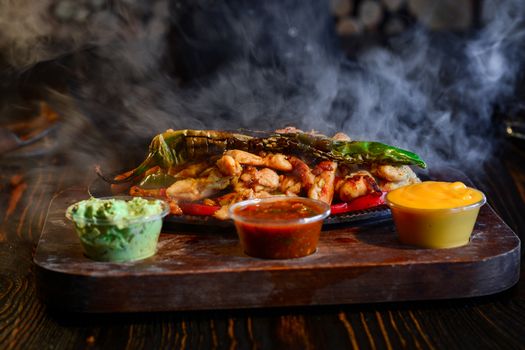
Tex-Mex Fajitas
The diets react (see scores below)
Common Ingredients
- skirt steak
- bell peppers
- onion
- flour tortillas
- lime
- cumin
- garlic
- sour cream
Specific recipes may vary.
Incompatible with 7 of 11 diets
Diet Ratings
Tex-Mex Fajitas as traditionally prepared are incompatible with keto primarily due to the flour tortillas, which are a grain-based, high-carb ingredient. A single large flour tortilla contains approximately 25-35g of net carbs, instantly consuming or exceeding the entire daily keto carb budget. While the skirt steak, sour cream, lime juice, cumin, and garlic are keto-friendly, and bell peppers and onions are borderline acceptable in small amounts, the tortilla is a dealbreaker. The dish in its standard form cannot be consumed on keto without a fundamental substitution (e.g., lettuce wraps or low-carb tortillas), which would make it a different dish entirely. Onions also add moderate carbs, compounding the issue.
Tex-Mex Fajitas as described contain multiple animal products that are strictly excluded from a vegan diet. Skirt steak is beef — a direct animal flesh product. Sour cream is a dairy product made from cow's milk. Both are unambiguously non-vegan under any mainstream vegan standard. The remaining ingredients (bell peppers, onion, flour tortillas, lime, cumin, garlic) are plant-based, but the presence of skirt steak and sour cream makes this dish incompatible with a vegan diet.
Tex-Mex Fajitas contain multiple non-paleo ingredients that are clear violations of paleo principles. Flour tortillas are made from wheat, a grain explicitly excluded from the paleo diet. Sour cream is a dairy product, also excluded. These are not minor or debated ingredients — both represent core categories that all major paleo authorities agree are off-limits. The paleo-compliant components (skirt steak, bell peppers, onion, lime, cumin, garlic) are excellent paleo foods, but the dish as traditionally constructed cannot be considered paleo-friendly. A modified version stripping out the tortillas and sour cream would score much higher.
Tex-Mex Fajitas conflict with Mediterranean diet principles on multiple fronts. Skirt steak is red meat, which should be limited to only a few times per month in the Mediterranean diet. Flour tortillas are refined grain products with minimal nutritional value compared to whole grains. Sour cream is a high-saturated-fat dairy product that goes beyond the moderate, lower-fat dairy encouraged in Mediterranean eating. While the bell peppers, onion, garlic, lime, and cumin are positive Mediterranean-compatible elements, the core components — red meat and refined grain wraps — fundamentally contradict the diet's principles. A chicken version would be marginally better but the flour tortillas and sour cream still pose problems.
Tex-Mex Fajitas are fundamentally incompatible with the carnivore diet. While the dish does contain skirt steak — an acceptable carnivore protein — the vast majority of ingredients are plant-derived and strictly excluded: flour tortillas (grain-based), bell peppers, onion, lime, cumin, and garlic are all plant foods. Sour cream is a dairy product that some carnivore practitioners include, but it is a minor component here. The dish as a whole is defined by its plant-based components, making it an 'avoid' with no meaningful path to modification short of removing nearly every ingredient. This is not a borderline case — it is a classic plant-heavy dish with meat as one component among many excluded foods.
This dish contains two clearly excluded ingredients: flour tortillas (wheat/grain-based, excluded) and sour cream (dairy, excluded). Flour tortillas also fall under the 'no recreating junk food/wraps' rule even if a grain-free version were substituted. The remaining ingredients — skirt steak, bell peppers, onion, lime, cumin, and garlic — are all Whole30 compliant on their own, but the dish as traditionally prepared cannot be considered compliant.
Tex-Mex Fajitas as described contain multiple high-FODMAP ingredients that make this dish unsuitable during the elimination phase. Onion is one of the highest-FODMAP foods known, rich in fructans, and cannot be made safe at any typical serving size. Garlic is similarly high in fructans and a major FODMAP offender. Flour tortillas are made from wheat, which is high in fructans — a standard serving of 1-2 flour tortillas will deliver a significant fructan load. Sour cream contains lactose and is moderate-to-high FODMAP at typical serving sizes (more than 2 tablespoons). The combination of these four problematic ingredients — onion, garlic, flour tortillas, and sour cream — makes this dish a clear 'avoid' for elimination phase. The remaining ingredients (skirt steak, bell peppers, lime, cumin) are individually low-FODMAP and would be fine, but they cannot rescue the dish from its high-FODMAP components.
Tex-Mex Fajitas contain a mix of DASH-friendly and DASH-problematic components. The bell peppers and onion are excellent DASH vegetables, rich in potassium, fiber, and antioxidants. Lime, cumin, and garlic are beneficial, low-sodium flavor enhancers that reduce the need for added salt. However, skirt steak is a fatty cut of red meat — DASH guidelines limit red meat and emphasize lean poultry or fish as primary proteins. Flour tortillas are refined grains rather than whole grains, and sour cream is full-fat dairy, both of which DASH discourages. The dish as commonly prepared in restaurants also tends to carry significant sodium from marinades, seasoning blends, and preparation. If made at home with chicken instead of skirt steak, whole-wheat tortillas, and Greek yogurt instead of sour cream, this dish could score higher. As commonly prepared, it is acceptable occasionally but requires meaningful modifications for consistent DASH compliance.
NIH DASH guidelines explicitly limit red meat and full-fat dairy, placing this dish in the caution zone. However, some updated clinical interpretations note that lean beef in small portions (3 oz) can fit within DASH's weekly red meat allowance, and if sodium is controlled through home preparation with no-salt-added seasonings, the overall nutrient profile — rich in vegetables and potassium — may be compatible with DASH goals for non-hypertensive individuals following the standard 2,300mg sodium limit.
Tex-Mex fajitas contain a mix of Zone-favorable and unfavorable components. Bell peppers and onions are excellent low-glycemic, polyphenol-rich vegetables that Zone strongly endorses. Skirt steak provides solid protein but is a fattier cut than Zone's preferred lean proteins (skinless chicken breast, fish), adding saturated fat that competes with the fat block allocation. Flour tortillas are the primary problem: they are high-glycemic refined carbohydrates that Zone classifies as 'unfavorable,' spiking insulin and difficult to balance within a 9g net carb block — a single standard flour tortilla contains roughly 25-30g net carbs (nearly 3 carb blocks) with poor fiber compensation. Sour cream adds saturated fat with minimal nutritional benefit. However, the dish is highly adaptable: skipping or minimizing the tortilla and substituting lettuce wraps or a small corn tortilla, swapping skirt steak for chicken breast or lean flank steak, and replacing sour cream with guacamole (monounsaturated fat) would transform fajitas into a Zone-favorable meal. The fajita filling itself — seasoned grilled meat with peppers and onions — is actually a reasonably Zone-aligned concept. The rating sits at caution because the standard preparation as described requires significant modification to achieve the 40/30/30 ratio, primarily due to flour tortillas and fatty beef.
Some Zone practitioners and coaches treat fajitas as a near-ideal Zone meal by focusing on the filling and simply limiting tortillas to one small portion or omitting them entirely. In Sears' later anti-inflammatory writing, he softened his position on saturated fat somewhat, meaning skirt steak in moderate portions is less problematic than early Zone texts suggested. A chicken breast version of this dish with the tortilla minimized could reasonably score 6-7.
Tex-Mex fajitas present a mixed anti-inflammatory profile. On the positive side, bell peppers are rich in vitamin C and carotenoids (strong antioxidants), onions provide quercetin (a notable anti-inflammatory flavonoid), garlic is a well-established anti-inflammatory ingredient, cumin offers polyphenols and antioxidant activity, and lime juice contributes vitamin C and flavonoids. If chicken is chosen as the protein, it qualifies as lean poultry (a 'moderate' food), improving the overall score. However, skirt steak — a fatty cut of red meat — is a primary protein option and falls in the 'limit' category due to saturated fat content and its association with elevated inflammatory markers like CRP and IL-6. Flour tortillas are a refined carbohydrate with minimal fiber, also a mild pro-inflammatory factor. Sour cream is full-fat dairy, which is in the 'limit' category for saturated fat. The dish is not inherently processed or laden with additives, and the vegetable and spice components offer genuine anti-inflammatory value. Overall, this is a contextually mixed dish — the anti-inflammatory benefits of the produce and spices are real, but the red meat and refined carb components temper the rating. Substituting chicken, using corn tortillas, and swapping sour cream for avocado or Greek yogurt would meaningfully improve the profile.
Some anti-inflammatory practitioners, particularly those following Dr. Weil's broader Mediterranean-influenced framework, would note that occasional red meat in the context of an otherwise plant-rich meal with quality spices and vegetables is acceptable and not cause for concern. Others, particularly those influenced by more strict protocols (e.g., AIP or functional medicine approaches), would downgrade further due to the refined flour tortilla and full-fat dairy, and flag that beef's arachidonic acid content contributes to inflammatory cascades even in moderate amounts.
Tex-Mex fajitas have a genuinely mixed nutritional profile for GLP-1 patients. The bell peppers and onions are excellent — fiber-rich, hydrating, easy to digest, and nutrient-dense. The spices (cumin, garlic, lime) are fine and may even support digestion. The protein source is the key variable: chicken breast would push this toward a 6-7, while skirt steak pulls it down due to higher saturated fat content and tougher texture that can be harder to digest given slowed gastric emptying. Flour tortillas are a refined grain with low fiber and moderate calorie density — they add carbohydrates without meaningful nutritional benefit, and their portion can escalate quickly. Sour cream is a high-fat, low-protein topping that worsens the fat load per serving and may aggravate nausea or reflux. The dish is salvageable with smart modifications: substituting chicken breast for skirt steak, swapping flour tortillas for smaller corn tortillas or a lettuce wrap, and omitting or minimizing sour cream. As typically served in a restaurant or standard home preparation, however, the fat load from skirt steak plus sour cream, combined with refined-grain tortillas, creates enough GLP-1 risk factors to warrant caution rather than approval.
Some GLP-1-focused dietitians consider fajitas a reasonable restaurant choice because the base structure — protein plus vegetables — is inherently sound, and patients can exercise control over toppings and tortilla quantity. Others flag the combined fat burden of fatty beef and full-fat dairy toppings as a meaningful nausea and reflux trigger, particularly in the first months of GLP-1 therapy when GI side effects are most pronounced.
*See how scores were generated at our methodology page.
Nutritional profile
Six traits that cut across every diet.
Fiber & Plants
How much whole-plant food and fiber it delivers.
Healthy Fats
The quality of its fats (unsaturated, omega-3).
Whole / Unprocessed
How close it is to its natural, unprocessed form.
Gut Gentle
How easy it is on digestion (low FODMAP, few irritants).
Low Glycemic
How little it spikes your blood sugar.
Protein Density
How much protein it packs per calorie.
Controversy Index
Higher controversy = more disagreement between diets.
Diet-Specific Tips
 DASH — 5/10
View tips
- Skirt steak is a fatty cut of red meat — DASH limits red meat consumption
- Bell peppers and onion are DASH-approved vegetables rich in potassium and fiber
- Flour tortillas are refined grains, not DASH-recommended whole grains
- Sour cream is full-fat dairy, discouraged by DASH guidelines
- Restaurant preparation typically adds high sodium via marinades and seasoning blends
- Lime, cumin, and garlic are DASH-positive low-sodium flavor enhancers
- Chicken substitution would improve DASH compatibility significantly
- Home preparation with controlled sodium, whole-wheat tortillas, and low-fat dairy substitutes raises score
 Zone — 5/10
View tips
- Flour tortillas are high-glycemic refined carbs classified as 'unfavorable' in Zone — one tortilla can consume 2-3 carb blocks
- Skirt steak is a fattier cut with more saturated fat than Zone's preferred lean proteins; chicken option is significantly better
- Bell peppers and onions are ideal Zone carbohydrate sources — low-glycemic, high in polyphenols and fiber
- Sour cream adds saturated fat, displacing the preferred monounsaturated fat block
- Lime and spices (cumin, garlic) are Zone-neutral or beneficial with anti-inflammatory properties
- Dish is highly modifiable: lettuce wraps or reduced tortilla + chicken breast + guacamole instead of sour cream would yield a Zone-favorable meal
 Anti-Inflammatory — 5/10
View tips
- Skirt steak is a fatty red meat high in saturated fat — a 'limit' food associated with elevated CRP
- Bell peppers and onions are rich in carotenoids, vitamin C, and quercetin — strong anti-inflammatory antioxidants
- Garlic and cumin are anti-inflammatory spices with polyphenol activity
- Flour tortillas are refined carbohydrates with low fiber — mildly pro-inflammatory
- Sour cream is full-fat dairy — a 'limit' food due to saturated fat content
- Chicken substitution would significantly improve the anti-inflammatory profile
- Lime juice contributes vitamin C and flavonoids — minor positive contribution
 GLP-1 Friendly — 5/10
View tips
- Skirt steak is a higher-fat cut with significant saturated fat — harder to digest under slowed gastric emptying
- Chicken breast substitution would substantially improve protein density and reduce fat load
- Bell peppers and onions are fiber-rich, hydrating, and GLP-1 friendly
- Flour tortillas are refined grains — low fiber, moderate calorie density, portion can escalate
- Sour cream adds saturated fat with minimal protein benefit and may worsen nausea or reflux
- Spices at typical fajita levels (cumin, garlic) are well-tolerated by most GLP-1 patients
- Dish is highly modifiable — rating improves significantly with protein swap and topping adjustments
- As typically served, combined fat from steak plus sour cream exceeds what GLP-1 patients tolerate comfortably