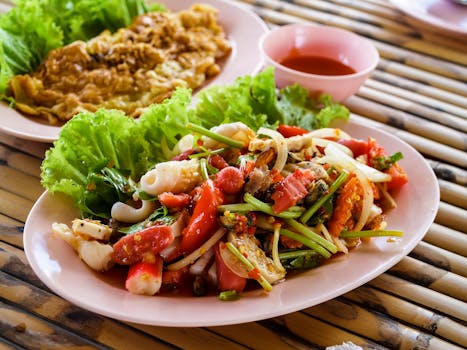
Thai
Thai Crab Salad
The diets react (see scores below)
Common Ingredients
- crab meat
- lime juice
- fish sauce
- Thai chiles
- cilantro
- mint
- shallots
- cucumber
Specific recipes may vary.
Incompatible with 2 of 11 diets
Diet Ratings
Thai Crab Salad is largely keto-friendly but requires portion awareness. Crab meat is a lean, low-carb protein source that fits keto well. The fresh herbs (cilantro, mint), Thai chiles, and cucumber are low-carb vegetables that add minimal net carbs. However, shallots are moderately higher in carbs than most alliums (~6g net carbs per 100g), and fish sauce, while used in small quantities, often contains added sugar in Thai formulations. Lime juice adds a small carb load. Combined, these minor carb contributors could accumulate, especially if shallots are used generously. The dish is also relatively low in fat, which is a structural limitation for keto — crab is a lean protein and there are no added fats (no coconut milk, avocado, or oil). This makes it protein-forward rather than fat-forward, deviating from the 70-80% fat target.
Strict keto practitioners may flag this dish more firmly due to the low fat-to-protein ratio and potential hidden sugars in commercial fish sauce, arguing it should be avoided or heavily modified (e.g., adding avocado or a fat-based dressing) to qualify as a genuine keto meal rather than just a low-carb one.
Thai Crab Salad contains multiple animal-derived ingredients that are clearly incompatible with a vegan diet. Crab meat is a seafood/animal product, and fish sauce is derived from fermented fish. Both are direct animal products with no ambiguity in vegan classification. The remaining ingredients — lime juice, Thai chiles, cilantro, mint, shallots, and cucumber — are all plant-based, but the presence of crab and fish sauce makes this dish entirely unsuitable for vegans.
Thai Crab Salad is largely paleo-friendly, with crab meat, lime juice, Thai chiles, cilantro, mint, shallots, and cucumber all being clearly approved whole foods. The main concern is fish sauce, which is a processed condiment that typically contains added salt and sometimes sugar or other preservatives — both of which are excluded under strict paleo rules. Most commercial fish sauces contain significant sodium chloride (added salt), which purists would flag. In practice, many paleo practitioners accept fish sauce in small amounts as a natural fermented condiment, similar to how fermentation was available to ancient humans, and some paleo-compliant fish sauces exist with minimal ingredients. The dish scores well overall but the fish sauce prevents a full approval under strict interpretations.
Strict Cordain-school paleo would flag fish sauce for its added salt and processing, and would exclude this dish without a salt-free or compliant fish sauce substitute. However, many modern paleo authorities including Mark Sisson and practical Whole30/paleo practitioners accept traditional fish sauce as a minimally processed fermented condiment used in small culinary quantities.
Thai Crab Salad aligns well with Mediterranean diet principles. Crab is a lean seafood that fits the 2-3 times weekly seafood recommendation, and the dish is built around fresh vegetables and herbs (cucumber, cilantro, mint, shallots) with bright acid from lime juice. There is no refined grain, added sugar, or saturated fat. Fish sauce adds sodium but is used as a flavoring rather than a fat source, and is functionally analogous to traditional Mediterranean fermented fish condiments like garum or colatura di alici. The absence of olive oil is the main gap — it is not the primary fat source here — but the dish is otherwise whole-food, plant-forward, and seafood-centered.
Some Mediterranean diet purists may lower the score because olive oil is entirely absent and fish sauce, while analogous to ancient Mediterranean fish condiments, is not a canonical ingredient. Traditional Mediterranean salads would typically dress with extra virgin olive oil and vinegar rather than lime and fish sauce, and strict interpretations may view the Thai flavor profile as outside the dietary pattern's intent.
Thai Crab Salad is overwhelmingly plant-based in composition. While crab meat is a carnivore-approved seafood, it is a minor component surrounded by numerous plant-derived ingredients: lime juice, Thai chiles, cilantro, mint, shallots, and cucumber. Fish sauce may be carnivore-compatible if pure (anchovies and salt only), but the dish as a whole is a plant-forward salad that violates nearly every carnivore principle. The cucumber, shallots, fresh herbs, and chiles are all excluded plant foods, and the lime juice adds plant acids and sugars. This dish cannot be considered carnivore in any tier of the diet.
Thai Crab Salad consists almost entirely of Whole30-compliant whole foods: crab meat (seafood), lime juice (fruit juice), fresh herbs (cilantro, mint), vegetables (Thai chiles, shallots, cucumber), and fish sauce as a seasoning. Every ingredient is naturally compliant with Whole30 guidelines. The one item requiring label scrutiny is fish sauce, which commonly contains only anchovies, salt, and water, but some brands add sugar or other excluded ingredients. As long as a compliant fish sauce (no added sugar) is used, this dish is fully approved.
Official Whole30 guidelines allow fish sauce, but Melissa Urban and the Whole30 community emphasize checking labels carefully, as many commercial fish sauce brands include added sugar — making this a 'read your labels' situation rather than an automatic approval for every version of this dish.
This Thai Crab Salad contains one significant high-FODMAP ingredient — shallots — which are high in fructans and problematic even in small amounts during the elimination phase. Crab meat is low-FODMAP (seafood is naturally FODMAP-free), lime juice is low-FODMAP, fish sauce is low-FODMAP at typical culinary doses (check for added onion/garlic in commercial versions), Thai chiles are low-FODMAP in small amounts, cilantro and mint are low-FODMAP herbs, and cucumber is low-FODMAP at standard servings. The dish would be approvable if shallots were omitted or substituted with the green tops of spring onions, which are low-FODMAP. As served with shallots, the dish requires caution.
Monash University rates shallots as high-FODMAP even in small quantities due to fructan content, and most clinical FODMAP practitioners would advise removing them entirely during elimination rather than reducing portion size. Additionally, commercial fish sauce sometimes contains garlic or onion — strict elimination dieters should verify the ingredient label.
Thai Crab Salad contains several DASH-friendly elements — crab is a lean protein source rich in magnesium and potassium, and the bulk of the dish is vegetables, herbs, and citrus (cucumber, shallots, cilantro, mint, lime juice). However, fish sauce is the critical concern: a single tablespoon of fish sauce contains approximately 1,400–1,500mg of sodium, and Thai recipes typically use it generously. This single ingredient can easily push the dish toward or beyond the DASH sodium threshold for an entire meal. Crab meat itself, while lean and nutritious, also carries moderate natural sodium (~300–400mg per 3oz). The overall dish profile is otherwise well-aligned with DASH principles — low saturated fat, no added sugars, no processed ingredients, rich in anti-inflammatory herbs and fresh vegetables — but the fish sauce sodium load requires meaningful portion control or modification to qualify as a core DASH food.
NIH DASH guidelines broadly endorse lean seafood and fresh vegetable-based dishes, which would support this salad's profile. However, updated clinical interpretations focusing on real-world sodium sources flag fish sauce as a high-sodium condiment equivalent to soy sauce or table salt — some DASH-oriented dietitians would advise substituting fish sauce with a reduced-sodium alternative or lime juice alone to make this dish truly DASH-compliant.
Thai Crab Salad aligns very well with Zone Diet principles. Crab meat is an excellent lean protein source — low in fat, high in quality protein, and easy to portion into Zone blocks (approximately 7g protein per block). The carbohydrate sources here are all low-glycemic and Zone-favorable: cucumber is a classic Zone vegetable, shallots contribute minimal net carbs, and lime juice, fish sauce, chiles, cilantro, and mint add negligible carbohydrate load while delivering polyphenols and anti-inflammatory compounds. The dish is naturally low in fat, which means a small addition of a monounsaturated fat (such as a drizzle of olive oil or a few slices of avocado) would complete the Zone 40/30/30 block ratio perfectly. Fish sauce adds sodium but is not a Zone concern from a macro perspective. The anti-inflammatory profile — omega-3s from crab, polyphenols from herbs and chiles — aligns with Sears' later emphasis on eicosanoid balance and inflammation control. The primary adjustment needed is adding a fat source to hit the 30% fat target, as this dish as written is very low in fat.
Thai Crab Salad is built almost entirely on anti-inflammatory ingredients. Crab meat is a lean, low-fat seafood that provides omega-3 fatty acids (though in lower amounts than fatty fish like salmon), zinc, selenium, and copper — all of which support immune function and reduce oxidative stress. Lime juice supplies vitamin C and flavonoids. Thai chiles contain capsaicin, a well-documented anti-inflammatory compound. Cilantro and mint are antioxidant-rich herbs consistently emphasized in anti-inflammatory frameworks. Shallots provide quercetin and other flavonoids. Cucumber adds hydration, silica, and mild antioxidants. Fish sauce is the one note of caution — it contributes significant sodium and contains additives in some commercial versions, though in typical culinary quantities its impact on inflammation is minimal. There are no refined carbohydrates, seed oils, added sugars, or processed ingredients. The dish overall represents the kind of lean protein + fresh vegetables + herbs + citrus profile that anti-inflammatory nutrition strongly endorses.
Some anti-inflammatory practitioners following autoimmune-specific protocols (e.g., AIP) flag shellfish including crab as a potential trigger for those with leaky gut or shellfish sensitivity, due to chitin and allergenic proteins; however, mainstream anti-inflammatory guidance including Dr. Weil's framework considers shellfish acceptable and crab a lean, beneficial protein source for the general population.
Thai Crab Salad is a nutrient-dense, low-fat dish with solid protein from crab meat and excellent hydration support from cucumber and lime juice. Crab is a lean protein source (~17-20g protein per 3 oz serving), making it a reasonable GLP-1 companion. The dish is light, easy to digest, and free from fried or high-fat ingredients. However, the Thai chiles are a meaningful concern — GLP-1 medications already slow gastric emptying and can increase acid sensitivity, and spicy chiles may worsen nausea, reflux, or GI discomfort in a significant subset of patients. Fish sauce adds sodium, which is generally manageable but worth noting for patients monitoring blood pressure. The protein yield per serving may also be modest depending on portion size of crab, potentially requiring supplementation to hit the 15-30g per meal target.
Most GLP-1-focused RDs would support this dish conceptually given its lean protein, low fat, and vegetable content, but tolerance of Thai chiles varies considerably among GLP-1 patients — some clinicians advise removing or significantly reducing hot chiles entirely during the early titration phase when GI side effects are most pronounced, while others consider mild spice acceptable once the patient is stabilized on their dose.
*See how scores were generated at our methodology page.
Nutritional profile
Six traits that cut across every diet.
Fiber & Plants
How much whole-plant food and fiber it delivers.
Healthy Fats
The quality of its fats (unsaturated, omega-3).
Whole / Unprocessed
How close it is to its natural, unprocessed form.
Gut Gentle
How easy it is on digestion (low FODMAP, few irritants).
Low Glycemic
How little it spikes your blood sugar.
Protein Density
How much protein it packs per calorie.
Controversy Index
Higher controversy = more disagreement between diets.
Diet-Specific Tips
 Keto — 6/10
View tips
- Crab meat is low-carb and high-quality protein, fitting keto macros
- Shallots are higher in net carbs than typical keto alliums — portion control required
- Fish sauce may contain added sugar depending on brand — check labels
- Lime juice adds minor but non-trivial carb load in larger amounts
- Dish is low in fat, making it lean/protein-forward rather than true keto-fat-ratio compliant
- Fresh herbs and cucumber are very low net carb and keto-safe
- No grains, starchy vegetables, or overtly high-carb ingredients present
 Paleo — 6/10
View tips
- Crab meat is a fully approved paleo protein
- Lime juice, chiles, cilantro, mint, shallots, and cucumber are all whole paleo-approved foods
- Fish sauce contains added salt and is a processed condiment — excluded under strict paleo
- Some commercial fish sauces also contain added sugar, compounding the concern
- No grains, legumes, dairy, or seed oils present
- Dish is otherwise a clean, whole-food preparation
 Mediterranean — 8/10
View tips
- Crab is a lean seafood consistent with 2-3x weekly seafood guideline
- Fresh vegetables and herbs (cucumber, shallots, cilantro, mint) are strongly encouraged plant foods
- Lime juice provides acid without added sugar
- No refined grains, added sugars, or saturated fats
- Fish sauce is a sodium-dense fermented condiment analogous to historical Mediterranean fish sauces but high in sodium
- No olive oil present, which is the canonical fat in Mediterranean eating
- Whole-food preparation with minimal processing
 Whole30 — 9/10
View tips
- Crab meat is a compliant Whole30 protein (seafood)
- Lime juice is a compliant fruit juice — allowed in any context per 2024 guidelines
- Fresh herbs (cilantro, mint) are fully compliant
- Thai chiles, shallots, and cucumber are compliant vegetables
- Fish sauce is generally compliant but label-checking for added sugar is required
- No grains, dairy, legumes, or other excluded ingredients present
- Dish is a genuine whole-food salad, not a recreation of a junk food or baked good
 Low-FODMAP — 5/10
View tips
- Shallots are high-FODMAP (fructans) and the primary concern in this dish
- Crab meat is naturally FODMAP-free and safe
- Lime juice, cilantro, mint, and cucumber are low-FODMAP at standard servings
- Thai chiles are low-FODMAP at typical culinary amounts (small quantities)
- Fish sauce is generally low-FODMAP but commercial versions may contain garlic/onion — label check advised
- Dish would be low-FODMAP if shallots replaced with green spring onion tops
 DASH — 5/10
View tips
- Fish sauce is very high in sodium (~1,400–1,500mg per tablespoon), the primary DASH concern
- Crab is a lean, low-saturated-fat protein consistent with DASH guidelines
- Cucumber, shallots, and fresh herbs are core DASH-approved vegetables
- No saturated fat, no added sugars, no processed ingredients
- Lime juice adds potassium and flavor without sodium
- Dish can be made DASH-compliant by reducing or replacing fish sauce with low-sodium alternatives
- Natural sodium in crab meat adds moderately to overall sodium load
 Zone — 8/10
View tips
- Crab meat is a lean, high-quality Zone protein source easily measured in 7g blocks
- All carbohydrate sources (cucumber, shallots, lime, herbs) are low-glycemic and Zone-favorable
- Natural anti-inflammatory profile: omega-3s from crab, polyphenols from chiles, cilantro, and mint
- Dish is fat-light as written — needs a monounsaturated fat addition (avocado, olive oil) to complete Zone ratio
- Fish sauce is high in sodium but macronutrient-neutral for Zone purposes
- No high-glycemic carbs, no refined sugars, no unfavorable fats present
 Anti-Inflammatory — 8/10
View tips
- Crab provides lean protein with omega-3s, zinc, and selenium — all anti-inflammatory micronutrients
- Thai chiles supply capsaicin, a well-documented anti-inflammatory compound
- Cilantro and mint are antioxidant-rich herbs emphasized in anti-inflammatory diets
- Shallots provide quercetin and polyphenols
- Lime juice adds vitamin C and flavonoids
- No seed oils, refined carbs, added sugars, or processed ingredients
- Fish sauce adds sodium and should be used in moderation
- Shellfish may be problematic for individuals with autoimmune conditions or shellfish sensitivities
 GLP-1 Friendly — 6/10
View tips
- Crab is a lean, low-fat protein source supporting muscle preservation
- Thai chiles may worsen GLP-1-associated nausea, reflux, or GI sensitivity
- Cucumber and lime juice provide hydration support
- Fish sauce adds sodium — relevant for hypertensive patients
- Protein per serving may be modest depending on crab quantity — verify 15-30g target is met
- No fried, high-fat, or high-sugar ingredients
- Light and easy to digest — well-suited for slowed gastric emptying
- Nutrient-dense per calorie with fresh herbs and vegetables