Thai
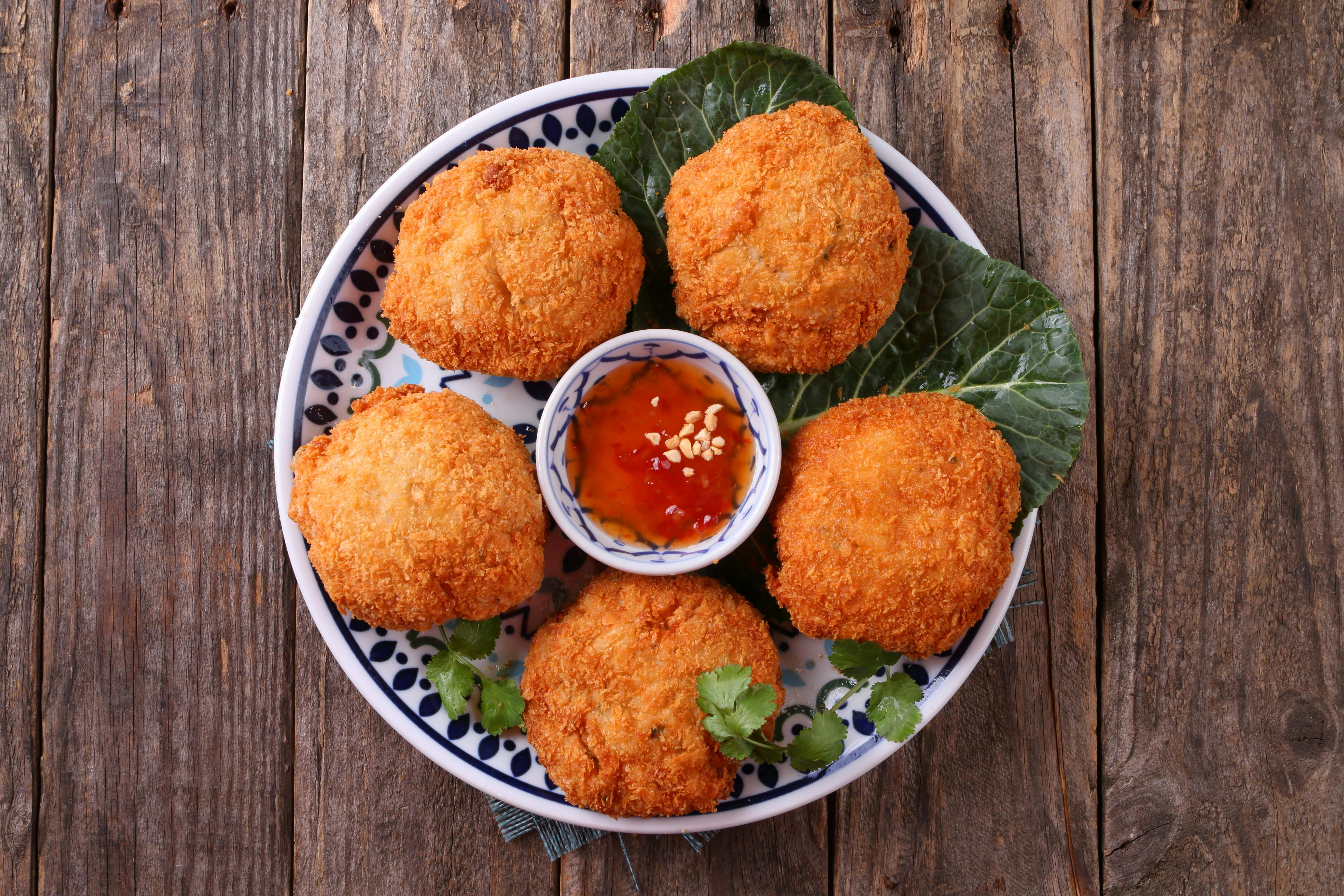
Thai Fish Cakes (Tod Mun Pla)
The diets react (see scores below)
Common Ingredients
- white fish
- red curry paste
- kaffir lime leaves
- long beans
- egg
- fish sauce
- cilantro
- sweet chili sauce
Specific recipes may vary.
Incompatible with 5 of 11 diets
Diet Ratings
Thai Fish Cakes (Tod Mun Pla) are problematic for keto primarily due to sweet chili sauce, which is loaded with sugar (roughly 10-15g carbs per tablespoon) and is a standard, non-negotiable component of this dish. Red curry paste also contains small amounts of sugar and starch. Long beans add minor carbs but are not a major concern in typical quantities. The fish, egg, fish sauce, and aromatic ingredients (kaffir lime leaves, cilantro) are keto-friendly, but the sweet chili sauce alone can easily push a single serving over the daily net carb limit. As traditionally prepared and served, this dish is incompatible with ketosis.
Some lazy keto practitioners argue that a small portion (2-3 cakes) without dipping sauce, or using a sugar-free homemade chili sauce substitute, makes this dish viable. They contend the base fish cake itself — minus the sweet chili sauce — is largely keto-compliant.
Thai Fish Cakes (Tod Mun Pla) contain multiple animal-derived ingredients that are strictly excluded from a vegan diet. White fish is a direct animal product, egg is an animal product, and fish sauce is derived from fermented fish — all three are clear disqualifiers. There is no ambiguity here; this dish is fundamentally built on animal ingredients and cannot be considered vegan in any standard or fringe interpretation.
Thai Fish Cakes contain several non-paleo ingredients that disqualify the dish. Red curry paste typically contains shrimp paste and other additives, but more critically, long beans are legumes — strictly excluded from the paleo diet. Fish sauce almost universally contains added salt and often preservatives, placing it in the processed/avoid category. Sweet chili sauce is a significant offender: it contains refined sugar, rice vinegar, and often cornstarch or other grain-based thickeners. While the base ingredients (white fish, egg, kaffir lime leaves, cilantro) are paleo-approved, the combination of a legume (long beans), refined sugar (sweet chili sauce), and processed condiments (fish sauce, commercial curry paste) makes this dish non-compliant in its traditional form.
Thai Fish Cakes are built around white fish, which is strongly encouraged in the Mediterranean diet (2-3 times weekly), and include beneficial ingredients like long beans, kaffir lime leaves, cilantro, and egg. However, several elements complicate a straightforward approval: the dish is typically deep-fried (using oil that is not extra virgin olive oil), red curry paste contains non-Mediterranean spices and may include processed additives, fish sauce is a high-sodium processed condiment, and sweet chili sauce adds refined sugar. The overall preparation method (deep-frying) and the non-Mediterranean flavor profile with added sugar push this into caution territory. The core protein is excellent, but the preparation and accompaniments work against Mediterranean principles.
Some Mediterranean diet interpreters would score this more favorably, focusing on the high-quality fish base, vegetable inclusions (long beans), and herb content, arguing that cross-cultural dishes built on Mediterranean-approved proteins and vegetables are compatible. Others would score it lower, emphasizing that deep-frying in non-olive oil and the sweet chili dipping sauce (added sugar, refined) represent meaningful departures from core principles.
Thai Fish Cakes are heavily non-compliant with the carnivore diet despite containing a carnivore-approved base protein (white fish) and egg. The dish is loaded with multiple plant-based ingredients that are strictly excluded: red curry paste (contains chili peppers, lemongrass, galangal, garlic, and other plant compounds), kaffir lime leaves (plant), long beans (legume/vegetable), cilantro (herb), and sweet chili sauce (sugar, plant-derived, highly processed). Fish sauce itself is generally carnivore-acceptable (fermented fish), and the egg is fine, but these are minority ingredients in a dish that is fundamentally plant-spice-forward. The sweet chili sauce alone — containing sugar and plant additives — makes this a clear avoid. This dish cannot be made carnivore-compliant without stripping it of nearly all its defining characteristics.
Thai Fish Cakes contain several problematic ingredients. The most clear disqualifier is sweet chili sauce, which virtually always contains added sugar (often in large quantities) — a core excluded ingredient on Whole30. Red curry paste is also frequently non-compliant, as many commercial brands contain added sugar, shrimp paste with preservatives, or other excluded additives. Fish sauce must be label-checked for added sugar or non-compliant preservatives, though compliant versions do exist. Beyond the ingredient issues, Thai fish cakes are a formed, fried patty that mimics a processed snack/junk food format, which also raises concerns under Rule 4's spirit-of-the-program guidance. Long beans (a legume) are not in the explicitly excepted category (only green beans, sugar snap peas, and snow peas are allowed), making them another excluded ingredient. The combination of sweet chili sauce with added sugar, likely non-compliant curry paste, and excluded long beans makes this dish a clear avoid.
Thai Fish Cakes contain several individually manageable ingredients but the red curry paste is the critical concern. Commercial red curry paste almost universally contains garlic and shallots/onion, both of which are high-FODMAP fructan sources. Even small amounts of garlic can trigger symptoms in sensitive individuals. The quantity of curry paste per serving in fish cakes is relatively small (a few tablespoons spread across multiple cakes), so the per-serving FODMAP load from garlic/shallots may be modest, but it's not zero and varies by brand and recipe. Long beans (yard-long beans) are different from regular green beans — Monash has not extensively tested them, adding uncertainty. Fish sauce at typical serving amounts is low-FODMAP. Kaffir lime leaves, egg, white fish, and cilantro are all low-FODMAP safe. Sweet chili sauce may contain garlic or onion powder depending on the brand, adding further fructan load. The dish could be made low-FODMAP with a homemade FODMAP-friendly curry paste (using garlic-infused oil, no onion/shallot) and a compliant sweet chili sauce, but as typically prepared commercially or in restaurants, it should be treated with caution.
Monash University rates small amounts of red curry paste as low-FODMAP (1 teaspoon serving), but clinical FODMAP practitioners generally advise avoiding commercial curry pastes during elimination because garlic is a primary ingredient and FODMAP load accumulates across multiple cakes. Some practitioners allow homemade versions using garlic-infused oil as a safer substitute.
Thai Fish Cakes contain several DASH-friendly components — white fish is a lean protein actively encouraged by DASH guidelines, long beans and kaffir lime leaves provide fiber and micronutrients, and egg is an acceptable protein source. However, the dish has significant sodium concerns: fish sauce is extremely high in sodium (one tablespoon can contain 1,000–1,400mg), and red curry paste also contributes a notable sodium load. Together, these two ingredients alone could push a single serving close to or exceeding the standard DASH daily sodium limit of 2,300mg, and well over the low-sodium DASH threshold of 1,500mg. Sweet chili sauce adds refined sugar and additional sodium. The dish is fried (deep-fried in traditional preparation), adding fat content, though the fat profile from vegetable frying oil is less concerning than saturated fat. Overall, the fish base is DASH-positive, but the high-sodium condiments and preparation method push this firmly into 'caution' territory.
NIH DASH guidelines emphasize limiting sodium and would flag fish sauce and curry paste as problematic ingredients. However, some DASH-oriented clinicians note that a small serving of Thai Fish Cakes in the context of an otherwise low-sodium day, or prepared with reduced fish sauce and low-sodium curry paste, could fit within DASH principles while still delivering lean protein and vegetables — portion size and recipe modification are key variables here.
Thai Fish Cakes have a solid Zone foundation — white fish is an excellent lean protein source, egg contributes additional protein and fat, and long beans are a favorable low-glycemic vegetable. However, the sweet chili sauce is the primary Zone concern, as it is high in sugar and raises the glycemic load of the dish meaningfully. Red curry paste and fish sauce add sodium but are otherwise macro-neutral in small quantities. Kaffir lime leaves and cilantro are polyphenol-rich and anti-inflammatory, aligning well with Sears' later nutritional philosophy. As typically prepared, these cakes are often pan-fried or deep-fried, which can introduce omega-6-heavy seed oils (a Zone negative) and increase total fat beyond the 30% target. The dish skews protein-favorable but the sweet chili sauce disrupts the carbohydrate quality, and frying method matters significantly. As a snack, portioning is also critical — a 1-2 cake portion with sauce kept minimal or replaced with a lower-sugar dipping option (e.g., cucumber relish, reduced sauce) can fit Zone blocks reasonably well. Without these adjustments, the glycemic impact of the sauce and potential seed oil usage push this into caution territory.
Some Zone practitioners and Sears' later anti-inflammatory writings place greater emphasis on polyphenol-rich spice profiles (curry paste, lime, cilantro) as genuinely beneficial, which could nudge this dish slightly higher in approval if prepared with a Zone-friendly fat (coconut oil or light olive oil) and the sweet chili sauce is minimized or omitted. Conversely, stricter Zone adherents following the original Enter the Zone framework would flag the sweet chili sauce as an 'unfavorable' carb addition that disrupts the 40/30/30 ratio and recommend avoiding it entirely.
Thai Fish Cakes present a mixed anti-inflammatory profile. On the positive side, white fish provides lean protein with some omega-3s (though lower than fatty fish like salmon), and the spice blend is genuinely anti-inflammatory: red curry paste typically contains galangal, lemongrass, chili peppers, and turmeric — all well-supported anti-inflammatory ingredients. Kaffir lime leaves add polyphenols, cilantro provides antioxidants, and long beans contribute fiber. These are meaningful positives. The concerns come from the sweet chili sauce, which typically contains added sugar and sometimes high-fructose corn syrup — a dipping sauce that is likely used in a non-trivial amount. Fish sauce adds sodium but no direct inflammatory concern. The egg is a minor mixed factor. The cooking method matters significantly here: traditional Thai fish cakes are pan-fried or deep-fried, which introduces refined cooking oils (often high-omega-6 vegetable or seed oils) that are problematic under anti-inflammatory principles. If pan-fried in a small amount of avocado or coconut oil, the dish scores higher; deep-frying pulls it down. The net result is a dish with genuinely anti-inflammatory herbs and spices offset by sugar in the dipping sauce and likely pro-inflammatory frying oils — landing squarely in the caution zone.
Some anti-inflammatory practitioners would score this higher, emphasizing the curcumin and capsaicin content in red curry paste and treating lean fish as a clean protein — Dr. Weil's framework would view the herb-and-spice base favorably. Conversely, stricter anti-inflammatory and AIP-aligned practitioners would flag the refined oil used in frying, the added sugars in sweet chili sauce, and potentially the nightshade components (chili) in curry paste as concerns for inflammation-sensitive individuals.
Thai fish cakes offer a decent protein base from white fish and egg, which aligns well with GLP-1 protein priorities. However, several factors push this into caution territory. Red curry paste is moderately spicy and can aggravate nausea and reflux, which are common GLP-1 side effects. The traditional preparation involves shallow or deep frying, adding significant fat and making digestion harder given slowed gastric emptying. Fish sauce is high in sodium, which can contribute to bloating and water retention. The sweet chili dipping sauce adds refined sugar and empty calories — a meaningful concern when caloric intake is already reduced. Long beans and the overall ingredient mix do provide some fiber and micronutrients. If prepared at home with minimal oil (pan-seared or baked), spice levels reduced, and sweet chili sauce skipped or minimized, this dish becomes more GLP-1 compatible. As typically served in restaurants or street food contexts, the frying method and spicy-sweet profile make it a moderate-risk choice.
Some GLP-1-focused dietitians would rate fish-based dishes more favorably regardless of preparation, emphasizing the lean protein and omega-supporting white fish base and noting that spice tolerance varies widely among patients — those without reflux or nausea may tolerate the curry paste without issue. Others would flag the frying method and sugar content as firm disqualifiers, particularly in the early weeks of GLP-1 therapy when GI sensitivity is highest.
*See how scores were generated at our methodology page.
Nutritional profile
Six traits that cut across every diet.
Fiber & Plants
How much whole-plant food and fiber it delivers.
Healthy Fats
The quality of its fats (unsaturated, omega-3).
Whole / Unprocessed
How close it is to its natural, unprocessed form.
Gut Gentle
How easy it is on digestion (low FODMAP, few irritants).
Low Glycemic
How little it spikes your blood sugar.
Protein Density
How much protein it packs per calorie.
Controversy Index
Higher controversy = more disagreement between diets.
Diet-Specific Tips
 Mediterranean — 5/10
View tips
- White fish is a Mediterranean diet staple — strongly positive
- Typically deep-fried, likely not in extra virgin olive oil — negative preparation method
- Sweet chili sauce contains added sugar and refined ingredients — negative
- Long beans, kaffir lime leaves, cilantro add plant-based value — positive
- Fish sauce is high-sodium and processed — minor negative
- Egg is an acceptable moderate ingredient
- Non-traditional cuisine with flavor profile outside Mediterranean tradition — neutral to low confidence
 Low-FODMAP — 4/10
View tips
- Red curry paste contains garlic and shallots — high-FODMAP fructan sources
- Commercial sweet chili sauce may contain garlic or onion powder
- Small per-serving curry paste quantity may keep fructan load borderline tolerable
- White fish, egg, fish sauce, kaffir lime leaves, and cilantro are all low-FODMAP
- Long beans have limited Monash testing data compared to standard green beans
- Homemade version with FODMAP-friendly curry paste would be significantly safer
 DASH — 4/10
View tips
- White fish is a DASH-approved lean protein
- Fish sauce is extremely high in sodium (~1,000–1,400mg per tablespoon)
- Red curry paste adds additional sodium load
- Sweet chili sauce contributes added sugar and sodium
- Traditional deep-frying adds fat, though from vegetable oil
- Long beans provide DASH-positive fiber and micronutrients
- Combined sodium from fish sauce and curry paste may exceed DASH daily limits in a single serving
- Low-sodium recipe modifications (reduced fish sauce, low-sodium curry paste) would significantly improve DASH compatibility
 Zone — 5/10
View tips
- White fish is an ideal lean Zone protein source
- Sweet chili sauce is high in sugar, raising glycemic load and disrupting 40/30/30 ratio
- Long beans are a favorable low-glycemic Zone carbohydrate
- Frying method likely introduces omega-6 seed oils, which Sears discourages
- Kaffir lime leaves, cilantro, and curry paste provide anti-inflammatory polyphenols
- Egg adds protein and some fat, consistent with Zone blocks
- Portion control is essential — 1-2 cakes as a snack is manageable; larger servings unbalance the ratio
 Anti-Inflammatory — 5/10
View tips
- White fish provides lean protein with modest omega-3 content — beneficial but less potent than fatty fish
- Red curry paste contains turmeric, galangal, lemongrass, and chili — meaningful anti-inflammatory spice base
- Kaffir lime leaves and cilantro add polyphenols and antioxidants
- Sweet chili dipping sauce introduces added sugar, a notable pro-inflammatory concern
- Frying method likely uses refined seed/vegetable oils high in omega-6 — a significant anti-inflammatory diet concern
- Long beans contribute fiber and phytonutrients
- Overall spice profile is a genuine positive, but processing and sauce undercut the dish's rating
 GLP-1 Friendly — 5/10
View tips
- White fish provides lean, high-quality protein supporting muscle preservation
- Traditional frying method adds significant fat, worsening GLP-1 GI side effects
- Red curry paste introduces moderate-to-high spice level, risking nausea and reflux aggravation
- Sweet chili dipping sauce adds refined sugar and empty calories — counterproductive on reduced appetite
- Fish sauce contributes high sodium, potential bloating risk
- Egg adds additional protein and binding without major drawbacks
- Long beans contribute modest fiber
- Home preparation with baking or minimal oil and reduced spice significantly improves GLP-1 compatibility