Thai
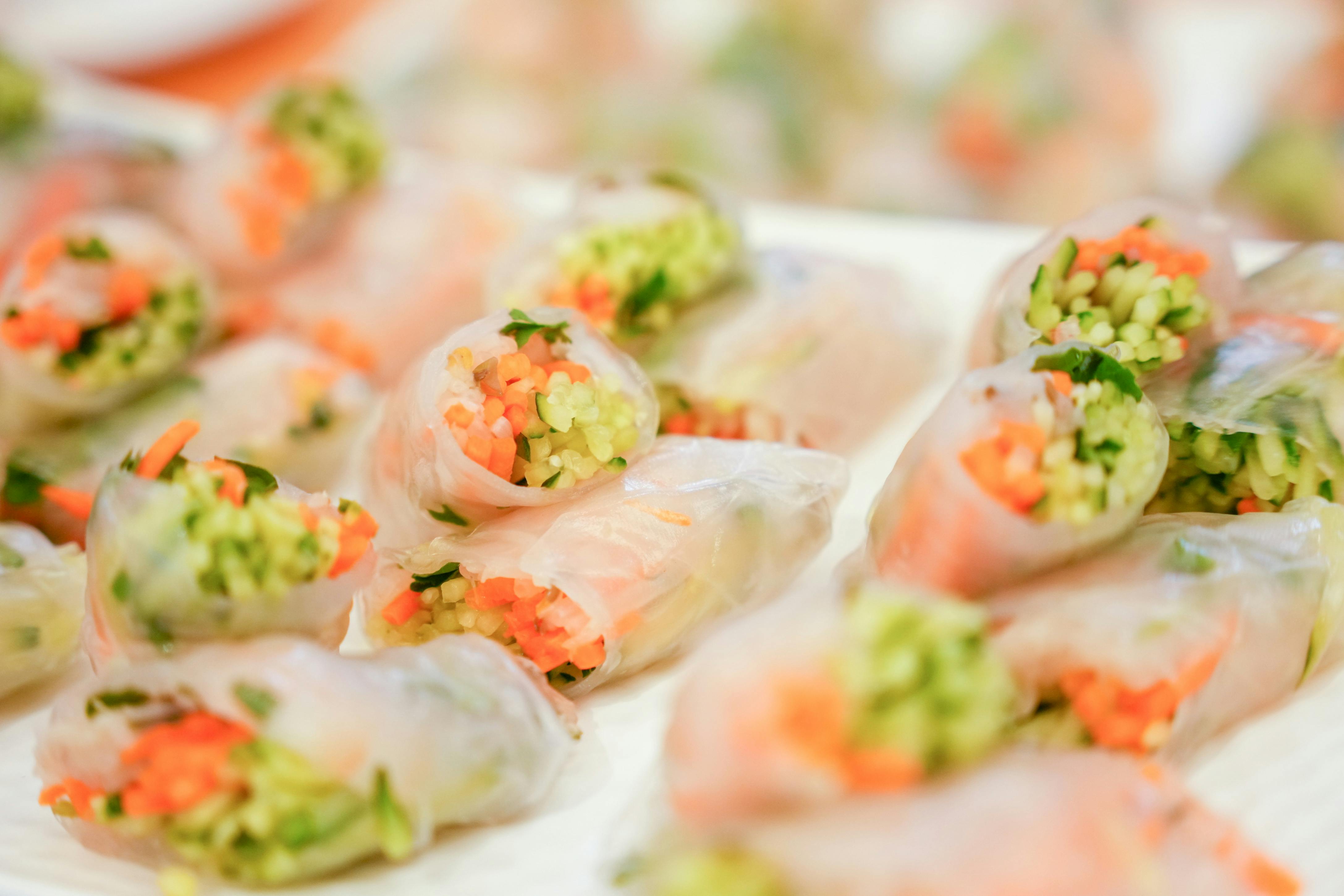
Thai Fresh Spring Rolls
The diets react (see scores below)
Common Ingredients
- rice paper
- shrimp
- rice vermicelli
- lettuce
- mint
- Thai basil
- peanut sauce
- cucumber
Specific recipes may vary.
Incompatible with 5 of 11 diets
Diet Ratings
Thai Fresh Spring Rolls are fundamentally incompatible with a ketogenic diet. The two core structural components — rice paper wrappers and rice vermicelli noodles — are both high-glycemic, refined starch sources derived from white rice. A single rice paper sheet contains approximately 8-10g net carbs, and a standard serving of rice vermicelli adds another 20-30g net carbs, meaning even one spring roll can consume or exceed the entire daily keto carb budget. The peanut sauce adds additional carbs from peanuts and typically added sugar. While the shrimp, lettuce, mint, Thai basil, and cucumber are individually keto-friendly, they cannot redeem a dish built around two grain-based starch components. There is no practical portion size that makes this dish compatible with ketosis.
Thai Fresh Spring Rolls as listed contain shrimp, which is an animal product (seafood). This is a clear and unambiguous disqualifier under vegan diet rules. All other ingredients — rice paper, rice vermicelli, lettuce, mint, Thai basil, cucumber, and peanut sauce — are plant-based, but the inclusion of shrimp makes the dish entirely non-vegan. A vegan version could easily be made by substituting shrimp with tofu, tempeh, or additional vegetables.
Thai Fresh Spring Rolls contain multiple non-paleo ingredients that disqualify the dish outright. Rice paper is a processed grain product made from rice flour, and rice vermicelli is a refined grain — both are grains explicitly excluded from the paleo diet. Peanut sauce is doubly problematic: peanuts are legumes (not nuts), and commercial peanut sauce typically contains added sugar, salt, and seed oils. The remaining ingredients — shrimp, lettuce, mint, Thai basil, and cucumber — are all paleo-approved, but the foundational components of this dish (the wrapper, the noodles, and the dipping sauce) are fundamentally incompatible with paleo principles. This is not a borderline case; the dish is structured around grains and legumes.
Thai Fresh Spring Rolls are largely compatible with Mediterranean diet principles but have some notable gaps. On the positive side, the dish features shrimp (encouraged seafood), abundant fresh vegetables (lettuce, cucumber, herbs), and is not fried or heavily processed. However, rice paper and rice vermicelli are refined grains with no whole-grain equivalents in this dish, which conflicts with the Mediterranean preference for whole grains. The peanut sauce adds plant-based fat and legume protein (positive), but may contain added sugar and is calorie-dense. There is no olive oil, and the overall flavor profile and ingredient sourcing are non-Mediterranean. As an occasional snack with seafood and fresh vegetables, it is acceptable in moderation but is not a Mediterranean staple.
Some modern Mediterranean diet interpreters, particularly those focused on plant-forward eating patterns rather than strict regional tradition, would view this dish more favorably given its emphasis on fresh vegetables, herbs, seafood, and nut-based fat — arguing that the principles matter more than geographic origin. Conversely, stricter adherents following traditional guidelines (e.g., Oldways Mediterranean Diet Pyramid) would flag the refined rice starch wrappers and noodles as a meaningful departure from whole-grain emphasis.
Thai Fresh Spring Rolls are fundamentally incompatible with the carnivore diet. The dish is dominated by plant-based and grain-based ingredients: rice paper (grain-derived wrapper), rice vermicelli (grain-based noodles), lettuce, mint, Thai basil, cucumber, and peanut sauce (legume-based, often with added sugar and plant oils). While shrimp is a carnivore-approved animal protein, it is a minor component surrounded by entirely excluded ingredients. There is no version of this dish that could be adapted to carnivore without completely deconstructing it — at which point it would simply be shrimp, not spring rolls.
This dish contains multiple excluded ingredients. Rice paper is made from rice (a grain), rice vermicelli is a rice-based grain noodle, and peanut sauce contains peanuts (a legume) — all three are explicitly excluded on the Whole30. Even if the shrimp, lettuce, mint, Thai basil, and cucumber are fully compliant, the dish cannot be salvaged without eliminating its foundational components. Additionally, rice vermicelli qualifies as a noodle/pasta analog, which falls under the 'no recreating junk food' rule even if a grain-free version were attempted.
Thai Fresh Spring Rolls are mostly low-FODMAP, but the peanut sauce is the critical concern. Most Thai peanut sauces contain garlic and/or onion (high-FODMAP fructans), and often honey or other high-FODMAP sweeteners. The base ingredients are safe: rice paper (rice flour, low-FODMAP), shrimp (protein, no FODMAPs), rice vermicelli (low-FODMAP), lettuce (low-FODMAP), mint (low-FODMAP at normal amounts), cucumber (low-FODMAP at standard serving). Thai basil is low-FODMAP as a herb garnish. Peanuts themselves are low-FODMAP at ~32g (about 2 tbsp peanut butter), but commercially prepared or restaurant peanut sauces almost universally include garlic and/or onion, making them high-FODMAP. If the peanut sauce is skipped or replaced with a garlic/onion-free version sweetened with maple syrup or rice vinegar, the dish would score 8-9 and be safely approved during elimination.
Monash University rates plain peanuts and peanut butter as low-FODMAP at standard servings, but clinical FODMAP practitioners would caution that virtually all restaurant or prepared peanut sauces contain garlic, onion, or both — common enough that many dietitians advise avoiding peanut sauce entirely during the elimination phase unless homemade and verified FODMAP-safe.
Thai Fresh Spring Rolls are largely composed of DASH-friendly ingredients: shrimp (lean protein), fresh vegetables (lettuce, cucumber), herbs (mint, Thai basil), and rice vermicelli. These align well with DASH principles of lean protein, abundant vegetables, and low saturated fat. However, the peanut sauce introduces meaningful fat content (including some saturated fat), moderate calories, and often significant sodium depending on preparation — typically containing soy sauce, which is high in sodium. Rice paper and rice vermicelli are refined starches rather than the whole grains DASH emphasizes, though they are low in sodium and fat. The dish is not fried, which is a positive. The overall assessment is 'caution' because while the base ingredients are excellent, the peanut sauce is a sodium and calorie concern that requires portion control, and the refined carbohydrates are not ideal from a DASH perspective.
NIH DASH guidelines emphasize limiting sodium and emphasizing whole grains, which would flag the peanut sauce (soy sauce-based) and refined rice noodles as concerns. However, updated clinical interpretations note that the overall dish is minimally processed, rich in vegetables, and uses lean protein — many DASH-oriented dietitians would consider this a good choice if peanut sauce is used sparingly or a low-sodium version is prepared, and the vegetable density is praised.
Thai Fresh Spring Rolls contain several Zone-compatible elements alongside some unfavorable ones. On the positive side, shrimp is an excellent lean protein source, and the fresh vegetables (lettuce, cucumber, mint, Thai basil) are ideal low-glycemic Zone carbohydrates. However, the dish has two significant Zone challenges: (1) rice paper and rice vermicelli are high-glycemic refined carbohydrates that Sears classifies as 'unfavorable' carbs — they contribute substantial net carbs with minimal fiber, spiking the carb block count quickly; (2) peanut sauce adds fat but it's omega-6-heavy (peanut oil) rather than the preferred monounsaturated sources like olive oil or macadamia nuts, and often contains added sugar. As a snack, a single roll could potentially be portioned to approximate Zone blocks — the shrimp provides protein, vegetables provide favorable carbs, and the peanut sauce provides fat — but the rice paper/vermicelli combination makes it difficult to hit the 40/30/30 ratio without the carb portion running too high relative to protein. A Zone-aware version would minimize or eliminate the vermicelli, use a smaller rice paper, increase shrimp quantity, and swap peanut sauce for a lighter olive-oil-based dip. As served in a typical Thai restaurant, the carb load from refined rice starch likely dominates.
Some Zone practitioners and later Sears writing acknowledge that the overall glycemic load of a mixed dish is modulated by protein and fat co-ingestion — the shrimp and peanut sauce slow digestion enough that a single small spring roll may not produce a dramatic insulin spike. Additionally, peanut butter is listed in some Zone food block guides as an acceptable fat source in measured amounts, which would make the peanut sauce more defensible if portion-controlled. Practitioners who focus on overall meal balance rather than strict ingredient favorability ratings might score this higher.
Thai fresh spring rolls are a strong anti-inflammatory choice overall. Shrimp provides lean protein and some omega-3s, along with selenium and astaxanthin, a potent antioxidant carotenoid. Fresh herbs — mint and Thai basil — deliver polyphenols and flavonoids with documented anti-inflammatory properties. Lettuce and cucumber add antioxidants and hydration with minimal inflammatory burden. Rice paper and rice vermicelli are refined carbohydrates but are gluten-free, low in fat, and consumed in modest quantities relative to the dish's overall composition. The main area of caution is the peanut sauce: peanuts are legumes with a higher omega-6 fatty acid content than, say, walnuts or almonds, and commercial peanut sauces often contain added sugar and sodium. However, when made with natural peanut butter and moderate sugar, peanuts do provide some fiber, vitamin E, and resveratrol. The dish is fresh, minimally processed, vegetable-forward, and herb-rich — all hallmarks of anti-inflammatory eating.
Most anti-inflammatory frameworks would approve this dish given its whole-food, herb-rich profile. The mild dissent concerns peanuts: some anti-inflammatory practitioners flag peanuts' omega-6 content and potential for aflatoxin contamination as mildly pro-inflammatory, while Dr. Weil's framework includes peanuts in moderation as part of a legume-friendly approach. The refined rice starch base is also a minor consideration for those following stricter anti-inflammatory protocols.
Thai fresh spring rolls are a generally favorable snack for GLP-1 patients but land in caution territory primarily due to the peanut sauce. The base components — shrimp, fresh vegetables (lettuce, cucumber), herbs (mint, Thai basil), and rice paper — are lean, easy to digest, hydrating, and nutrient-dense. Shrimp is a high-quality, low-fat protein source. However, the protein per serving is modest (roughly 8-12g per roll depending on shrimp quantity), making it portion-dependent to meet GLP-1 protein targets. Rice vermicelli adds refined carbohydrates with minimal fiber or protein value, contributing empty-ish calories. The peanut sauce is the main concern: it is high in fat and calories in a small volume, can be calorie-dense in ways that undermine nutrient density per calorie, and the fat load may worsen nausea or slow digestion further in GLP-1 patients. With sauce limited or on the side, this dish scores higher. As served with a standard dipping portion, it earns a cautious approval.
Some GLP-1-focused RDs view fresh spring rolls favorably as a whole-food, low-processed snack and accept peanut sauce in small amounts for satiety and palatability, arguing the healthy fats support fat-soluble nutrient absorption. Others flag the peanut sauce fat content and the low fiber of rice vermicelli as meaningful drawbacks for patients already struggling with slow gastric emptying and constipation.
*See how scores were generated at our methodology page.
Nutritional profile
Six traits that cut across every diet.
Fiber & Plants
How much whole-plant food and fiber it delivers.
Healthy Fats
The quality of its fats (unsaturated, omega-3).
Whole / Unprocessed
How close it is to its natural, unprocessed form.
Gut Gentle
How easy it is on digestion (low FODMAP, few irritants).
Low Glycemic
How little it spikes your blood sugar.
Protein Density
How much protein it packs per calorie.
Controversy Index
Higher controversy = more disagreement between diets.
Diet-Specific Tips
 Mediterranean — 5/10
View tips
- Shrimp is a Mediterranean-approved seafood protein
- Rice paper and rice vermicelli are refined grains, not whole grains
- Fresh vegetables and herbs (lettuce, cucumber, mint, basil) are strongly aligned with Mediterranean principles
- Peanut sauce provides plant-based fat and protein but may contain added sugar
- No olive oil present; dish uses no Mediterranean-traditional fats
- Non-fried preparation method is a positive attribute
- Overall dish is minimally processed despite refined grain wrappers
 Low-FODMAP — 5/10
View tips
- Rice paper is low-FODMAP (rice-based)
- Shrimp is a FODMAP-free protein
- Rice vermicelli is low-FODMAP
- Lettuce, cucumber, mint, Thai basil are all low-FODMAP at standard herb/vegetable servings
- Peanut sauce is the primary risk: typically contains garlic and/or onion (high-FODMAP fructans)
- Peanut sauce may also contain honey or other high-FODMAP sweeteners
- Dish is safe if peanut sauce is omitted or made garlic/onion-free
 DASH — 6/10
View tips
- Shrimp is a lean, low-fat protein well-suited to DASH
- Abundant fresh vegetables and herbs provide potassium, magnesium, and fiber
- Peanut sauce typically contains soy sauce — a high-sodium ingredient that raises concern
- Rice paper and rice vermicelli are refined grains, not whole grains as DASH prefers
- Dish is not fried, keeping total fat and calorie load lower than fried alternatives
- Peanut sauce adds saturated fat and caloric density; portion size matters
- Low-sodium peanut sauce or reduced quantity would improve DASH compatibility significantly
 Zone — 5/10
View tips
- Rice paper and rice vermicelli are high-glycemic refined carbs classified as 'unfavorable' in Zone terminology
- Shrimp is an excellent lean protein — a strong Zone-favorable ingredient
- Fresh vegetables (lettuce, cucumber, herbs) are ideal low-glycemic Zone carbohydrates
- Peanut sauce is omega-6-dominant fat, not the preferred monounsaturated fat source, and often contains added sugar
- Carb blocks from rice starch likely outweigh protein blocks, making 40/30/30 ratio hard to achieve without modification
- As a snack, a single roll with minimal vermicelli could be portioned more carefully than a full meal serving
 Anti-Inflammatory — 8/10
View tips
- Shrimp provides lean protein, selenium, and astaxanthin (anti-inflammatory carotenoid)
- Thai basil and mint are rich in anti-inflammatory polyphenols and flavonoids
- Fresh vegetables (lettuce, cucumber) contribute antioxidants with negligible inflammatory load
- Rice paper and vermicelli are refined carbohydrates but gluten-free and low in fat
- Peanut sauce adds omega-6 fatty acids and potentially added sugar — moderate concern
- No processed meats, trans fats, seed oils, or artificial additives
- Dish is fresh and minimally processed, aligning well with anti-inflammatory principles
 GLP-1 Friendly — 6/10
View tips
- Shrimp provides lean, high-quality protein but total protein per roll is modest — multiple rolls needed to hit 15-20g protein target
- Peanut sauce is high in fat and calories; may worsen nausea, bloating, or slow digestion on GLP-1 medications
- Rice vermicelli is a refined carbohydrate with minimal fiber — contributes calories without meaningful nutritional benefit
- Fresh vegetables and herbs add hydration, micronutrients, and digestive ease
- Rice paper wrapper is low-fat and easy to digest
- No frying, no added sugars in base ingredients — preparation method is GLP-1 friendly
- Portion-sensitive: one roll is a light snack; as a protein-forward meal, quantity must increase which also increases peanut sauce fat load
- Sauce served on the side significantly improves the rating